Love: for God’s sake
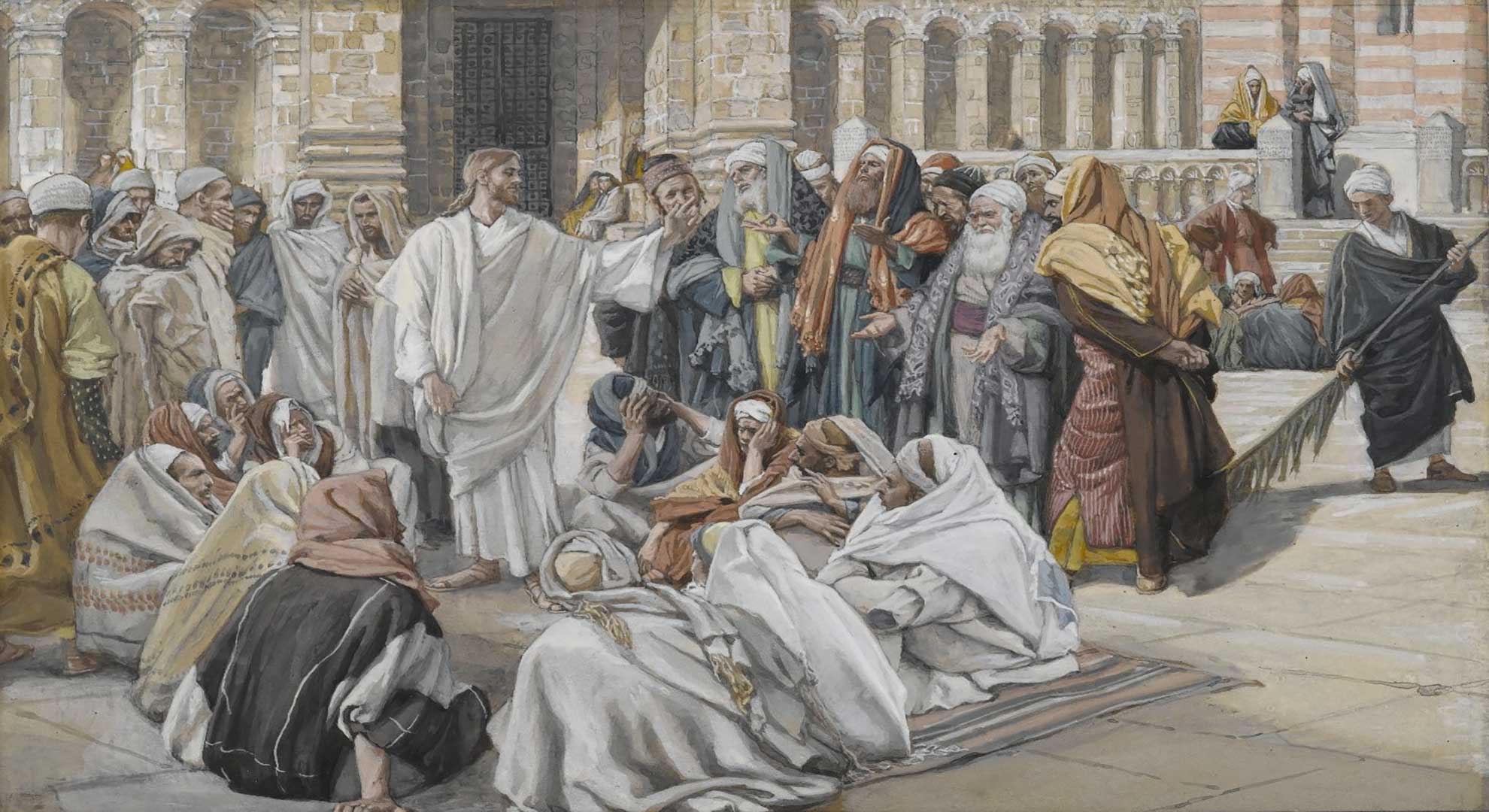
As we continue reading from the Gospel of St Matthew (22: 34-40), we see how Jesus counters his adversaries. He had just finished silencing the Sadducees on the question of the resurrection of the dead, when he was assailed by the Pharisees. They wanted Him to pronounce on the ‘Great Commandment in the law’. Jesus assigns equal importance to the two commandments known in the Old Testament and focusses on them the entire content of the law. Loving God with our heart, mind and soul is the first and great commandment, He said, and by the second, which is like it, we ought to love our neighbour as ourselves.
But who is our neighbour? From the parable of the Good Samaritan, we learn that our neighbour is essentially a person in need. In our materialistic age, we think of money as the need, but that simply is not the case. Very often, the other yearns for our love, our time, just a little word or a listening ear. It may not even require our physical presence; sometimes a tinkle, a WhatsApp message, a comforting thought from afar, could save the day. We will never know in advance who we are called to serve, when and how. But serve we must; and those that we serve are our neighbour, and service is the expression of our love.
But then again, what is love? Someone has said: “Love is the most beautiful thing to have, hardest thing to earn and most painful thing to lose”; but far from defining, it makes love seem elusive. In 1 Corinthians 13: 4-7, some of love’s attributes make it palpable: “Love is patient; love is kind; love is not envious or boastful or arrogant or rude. It does not insist on its own way; it is not irritable; it keeps no record of wrongs; it does not rejoice in wrongdoing but rejoices in the truth. It bears all things, believes all things, hopes all things, endures all things.”
Palpable but not defined. That is because love is a many-splendored thing, largely misunderstood and therefore clichéd, especially in our times. Several Catholic thinkers have dwelt upon this inexhaustible topic, and more recently, in his book The Four Loves, C. S. Lewis has distinguished between Affection, Friendship, Eros and Charity, showing how one merges into another, and how one can even become another. More importantly, he underlines that the first three – human loves – can be tainted if not accompanied by the sweetening grace of divine love, Charity. And, as St Ignatius put it: “Love is shown more in deeds than in words.”
We understand love more concretely through the First Reading (Ex 22: 21-27) in which God forbids us to wrong a stranger or oppress him; to afflict a widow or orphan; or to torment a poor man. They are personae miserabiles – people in difficult social, economic and juridical situations. Easing their situation constitutes works of mercy that our Catechism speaks of: “charitable actions by which we come to the aid of our neighbour in his spiritual and bodily necessities.” Instructing, advising, consoling, comforting, forgiving and bearing wrongs patiently are spiritual works of mercy; the corporal include giving alms to the poor, feeding the hungry, sheltering the homeless, clothing the naked, visiting the sick and imprisoned, and burying the dead. (Cf. CCC, 2447)
Christian civilisation traditionally grew up on those sublime teachings and achieved a healthy balance between body and spirit down the ages. But alas, with the overpowering rise of godless modernism, haven’t some people grown weary of the teachings that had once nourished them? The consequence of such degradation has been staring us in the face. And with the recent opening of the gates of Europe to hordes of people (refugees, asylum seekers, migrants), some of whom are avowedly spiritual enemies of Christian civilisation (or what is left of it), shouldn't it be reexamined whether the physical needs of the neighbours are more crucial than the spiritual wellbeing of the household?
St Paul was extremely concerned about the spiritual health of his people. In the Second Reading (1 Thes 1: 5-10), he is all praise for the example that the Thessalonians have set to the believers in Macedonia and Achaia. The Word of God sounded forth from them like clarion trumpets and their faith went forth everywhere. God was their highest good, from which the good of neighbour flowed. Hence the Apostle is happy to note how they “turned to God from idols, to serve a living and true God, and to wait for His Son from Heaven, whom He raised from the dead, Jesus who delivers us from the wrath to come.”
Would it be wrong to see God’s wrath in terms of environmental disasters and wars? Aren’t we witnessing veiled religious and spiritual wars? Spiritual warfare is a fact of life; we cannot wish it away. So, it would be necessary to reflect on how far enemies of Christianity can be our ‘neighbours’!... Can they be allowed to hack at the very foundations of Christian civilisation… and we foolishly call it ‘love’? We cannot forget our duty to love God above all things, and the neighbour for God’s sake.

Unto God and Caesar
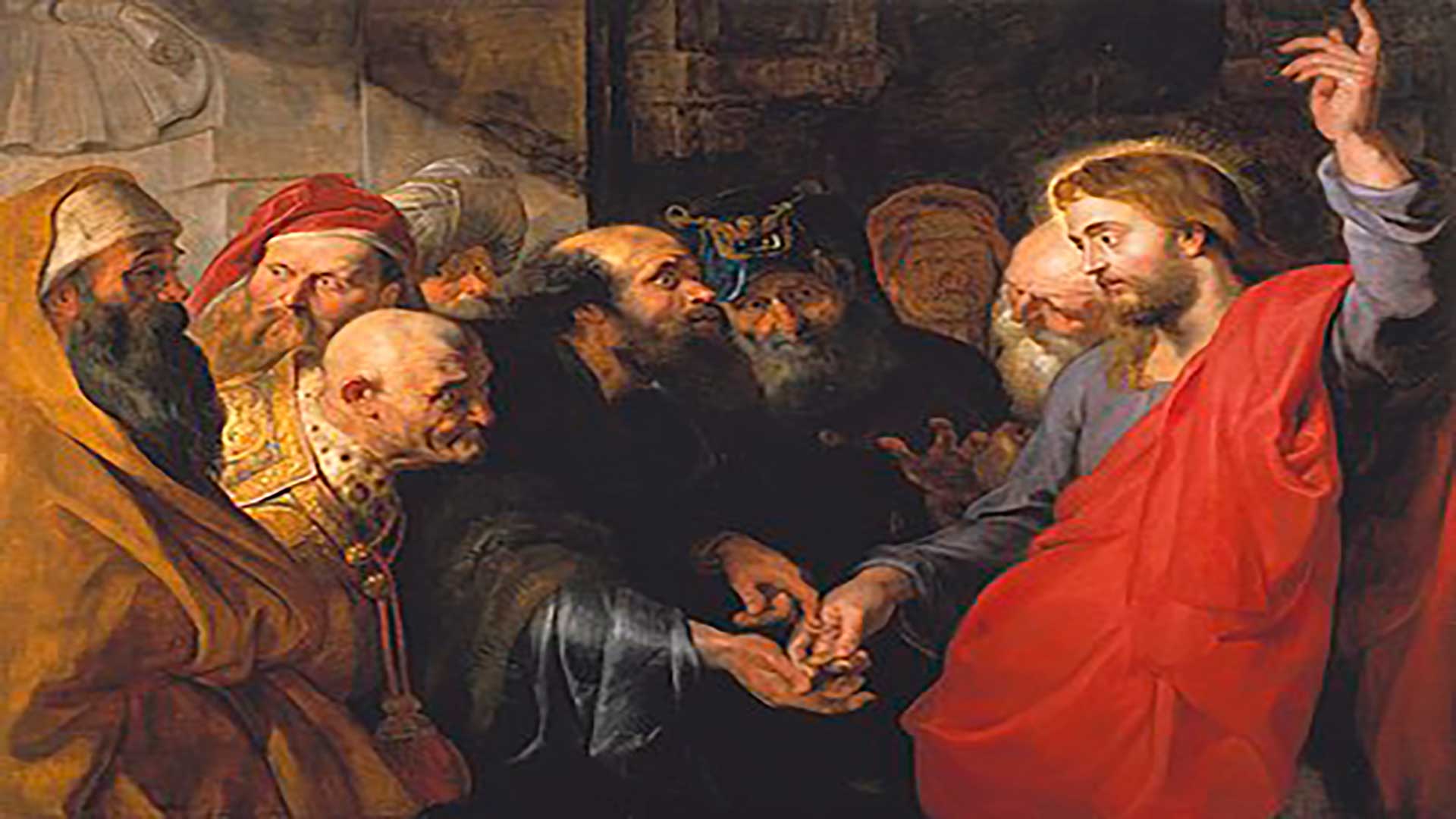
This Sunday’s Gospel text (Mt 22: 15-21) picks up where we left off last Sunday. The wedding feast parable was a subtle attack on the Jewish authorities. Such was their hatred of Our Lord that even two divergent groups did not think twice before they got together to checkmate Jesus: Herodians, a political party at least outwardly friends with the Roman authorities and indifferent to religion; and the Pharisees, puritanical as regards the Jewish law and traditions, and opposed to Roman rule. Devising a ploy from which it seemed impossible for Jesus to escape, they got some young scholars to pose the following question with guileless simplicity: “Is it lawful to pay taxes to Caesar, or not?”
Jesus was faced with a false dilemma, for to condemn the Roman tax would be to incur the vengeance of those pagan rulers; to consider the tax legitimate would anger the Jews, who had always resented the Roman rule. Seeing through the trick, Jesus asked for a coin, pointed to the image and inscription on it, and promptly replied, keeping his tone light and matter-of-fact: “Render therefore to Caesar the things that are Caesar’s, and to God the things that are God’s.” This exposed the hypocrisy of the Pharisees, who used Roman currency for trade and commerce, yet grudged the payment of tax; so too the Herodians, who could easily be charged with detracting against the Roman authority.
Jesus thus made it clear that while political masters seek taxes God seeks souls. Or as Fulton Sheen points out, “Once again He was saying that His Kingdom was not of this world; that submission to Him is not inconsistent with submission to secular powers; that political freedom is not the only freedom. To the Pharisees who hated Caesar came the command: ‘Give unto Caesar’; to the Herodians who had forgotten God in their love of Caesar came the basic principle: ‘Give unto God.’”[1]
Does that amount to serving two masters? No. The two masters that we cannot serve at the same time are God and Mammon (pleasures of the world included). These we cannot serve alike because they are things opposed to each other; to serve one we often (have to) forego the other. For instance, when it comes to running a business and amassing wealth we may think that ends justify the means, sacrificing even religious worship on Sundays and holy days. On the other hand, serving a legitimate temporal authority is necessary for the smooth functioning of society; it is a different matter if the authority acts immorally and illicitly, but our basic aim should always be to align earthly administration with divine law.
In the ultimate analysis, everything belongs to God, doesn't it? Hence, in the First Reading (Is 45: 1, 4-6), God makes it clear that He is the Lord and there is no other. He is always in control and exercises dominion even over those who do not acknowledge Him. For instance, God had the Persian king Cyrus put an end to Babylonian rule and free the Jews. ‘Anointed’ were the kings of Israel alone, but since Cyrus as God’s instrument in the liberation of Israel is regarded as anointed, too.
To pay God tribute, we ought to sing His praises and “tell among the nations His glory and His wonders among all the peoples.” That is to say, we have to evangelise. We can do so from wherever we are, whatever be our station in life. We can do so without worrying about what we are going to say, for then the Holy Spirit takes charge and guides us. In fact, we can go forth and preach through our actions rather than our words: we can engage in the apostolate of presence. “Preach the Gospel at all times, and if necessary, use words” is a quote commonly attributed to St Francis of Assisi.
But alas, on World Mission Sunday being observed today, it is imperative for us to check the nature and state of our Missions. Is evangelisation happening in reality, that is to say, are we genuinely proclaiming the Gospel message, or is it only an exercise in social service? This day is marked by a special collection taken up to support "missionary projects", but are these the same pious projects that you and I have in mind? Have a look at the links below, to see whether we are "converting" others or "perverting" ourselves! Hence an appeal was recently made by a Lay Catholic faithful organisation, to the Bishops of India, to stop the menace of theological errors being spread under the pretext of "inculturation": https://youtube.com/shorts/kagBOaVfIj0?feature=share and https://www.saveourfaith.com/
In the Second Reading (1 Thes 1: 1-5), St Paul, on behalf of his missionary companions Silvanus and Timothy, and himself, informs the Thessalonians of how he and his own pray and thank God for their “work of faith[2] and labour of love and steadfastness of hope in our Lord Jesus Christ.” Such graces are divine gifts, which we should always appreciate. Just like the Thessalonians, who were newly formed into a faith community, continued to be challenged by paganism all around them, we Christians in the contemporary world are continually confronted by innumerable temptations and traps from a neo-pagan world. So, the lesson to learn is that what we give unto Caesar should by no means prevent us from giving unto God.
----------
[1] Fulton Sheen, Life of Christ (Bangalore: Asian Trading Corporation, 1984), p. 203
[2] This throws up the controversial topic of faith without works.
The Elect to Eternal Life
The Readings of today provide at least a faint background to the goings-on in West Asia, a region long steeped in violence and terrorism. While the Jews claim that the recent attack on Israel has been the deadliest for them since the German Holocaust, one can’t help but think of the Prince of Peace who once walked that way with a promise of great hope for the human race!
God made many several covenants with the people of Israel. In the First Reading (Is 25: 6-10) we note His promises of freedom and celebration on Zion, the mount on which the city of David was built. In its Temple God has promised to unite the peoples of the world. There they will live in harmony, putting behind them pride, hatred, injustice and war. With joy and life replacing mourning and death, the people will sing, “This is the Lord; we have waited for Him; let us be glad and rejoice in His salvation.”
The Lord is none other than Christ our Saviour. David’s Psalm 23, too, famously reminds us that in good times and in bad, in sickness and in health, the Lord is our Good Shepherd. Those who trust in Him shall not want but enjoy green pastures, restful waters, sufficient repose and a joyful spirit. For He is the God of wisdom, strength and kindness; who guides us, walks by our side, comforts, feeds and anoints us. The Psalm spoke warmly to the heart of pastoral Israel.
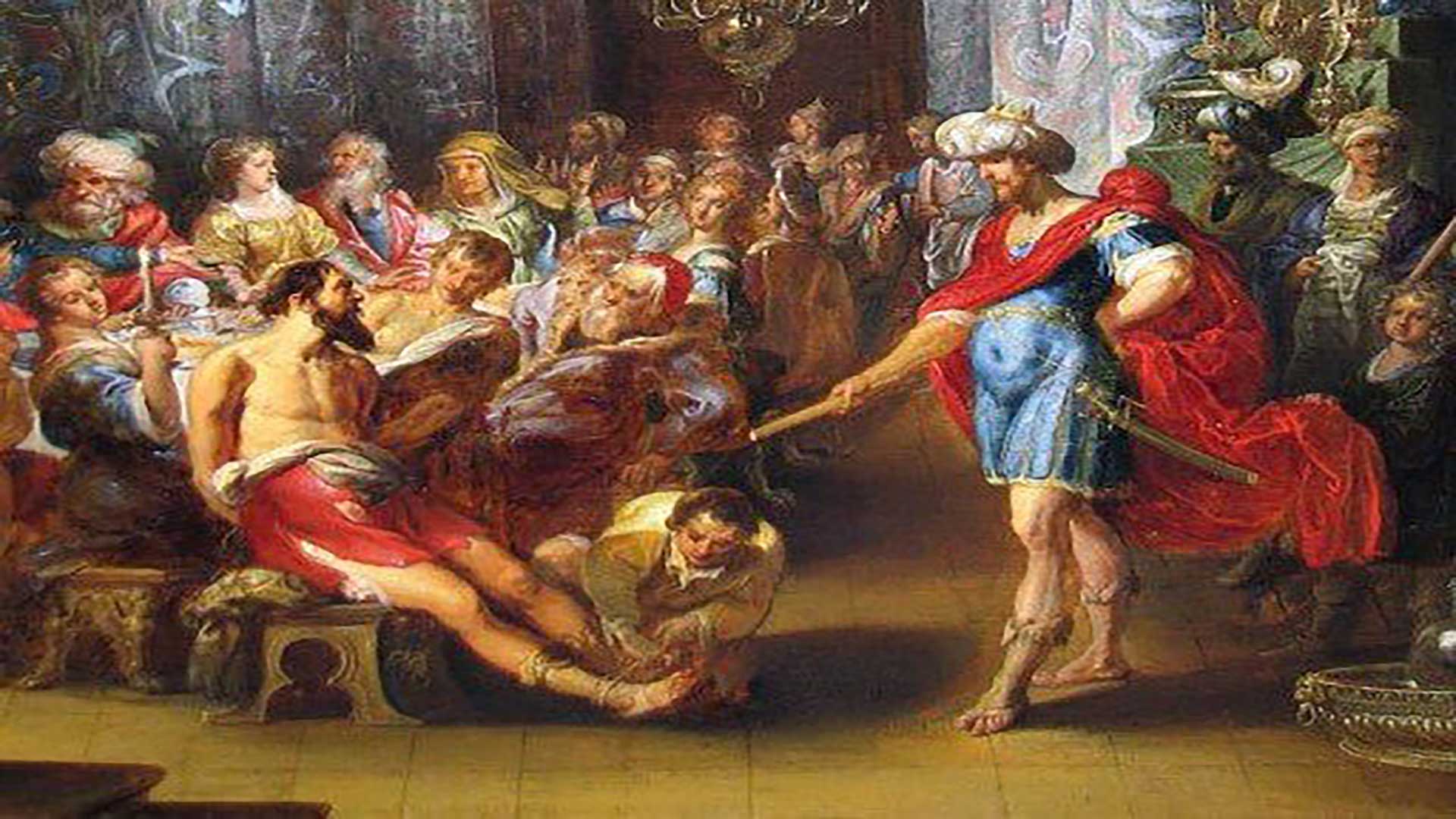
Jesus’ parable in today’s Gospel text (Mt 22: 1-14) brings the images of the Old Testament closer to us by comparing the Kingdom of Heaven to a sumptuous wedding banquet. The first invitees (representing the Jews, who were the first to hear God’s Word) failed to honour the king’s (God’s) invitation: they not only went about their own petty tasks, but even killed the king’s messengers! Much like the owner of the vineyard, in last Sunday’s parable, the king sent his troops to destroy the murderers and burn their city. Finally, he extended his invitation to the rest of the world (thus announcing the universality of the Kingdom of God), and the wedding hall (His Church) was full.
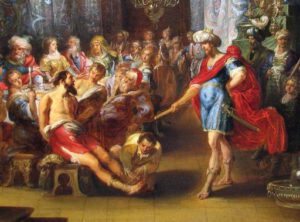
But then again, who is the “man who had no wedding garment”? In those days, all guests were supplied with a robe to wear at the banquet; but here was a stranger, probably a crasher, who either had no robe or had failed to wear one. Not to be taken for a poor man but a guest flouting the norms, he is, quite expectedly, shown the door. In like manner, why won’t those who disregard the Commandments be bound hand and foot and cast into the “outer darkness” (hell), where men “weep and gnash their teeth”?
Jesus makes it clear that the divine invitation is gratis but also exacting. It is the wearing of the garment of Christ in a worthy manner that will entitle us to the heavenly banquet. Even though He has invited all into His tent, only those who have fulfilled the stipulated conditions will be chosen to dine with Him.[1] It is ironical that even at the Last Supper this truth had not dawned on the Apostles!
For that matter, did the Jews remember the parable when Jerusalem and the temple were reduced to rubble in 70 A.D.? And will they now turn a new leaf? God, who is slow to anger and abounding in love, is never discouraged. He continues to make overtures of friendship. Hence, quite significantly, the Jews, themselves a persecuted and dispersed lot, are gathering back in their land after two millennia in exile. This is not to absolve their governments from their continued violence, which is the handiwork of evil men in the Holy Land. Be that as it may, will the Jews finally seize the day and turn to the True God?
Only a profound change of heart can bring about a transformation in the world at large. St Paul refers to the necessary dispositions, in the Second Reading (Phil 4: 12-14, 19-20). He who had received substantial material help from the Philippians was not overly concerned about how he should be living. The message he wishes to highlight is that God is the great Provider of our every need, according to His riches, in marvellous ways, in His Son Jesus. So, when we are with the Good Shepherd, we have nothing to fear; when the Good Lord is with us, none can be against us.
Let us therefore never decline a good invitation; and if it be a divine call, let us accept it wholeheartedly and be steadfast, so as to be counted among the elect to eternal life.
------
[1] This parable has a parallel only in Luke 14: 16-24.
Labouring in the Vineyard
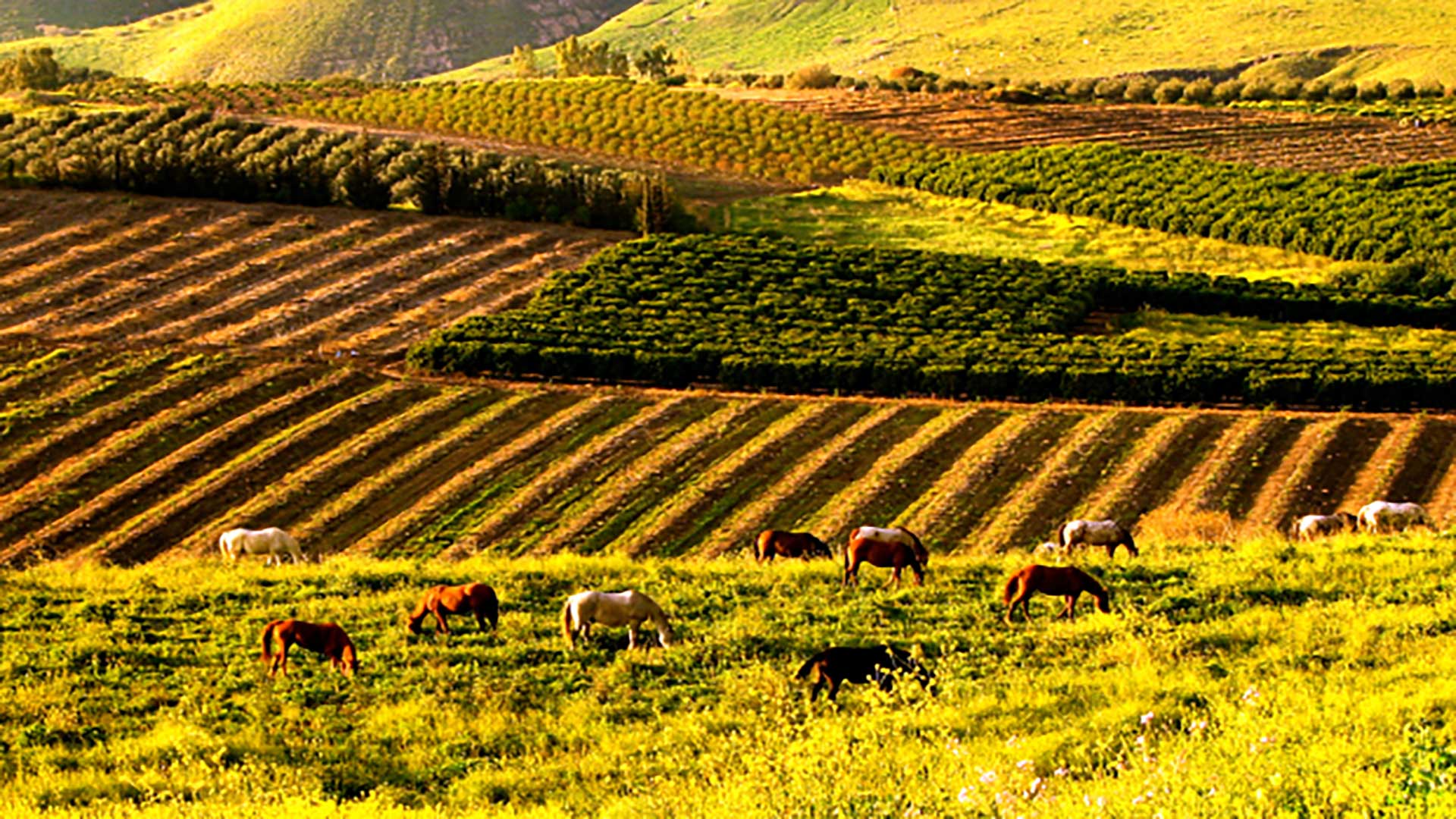
The image of the Vineyard is truly captivating. In fact, since times immemorial, prophet after prophet has used this charming feature of Israel’s landscape to make a valid point. With grapes as an agricultural item playing an important role in the economy, society, and even in the faith traditions of the Jews, and later of the Christians too, it is no wonder that the Holy Bible abounds in parables relating to the Vineyard.
Bible commentators say that one of the best-known uses of the vineyard symbol in the Old Testament occurs in Isaiah, of which the First Reading (Is 5:1-7) provides the core: 'The vineyard of the Lord of hosts is the house of Israel.' Here, Isaiah recalls how the owner (who represents God) tenderly cared for his vineyard (His people Israel). And yet, how did the vineyard respond? By producing wild grapes (unruly behaviour or sin). It is quite natural that the owner should destroy such worthless plantations – quite clearly symbolic of retribution for sinful human behaviour.
Historically, the retribution that Isaiah hinted at was the Assyrian military attack that the southern kingdom, Judah, was anticipating, just as the northern kingdom of Israel had experienced earlier. The Prophet’s argument was that God had punished Israel for their unfaithfulness, and Judah could well avert its share of problems by changing their ways and strictly following God’s law. Yet, Isaiah is not all that hopeful, for God had once looked for justice but witnessed bloodshed; righteousness, and alas, beheld a cry.
Jesus’ parable in the Gospel (Mt 21:33-43) uses the vineyard symbolism with a more palpable human element: it replaces wild grapes with wild tenants. Since they have beaten, stoned, abused and killed the owner’s servants, and even his son, all of whom he had dispatched in quick succession, he 'put[s] those wretches to a miserable death, and let[s] out the vineyard to other tenants who will give him the fruits in their seasons.'
How loaded with meaning! While the owner here still symbolises God, and the vineyard His people Israel, the ominous part is that the tenants represent officialdom and religious authorities to whom souls have been entrusted. Have they been reliable stewards of God’s property? The son there is the Son of God, Jesus Christ our Lord. Did Israel respect Him? No; they took Him, who was the heir, cast him out of the vineyard, and killed him... And what about us today? We still do the same every time we reject Him and through other sinful acts.
Alas, while many have embraced the Christian faith, not all have remained faithful. Thus, after Israel rejected Jesus, the Faith moved to the West, where it flourished for centuries, fulfilling the words of our Lord and Master to His Chosen People: 'The kingdom of God will be taken away from you and given to a nation producing the fruits of it.' But, eventually, after having reaped the fruits of Christian civilisation, that part of the world, too, failed, in a way, to cling to the old rugged Cross of Christ. With ever-growing affluence and misplaced confidence, the West slowly but steadily dropped its guard, and put its Christian faith on the back burner.
In our modern context, consumerism and individualism have become the new 'wild grapes', choking out the communal and sacrificial nature of the Gospel. And most worrisome is the fact, as Pope Paul VI put it, way back in 1972, that 'the smoke of Satan has entered the Church of God.'
As regards the rejected stone whom God has destined to be the cornerstone of salvation, that rejected stone is none other than Jesus: 'The very stone which the builders rejected has become the cornerstone; this was the Lord’s doing, and it is marvellous in our eyes.' Presently, the greatest hope for the Church comes from the Asian and African continents.
For instance, in a nascent sovereign country like East Timor, the people have resolutely opted for the Catholic Faith, and this has gone from strength to strength (from 20% to 98%). For their part, several African nations have been among the staunchest supporters of Catholic morality and discipline, evident in their brave rejection of homosexuality, transgenderism, divorce, the ordination of women, and so on. Their Cardinals assert themselves at the Vatican, and their people do so at home – with their undeniable religious zeal, resilience amidst material poverty and persecution, and indescribable communal joy. They are among those who portray God’s Vineyard as a beacon of hope.
However, even while the social, political, economic, and environmental issues of our fragile planet are beginning to assume apocalyptic proportions, we must continue to be people with hope – not grapes of wrath but of sweetness. In the Second Reading (Phil 4:6-9), St Paul advises: 'Have no anxiety about anything, but in everything by prayer and supplication with thanksgiving let your requests be made known to God. And the peace of God, which passes all understanding, will keep your hearts and your minds in Christ Jesus.'
This is exactly what the modern Christian needs: to be a bunch of sweet grapes in a bitter world, by cultivating what is true, honourable, just, pure, lovely, gracious, excellent, and worth praise.
Mission of Love
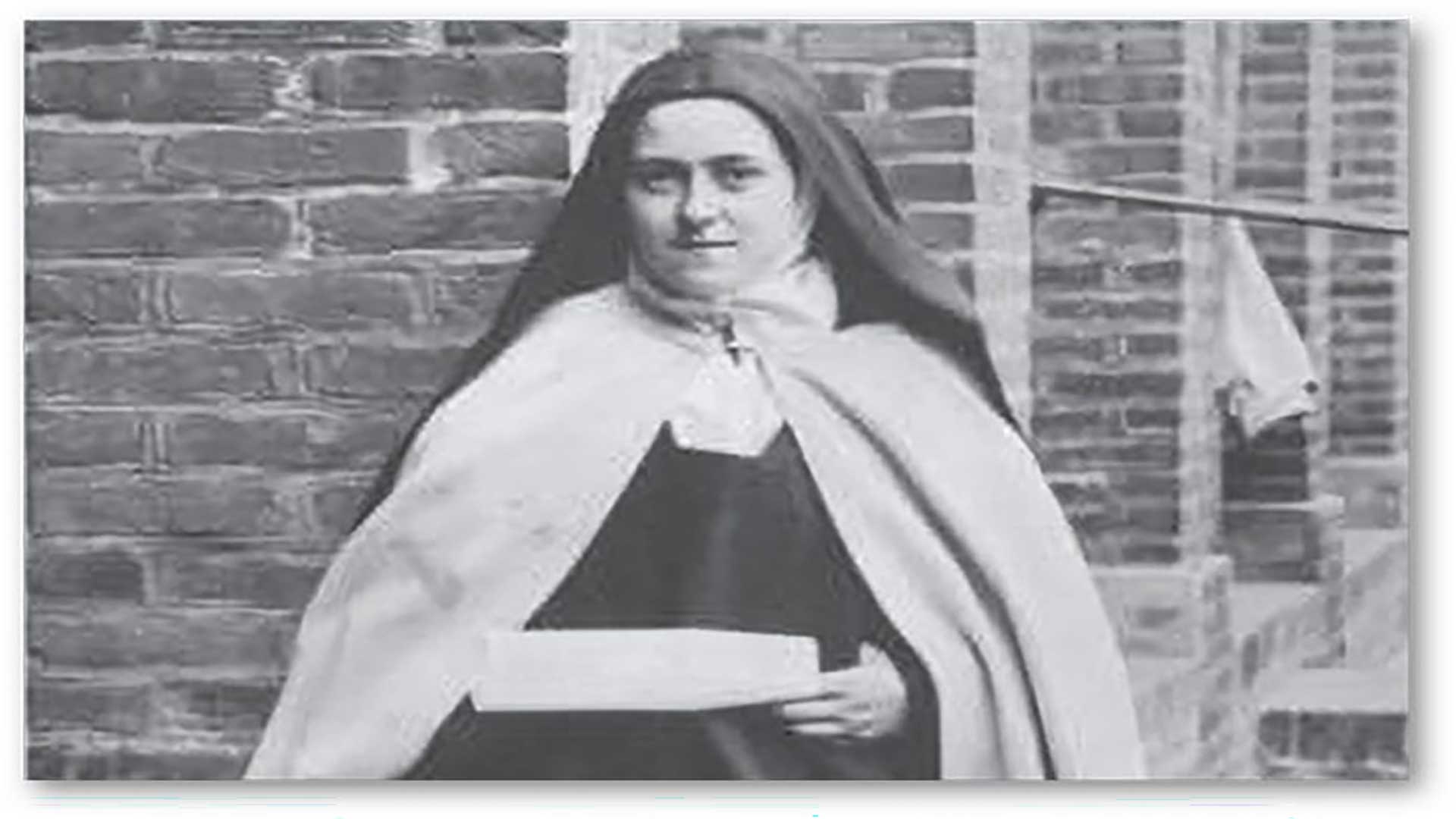
As India is a Mission field, the Mass Readings of this Sunday pertain to the Feast of the Patroness of the Missions: St Teresa of the Child Jesus and the Holy Face, or of the Little Flower, also known as Thérèse of Lisieux.[1]

Three amazing Carmelite Teresas are saints of the Catholic Church, whose feasts take place between August and October: Teresa of Ávila (1515-1582), Thérèse of Lisieux (1873-1897) and Teresa Benedicta of the Cross, née Edith Stein (1891-1942). The first one was the founder of the Order of the Discalced Carmelites; the second and the third were nuns of the same Order.
St Thérèse of Lisieux was born Marie-Françoise Thérèse Martin, in Alençon, France, the youngest of nine children, five of whom survived childhood and became nuns. Thérèse entered the Carmelite convent at Lisieux, where she was outwardly unremarkable, even a little problematic in the worldly sense, and so initially misunderstood. The story of her spiritual development became well known thanks to her autobiography, written by order of the prioresses. It was published in 1898, a year after her death by tuberculosis, under the title Histoire d’une âme (“Story of a Soul”) and became an instant bestseller.
Thérèse died very young and without ever having left the cloister, yet, two years after her canonisation in 1925, Pope Pius XI proclaimed her Patroness of the Universal Missions, alongside St Francis Xavier, a tireless Jesuit missionary in India and Japan. Why? Because “what makes a missionary are not the legs but the heart!”[2] They are missionaries whose hearts burn with love for Christ and zeal to save souls by love. In fact, St Thérèse is well known for teaching the Little Way of Spiritual Childhood, or simply ‘The Little Way’. It is the sacrifice of ourselves to God’s love, as we learn to seize every opportunity in our daily life to be an example of love. In her words, it is “the way of spiritual childhood, the way of trust and absolute surrender”.
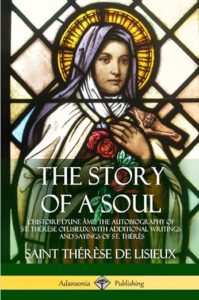 These biographical details help us to understand the choice of today’s Readings. The First Reading (Is 66: 10-14) brings forth an intimate image – that of Jerusalem giving suck like a mother. Jerusalem is not just a physical place but a metaphor for all that Christians look forward to: a paradise to be attained after death. Jerusalem is where the nations of the world will finally come and seek the Lord of Hosts! The Reading is therefore very reassuring for the Missions and missionaries.
The Second Reading (1 Cor 13: 4-13) is also pertinent. In her Story of a Soul, St Thérèse writes: “In spite of my littleness, I have the vocation of the apostle. I would like to travel over the whole earth to preach your name and plant your cross on pagan soil. But O my Beloved, one mission alone would not be sufficient for me, I would want to preach the Gospel on all the five continents simultaneously and even to the most remote isles! I would be a missionary, not for a few years only, but from the beginning of creation until the consummation of the ages… O my Jesus, what is your answer to all my follies?”
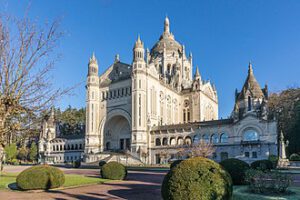
It is said that she got the answer upon meditating on chapters 12 and 13 of St Paul’s First Letter to the Corinthians: she understood that there are different kinds of spiritual gifts, but the same Spirit gives them; that there are different ways of serving, but the same Lord is served. It is like Christ Who is a single body with many parts; and nonetheless it is just one body. Thérèse had what it takes to be an authentic Christian: love, the greatest of the three theological virtues, and the vocation to serve with love from wherever she was.
St. Thérèse loved nature, and often used the imagery of nature to explain how the Divine Presence is everywhere, and how everything is connected in God’s loving care. She saw herself as “the Little Flower of Jesus” (hence, she is a patron of the florists, too), like the simple wild flowers in fields and forests, rather than a brilliant rose or an elegant lily, yet growing and giving glory to God.[3] Apt, therefore, is the Gospel text, in which Jesus says: “Truly, I say to you, unless you turn and become like children, you will never enter the kingdom of Heaven.”
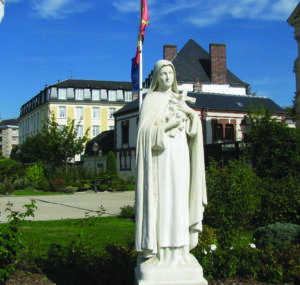
There is no doubt that those who humble themselves will be exalted. In 1997, on her death centenary, she became the youngest person to be designated a Doctor of the Church, and the second Carmelite nun to receive that distinction after St Teresa of Ávila. On this occasion, Pope John Paul II in his Apostolic Letter Divini amoris scientia elucidated what he called Thérèse’s “science of love”:
“The spiritual doctrine of Thérèse of Lisieux has helped extend the kingdom of God. By her example of holiness, of perfect fidelity to Mother Church, of full communion with the See of Peter, as well as by the special graces obtained by her for many missionary brothers and sisters, she has rendered a particular service to the renewed proclamation and experience of Christ’s Gospel and to the extension of the Catholic faith in every nation on earth.”[4]
St Thérèse is thus perfectly justified to be Patroness of the Missions. But how would she look at the Mission field today? This is a very crucial question, better left for another day.
------------
[1] Her feast day in the General Roman Calendar was 3 October, from 1927 until it was moved, in 1969, to 1 October.[2] https://sspx.org/en/news-events/news/why-st-therese-patroness-missions-17832
[3] Cf. https://www.littleflower.org/st-therese/frequently-asked-questions/
[4] No. 10 https://www.vatican.va/content/john-paul-ii/en/apost_letters/1997/documents/hf_jp-ii_apl_19101997_divini-amoris.html
God above all else
Today’s readings offer a profound lesson in the attributes of God and a glimpse into a Kingdom of Heaven that far exceeds human imagination. For our part, we are called to bloom where we are planted, always offering praise and thanks for the infinite variety of blessings and graces we receive.
The First Reading (Is 55:6-9) speaks to a people in exile. After allowing them to experience the consequences of their wandering, God calls them back to conversion. Their exile, though temporary, was a time of trial — an experience not unfamiliar to us in our own valley of tears. Isaiah reminds us that the best remedy for trial is to let ourselves be conquered by God’s boundless love. To do this, we must align our wills with His, resisting the temptation to bend His divine teachings to suit our personal tastes or cultural trends.
All too often, instead of exercising humility and justice, humanity offends God in countless ways. We see a world that either confuses the natural with the supernatural or rejects the divine entirely. We encounter those who speak of justice while abusing their neighbours, or who worship power and money until they become slaves to both. Yet others curry favour with false gods and fail to honour the true God they have known since their baptism.
As the Responsorial Psalm reminds us, the true God is highly to be praised, and His greatness is immeasurable. It is foolish to think we can match His stature, yet He remains intimately close to everyone who calls upon Him in truth. Cultivating this deep faith and trust is the ultimate antidote to the fear, tension, and stress that bedevil our daily lives. The One who knows the number of hairs on our heads will surely take care of us.
This total focus on God is perfectly captured by St. Paul in the Second Reading (Phil 1:20-24, 27). Writing from a prison cell, Paul delivers his famous, pithy conviction: ‘For to me, to live is Christ, and to die is gain.’ If he is spared death, he promises to continue working fruitfully for Christ; if he is executed, he will be united with Him in Heaven. He is at peace either way because Christ is his absolute centre.
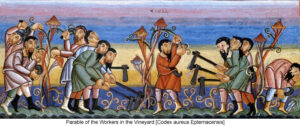
Finally, in the Gospel (Mt 20:1-16), Jesus illustrates exactly why God’s thoughts are not our thoughts, and His ways are not our ways. The Parable of the Labourers in the Vineyard reveals a God who is not grudging, but immensely generous. He does not treat us according to mathematical calculations, but according to our deepest needs. He is magnanimous, empathetic, and fair in a way that transcends human logic.
This Gospel text may shock the world’s paymasters and economists, but it is a lesson about the economy of the Kingdom of Heaven. We cannot demand that God pay us based on what we perceive to be our own merits. He knows our backstories better than we do. Jesus reveals to the grumbling labourers — and to the Pharisees of His time — that divine goodness completely bypasses human criteria of compensation. Historically, this also served as a lesson to the Jewish people that the pagan nations, though called ‘last’, would receive the same full inheritance of grace.
To human eyes, the world may seem as the poet wrote: ‘lovely, dark and deep,’ filled with promises to keep and miles to go before we sleep. But this Sunday reminds us of a greater truth: if through our life we choose God above all else, then when we finally do close our eyes in sleep, we will wake up safely with Him.
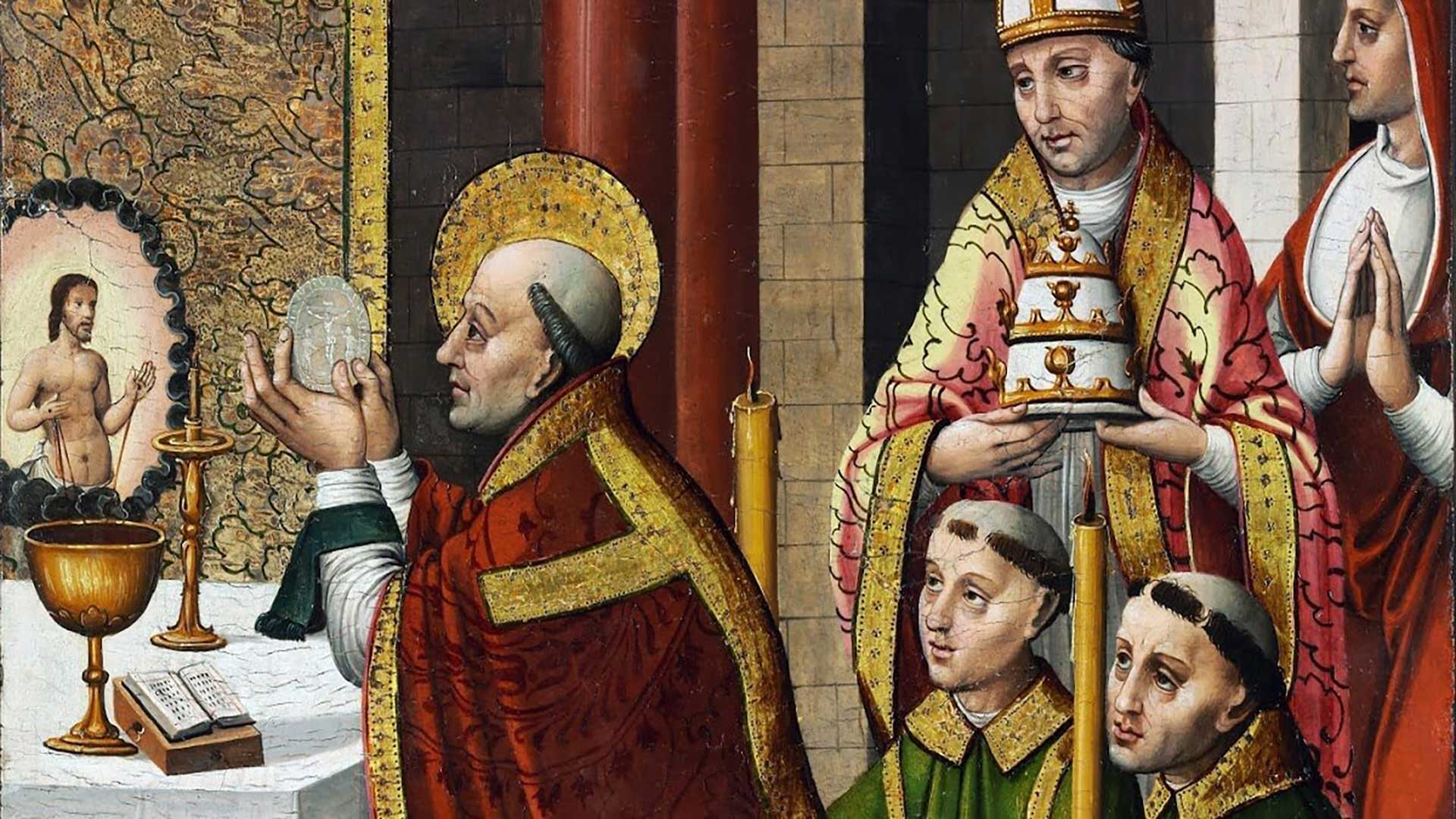
Banner: Mass of Saint Gregory the Great by Master of Portillo (1520-1525). https://rb.gy/qhikf

The Other Side of Love: Why Christian Charity Isn’t Foolish Sentimentality
‘Thou shalt love the Lord thy God with all thy heart, and with all thy soul, and with all thy mind’ (Deuteronomy 6:5) and ‘Thou shalt love thy neighbour as thyself’ (Leviticus 19:18).
While these foundational principles are deeply rooted in the Mosaic law, humanity has struggled to live them out. All too often, we live in ignorance of their unity, or we practice one to the detriment of the other.
Historically, when human hearts grew hardened, lex talionis — an eye for an eye, a tooth for a tooth (Exodus 21:23–27) — became the default setting for justice. Yet, Scripture repeatedly points us toward a higher trajectory. In today's First Reading (Sir 27:30–28:7), Sirach calls anger and wrath ‘abominations’ that mark a sinner, warning that ‘he that takes vengeance will suffer vengeance from the Lord.’ The proposed antidote is clear: ‘Forgive your neighbour the wrong he has done, and then your sins will be pardoned when you pray.’
To break out of this moral predicament, Sirach urges us to 'Remember your last days, set enmity aside; remember death and decay, and cease from sin!' In other words, we must keep the ‘Last Things’[i]— Death, Judgment, Heaven, and Hell — firmly before our eyes. They act as a spiritual lens, sharpening our eternal vision.
From Strict Justice to Infinite Mercy
Sirach's exhortation about forgiveness aligns seamlessly with the Gospel (Mt 18:21-35). Jesus explicitly stresses that seeking the Lord’s pardon is futile if we refuse to reconcile with our brother.
When the Apostle Peter heard Christ pronounce these foundational tenets of Christian law, he wanted the boundaries clearly defined. He asked, ‘Lord, how often shall my brother sin against me, and I forgive him? As many as seven times?’
At the time, teachers of the law taught that pardoning someone three times was the pinnacle of perfection. Jesus completely shattered this limit, extending forgiveness to infinity.
As Abbé C. Fouard writes in Jesus Christ the Son of God, ‘To make it better understood how rigorously His law of loving kindness must bind our actions, He set before the Apostles’ eyes one of those Oriental courts where the lightest fancy of their monarch can, in an instant, raise up or demolish the most splendid fortunes.
So, then, Charity, much more than Justice, should be the foundation of Christian righteousness, or rather one must be blended with the other! “Mercy and faithfulness meet in one; justice and peace are united in one embrace!” even as two sisters.’[ii]
The Danger of Naive Love
However, we must be careful not to water down Jesus’s commandment of love through indiscriminate, naive application. True love does not mean suspending our critical judgment about men and matters.
Our Lord explicitly exhorted us to be ‘wise as serpents and harmless as doves’ because He knew He was sending us out ‘like sheep among wolves’ (Matthew 10:16). Centuries later, Shakespeare vividly echoed this reality in Macbeth: ‘There’s daggers in men’s smiles.’
The modern world remains stubbornly hostile to God’s Word. In his profound work Way of the Cross, Professor Plínio Corrêa de Oliveira sharply observes: ‘Is it not true that today Our Lord Jesus Christ and His Holy Church are disobeyed, abandoned, betrayed? Is it not true that the laws, institutions, morals, and ways of the people are more and more hostile to Jesus Christ?’[iii]
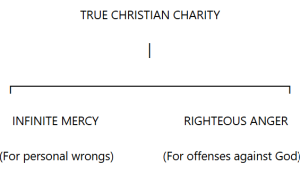
In the face of such structural hostility, foolish sentimentality must make way for something tougher: righteous anger.
The Role of Righteous Anger
Christ Himself displayed righteous anger when He cleared the temple, driving out those who desecrated His Father’s house. As Fr. John Hardon explains in his Modern Catholic Dictionary, ‘such anger is allowable only if it tends to punish those who deserve punishment, according to the measure of their guilt, and with the sincere intention to redress what harm may have been done or to correct the wrongdoer.’[iv]
We cannot let ourselves be carried away by a superficial, pop-culture definition of love. Righteous anger against offenses targeting God is not only acceptable — it is laudable.
When St. Paul wrote that ‘Love bears all things… endures all things’ (1 Corinthians 13:7), he did not mean we should accept sacrilege, blasphemy, or evil slavishly and shamelessly. True charity requires us to distinguish between love of self and love of God — between those who love God and those who actively oppose Him.
While we may turn a blind eye to personal offenses, we must stand firm against offenses aimed at God.
Restoring Love to its Proper Place
We must constantly audit our motives: Are we doing something simply because we like it, or because it is genuinely good, true, right, and beautiful?
‘Love’ is arguably the most abused word in the modern lexicon. It needs to be restored to its proper theological place. Authentic charity ensures there is no tinge of personal hatred or desire for revenge in our hearts. Its ultimate goal is to restore things to their pristine, orderly state — paving the way to forgive and, where possible, forget.
Ultimately, we must entrust ourselves entirely to God, praying as if everything depended on prayer and working as if everything depended on work. As St. Paul proclaims in today's Second Reading (Romans 14:7-8): ‘None of us lives to himself, and none of us dies to himself. If we live, we live to the Lord, and if we die, we die to the Lord.’
Whether we live or die, let our love for God remain absolute, grounded in the profound gratitude that we belong to Him.
[i] See my blogpost “The Last Things – First!” https://www.oscardenoronha.com/2019/11/01/the-last-things-first/
[ii] Abbé C. Fouard, Jesus Christ the Son of God, Goa: Don Bosco, 1960, p. 271-272.
[iii] Plínio Corrêa de Oliveira, The Way of the Cross https://www.tfp.org/the-way-of-the-cross/
Cutting against the grain
We are living in difficult times, a far cry from when elders had the authority to correct youngsters. In the past, children weren’t pulled up by their parents alone; just anyone felt empowered to reprimand any erring person. There probably were abuses in this regard, but then, by and large, life was based on well-established rules, customs, traditions. This ensured a system of checks and balances among individuals or groups of people.
To say that it is easier said than done is to adopt the past of least resistance. We fail to notice how, on the other hand, forces of evil have long been proactive in toppling authority and ushering in a reign of unbridled freedom. It is by a “Revolution” such as this, as the Brazilian Catholic thinker Professor Plínio Corrêa de Oliveira prophetically describes in his book Revolution and Counter-Revolution,[1] that we have come to this pass. Relativistic thinking – the belief that there is no absolute truth, right and wrong, true and false, good and bad – has pulled the rug from under our feet.
Against this background, are we in a position to “warn the wicked to turn from his way” as in the First Reading (Ezek. 33: 7-9) God urges that Prophet of the Spirit of God to do? The wicked would quickly retort: ‘Who are you to admonish me? You may think you are right, but I too am right!’ This is the tenor of the times. Nonetheless, we ought to pay heed to God’s warning that the “wicked man shall die in his iniquity, but his blood I will require at your hand.”
If the wicked do not change their ways, they shall die, whereas we shall have the consolation of having corrected them, and shall be saved. Let us therefore pluck up the courage to do our duty. The open secret is to act with tact and consideration; not out of self-interest, but out of love. It is quite another matter if our love and concern are misconstrued; others will always judge us by their standards, sometimes making grief the price we have to pay for the love we have shared. How many of you can relate to such a situation?
In what way do we express love? St Paul in the Second Reading (Rom 13: 8-10) says: “Owe no one anything, except to love one another… for love is the fulfilling of the law.” But again, what is this love? It is not amorous and sentimental love that is in question here but, rather, the love of God – the first of the Christian virtues which involves following His commandments. Which is where a secular or an atheistic society makes it fundamentally difficult for Christians to have a lucid notion of the divine order of things and follow it. Nowadays, it is more about pleasing ourselves than about pleasing God; and those who stand by Him are considered out of step with the times. A recipe for disorder indeed.
Disorderliness has been part of the human DNA ever since Original Sin; and the situation keeps getting worse every time we offend God. That is why, in a godless world, misunderstanding, anger, resentment, bitterness, hatred, friction and strife are widespread. Note the instances of cold war, not to speak of open criticism, badmouthing and even lawsuits between family members – instead of justice sought through the Church.

As the Gospel (Mt 18: 15-20) recommends, “If your brother sins against you, go and tell him his fault, between you and him alone. If he listens to you, you have gained your brother.” And there is a whole set of steps to be taken to reach the logical conclusion. And what Jesus further tells His disciples is sublime: “Whatever you bind on earth shall be bound in heaven, and whatever you loose on earth shall be loosed in heaven.”
All this calls for effort, dedication and care. Above all, it calls for prayer, for Our Lord has said, “Where two or three are gathered in my name, there am I in the midst of them.” It speaks volumes of the close connect between Heaven and Earth, of us as God’s children who He loves and cares for, and of the free will He has endowed us with. And “if two of you agree on earth about anything they ask, it will be done for them by my Father in Heaven,” is not business management or the product of our efforts, but divine management!
So, how does the life of an honourable person look like in our day and age? According to Professor Oliveira, he or she is often forced to keep “a disheartened silence – a sad condition: ‘Vae Soli’ (‘Woe to him that is alone’).”[2] For its part, society, by either overtly or covertly saying that God is dead, makes the confusion worse confounded. At any rate, while we put our hope and trust in God alone, we ought to persevere on our path of denouncing evil when we encounter it and promoting peace. If the Son of Man Himself was put to death, what more can we say about cutting against the grain?
[1] https://www.pliniocorreadeoliveira.info/UK_RCR.pdf
[2] Ibid., p. 58

God’s Spirit beckons
We are spirit and matter, and what really matters is the spirit. This is something the human race has been grappling with since its inception. Jeremiah and Job alike have addressed the issue, but it is only Jesus who provided the right answers, He who is the Way, the Truth and the Life!
The Book of Jeremiah, from which the First Reading (Jer 20: 7-9) is taken, catalogues the Prophet’s woes. It reads like a spiritual diary or confessions spanning the four decades (626 BC to 587 BC) of his prophetic tenure. He tells his countrymen in no uncertain terms that their Babylonic exile is a punishment, a consequence of their unfaithfulness by way of pagan worship.
But alas, none paid heed; they went on with their life, as though Jeremiah were a madman, a mere voice of dissent crying in the wilderness. This only goes to show that a man of God is not without his share of problems; he is at the receiving end of fellow humans and, at times, quite ironically, he feels forsaken even by God. Jeremiah was a man who cried his heart out, and is nicknamed ‘the Weeping Prophet’. For indeed, the greater his obedience to the task entrusted to him by God, the more he suffered.
You and I have also felt the same and in vain have we tried to make sense of it all, haven’t we? Oddly, Peter who had a little earlier recognised Jesus as the Messiah and Son of the Living God, is suddenly repulsed by the idea of His Master’s suffering and death – the first prediction of His Passion – much as you and I are baffled by those twin problems in our day and age. However, trust Jesus Christ to give us the right perspective. In today’s Gospel text (Mt 16: 21-27), He says: “If any man would come after me, let him deny himself and take up his cross and follow me. For whoever would save his life will lose it, and whoever loses his life for my sake will find it.” (24-25)
If back in Jesus’ time, his disciples stood bewildered, do you think that exhortation would go well with the materialistic world we live in today? Following Jesus is therefore no easy task – but, then, who on earth can give us a better way? It simply means we should be walking the proverbial narrow path – which is the only sure one after all! And to highlight his admonition, Jesus dismissed Peter as being a ‘tempter’, like Satan, a stumbling block on His path to the redeeming Cross. All that Peter should have done was faithfully followed the Master's directives; and we too should, for the stakes are high, as famously expressed by Jesus: “For what does it profit a man if he gains the whole world and forfeits his soul?”
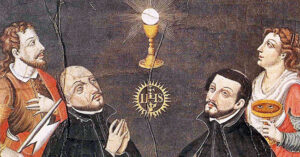
So, it’s clearly a choice between this life and the next, between temporary successes and eternal loss. Centuries later, the Divine Master’s life-giving rhetoric is said to have clinched Ignatius of Loyola’s conquest of Francis Xavier’s soul. While at the renowned Sorbonne in Paris, the Basque youth was deeply in love with life and knowledge; he aspired to rise and shine in a boundless world of scientific advances and geographical discoveries. New avenues of learning in the fields of philosophy, poetry, art, political science, and so on, fostered a humanist spirit at the same time as it changed man’s relationship with God.
We who have recently witnessed Chandrayaan and other success stories, are we going to be so completely taken up by earthly promises that we let them eclipse our resurrection story? Let us not give into a romantic idea of life and forget that suffering is for real, for whoever dodges it will regret their folly. As a faithful people of God, let us heed St Paul’s powerful appeal in the Second Reading (Rom 12: 1-2): “to present your bodies as a living sacrifice, holy and acceptable to God, which is your spiritual worship.”
Whereas in Jeremiah’s time, the Jews were plagued by the Babylonians, in Jesus’ time it was the Romans that besieged them. On both occasions it was in retribution for pagan worship. And what of our time? Alas, we have embraced the ways of the world; we are ready to bow or bend over backwards to please earthly masters and idols. We have forgotten and offended God no end. Hence, the urgency of the Pauline call: “Do not be conformed to this world but be transformed by the renewal of your mind, that you may prove what is the will of God, what is good and acceptable and perfect.” That is the Life in the Spirit beckoning us!
Banner: https://rb.gy/v5868
Governed by God
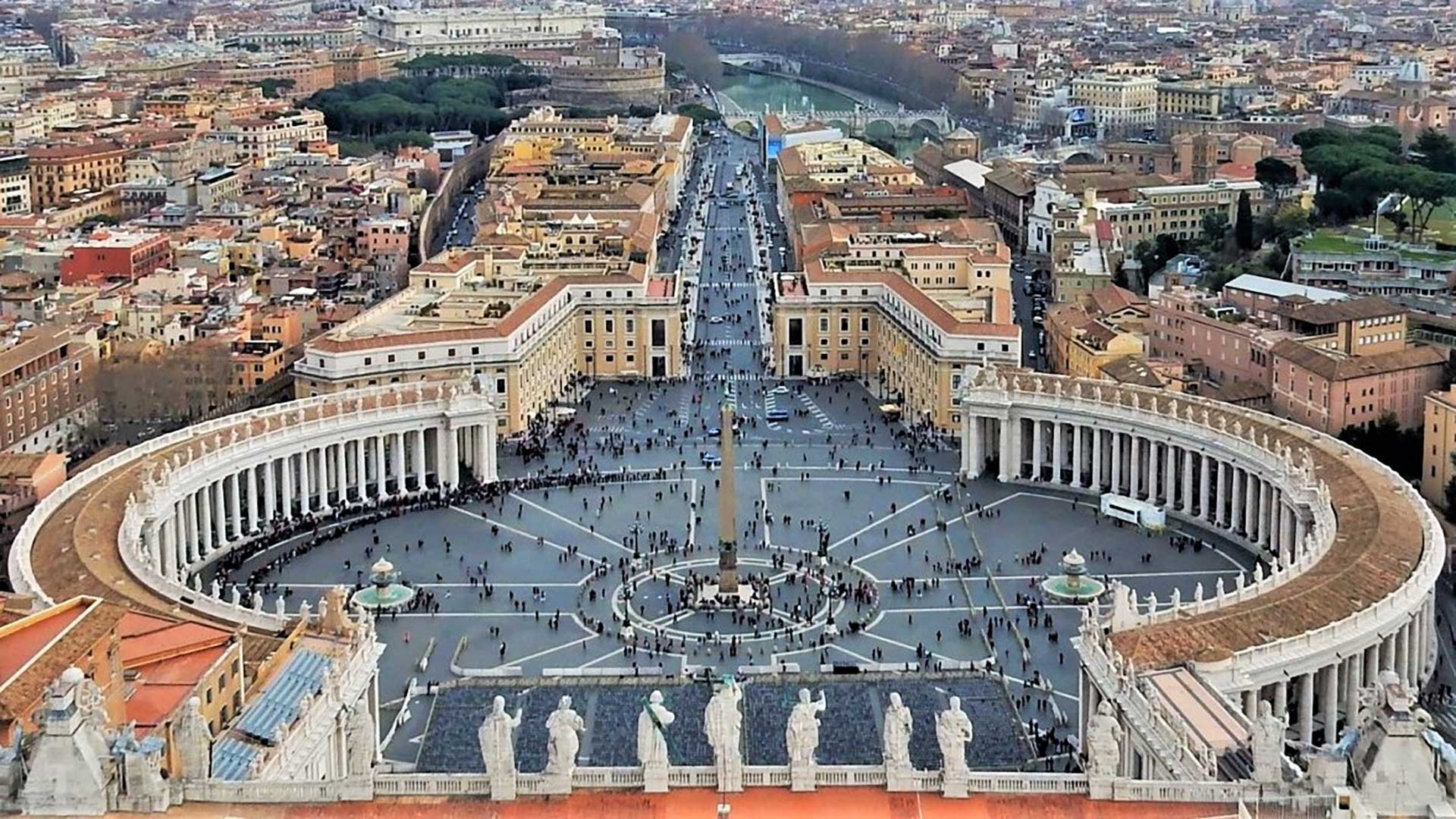
Countries today pride themselves on having governments ‘of the people’, but alas, they can’t hold a candle to what were once upon a time governments ‘by God’! Who can deny that governments inspired by the True God and upheld in Faith can better realise God’s kingdom on earth?
In the First Reading (Is 22: 19-23), look at how Shebna, the royal steward or prime minister in the reign of king Hezekiah of Judah, was ejected from office because of his pride. He was replaced by Eliakim, the son of Hilkiah, an influential Hebrew priest. What better example can there be of political recall?
No doubt, many modern constitutions provide for recall, but very often the process is flawed. On the other hand, Isaiah tells us about how God intervened to provide quality governance for His people. It is a pity that we have lost our connection not only with our political leaders but with God Himself, who is undeniably the author of all that we have and enjoy.
In the Gospel (Mt 16: 13-20), we see how and why Peter was chosen to lead the flock. His name was Simon but Jesus called him Kepha (from the Aramaic, ‘rock or stone’) which in the Greek and Latin tradition translates as Petros/Petrus. He was the first disciple to express faith in Jesus as the Messiah and Son of God: “You are the Christ, the Son of the living God.” This was revealed to him by the Father in Heaven. Hence, although Peter was humanly imperfect and would thrice deny his Master, Jesus drew him into His inner circle.
That is to say, Jesus knew Peter, and vice-versa, and on that Rock He built His Church. That change of name indicates a mission was given to him, as happened to Abraham and Jacob. Come Pentecost, Peter overcame his faint-heartedness and began to preach boldly. He founded and led the churches of Antioch and Rome. And what a leader and first Pope he was – true to his faith and to his people; he did not gaslight the fledgling community but encouraged them, suffered and died for them, crucified upside down, in Rome, under Emperor Nero.
The uniqueness of our Holy Mother Church is that she is made up of sinners who have nonetheless been called to be followers of Christ! Or else, who would qualify? Such magnanimity is humanly incomprehensible; hence, St Paul, in the Second Reading (Rom 11: 33-36) observes: “Oh, the depths of the richness of the wisdom and knowledge of God! How unsearchable are his judgments, and how inscrutable His ways!”
More importantly, the greatest proof of the Church’s divine nature is the many storms she has withstood down the centuries. The same applies to the supremacy of the Petrine office as intended by Jesus. No human institution of that magnitude – if there is any other – would ever survive; but we have the assurance that “the gates of the netherworld shall not prevail against it.” It is a very illuminating and comforting promise; it is also a matter of pride, but can we bask in Her glory and be complacent?
Not at all. No doubt, the Church will not die if we persist in our near-Faustian folly; we will. So, it is up to us to do whatever possible to help our community of faith. With the gathering clouds of suspicion and doubt within the Church (especially with Synodality, which is set to change the order of things), we have to pray for the successors of Peter to be faithful to Scripture and Tradition. And you and I, rather than focus on acquiring wealth, power, influence and success, we ought to see the futility of such aspirations.
Most importantly, Jesus’ forthright question “Who do you say I am?” is a call to get to know Him more closely. Only then we will work wholeheartedly for God’s Kingdom to be realised on earth, acknowledging joyfully: “For from Him, and through Him, and in Him are all things. To Him is glory, for all eternity. Amen.” This will open our minds and hearts to God, will let ourselves be governed by Him and be living signs of the presence of Jesus in the world.