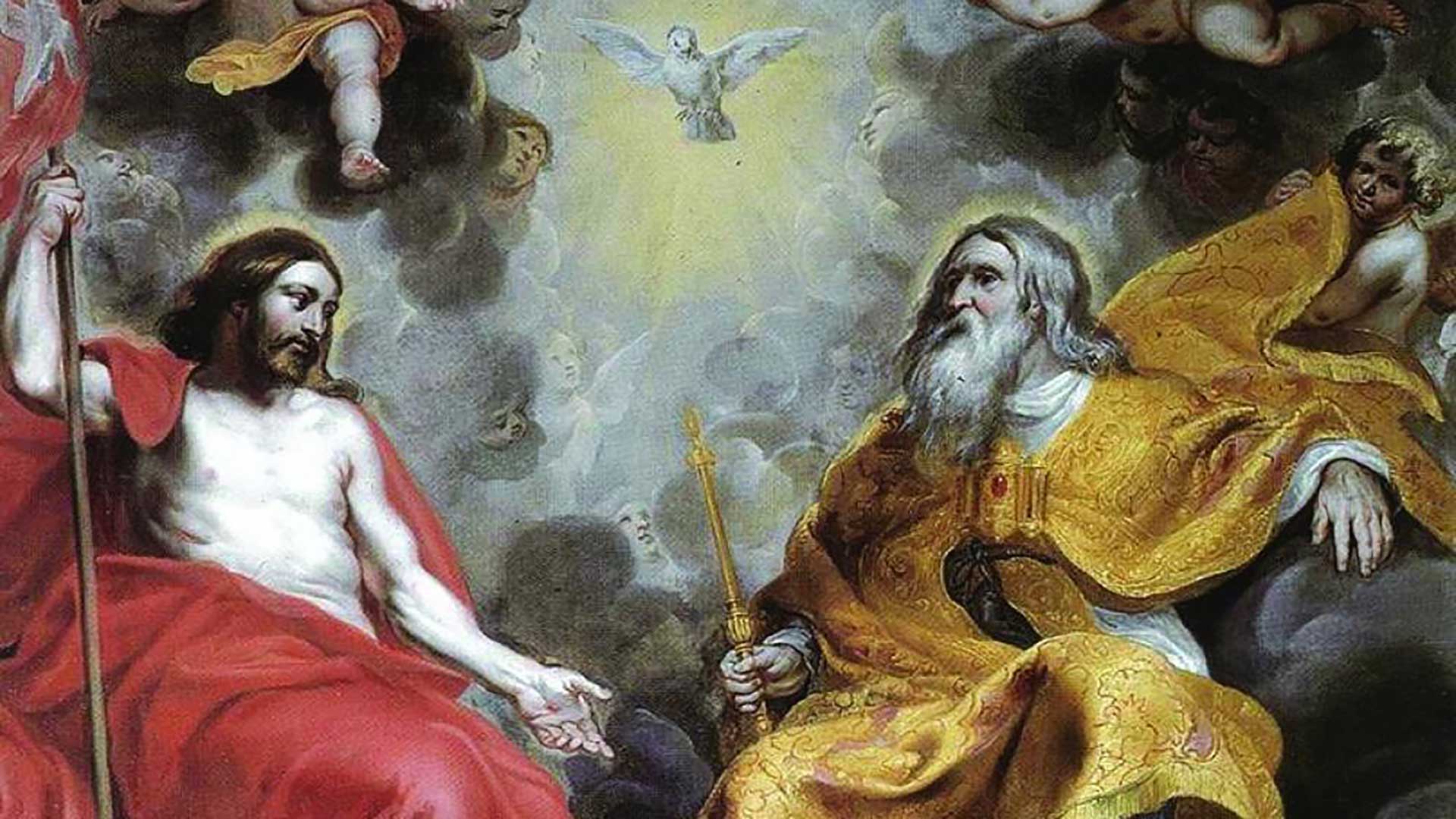
The Holy Trinity, a deep Mystery!
Close on the heels of Sunday of the Holy Spirit comes Sunday of the Holy Trinity, this latter being the central mystery of our faith and life (CCC 234). We believe in one God, who is not alone, solitary, but a Trinity, a Triune God, a divine family of life and love. Just as the Father sent His Only Son, Jesus Christ, the Second Person of the Holy Trinity, to be born in the world, and Jesus Christ, after ascending to the Father, ensured that the Third Person, the Holy Spirit, would descend upon the world, it is only fitting that we honour them all together today, on the Solemnity of the Holy Trinity.
The First Reading (Exod 34: 4-6, 8-9) takes us back to the beginning to witness Moses’ encounter with God the Father. God rightly introduces Himself as 'merciful and gracious, slow to anger, and abounding in steadfast love and faithfulness.'
God's delightful self-description comforts Moses so that he promptly invokes his 'stiff-necked people' (a true description of the miserable human race) who, by relapsing into idol worship, had provoked Moses into breaking the tablets inscribed with the Decalogue. Moses calls on God to pardon their iniquity and their sin, and take them for His inheritance, or say, forgive their shortcomings, restore them to health, and let them be beneficiaries of His love.
In the Gospel (Jn 3: 16-18), Jesus Himself speaks of the Second Person, as follows: 'God so loved the world that He gave His Only Son, that whoever believes in Him should not perish but have eternal life.'
This passage serves as a testament to God’s love and a promise of eternal life for those who believe in Him. In the words of bishop St Cyprian of Carthage (3rd century AD), salus extra ecclesiam non est, or extra Ecclesiam nulla salus, which means that outside the Church there is no salvation.
So, what about 'he who does not believe,' as Jesus put it? God’s love expressed through Jesus – who died to save us – is so great that we lose our salvation if we do not stand by Him and embrace His faith. This is what the Catholic Church has traditionally taught. The current Catechism of the Catholic Church (CCC), quoting Vatican II document Lumen Gentium, states:
'Those who, through no fault of their own, do not know the Gospel of Christ or his Church but who nevertheless seek God with a sincere heart, and, moved by grace, try in their actions to do his will as they know it through the dictates of their conscience – those too may achieve eternal salvation.' (CCC 847)
That is food for thought and discussion beyond the reading of the day!
The Second Reading (2 Cor. 13: 11-13) speaks of the Holy Spirit. St Paul teaches us to greet one another saying, 'The grace of the Lord Jesus Christ and the love of God and the fellowship of the Holy Spirit be with you all.' That’s how the Apostle to the Gentiles ends his letter to the Corinthians; and that’s how we begin the liturgy of the Holy Sacrifice of the Mass. So routinely do we pronounce these words that we fail to appreciate their deep meaning.
The fact is that none can claim to have fully understood the Holy Trinity. But then, 'God has left traces of his Trinitarian being in his work of creation and in his Revelation throughout the Old Testament. But his inmost Being, as the Holy Trinity, is a mystery that is inaccessible to reason alone or even to Israel's faith before the Incarnation of God's Son and the sending of the Holy Spirit.' (CCC 237) The Father is revealed by the Son; the two are revealed by the Spirit (CCC 238-248). The whole divine economy is the common work of the three divine persons. (CCC 258) The ultimate end of the whole divine economy is the entry of God's creatures into the perfect unity of the Blessed Trinity. (CCC 260)
So, how do we proceed from here? Even before trying to delve into the Mystery, we must acknowledge how privileged we are as Christians to have been let into what is indeed the Mystery of the intimate life of God. It is profound, overwhelming, and incomparable! If we have not fully understood it – and we never will – there is nothing to fear. St Augustine tried to reason out, but to no avail; there is that famous story of how a little child set his questions at rest…. Children often say the most insightful things.
On the other hand, what the mind cannot comprehend, our hearts can – faith can. That is how a mother understands her baby who only babbles – with love. And that is how, even with reference to everyday things, we may understand the workings of the Trinity, for God has indeed left traces of his Trinitarian nature in his work of creation. A frequently cited example is the flame of fire, which possesses three characteristics (heat, light, and form) and remains one entity, and cannot exist as a flame of fire if any of these attributes are absent.
Today provides us with an opportunity to meditate on this fundamental mystery of our faith and love and to initiate a personal relationship with each of the three Persons of the Holy Trinity!

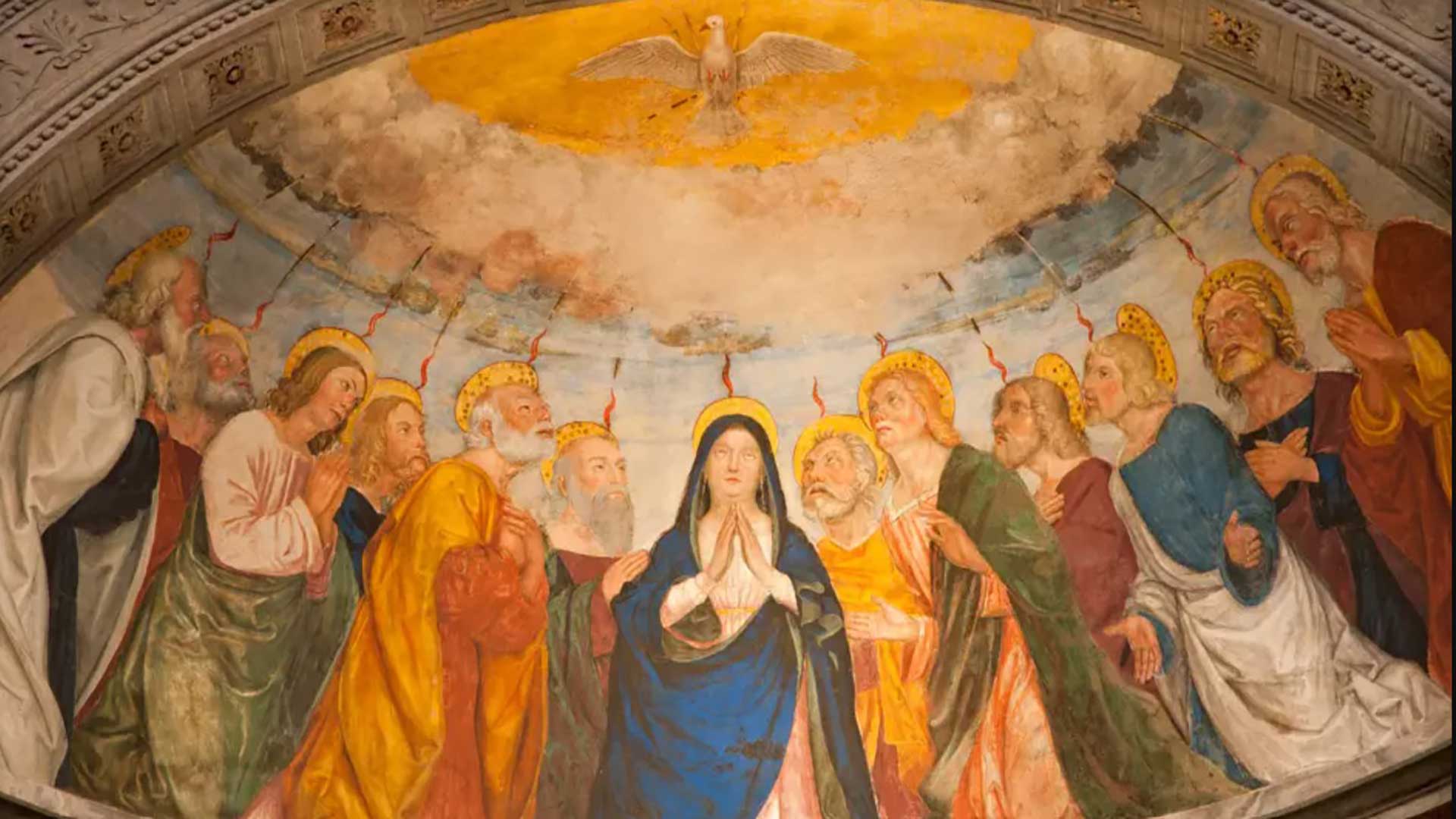
Pentecost and Proclamation
Today, the eighth Sunday of Easter, we celebrate Pentecost, or the fiftieth day after Easter. It marks the descent of the Holy Spirit upon the disciples.
The intimate connection between the two feasts will be lost on us if we do not look at its pre-Christian background.
In old Jewish tradition, the feast of Shavuot is the fiftieth day after the Pesach (Passover). This was held to commemorate the liberation of Jews from slavery in Egypt. On this occasion, many Jews from countries around the Mediterranean came on pilgrimage and stayed until the Shavuot. This was at first an agricultural feast (a thanksgiving for the first fruits of the wheat harvest) but later came to be related to the receiving of the Law by Moses on Mount Sinai.
On the other hand, a new tradition began when the Resurrection coincided with the day of Passover. In fact, the Resurrection replaced the Passover, precisely because by His death and resurrection, Jesus offered the world freedom from death and sin. Similarly, fifty days later, or say, coinciding with Shavuot, Jesus sent down the Holy Spirit upon His disciples. Thus was Shavuot christianised and called Pentecost, Greek for ‘fiftieth day’.
So much for the relation between the old and the new.
In the First Reading (Acts 2: 1-11), St. Luke describes the marvel of Pentecost. The disciples and others were gathered to celebrate Shavuot when there was the rush of a mighty wind, and tongues of fire came to rest on each of them. While the wind represents the breath of God blown into the disciples, the fire represents the courage and enthusiasm that filled the disciples.
In concrete terms, Pentecost is the foundation day of the Church. On this day, Jesus sent down the Holy Spirit to guide and inspire the disciples on their mission to preach the Gospel, just as He had promised them before he ascended to the Father. 'As the Father has sent me, even so I send you,' says today's Gospel (Jn 20: 19-23), a longer form of which was read on the Second Sunday of Easter.
To effectively conduct missionary work, each member of the community received (and still receives) one or more gifts and charisms. There are seven gifts of the Holy Spirit: wisdom, understanding, counsel, fortitude, knowledge, piety, and fear of the Lord. Whereas gifts are 'permanent dispositions which make man docile in following the promptings of the Holy Spirit' (CCC 1830), given primarily for the purpose of personal sanctification, charisms (e.g., healing) are special gifts given for the common good, or the good of the Church (cf. CCC 798 ff).
Significantly, on the Birthday of the Church, there were people separated by languages, cultures, races and nations, all of them symbolised by the expatriate Jews present over there: they now formed the new People of God.
So, how important, really, is the Holy Spirit? St. Paul in the Second Reading (1 Cor. 12: 3-7, 12-13) says that 'no one can say "Jesus is Lord" except through the Holy Spirit.' It is the same Spirit that fills us with charisms and lets us serve, each according to our gift. While the charisms and services are varied, they are the same Lord. 'To each is given the manifestation of the Spirit for the common good.' This implies that our life must be dedicated to the truth that is God and to the service of the community.
This community is fundamentally the Church. Jesus is the tree or the body, and, correspondingly, we are the branches or the members. The Holy Spirit keeps us united and drinking of the same belief in the True God.
Can there be any doubt, then, that the Church is a divine rather than a human institution? The Holy Spirit gives her life. The same baptism of fire that the apostles received we too do receive through the Sacrament of Confirmation. The gift of tongue symbolises the fact that the Church goes out to the peoples of the world and adapts to their culture, of course, while doing what it has been called to do: that is, most clearly proclaiming Our Lord Jesus Christ and Him alone. That is how intimately the proclamation of the Gospel is related to Pentecost.
A hymn for Pentecost: https://youtu.be/5GrQJGQWfd8
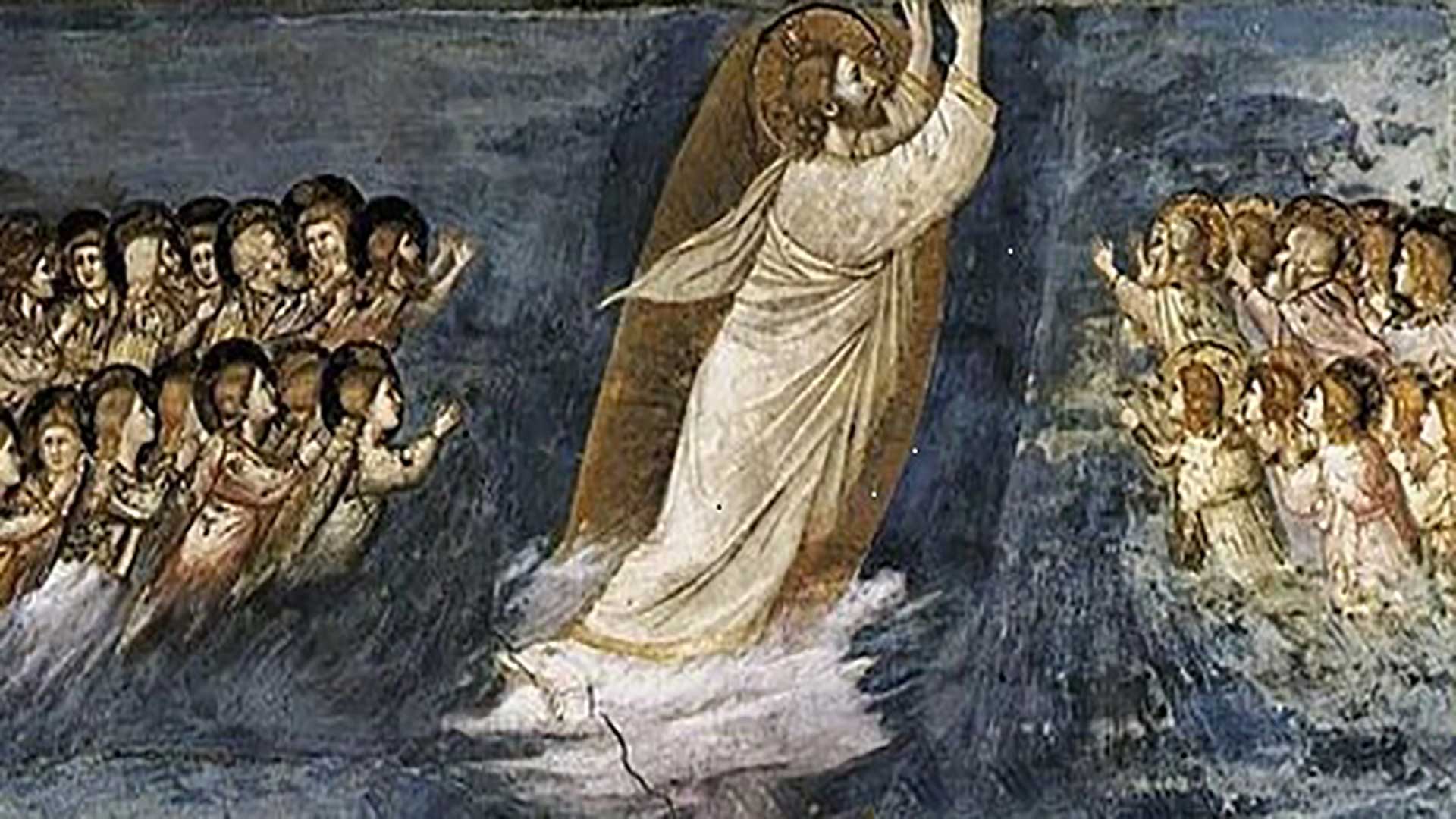
Ascension: Heaven and Earth drawn near
Even just the last two mysteries of the life of Jesus–the Resurrection and the Ascension–are sufficient to convince us that Jesus is God. The Resurrection shows that Jesus not only rose from the dead but also never died again. In his new, glorified body, Jesus revealed Himself at many locations over a significant forty-day period. Now, before the apostles’ very eyes, He ascended to His Father, and has been there ever since.
There is Scriptural testimony about the Ascension, because the eleven apostles (besides Mary and other disciples) were privy to the marvel. St Matthew (28: 16-20) and the Acts of the Apostles (1: 1-11) – both of which form the Gospel and the First Reading of today; St Mark (16: 15-20) and St Luke (24: 46-53) (earmarked for Years B and C of the liturgical year) talk about the Ascension.
Curiously, the Old Testament also refers to the Ascension in Psalm 68: 18, a reference that St Paul has used to great effect in the Second Reading (Eph 1: 17-23).
Several non-Christian historical sources also attest to Jesus' historicity and to the Resurrection: Stoic philosopher Mara (c. 73 AD) in a letter to his son Sarapion, and the Greek-writing Jewish priest Flavius Josephus in his book Jewish Antiquities (c. 93 AD). The historical sources included writers hostile to Christianity: the influential Roman historian and senator Tacitus in his Annals (c. 116 AD); another Roman historian, Suetonius, in his Lives of the Twelve Caesars (c. 121 AD); and the Talmud (c. 400 AD), a collection of ancient Jewish laws.
Here is how The Catholic Encyclopaedia describes the glorious Ascension:
“Although the place of the Ascension is not distinctly stated, it would appear from the Acts that it was Mount Olivet, since after the Ascension the disciples are described as returning to Jerusalem from the mount that is called Olivet, which is near Jerusalem, within a Sabbath day’s journey. Tradition has consecrated this site as the Mount of Ascension and Christian piety has memorialized the event by erecting over the site a basilica. St Helena built the first memorial, which was destroyed by the Persians in 614, rebuilt in the eighth century, to be destroyed again, but rebuilt a second time by the crusaders. This the Moslems also destroyed, leaving only the octagonal structure which encloses the stone said to bear the imprint of the feet of Christ, that is now used as an oratory.
 “Not only is the fact of the Ascension related in the passages of Scripture cited above, but it is also elsewhere predicted and spoken of as an established fact. Thus, in John 6: 63 Christ asks the Jews: ‘If then you shall see the Son of Man ascend up where He was before?’ and in 20: 17, He says to Mary Magdalen: ‘Do not touch Me, for I am not yet ascended to My Father, but go to My brethren, and say to them: I ascend to My Father and to your Father, to My God and to your God.’ Again, in Ephesians 4: 8-10, and in Timothy 3: 16, the Ascension of Christ is spoken of as an accepted fact.
“The language used by the Evangelists to describe the Ascension must be interpreted according to usage. To say that He was taken up or that He ascended, does not necessarily imply that they locate heaven directly above the earth; no more than the words ‘sitteth on the right hand of God’ mean that this is His actual posture. In disappearing from their view ‘He was raised up and a cloud received Him out of their sight’ (Acts 1: 9), and entering into glory He dwells with the Father in the honour and power denoted by the Scripture phrase.”[1]
To positivists and rationalists who may mock the doctrine of the Ascension, the all-important twentieth-century author of Miracles[2], C. S. Lewis, states interestingly that after the Resurrection, it may have been that Jesus, “a being still in some mode, though not our mode, corporeal, withdrew at His own will from the Nature presented by our three dimensions and five senses, not necessarily into the non-sensuous and undimensioned but possibly into, or through, a world or worlds or super-sense and super-space. And He might choose to do it gradually. Who on earth knows what the spectators might see? If they say they saw a momentary movement along the vertical plane – then an indistinct mass – then nothing, who is to pronounce this improbable?”
In the universality of its observance, the Ascension ranks alongside Christmas, Easter, and the upcoming Pentecost. The Ascension completes a glorious cycle that began with the Incarnation; so, it makes perfect sense that Jesus, who deigned to come into the world, should, at the end of his mission of reconciling man to God, return to the bosom of the Father. His momentous last words on the occasion bear this out. For our part, we must bear Him witness throughout our pilgrim journey on earth, also gratefully acknowledging that, through His Ascension, Heaven and Earth have drawn near.
[1] Wynne, J. (1907). Ascension. In The Catholic Encyclopedia. New York: Robert Appleton Company. Retrieved May 20, 2023 from New Advent: http://www.newadvent.org/cathen/01767a.htm
[2] First published in 1947. Current edition, Fount: 2002.
Banner: https://rb.gy/bahmj
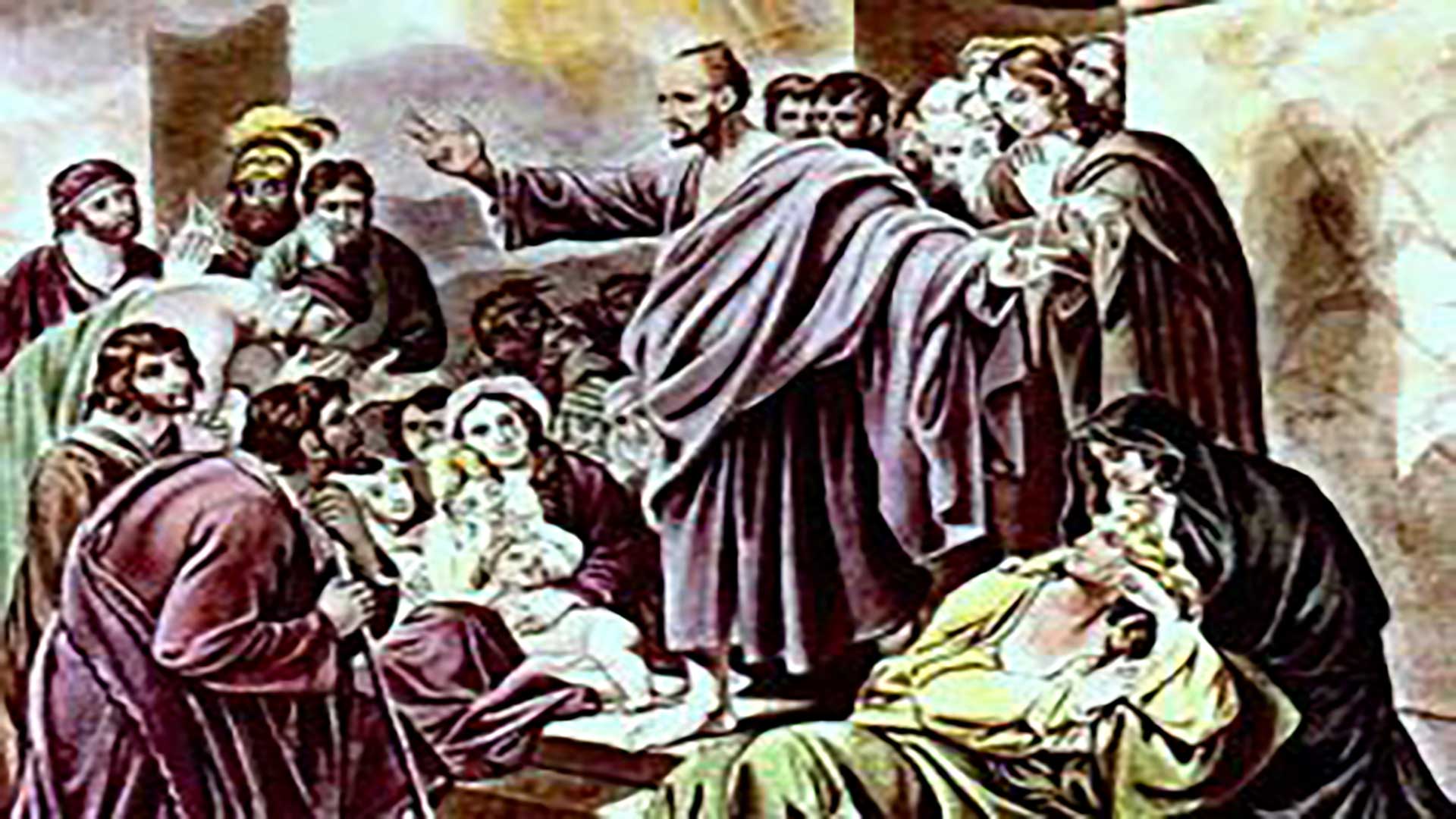
Pondering God’s commandments, with love
As we inch towards the Ascension and Pentecost, we see heartening changes in the incipient Christian community.
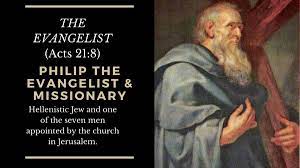
In the First Reading (Acts 8: 5-8, 14-17), we meet Philip, one of the seven deacons. He is in Samaria, where his preaching has fallen on good soil. The people are in awe of his words and miracles, and relieved to be delivered of evil spirits. On hearing that encouraging update in Jerusalem, apostles Peter and John are dispatched double quick to lay their hands over the Samaritans and pray that they too will receive the Holy Spirit.
Ever since King Ahab erected a temple to Baal in Samaria, its people were considered idolatrous. But they awaited a Messiah and were suddenly privileged to be at the forefront of evangelisation. Why?
Philip had ventured there because Jesus Himself had preached in the area (cf. the story of the Samaritan woman at the well) and wished that the Gospel be taken there after His Ascension. Thus, Jesus implied that the Good News of Salvation was meant to reach all. It is doubly significant that Philip, not an apostle but a deacon, whose main job was to relieve the apostles of menial chores, became the first foreign missionary in Christian history.[1]
Reaching out to Samaria has had profound, long-lasting implications; it fundamentally changed the course of early Christianity. The church in Samaria was to Jerusalem what a local church today (say, the archdiocese of Goa and Daman) is to the universal church. The arrangement sheds light on the hierarchical structure that has governed the Church for the last two millennia; it speaks volumes about the issuance and teaching of doctrine centrally, from the headquarters in Rome, so that all of Christendom is of one mind; and finally, it points to the communion of saints, or say, the fellowship of those united with Christ across space and time.[2]
For Christ to be present with His people across space and time is no mean feat; but to God, nothing is impossible. It is a fulfilment of what Our Lord had promised in his farewell discourse, just before His Passion and Death. He had said that after His Ascension, the Holy Spirit would be with the Christians until the end of times; the Spirit of truth would pick up from where He had left off, to illuminate and strengthen all the faithful. There is no denying that, since we keep the commandments, we grow in wisdom and stature, and live in spiritual unity and love of God. God is always in our midst.
But, really speaking, who has the strength to keep the Lord’s commandments? Only those who love Him will do so, says Jesus, quite plainly, in the Gospel (Jn 14: 15-21). Yes, it demands total commitment – difficult, but not unreasonable or impossible.
‘Total commitment’? This may be frowned upon when God asks for it. But then, don’t the spouses, children, bosses, friends, clubs, expect 'total commitment'? Don’t we respect rules and keep promises; when we don’t, we quit – or are obliged to quit!
Why, then, should a relationship with the divine be any different? In fact, our commitment should have been infinitely stronger. If it isn’t, that's because we have been accustomed to taking God for granted for far too long. ‘God will understand’ is a lame explanation and a convenient ruse to flout rules and break promises.
For example, the First Commandment: "You shall worship the Lord your God, and Him only shall you serve." It summons us to believe in God, to hope in Him, and to love Him above all else. "You shall love the Lord your God with all your heart, and with all your soul and with all your strength" (Deut. 6:5). Adoring Him, praying to Him, offering Him the worship that belongs to Him, and fulfilling the promises and vows made to Him are part of the virtue of religion.
On the other hand, superstition is a withdrawal from the worship we ought to give to the true God. Superstition is manifested in idolatry, as well as in various forms of divination and magic. Likewise, atheism is a sin against the first commandment, since it rejects or denies the existence of God.[3]
Yet, what is the in-thing? To keep God out of one’s day-to-day dealings, if deemed socially or politically expedient to do so. This is the antithesis of the First Commandment that we are expected to profess and practise. If this is so with the First commandment, what the score will be on the remaining nine is anybody’s guess!
Therefore, St. Peter, in the Second Reading (1 Pet 3: 15-18), counsels us to revere Christ as Lord, defend those who are on God’s side, and do the right thing, in the right way, so that none can point an accusing finger at us. “For it is better to suffer doing right, if that should be God’s will, than for doing wrong,” he adds.
We must draw courage from of Our Lord’s undeserved death for our sins. We too run the risk of being hated or even put to death for siding with God, but we may rest assured that we will be made alive in the spirit by the same God who has conquered sin and death: Jesus Christ our Lord.
A tall order? If we listen to God’s commandments—with our minds and hearts—pondering what they mean to us here and now, we will invariably be assisted by the Holy Spirit. Jesus has cautioned that the dark world of unbelief is incapable of understanding and accepting the Spirit of truth – which will be accessible only to those who love and revere Him!
[1] Philip famously converted an Ethiopian eunuch, thus inducting a black into the church at a very early stage. Then he proceeded to evangelise other areas up to Caesarea; Greece, Syria and Phrygia.
[2] Those living are said to constitute “the church militant,” while the dead who are in Heaven, “the church triumphant", and those in Purgatory, “the church suffering.” Yet the three groups are in communion of the Spirit.
[3] Cf. Catechism of the Catholic Church, https://www.vatican.va/archive/ENG0015/__P7G.HTM

With eyes of faith
It must have been exciting to be part of the early church. Yet, look how there was disagreement and discrimination at its very inception (First Reading, Acts 6: 1-7). The Hellenists, Greek-speaking Jews who had returned from the Diaspora, felt discriminated against by the Hebrews, who were local, Aramaic-speaking Jews. Fortunately, to prevent mundane concerns from sapping their energy (in this case, Hellenic widows receiving second-class treatment in food distribution), the Apostles appointed seven helpers or deacons to take care of those worries. Of course, these seven were men of faith and filled with the Holy Spirit. While they helped safeguard social cohesion, the Apostles immersed themselves in the work of evangelisation.
Such wise principles have governed the church ever since. To illustrate it with something very familiar to us, the early church in Goa set up Fábricas to look after the temporal affairs of the parish, while the Confrarias or brotherhoods focussed on spiritual matters. It is not that Fábrica members were worldly and the confrades holy; faith and morality were essential to membership in either association. But, all in all, the arrangement brought balance to the individual and the community…. Have we strayed from those guiding principles, and consequently, are those bodies now a far cry from what they were meant to be?
Not those bodies alone – but our own bodies and souls are in need of d-e-l-i-v-e-r-a-n-c-e – deliverance – that is, prayer to bring healing and wholeness to us who are struggling with bondage to sin and demonic influences. Haven’t many of us Christians – and, sadly, some of our leaders too – rejected the living stone that in God’s sight is “chosen and precious”? That living stone is Jesus Christ, the Son of God. In the world today, and in Goa in particular, it is high time we realised our folly and decidedly turned back. Before long, the very people that we had once blindly trusted will pull out from under our feet. Alas, it will be a mighty fall, which only a mighty exercise in faith can prevent – deliver us from![1]
In the Second Reading (1 Pet 2: 4-9), St Peter calls us to be living stones and build ourselves into a spiritual temple. Well, one can lead the sheep to the water, but can one make it drink? We have built magnificent houses of God, but how many care to drink deep of the knowledge of God? The first Apostle reiterates that we are “a chosen race, a royal priesthood, a holy nation”, and our bounden duty, to “declare the wonderful deeds of Him who called you out of darkness into His marvellous light”!
Once again, for us in Goa, it is important to open our eyes to the gift of faith that our ancestors have handed down to us; and it is equally a matter of gratefully passing on that faith – in a pristine condition – to the communities around us. Only then can we think of ourselves as ‘living stones’ of the local and the universal Church.
A proper reflection on the first Pope’s enduring call will not only make our (Sun)day, it will have a considerable bearing on our community life for generations to come. In the wake of that tragic update about Goan Catholics straying into forbidden territory,[2] the Gospel today couldn’t be more pertinent. In answer to Thomas, the courageous Apostle who travelled to India, Jesus, in his farewell discourse at the Last Supper, said: “I am the Way, the Truth and the Life”!
How many times do our shepherds have to drum this message into us – seventy times seven? We the flock should not presume that it will always be possible for our shepherds to go in search of their sheep and bring them back to the fold, restore and heal them! Very often, we will have to remember these lessons ourselves or learn them from our somudai or community, which have to rise to the occasion in prayer and a spirit of service.
The Gospel (Jn 14: 1-12) is so unambiguous that we almost hear Jesus say to us, “Have I been with you so long, and yet you do not know me?” How come we still do not know the Master’s voice? Do we not believe that He is God, that He is in the Father and the Father in Him? Ever since He became Man, He is within our reach.
Haven’t we in Goa had Jesus for the past half a millennium and more? What is the use of declaring from the rooftops, “bhavarth amcho nhoi aicho kalcho, punn Sam Fransisk Xavieracho” (Our faith is not of recent origin; it goes back to the days of St Francis Xavier)[3] if we set our eyes on the idols that the Apostle of the Indies had banished?
Today, let us reaffirm our resolve to follow Him who is the Way, the Truth, and the Life. Let us keep our faith; let no other, however exalted his position, destroy it for us by presenting pastures new. As Jesus has twice said in Jn 14, “Let not your hearts be troubled”! And, yes, let us not depend on our physical eyes to see Him; we can see Him with eyes of faith (below, a hymn to help us reinforce it). We ought only to root out misplaced customs and usages, and let Jesus's words take root in our souls instead.
[1] The happenings in Manipur are a case in point; living stones are sought to be smashed and life snuffed out of the living church http://surl.li/gvxpl
[2] See http://www.oscardenoronha.com/2023/04/30/mary-to-mira-just-a-sound-away/
[3] Popular wisdom enshrined in the hymn “Dev amkam zai”, Gaionancho Jhelo, hymn F 3.
| Tuka amim polleunk nam (1 Ped 1, 8)
Tuka amim polleunk nam, punn Tujer amcho bhavart, Jezu amchea Taroka! Jezu, sorv utram Tujim sasnnachea jivitachim: konna-xim vochum ani!
Tuka amim polleunk nam, punn Tujer visvas tthevtanv, Jezu, amchea Taroka! Jezu, Tum eklo amkam bhasaitai sasnnik jivit: bhasavnnen pett´ta visvas!
Tuka amim polleunk nam, tori môg Tuzo kortanv, Jezu, amchea Taroka! Jezu, Tum chôdd-chôdd boro sogllo môg Tuka favo: amchem sukh Tujea mogan! |
We have not seen You (1 Pet 1, 8)[4]
We have not seen You, but our faith is in You, Jesus our Saviour! Jesus, precious words of Yours of eternal life: to whom can we go:
We have not seen You, but we place our faith in You, Jesus, our Saviour! Jesus, You are the only one for us You destine for us eternal life: This command raises hope! We have not seen You, and yet we love You, Jesus, our Saviour! Jesus, You are so good You deserve all our love our happiness is in Your love! |
[2] See http://www.oscardenoronha.com/2023/04/30/mary-to-mira-just-a-sound-away/
[3] Popular wisdom enshrined in the hymn “Dev amkam zai”, Gaionancho Jhelo, hymn F 3.
[4] Type: Hymn. Source: Gaionacho Jhelo, 1995 edition, R-40. Lyrics: Vasco do Rego, S.J. Music: Olavo V. Pereira. Publisher: Gõychi Sevadhormik Somoti (Pastoral Institute), Old Goa, Goa 403 402. Translated by: Alfred Noronha, Pandavaddo, Chorão, Goa 403 102. August 2005.
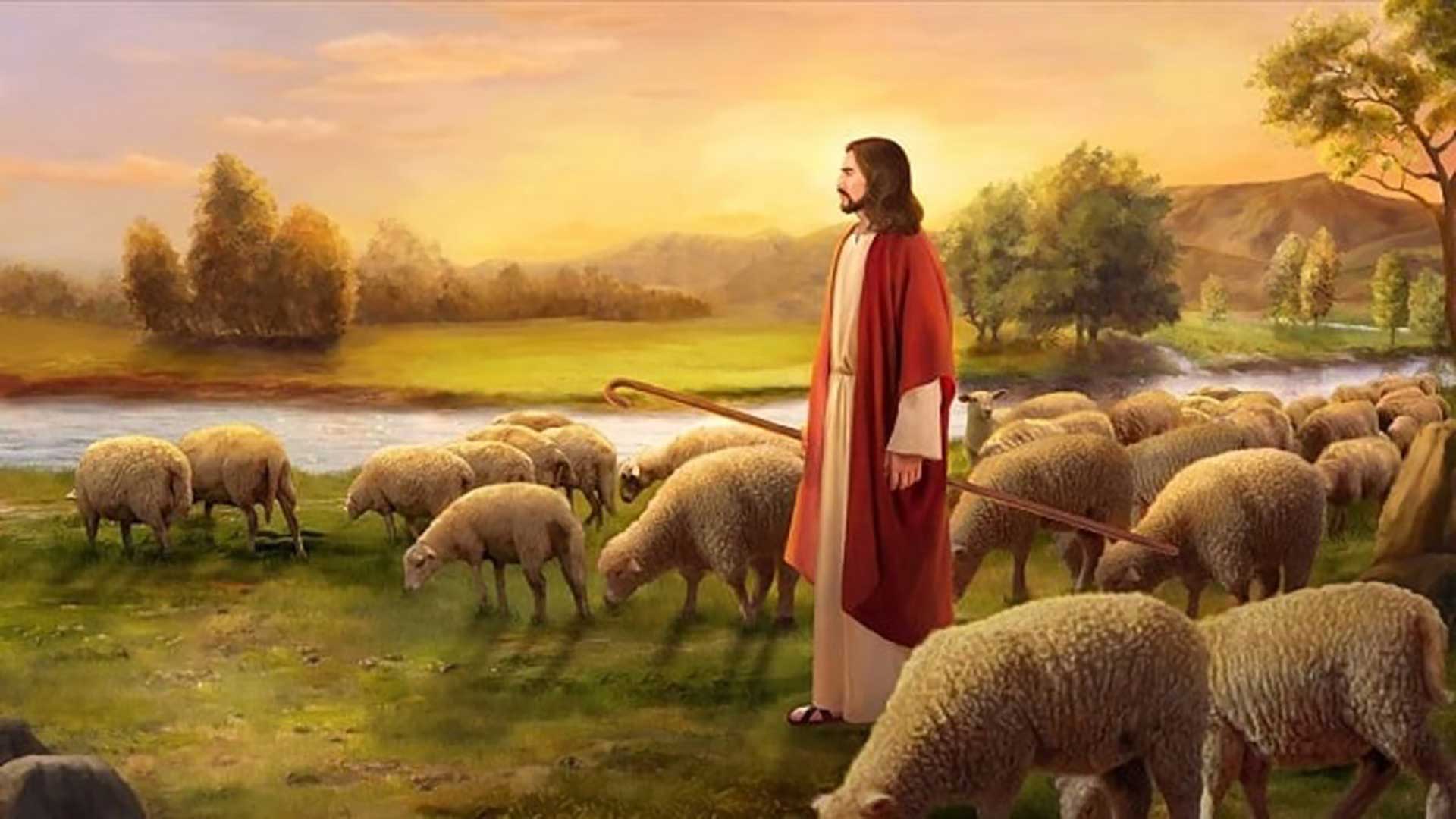
“The Lord is my Shepherd”
In our somewhat directionless world, isn’t it reassuring to hear our inner voice say, “The Lord is my shepherd, there is nothing I shall want”? These verses from David’s Psalm echo through the three readings of today; not only were they said by Jesus in His own lifetime, but Peter repeats them endlessly after the Resurrection.
After the Resurrection, it was important to catechise. We see once again, in the First Reading (Acts 2: 14, 36-41), how the first Apostle reproached the people for putting Jesus to death and urged them to repent. The reward for their repentance would be to receive “the gift of the Holy Spirit.” The pardon of our sins, the gift of the Holy Spirit, and the New Covenant are the fulfilment of Messianic promises. They are open to anyone who accepts the Word of God and transforms their life. And what a privilege, as St. Peter puts it, “The promise is to you and to your children and to all that are far off, every one whom the Lord our God calls to Him.”
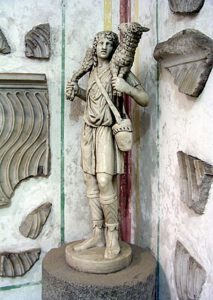
Again, in his First Letter, part of which forms the Second Reading (1 Pet 2: 20-25), St. Peter conscientizes the people. He talks about how Jesus is our Shepherd and Paschal Lamb. By His voluntary sacrifice, He showed us the way from death to life eternal. St Peter therefore invites us to suffer, as Jesus did, in the midst of life’s difficulties, which include misunderstandings, calumnies, accusations, and persecutions, all of which Christians suffer as a stumbling block and rock of offence to the world.
We learn from the Gospel (Jn 10: 1-10) that we have nothing to worry about, for Jesus the Good Shepherd is always by our side. He knows His Father in Heaven very intimately, and He knows us too with the same intimacy. He thus becomes “the door” to Heaven, the Mediator par excellence to our Father in Heaven. And His warning against false teachers and doctors – “thieves and robbers” all – is valid for all times, especially our own. He is the Way and the Truth and the Life; He is our only salvation. He is the door; anyone who enters will be saved through Him alone.
This Sunday, rightly known as “Good Shepherd Sunday,” may we trust only Jesus to be our Shepherd through life; through Him alone we can have life, and life in abundance. Above all, may our Pope, our bishops and priests be good shepherds, always taking the lay faithful to the right pasture.
The Challenge of Faith
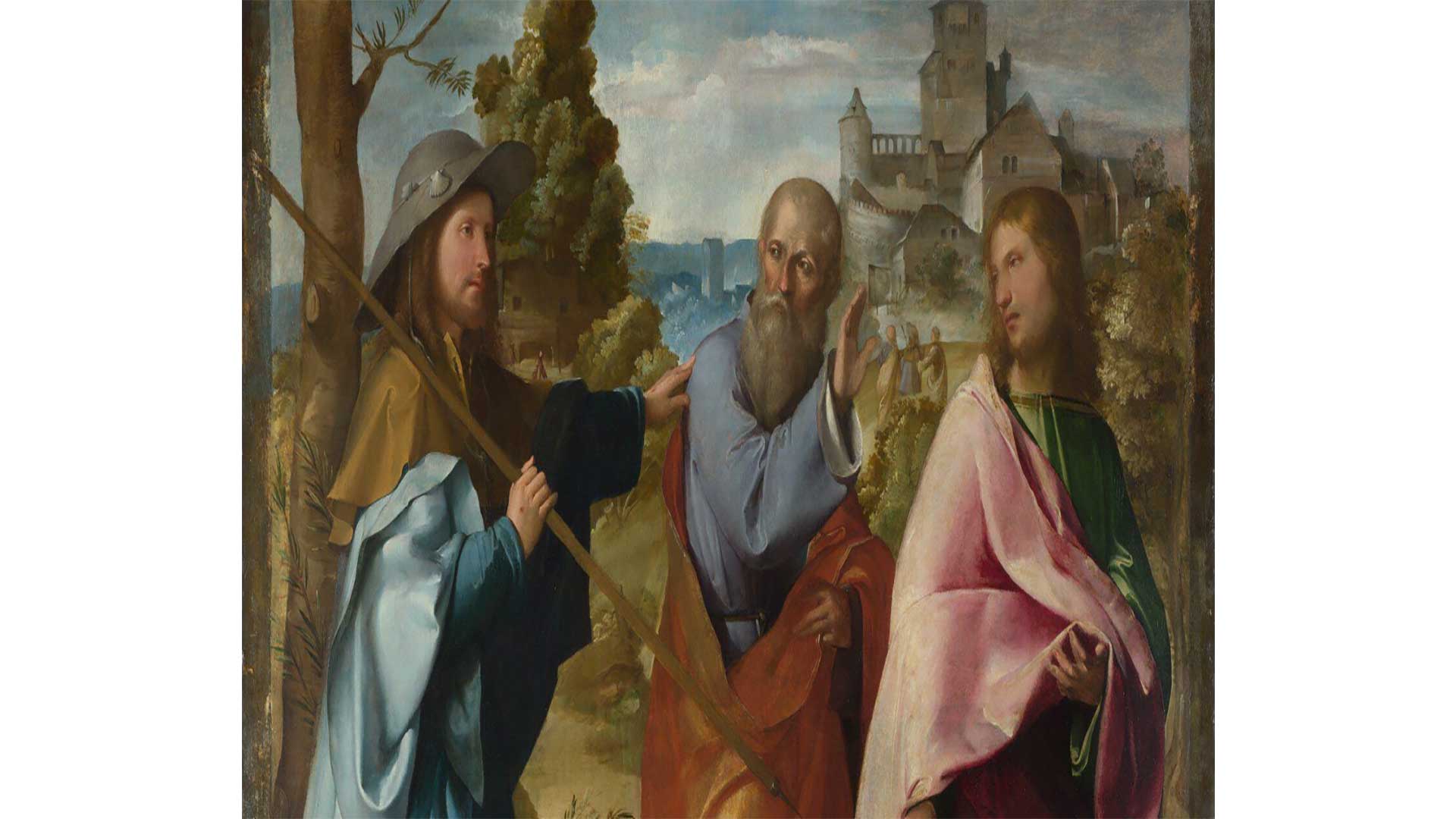
Today’s Gospel (Lk 24: 13-35) recounts the events of the evening of the Resurrection, specifically how Jesus, who had anonymously joined two disciples, Cleopas and an unnamed companion, on the road to Emmaus, remained unrecognised by them. Jesus pretended not to know what had happened in those pivotal days. Rather, He heard what they thought of Him: that He was a prophet expected to redeem Israel, and now His body was missing.
Were the disciples feeling it was all over now? Just then, the unknown fellow traveller lamented their foolishness and how they were 'slow of heart to believe all that the prophets have spoken.' None of that affected their self-esteem; they even invited the stranger to stay the night with them. It was then at the table—when He took the bread and broke it—that their eyes saw Jesus; he had meanwhile vanished out of sight.
What about us Catholics who have been with the Lord for so long? Do we truly know Him intimately, or do we take Him for granted? Do we acknowledge His presence among us, discern His signs, or does life go on as if He doesn't exist? Shouldn’t the Resurrection alone have definitively proven Christ's divinity, strengthened our faith and inspired us to proclaim to the world that He alone is God? Historically, many who claimed to be prophets or even God have died, and we have seen no hint of the glory they had claimed for themselves.
In contrast, the signs, miracles, and wonders that Jesus performed during his public life, and the marvels that we have witnessed down the centuries, are proof enough that the Church is divine. Jesus still walks the pilgrim path with us; He is with us on our road to Emmaus, a road fraught with doubts and difficulties. Jesus shares in our miseries and brightens our path—a mystery we can discern only with eyes of faith.
St. Peter, the focus of the first two readings, drives the same point home. He, whom the Resurrection has transformed, is out to vehemently proclaim his Master. He denied Him three times, but the Resurrection has now confirmed his faith.
The First Reading (Acts 2: 14, 22-33) is a synopsis of Peter’s first testimony about Jesus to the eleven after he received the gift of the Holy Spirit at Pentecost. He has a bounce in his step and a newfound zeal in his voice. He feels emboldened to speak not only by what his ears had earlier heard, but by what his eyes have now seen: the Risen Lord! Peter conscientizes the people and indicts them for killing the Messiah. Needless to say, God, who is always in control, had let it happen 'according to the definite plan and foreknowledge of God' and now 'God raised Him up, having loosed the pangs of death, because it was not possible for Him to be held by it.'
Peter also reminds the people that, as per David's prophesy, God would 'not let the Holy One see corruption'. The foremost Apostle’s message speaks of everlasting life, as prophesied by the sweet psalmist of Israel and fulfilled in the Paschal mystery. He is proud and confident that such a faith is not abstract but based on a real happening: the Resurrection. Nonetheless, as a final test of his faith, he who became the first Pope ordained by Christ Himself died an inverted crucifixion in the Nero Gardens.
In the Second Reading (1 Pet 1: 17-21), we see the Apostle who had struck the High Priest’s servant Malchus with a sword in the Garden of Gethsemane now seizing the opportunity to strike again.... Peter speaks candidly about his Lord and Master, undeterred by the tumultuous circumstances in Jerusalem. His appeal to the faithful to conduct themselves 'with fear' must be understood as the holy fear of God the Father, not of man. He stresses that Jesus is the Paschal Lamb who has sacrificed His life for the new humanity. 'Through Him, you have confidence in God, who raised Him from the dead and gave Him glory, so that your faith and hope are in God,' emphasizes Peter.
Finally, we might wonder if a fisherman like Peter was ever capable of writing such profound exhortations. Most likely, his secretary, Sylvan or Silas, edited his letters, yet there is no denying that they are divinely inspired. The fact that Our Lord chose poor Peter to lead the Church may likewise baffle the worldly wise. But, then, it isn't wisdom that God wants from us, but faith.
Quite paradoxically, a sure way of strengthening our faith is by being fools for Christ, and, like Peter, a rock upon which Christ can build His Church. Dare we accept the challenge of the faith that the fisherman once accepted?
Banner: https://www.nationalgallery.org.uk/paintings/altobello-melone-the-road-to-emmaus
Journeying from doubt to belief
Would you believe it? The apostles were caught off-guard by the Resurrection! They huddled together in fear, when they should have been rejoicing and shouting from the rooftops! Of course, with the benefit of hindsight, this seems like an obvious point. But the fact is that, although at the Passover Meal Jesus had foretold His return, 'Resurrexit' was likely just a distant concept to them.…
Let’s face it, what does it mean to us today? Does the Resurrection still have a breaking-news effect in our lives? The world had never seen a resurrection before. Jesus had raised three from the dead, but that did not register with those men of little faith!
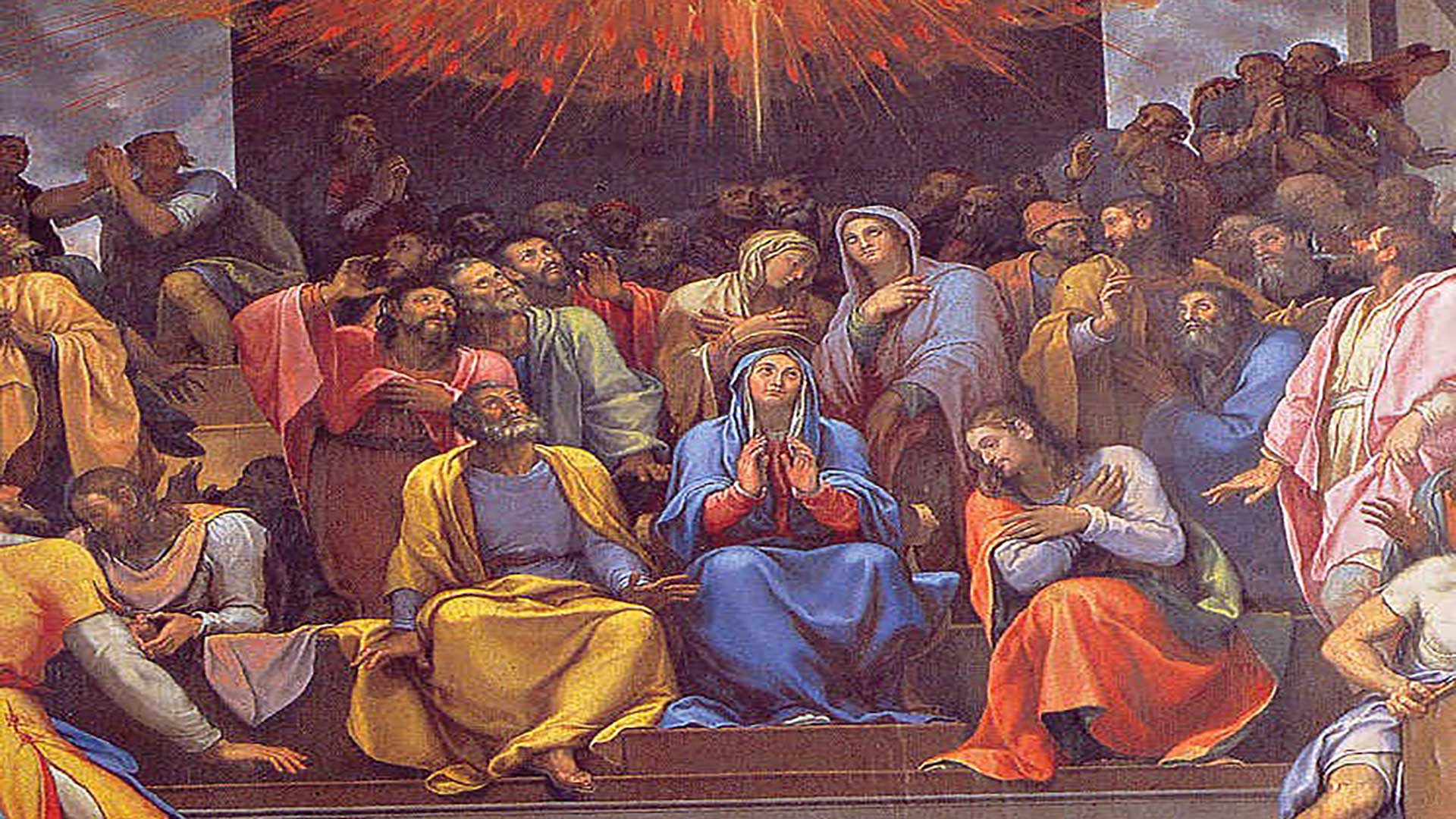
It was not the apostles, then, but Mary of Magdala who was privileged to first see the Risen Lord. Unable to contain herself, she rushed to break the news to Peter and John, but they simply shook their heads in disbelief. Meanwhile, Jesus appeared to two other Marys and Salome—women were the first messengers to the Apostles—and in the evening, to two disciples travelling to Emmaus. When this duo hurried back to Jerusalem, they found the apostles gathered, bewildered, in the Cenacle.
According to the Gospel (Jn 20: 19-31), when the doors were shut—where the disciples were gathered for fear of the Jews—Jesus came in and stood among them, saying, ‘Peace be with you’. He had defied the laws of time and space, which probably caused them even more fear. But then, to set all their doubts at rest, He showed them His hands and His side. He instructed them to receive the Holy Spirit and authorised them to forgive and preach in His Name.
This day soon became “the Lord’s Day,” replacing the Sabbath as the day of creation, the Mosaic law, and the Pasch. It symbolised a new creation, a new alliance, and a new, definitive Pasch. The Gospel account may not be exhaustive, but there is no doubt that the Church was on the horizon.
However, the going was not as smooth as it might seem. The Twin has gone down in history as ‘doubting Thomas’ (St John is the only evangelist to refer to the episode); still, we must not hold it against him. By the depth of his love, he believed when he met the Lord a week later; by the strength of his bond, he cried, ‘My Lord and my God’; and by the power of his commitment, he went on an apostolic mission to India.
What a lesson for us! Too often we doubt and remain in that doubt; we ask questions but seldom seek the answers. In our fast-paced world, while we pretend to eloquently reason out, we fail to see that faith alone can touch infinity and set us free.
So many holy traditions can be traced back to the Day of the Lord: the peace greeting, the receiving of the Holy Spirit, the sacrament of confession, and the duty to evangelise. Lest these meaningful commands turn into meaningless rituals, it is essential to remember that our acts must be soaked in faith. The Lord expects nothing short of a leap of faith, for ‘blessed are those who have not seen and yet believe.’
That transformative faith was evident when thousands converted and lived radically in the wake of the Resurrection. The First Reading (Acts 2: 42-47) tells us that the neo-converts ‘devoted themselves to the apostles’ teaching and fellowship, to the breaking of bread and the prayers.’ By having ‘all things in common’, they sowed the seed of religious communities; by selling or distributing their possessions, they introduced charitable living. This was not an injunction against private property, for they did so ‘as any had need’. But one thing is sure: by refraining from accumulating wealth, they emphasised that our real treasure lies in Heaven.
Thus, the neo-converts lived in the joy of the Lord and felt blessed. That is yet another lesson for us to take to heart. It is a pity that sometimes we distance ourselves from the Messiah, if not reject Him completely. By shameful acts of commission and omission, we repeatedly put him to a shameful death. If the Resurrection does not convince us of the divinity of Our Lord, no other miracle will. In fact, after He rose from the dead, His divinity was even more pronounced than his humanity.
The Second Reading (1 Pet. 1: 3-9) renews our hope. It teaches us that ‘by His great mercy, we have been born anew to a living hope through the resurrection of Jesus Christ from the dead, and to an inheritance which is imperishable, undefiled, and unfading, kept in Heaven for you.’ We may suffer a little while on earth, but that suffering is a purging. Through it all, we must continue to praise and thank God for our Christian vocation.
Finally, Christ being the reason for our being, we must dispel the darkness of doubt and soak in our belief. In fact, the Gospel account was written precisely ‘that you may believe that Jesus is the Christ, the Son of God, and that believing you may have life in His Name’ (Jn 20: 30-31). It promises not a naïve and selfish joy of the flesh, but a deep and self-giving joy of the spirit, simple and life-giving. This is a marvellous hope that we can all nurture as we renew our Christian life; it is a most wonderful way of being Church.
Banner: https://reclaimingourchildren.typepad.com
Why Easter is the bedrock of our faith!
It's thanks to Easter that we are Christians. Whereas the joyful birth of Jesus contained a promise, this was fulfilled through His sorrowful Death and glorious Resurrection. This unparalleled event was the ultimate answer to those who had rejected His luminous earthly passage abounding in wise teachings and unprecedented miracles. He who had come to complete the Jewish religion thus founded a new and sublime religion—Christianity—that would be open to the peoples of the world.
The panoply of readings from the Easter Vigil and Mass tells us the story of the redemption of the world. The seven readings[1] from the Old Testament and two from the New Testament are 'chosen and structured to lead the worshipping assembly into a deep contemplation of the mystery of salvation history—from the beginning of time, when God created the world in all its wonder, to this moment of the Church gathered in prayer, to the end of time when all things will be brought to perfection once again in God's love.'[2] In other words, the readings tell of the Redeemer about whom the prophets had long foretold.
The Easter Sunday (morning and evening) Mass offers a different set of readings, of which the Second Reading and the Gospel have internal choices.[3]
Starting with the Gospel (John 20: 1-9): obviously, it is about the Resurrection! If we read the four Evangelists, we cannot help but notice the multiple differences in their accounts. However, the disparity lies only in the secondary details: while St John (in all probability) wrote a first-hand account, the rest of the Evangelists wrote theirs based on eyewitnesses. Most importantly, none are at variance on the fundamental issue, that is, that the tomb was found without the Lord early on Sunday morning. It was not a desecration; it was undoubtedly the Resurrection!
In fact, those variations only go to show that the Resurrection accounts were not tailored; they were written at different times, between circa AD 66 and 110, in this order: Mark (AD 66-70), Matthew and Luke (AD 85-90), and John (AD 90-110). And even if they had never been written, there would still have been other evidence of the stunning event. Paul’s letters were put together between AD 50-58 and St Luke’s Acts of the Apostles between AD 70-90. Clearly, those letters are the earliest extant texts about the Resurrection, predating the first of the Gospels by over a decade. Would God the Father have allowed the most important event of all history to go unrecorded?
Very pertinently, the first two readings are taken from the accounts of those two travelling companions, Luke and Paul. The First Reading (Acts 10: 34a, 37-43) refers to the now fiery St. Peter chastising those who put Jesus to death. 'But God raised Him on the third day,' he states, 'and made Him manifest, not to all the people but to us, who were chosen by God and witnesses, who ate and drank with Him after He rose from the dead.' Faithful to the Divine Master’s command, the future First Pope testifies: 'To Him all the prophets bear witness that every one who believes in Him receives forgiveness of sins through His Name.'
Even more striking is St. Paul’s testimony related to the Resurrection. Here is one of Christ’s worst persecutors, whose conversion history is so well known that it can be dispensed with here. In today’s Second Reading (Col 3: 1-4), he most convincingly points to Christ 'seated at the right hand of God' and invites us to set our minds on things that are on high. It is the same Paul who famously said, 'If Christ has not been raised, your faith is futile and you are still in your sins.' (Cor 15: 17) He championed Christ’s cause—the physical Resurrection—which prompted Roman Emperor Nero to order his beheading.
Let alone dying like Paul, had we only believed more firmly in the Resurrection and spoken more ardently about this turning point in the history of humankind, by now there would have been only Christian apologists walking the earth and no apologetic Christians in sight! After two thousand years of Christianity, can we say we have done enough?
Let us therefore resolve to rise above our frailties—to rise with Christ and to live with Him forevermore, with Him who is indeed the Resurrection and the Life!
[1] The Vigil readings for all Year cycles are as follows: Gen 1: 1-2, 2; Gen 22: 1-18; Ex 14: 15-15, 1; Is 54: 5-14; Is 55: 1-11; Bar 3: 9-15, 32 – 1, 4; Ezek 36: 16-28; and at the Mass thereafter: Rom 6: 3-11 [Year A]; Mk 16: 1-7 [Year B], Lk 24: 1-12 [Year C]
[2] https://tinywebs.site/3k1Fpc
[3] The Second Reading can be either from Colossians (3: 1-4) or Corinthians (5: 6-8). And while the first choice of Gospel text is from St John (20: 1-9), one may alternatively take any one of the Gospel texts of the Easter Vigil Mass: Mt 28: 1-10 marked for Year A; Mk 16: 1-7, for Year B; or Lk 24: 1-12, for Year C. The Lectionary also specifies that at evening Mass, Gospel of the Third Sunday of Easter, Year A, may be read.
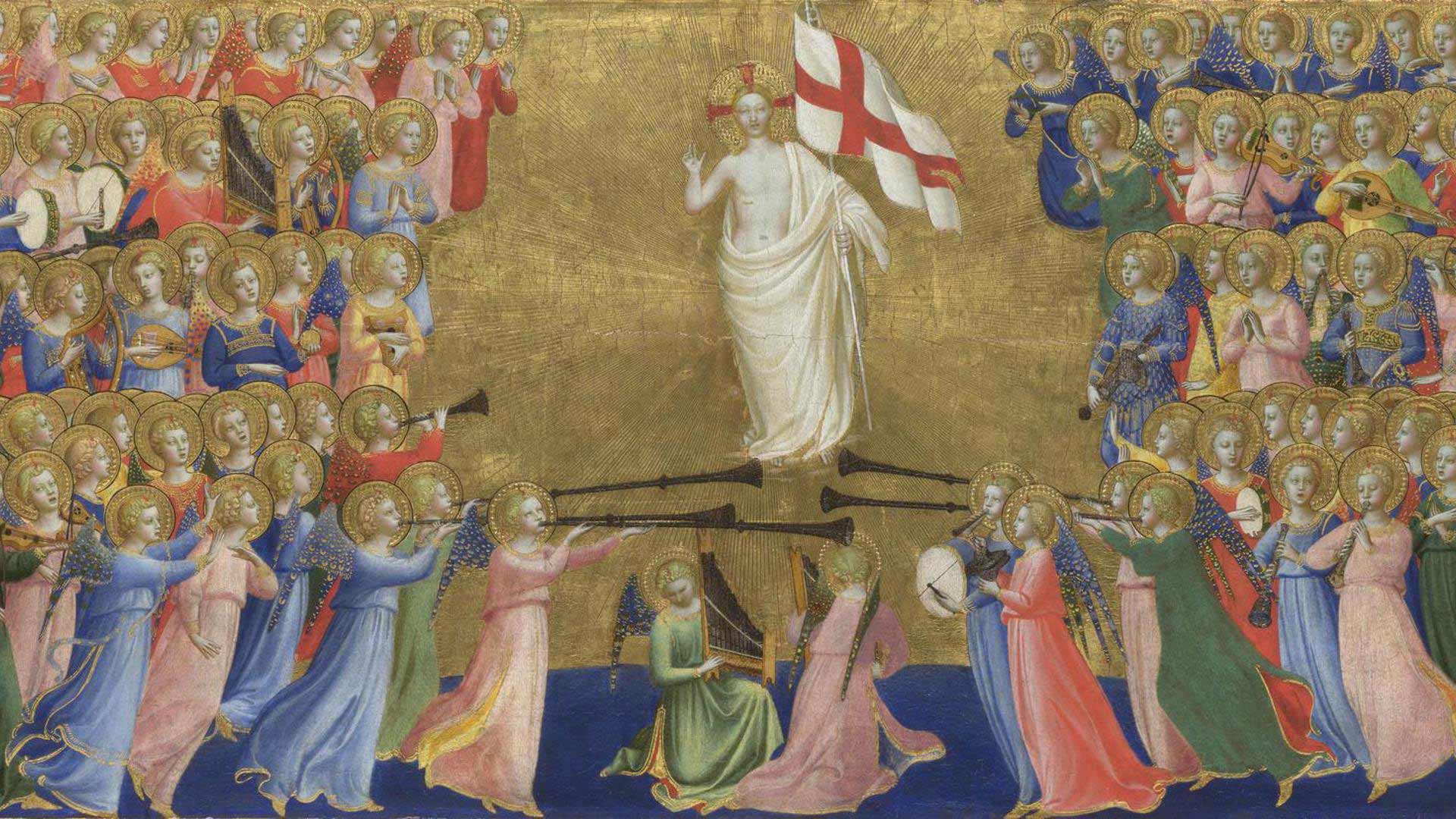
Banner: https://www.nationalgallery.org.uk/paintings/fra-angelico-christ-glorified-in-the-court-of-heaven
The Suffering Servant
Today is Palm Sunday. The day begins with the blessing of palms with holy water outside the church building. The Gospel read here is from St Matthew (21: 1-11) in Year A, St Mark (11: 1-10) or St John (12: 12-16) in Year B, and St Luke (19: 28-40) in Year C. The priest then leads the congregation in a festive procession into the church, celebrating Our Lord’s Messianic entry into Jerusalem.
However, at the Mass soon thereafter, the mood changes from joyful to sombre, marking the beginning of Holy Week. While the first two Readings and the psalm – Is. 50: 4-7; Ps. 21: 8-9, 17, 18a, 19-20, 23-24; Phil. 2: 6-11 – remain the same for cycles A, B and C, the Gospel changes from year to year, highlighting the three Synoptics: St Matthew (26: 14-27, 66), St Mark (14: 1-15, 47), and St Luke (22: 14-23, 56), respectively. They account for events going from the Last Supper to the Death of Jesus.
St John is thus the only evangelist whose Gospel is not read at this Mass. The Beloved Disciple – who offers a unique perspective on the Divine Master, more theological and mystical – is especially reserved for Maundy Thursday (Jn 13: 1-15) and Good Friday (Jn 18: 1-19, 42), besides two weekday readings. While the Gospel on Thursday focusses on the Last Supper, on Friday, we hear a Passion narrative that begins with Gethsemane and ends with Our Lord’s Death on the Cross.
Coming now to the three Readings of today: in the First Reading (Is 50: 4-7), who is Isaiah talking about? He could well be referring to himself or to an archetypal prophet, for all prophets suffered persecution. Better still, Isaiah could be referring to the One who was to come: Jesus the Messiah! Jesus, an unparalleled Master, is the Servant of God, obedient to the will of His Father in Heaven. Jesus is a model Servant who trusts in God and prevails over His enemies.
That the life of Jesus was a fulfilment of the prophecies of yore becomes clear in the richly textured Gospel passage (Mt 26: 14-27, 66) on the Passion of Christ. The text comprises Jesus’ scandalous betrayal by Judas Iscariot, as foretold at the memorable Passover meal; His moments of intense prayer on the Mount of Olives; His acts of extreme kindness even when His soul was sorrowful to death; His unlawful arrest and summary trial by the high priest; His shameful denial thrice over by Peter; His monstrous condemnation by Pilate; His distressful way to Calvary; His crucifixion, death, and burial.
St Paul in the Second Reading (Phil 2: 6-11) points to Jesus' humility. He who was fully divine willingly became fully human; He who was “in the form of God did not count equality with God (…) but emptied Himself, taking the form of a servant, being born in the likeness of men.” His total obedience led to His humiliation, which in turn engendered His exaltation. God gave him a name “which is above every name, that at the name of Jesus every knee should bow (…) and every tongue confess that Jesus Christ is Lord, to the glory of God the Father.”
No one who has carefully listened to the three readings of today will remain unmoved.
May this Holy Week inspire us to reflect on the human condition and our divine commitment. Today, some of Our Lord’s sufferings are inflicted upon His Living Body, the Church; we perpetrate some of them from within. God might sometimes allow our humiliation and suffering, but never our annihilation; our faith, hope and trust in God’s protection will ensure our final exaltation.
May the story of Jesus Christ, the Suffering Servant, and His supreme love for humanity cause our conversion and sanctification.