Panjim Church to me
In reply to a quick question from Dolcy D'Cruz of Herald, Panjim, last night... Thank you, Dolcy!
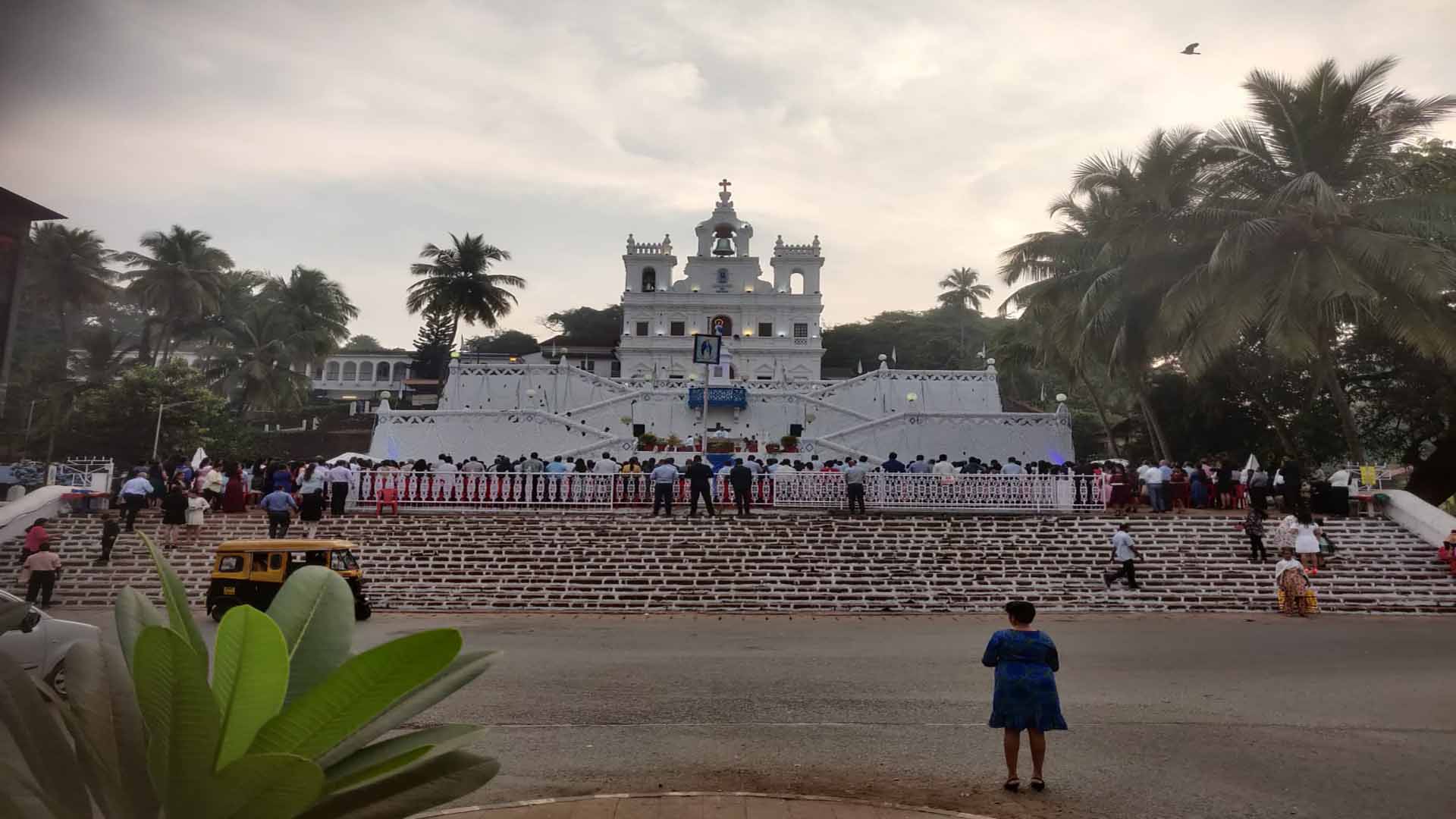
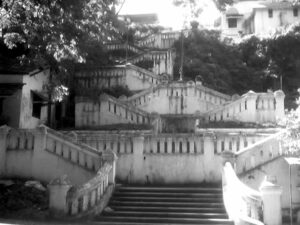
The city church has been part and parcel of my life for as long as I can remember. It is an architectural gem, perhaps best remembered for its iconic zigzag stairway.
However, my relationship with my parish church was on another plane. On Sundays, my family and I were regulars at the Mass held in Portuguese. It is also there that we attended Easter and Christmas services.
Come December, we awaited the Feast of the Patroness with great anticipation. It provided an excellent spiritual preparation for Christmas, for the angelic music of the Salves at twilight heralded the celestial choirs singing "Gloria in Excelsis Deo" a fortnight later. The church was thus my spiritual powerhouse. I still feel a strong pull even though I no longer live in the city centre.
On the other hand, I feel sorry to see the church helplessly serve as a backdrop for cultural events and photoshoots. There is scant respect shown to the sacred nature of the church complex. You find tourists dressed inappropriately, lingering on the stairway or ambling into the church premises. Who is going to stop this menace?


A story of great promise
“You have made us for yourself, O Lord, and our heart is restless until it rests in you,” St Augustine says in his famous Confessions. Thankfully, as we enter the second week of Advent, the Prince of Peace gives us the grace to achieve peace of mind and heart.
When the Lord touches us, life changes for the better. So it was with Jesse, a sheep farmer in Bethlehem, whose youngest son, David, received God’s call to be the king of Israel. David’s reign and that of his son Solomon formed a golden era, but soon after that, Israel began to produce godless kings.
In those dark hours, Isaiah’s prophecy, heard in today’s First Reading (Is 11: 1-10), was heart-warming: “There shall come forth a shoot from the stump of Jesse, and a branch shall grow out of his roots.” That regal shoot would be wise and clever like Solomon, prudent and strong like David; knowledgeable and respectful like Moses and the Patriarchs.
Clearly, Isaiah’s words referred to the Messiah. Born seven centuries later, Jesus was the “root of Jesse” who would provide an ensign to the Gentiles and pagans. The Jews, long awaiting a Messiah, did not acknowledge the Carpenter’s Son; it was their loss and our gain, for now we can hope for the Lord’s Second Coming, when, “Justice shall flourish and peace till the moon fails.” (Ps 71: 7-8) And “justice” (sanctity or victory over sin) will cause peace.
The Gospel of St Matthew (3: 1-12) takes us back to Isaiah, who had pointed to “the voice of one crying in the wilderness: 'Prepare the way of the Lord, make His paths straight’”—unmistakably the future John the Baptist! His message is as relevant today as it was when Jewish high society’s observance of religious precepts was mere tokenism or façadism. They were formalist and materialist, just as the world today is consumerist to boot.
What a far cry from the austere life of the Baptiser. Like the prophets of old, especially Elijah (cf. 2 Kings 1:8), he wore a camel’s hair garment, strapped a leather belt around his waist, and survived on locusts and wild honey. His mission was to serve: by announcing the Good News, baptising[1] the repentant, and denouncing the wicked. He called the bluff of the Pharisees and the Sadducees[2]—that “brood of vipers”—demanding that they “bear fruit that befits repentance” rather than bask in Abraham’s glory.
The promise of salvation continues through the Church. St Paul (Rom 15: 4-9) was convinced that “whatever was written in former days was written for our instruction, that by steadfastness and by the encouragement of the Scriptures we might have hope.” Jesus followed the law even as he sought to perfect it.
Take circumcision. The act, which was at the heart of God’s covenant with Abraham, was meant to retrench and restrain the animal man as it removed a part of his body.[3] Yes, Christians do without it, for, as St Thomas of Aquinas noted, circumcision was only “a figure of baptism”—that is, baptism has superseded it!
Salvation is a long story of great promise! However, St John the Baptist does not fail to warn that a time will come (the Final Judgement) when “every tree that does not bear good fruit will be cut down and thrown into the fire.” When the Lord comes again, He will divide the wheat from the chaff. He will “gather His wheat into the granary, but the chaff He will burn with unquenchable fire."
Two millennia ago, St John the Baptist was privileged to witness the incomparable First Coming of Jesus. Repentance is fundamental for those of us who wish to witness His glorious Second Coming and be part of that story of great promise.
[1] St John himself points to how Jesus would baptise differently: “I am baptizing you with water, for repentance . . . He will baptize you with the Holy Spirit and fire.” (Mt 3:11).
[2] The Pharisees were zealous observers of the law and of oral tradition; the Sadducees hailed from priestly families and were politically connected, despising tradition and sticking to the written law; a third group comprised the Scribes, who were doctors of the law that interpreted the Torah.
[3] Cf. https://www.catholic.com/encyclopedia/circumcision
Watchful and Fearless
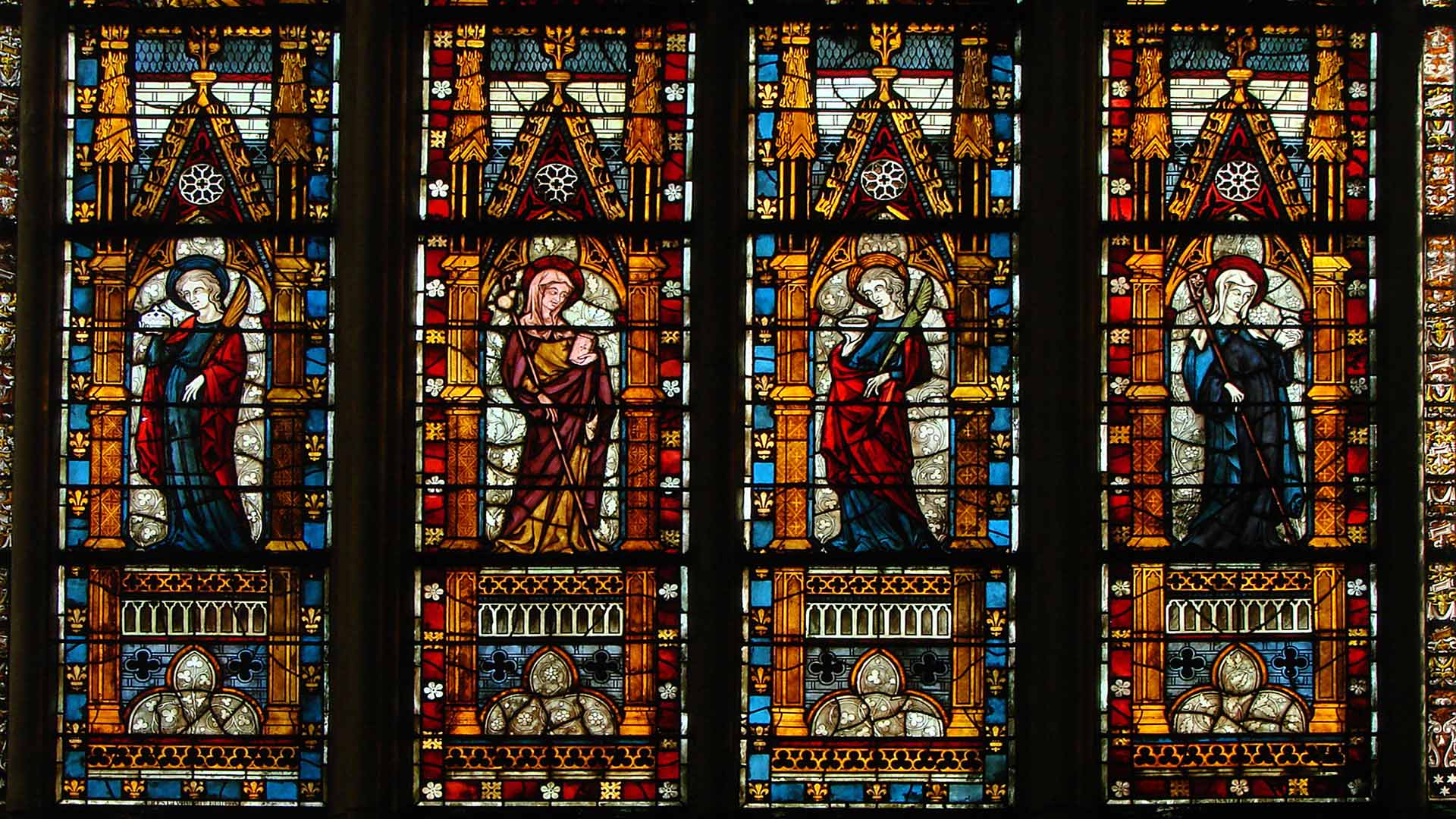
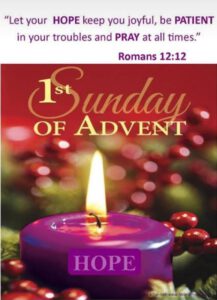
Today is the first of the four Advent Sundays and the beginning of a new liturgical cycle (Year A for Sunday Mass readings). They focus on waiting in hope for the Lord’s coming, an act symbolised by a purple candle traditionally placed in the evergreen wreath.
In the First Reading (Is 2: 1-5), the Prophet Isaiah glorifies Zion, the mountain on which God’s temple stands. He envisions people streaming from across the world to adore God and learn his law. A proper understanding of the Word of God will unite the peoples and inaugurate a period of peace, in which hatred will turn into esteem and armaments will turn into instruments of work and welfare. In short, St Augustine of Hippo speaks of the ‘City of God’ in his De Civitate Dei, expounding a Christian view of society and history.
The spread of Christianity across the world was a step in that direction. As Pope Leo XIII points out in Aeterni Patris (1879), “the only-begotten Son of the Eternal Father, who came on earth to bring salvation and the light of divine wisdom to men […] commanded the Apostles to go and teach all nations, and left the Church which He had founded to be the common and supreme teacher of the peoples. For men whom the truth had set free were to be preserved by the truth; nor would the fruits of heavenly doctrines by which salvation comes to men have long remained had not the Lord Christ appointed an unfailing teaching authority to train the minds to faith.” Only a Church that is faithful to the Lord’s commands can “teach religion and contend forever against errors,”[1] thereby showing us the way to the new and eternal Jerusalem.
Christ’s Incarnation was a watershed event in the history of humankind. From then on, we Christians have had the opportunity to learn the true law and work toward our salvation. St Paul urges Christians to achieve this true liberation by overcoming the darkness of sin. He vividly states this to the Romans (13: 11-14): “You know what hour it is, how it is full time now for you to wake from sleep.” Then, he issues us a call to “cast off the works of darkness, and put on the armour of light […] to put on the Lord Jesus Christ, and make no provision for the flesh to gratify its desires.” This is a caution against falling head over heels for the evanescent world we live in.
How many of us respond positively to the Lord’s standing invitation? Isn’t much of what is going on in the world today an affront to the Creator? God gives His people enough rope, and some of them hang themselves! Few realise that gaining the whole world and losing one’s soul is of no use; similarly, they fail to see that life is terribly uncertain, and so is the time when the Lord will come again. The COVID-19 pandemic was no doubt an eye-opener, but the world is back to its waywardness. To quote a 19th-century advocate of the Irish Catholics, “the condition upon which God hath given liberty to man is eternal vigilance; which condition if he breaks, servitude is at once the consequence of his crime and the punishment of his guilt.”[2]
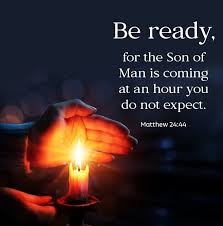
Isn’t servitude to sin rampant? How long do we wish to remain in the depths of the pit? Therefore, we must work hard to not let sin gain ascendancy in our individual and societal lives. We must not only make a collective effort toward living a life pleasing to God but also not hesitate to swim against the tide of opinion when our spiritual good so requires. Finally, we must heed St Matthew’s counsel (24: 37-44) to “be ready: for the Son of Man is coming at an hour you do not expect.” Of course, if we remain watchful, there is nothing to fear; on the contrary, eternal happiness will be the reward that we will receive.
[1] https://www.vatican.va/content/leo-xiii/en/encyclicals/documents/hf_l-xiii_enc_04081879_aeterni-patris.html
[2] John Philpot Curran (1750-1817)

The Hope of Advent
What makes Christmas the most awaited Christian celebration of the year? In our materialistic age, the gaiety that surrounds it makes it all the more attractive. However, for a heart and mind attuned to spiritual truths, Christmas is a harbinger of hope; it not only marks Christ’s birth on earth but also teaches us to await His Second Coming.
Christmas is not limited to one day. The Catholic Church celebrates Christmas from 25th December until the Solemnity of the Epiphany, which marks the manifestation of the Infant Jesus as the Saviour of the World.
How important is the preceding four-week liturgical season of Advent? If Christmas is the beginning of a spiritual journey, Advent is the preparation for its realisation. “Advent is thus a period for devout and joyful expectation.”[1]
PERIOD
“Advent begins with Evening Prayer I of the Sunday falling on or closest to 30 November and ends before Evening Prayer I of Christmas.”[2] The Sunday closest to 30 November can range between 27 November and 3 December, depending on the year. This means that Advent begins on the evening of a Saturday falling between 26 November and 2 December (inclusive), and it ends on the evening of 24 December, which holds Evening Prayer I of Christmas (25 December).
THEMES
These are indicated by a colour code, candles on a wreath, and the Liturgy (including the Word).
Colour:
The liturgical colour for Advent is violet or purple, like that of Lent, and it is a penitential season.[3]
Wreath:
“The Advent wreath, with the progressive lighting of its four candles, Sunday after Sunday, until the Solemnity of Christmas, is a recollection of the various stages of salvation history prior to Christ's coming and a symbol of the prophetic light gradually illuminating the long night prior to the rising of the Sun of justice.”[4]
Candles:
Three of the four candles are purple and used on the first, second, and fourth Sundays, to signify hope, faith, and prayer and expectation, respectively. On the third Sunday of Advent, also called Gaudete[5] (‘Rejoice’, in Latin, referring to expressed or exuberant joy) Sunday, a pink or rose candle is lit in addition to the two purple ones of the earlier Sundays. On Christmas Eve a white one is added: the ‘Christ candle’, signifying the purity of Our Lord.
Readings:
In all three liturgical cycles, the First Reading, mainly from Isaiah, includes prophecies regarding the Messiah and the messianic times.
The Second Reading, almost always from St Paul, comprises exhortations and orientations that help us be in readiness and full of hope.
The Gospel on the first Sunday refers to the Second Coming of Our Lord at the end of times; on the second and third Sundays, the focus is on the mission of St John the Baptist as the precursor of the proclaimed Saviour and preacher of a personal readiness to receive salvation; and on the fourth Sunday, the Gospel refers to the events fostering a proximate preparation for the Birth of the Saviour, with the Mother of Jesus figuring prominently therein.
The weekdays are divided into two periods: one up to 16 December, wherein the First Reading is from Isaiah and the Gospel on the life and work of St John the Baptist; the second, from 17 December to 24 December, serving to prepare more closely for the Lord’s Birth, has prophecies regarding the Messiah, from different books, for the First Reading, whereas the Gospel relates events that prepare the Nativity.[6]
Finally, the floral decoration and the music of Advent are marked by moderation, while the Gloria is neither sung nor recited.
Liturgy:
Advent Sundays (like those of Lent and Easter) take precedence over all solemnities and feasts of the Lord. Solemnities occurring on these Sundays are observed on the Saturdays preceding. No funeral Masses are celebrated either.
In the liturgy of Advent, two great figures are presented as guiding lights: John the Baptist, the precursor of Jesus, whose preaching is an invitation to conversion as an indispensable condition for salvation; and the Virgin Mary, who gave herself entirely to His holy will and waited in hope and joy for His coming into the world.
The entire liturgical season is so crucial to preparation that it is especially recommended that there be homilies even on the weekdays of Advent.
CONCLUSION
All in all, here is God’s beauty and majesty flowing through Scripture and ritual. Not the first Sunday alone, but the whole of the season of Advent is one of hope. This is a hope beyond all hopes, an eminent preparation for the Feast of Christmas. As the saying in Portuguese goes: “O melhor da festa é esperar por ela.” – The best part of the feast lies in the waiting!
[1] https://www.archbalt.org/wp-content/uploads/2017/04/GeneralNormsLiturgicalYear.pdf No. 39
[2] Ibid.
[3] According to the Code of Canon Law: “The penitential days and times in the universal Church are every Friday of the whole year and the season of Lent.” (No. 1250)
[4] Directory on Popular Piety and the Liturgy: Principles and Guidelines, No. 98
[5] The first word of the Introit of the Mass on that Sunday.
[6] Cf. ‘Synopsis of the Lectionary’, in Lectionary (Catholic Press, Ranchi, 2011), p. x.
Correspondência epistolar de Shankar Ramani
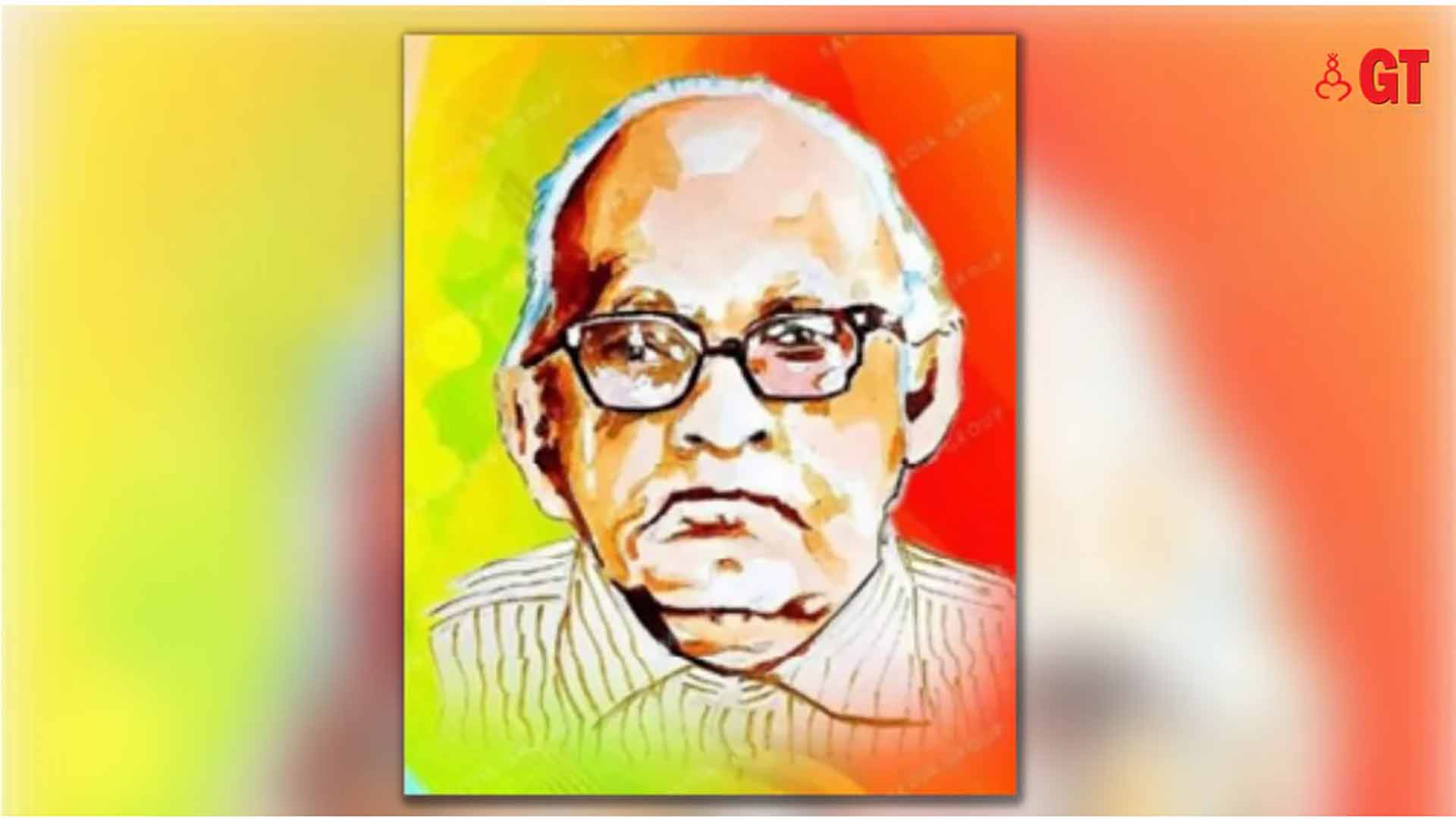
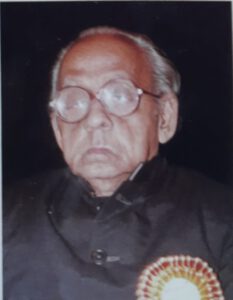
Por ocasião do centenário de nascimento de Shankar Ramani, traduzi uns trechos da sua correspondência epistolar em concani, publicada pela Revista Zaag (Vol. 32, No. 1, Agosto de 2005, pp. 20-22), da direcção de Ravindra Kelekar, e aos quais acrescentei notas de rodapé.
Sem data
Prezado Sr. Gajanana Jog[i]
…………………………………………………………………........................................................................................................................................................
De volta da escola, passávamos pela casa do Sarmalcar. Sada Sarmalcar[ii] era amigo de meu Pai. No vaivém da escola, dizia ‘Lá vai o fraco pugilista Ramani.’ Depois disso eram as casas do dr. Edu Poi[iii], Namtu Poi Dhungat[iv], Prof. Araújo Mascarenhas[v], e no fim da rua a grande casa do magnate Dempó[vi]. Eram casas ligadas. De entre elas, ficava a casa do proprietário Dattá, e ligada a ela a de Padmanata Xette. Em frente à casa do proprietário Dattá, no fim da rua, depois das casas de Ramachondra Xette, D. B. Desai, o rato do Neurencar, via-se a uma fila de casas de Pundolica Camotim[vii]. Essa era outra rua. Antes de esta começar, à esquina, havia um poste. Ao cair da tarde, um empregado da Câmara era obrigado a pendurar nele um petromax aceso.
A rua que passava pela escola ia direita à praça de automóveis. Aí se situavam as lojas de roupa e de confeitos. A rua que tomávamos de volta da escola ia direitinha ao cemitério de Santa Inez[viii]. No caminho, depois de Dom Bosco[ix], na mesma rua ficava a máquina de descasque e outra de fabrico de gelo de um parse[x]. Aquela era manejada por um indivíduo de nome Xencor. O parse era amigo de meu Pai. Quando fossemos lá, o parse ordenava ao Xencor que me desse gelo. Era uma máquina muito conhecida. Na traseira havia uma casa de balcão onde sentava a notória mulher pública, Saku. Gorda, sentava-se vestida de maneira coquete. Além de jovens liceístas, de dezassete ou dezoito anos, eram seus clientes grandes advogados e comerciantes, segundo me disse, na altura, Kamlakar Nagorcencar[xi]. E era verdade.
Até o ano de 1938, a cidade de Pangim se estendia dos Correios até à casa do Dr. Govinda Vaidia[xii]. A zona adiante fazia parte da aldeia de Taleigão[xiii]. Foi por isso que, até 1938, Soku ocupou esse balcão sem receio. Logo depois, veio um novo Governador, José Cabral[xiv]. Homem inteligentíssimo, mas ateu. Promulgou uma nova lei a estender os limites da cidade para além do cemitério. Em consequência, chegou a hora de mudar de casa. Para onde iria? Adiante, era tudo crematório. Já antes das cinco da tarde, a gente tinha medo de passar pelo cemitério. Um advogado que era cliente da Soku deu-lhe, porém, uma ideia. Soku fez logo um requerimento, enviando-o directamente ao Governador Cabral. Eis o conteúdo: “Trabalho como prostituta, servindo assim a sociedade. Não só isso, até dou um desconto aos alunos do Liceu.” O Governador foi esperto. Logo que leu esse requerimento de Soku, despachou: “Quem tem arte, faz vida em toda a parte.”
Por hoje é só.
Se me der na bitola, escreverei de novo.
Espero a sua resposta.
Como sempre,
Shankar Ramani
24.8.1995
…………………………………………………………………........................................................................................................................................................
Até o ano de 1928, não havia luz eléctrica em Pangim. Em certos cruzamentos ardia o petromax a noite inteira. Em 1929, veio a corrente eléctrica. O Governo enviara dois engenheiros para tratar da instalação de postes e de uma central eléctrica[xv]. Um deles era alemão, outro parse. Quando passavam os fios por cima dos postes, lembro-me de lhe ouvir dizer: ‘Ó, pá; ó, pá’. No dia em que Pangim veio a ter electricidade, toda a gente se pôs a passear pela cidade. Eu, o Kamlakar e o Casimiro Monteiro[xvi] vadiámos até às dez da noite.
…………………………………………………………………........................................................................................................................................................
27.8.1996
Prezado Sr. Jog
No ano de 1933 passei o Primeiro Grau com a nota de ‘Bem Habilitado’. Em junho de 1938, meu Pai matriculou-me como interno numa escola oficial. Ia-se à escola pelo recinto do Liceu. Descendo os degraus, chegava-se ao pé da Igreja. Depois, dando volta ao jardim, passava-se pelo Cine-Teatro Nacional[xvii] e o Quartel da Polícia[xviii]; e logo então, dobrando a esquina da Biblioteca Central[xix], chegava-se à nossa escola, que abria às 8,30 da manhã. Às 10,45, tínhamos um intervalo de 15 minutos. Nessa altura, chegava minha mãe, trazendo pães redondos, bem cortados, com manteiga caseira e açúcar, para eu comer, e café para beber. Eventualmente, se ficasse com muita fome, ia eu ao mercado na vizinhança onde comia gelebis[xx] de valor de um poiçá[xxi]. Um pouco além era o Campal. Na aula, sentava-me ao pé da janela. Eram dois alunos em cada banco. O outro era o mestiço Hugo Mendes. Não estudava nada. Era só esperteza saloia. O nosso professor chamava-se Frutuoso[xxii]. Um bom homem. Excelente professor. A janela dava para ver os vapores que faziam carreira entre Pangim e Betim[xxiii].
Nos primeiros seis meses, à parte o desenho, tive boas notas em todas as disciplinas. Infelizmente, por um mês sofri um ataque de sarna nas mãos. Nos primeiros dias, o professor deixou-me sentar sozinho num banco lá fora. Depois, fui proibido de vir à aula até curar a sarna. Perdi assim um mês e meio a dois meses. Enquanto me restabelecia, eram os dias de exames. Saí aprovado. Perdi a nota de Distinção. Precisamente nesse ano o meu Pai foi transferido para Mormugão. Entretanto, enviou os filhos para a aldeia de Durbate[xxiv], onde construíra uma casa.
…………………………………………………………………........................................................................................................................................................
[i] Gajanana Jog é um eminente contista na língua concani.
[ii] Sada, diminutivo de Sadananda, Sarmalcar era livreiro, com loja ao pé do templo Mahalaxmi, em Pangim.
[iii] Edu Poi, de nome complete Roguvira Sridora Poi Vernencar, descendente do antigo Malú Poi Vernencar, líder da comunidade hindu dos tempos do conquistador Albuquerque, era um recorrido clínico em Pangim, com residência na antiga Rua Afonso de Albuquerque.
[iv] Comerciante de ferramentas em Pangim.
[v] Distinto professor do Liceu, advogado, escritor e poeta, de nome completo Joaquim de Araújo Mascarenhas
[vi] Abastado proprietário e homem de negócios.
[vii] Comerciante geral.
[viii] Um dos bairros e paróquias de Pangim.
[ix] A Escola Dom Bosco foi fundada em Pangim, no ano de 1942, no sítio onde existia o palecete do Conde de Nova Goa.
[x] Na altura, talvez o único parse estabelecido em Goa, de apelido Mody.
[xi] Advogado em Margão.
[xii] Médico-cirurgião, que, segundo me informou o poeta Madhav Borcar, fabricara um aparelho electrocardiograma, para uso próprio.
[xiii] Uma das aldeias do concelho das Ilhas, a qual deu guarida à frota de Afonso de Albuquerque.
[xiv] Um dos mais eminentes governadores da antiga Índia Portuguesa, no período de 1938-45
[xv] Na altura, situava-se na Rua Heróis de 5 de outubro, hoje Rua Atmarama Borcar.
[xvi] Agente da Polícia, transferido de Goa por ordem do juiz Severino Balula.
[xvii] Fundado como Éden Cinema, passou a ser denominado Cine-Teatro Nacional em 1933.
[xviii] Situado na antiga Praça das Sete Janelas, depois conhecida como Largo Afonso de Albuquerque.
[xix] Fundada em 1832, com o nome de Pública Livraria, passando ultimamente a ser denominada Biblioteca Vasco da Gama, ora Krishnadas Shama Central Library, transferida para a nova urbanização do Pattó.
[xx] Doce de tipo bobina suculenta
[xxi] Moeda indiana
[xxii] Talvez se refere ao professor José Egídio Fidelis Frutuoso de Souza, de Pilerne.
[xxiii] Bairro da aldeia de Verém, do concelho de Bardez, que se situa na banda norte do rio Mandovi.
[xxiv] Aldeia do concelho de Pondá, um dos portos de navegação fluvial onde a lancha Pangim-Sanvordém fazia escala e onde descarregavam os patamaris vindos do Canará e de outros lugares.
(Publicado na Revista da Casa de Goa, https://casadegoa.org/revista/ii-serie-n-o-19-novembro-dezembro-de-2022/
Série II, No. 19, Novembro-Dezembro de 2022)
Thy Kingdom Come!
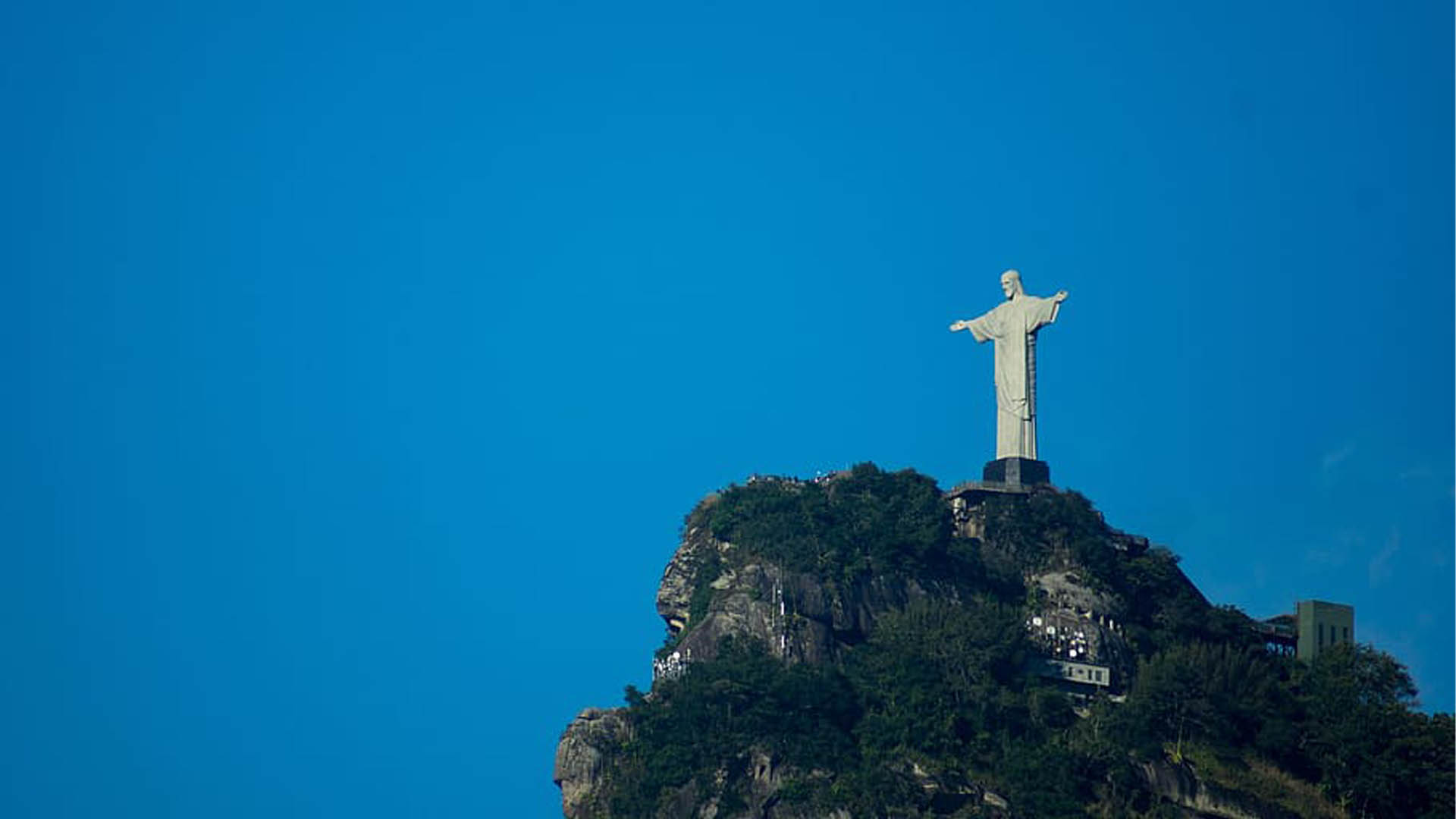
Today is the culmination of the liturgical year, a special day to reaffirm our faith and trust in Our Lord Jesus Christ as the King of the Universe. This Solemnity, which, according to the older liturgical calendar, used to be observed on the last Sunday of the month of October, preceding the Feast of All Saints, is now held on the Sunday immediately prior to the first Sunday of Advent.
The day’s readings are a clear endorsement of the Kingship of Our Lord. In the background to the First Reading (2 Sam 5: 1-3) lies the story of Saul, the first king of Israel, who lost to the Philistines, an enemy tribe. Given his ineptitude, God guided the Prophet Samuel to David, a humble but talented musician, who was secretly anointed king. While Saul was still living, David settled in Hebron where he was accepted by the tribe of the southern kingdom of Judah and reigned as their king for seven years.
After Saul died, the northern tribes who had been under Saul came to David at Hebron and anointed him King of all of Israel. Hebron, a Palestinian city thirty kilometres from Bethlehem, is one of the oldest cities in the Levant (a geographical area comprising Lebanon, Jordan, Palestine, Israel and Syria) and now in the focus of the Israeli-Palestinian conflict.
David reigned for forty years, from his capital Jerusalem, until he died at 70 years of age. He had already chosen his son Solomon for his successor, after whose death Israel was no longer a united kingdom. As for David, he is still honoured as an ideal king and the earthly forefather of our Lord and Saviour Jesus Christ, who by His Cross willed to unite all the peoples of the world.
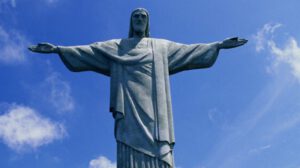
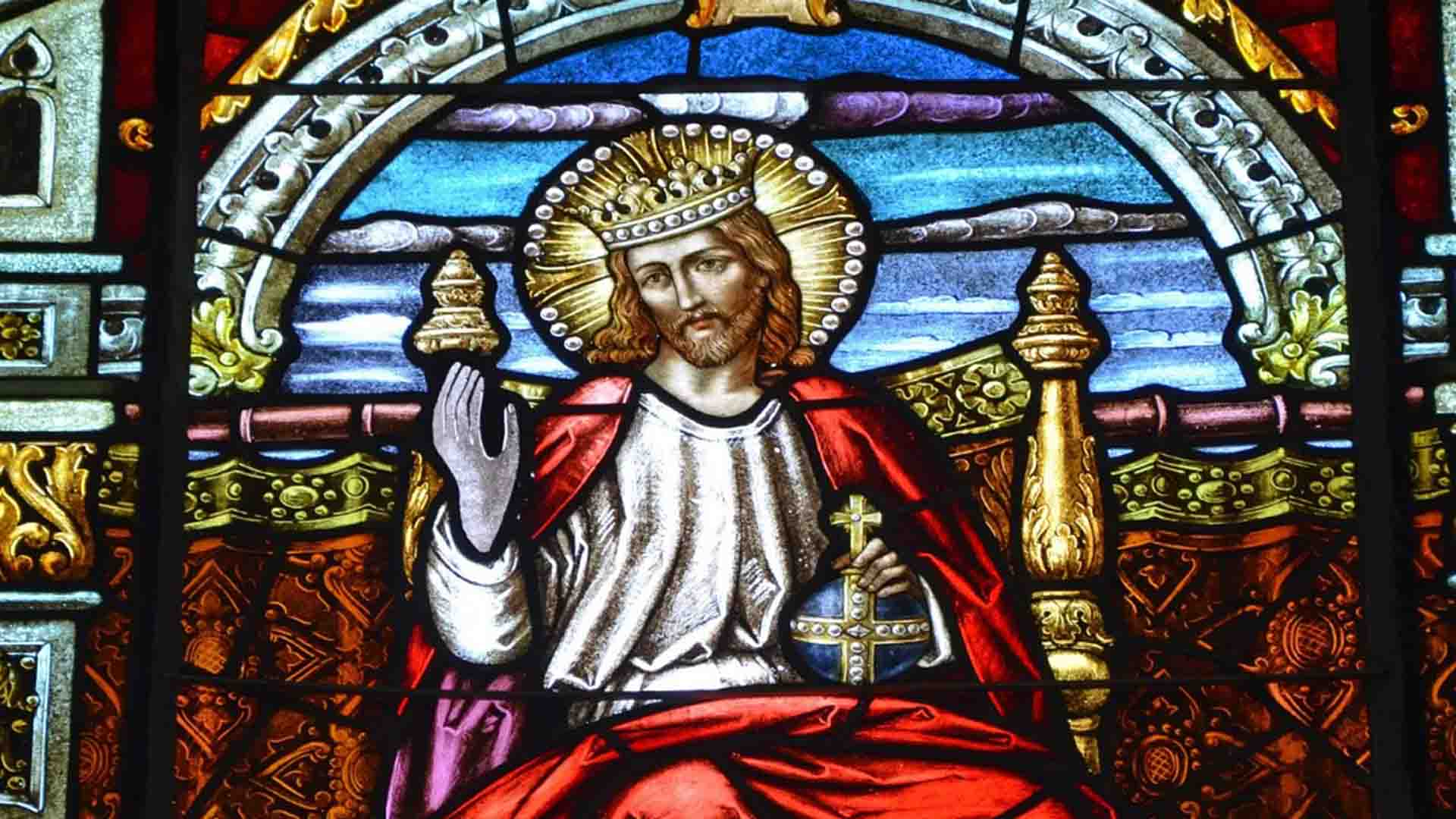
Equally apt for the great Feast of the Kingship of Christ is that passage of St. Paul’s Epistle (Col. 1: 11-20) that reminds us Christians that God has “qualified us to share in the inheritance of the saints in light” and “transferred us to the kingdom of His beloved Son, in whom we have redemption, the forgiveness of our sins.” Jesus is the Alpha and the Omega, through whom and for whom all things were created, “whether thrones or dominions or principalities or authorities”. Jesus made peace “by the blood of his cross”, and “in Him all things hold together.”
The Gospel text (Lk 23: 35-43) points to the striking contrast between Our Lord’s Passion and His final Victory. He died not because he deserved to die; He chose to die as a sacrificial lamb for our salvation. Not realising this, the soldiers mocked at him, saying, “If you are the King of the Jews, save yourself!” Jesus had clarified that His kingdom was not of this earth; and although the inscription ‘Iesus Nazarenus Rex Iudaeorum’ (‘Jesus of Nazareth, King of the Jews’) was meant to be ironic, it went down in history as the real truth. It reflected the conviction that Jesus was indeed the Messiah that they were waiting for – although this school of thought was anathema to the establishment.
There is no doubt, however, that both Jewish tradition and public opinion had unwittingly endorsed the true and complete kingly identity of Jesus. But what did He mean by ‘Kingdom’, as in the remarkable words ‘Thy Kingdom come’ from the Lord’s Prayer? In his book Jesus of Nazareth, Pope Emeritus Benedict XVI writes: “The Kingdom is not a thing, it is not a geographical dominion like worldly kingdoms. It is a person; it is He.”
The Lord’s Kingdom is indeed a spiritual kingdom that has the minds and hearts of the whole of humankind for its domain; but this mystical dimension has its consequence in civil society too. In fact, it is here that we Christians must practise the Beatitudes to the fullest extent, and proclaim the Gospel to the ends of the world, ensuring that our earthly journey becomes a fulfilment of God’s will – the will of His Son, Jesus Christ, King and Lord of the Universe.
Why a Feast of the Kingship of Christ?
There are only a few monarchies left in the world, but the concept is not incompatible with human nature. In the Christian tradition, the monarchical idea goes back to the days when, by God’s command and public acclamation, Samuel anointed Saul as king of Israel (c. 1021-1000 B.C.). Later, on finding him inept, he appointed David, who became king of the whole of Israel whose tribes he united after Saul’s death.
Monarchies were the most common form of government worldwide until the last century. However, in his encyclical Quas Primas (1925), it is not the form of government that Pope Pius XI brings into focus; it is the concurrent worldview that he finds problematic. Writing in the aftermath of World War I, when some key monarchies had been replaced by republics, the Pontiff pointed to a king “of whose kingdom there shall be no end.” (n. 5) Decrying the growing secularisation of society, he made it clear that, “as long as individuals and states refused to submit to the rule of our Saviour, there would be no really hopeful prospect of a lasting peace among nations.”
The issue of the encyclical marked the sixteenth centenary of the Council of Nicaea, where the divinity of the Word Incarnate—the foundation of Christ’s empire over humankind—was properly defined. The commemorative Encyclical proclaimed “Pax Christi in regno Christi” (“The peace of Christ in the kingdom of Christ”).
Biblical endorsement
Quas Primas notes that “it has long been a common custom to give to Christ the metaphorical title of ‘King’, because of the high degree of perfection whereby He excels all creatures.” But the Pope is also quick to clarify that “the title and the power of King belongs to Christ as man in the strict and proper sense too. For it is only as man that He may be said to have received from the Father ‘power and glory and a kingdom,’ since the Word of God, as consubstantial with the Father, has all things in common with Him, and therefore has necessarily supreme and absolute dominion over all things created.” (n. 7)
There are several Biblical references to Christ as King, one of them being Psalm 72, which foretells that his kingdom will have no limits and will be enriched with justice and peace: "in his days shall justice spring up, and abundance of peace... And he shall rule from sea to sea, and from the river unto the ends of the earth." (n. 8). The Prophets, too, give abundant testimony.[1] The doctrine of the Kingship of Christ found in the Old Testament is “even more clearly taught and confirmed in the New”. For instance, St Luke speaks of the Archangel announcing to the Blessed Virgin that she should bear a Son; that "the Lord God shall give unto him the throne of David his father, and he shall reign in the house of Jacob for ever; and of his kingdom there shall be no end."[2] (n. 10)
Finally, Christ Himself speaks of his kingly authority.[3] So, it goes without saying that “the Catholic Church, which is the kingdom of Christ on earth, destined to be spread among all men and all nations, should with every token of veneration salute her Author and Founder in her annual liturgy as King and Lord, and as King of Kings.” (n. 12)
King, Kingship, Kingdom
To those unconvinced of the need to call Our Lord ‘King’, St. Cyril of Alexandria explains how “Christ has dominion over all creatures, a dominion not seized by violence nor usurped, but his by essence and by nature.”[4] The Pope says Christ’s kingship is “founded upon the ineffable hypostatic union. From this it follows not only that Christ is to be adored by angels and men, but that to him as man angels and men are subject, and must recognize his empire; by reason of the hypostatic union Christ has power over all creatures. But a thought that must give us even greater joy and consolation is this that Christ is our King by acquired, as well as by natural right, for he is our Redeemer. Would that they who forget what they have cost their Saviour might recall the words: ‘You were not redeemed with corruptible things, but with the precious blood of Christ, as of a lamb unspotted and undefiled.’[5] We are no longer our own property, for Christ has purchased us ‘with a great price’;[6] our very bodies are the ‘members of Christ’[7].” (n. 13)
But what is the nature and meaning of Christ’s Kingship and His Kingdom?
Christ’s Kingship comprises a threefold power: legislative, executive and judicial. Christ, our Redeemer, is also a law-giver, to whom obedience is due;[8] those who keep his laws show their love for Him and shall remain in his love.[9] “Executive power, too, belongs to Christ, for all must obey his commands; none may escape them, nor the sanctions he has imposed.” He claimed judicial power as received from his Father[10], in which is included the right of rewarding and punishing all men living, for this right is inseparable from that of judging. (n. 14)
Yet, Christ’s kingdom is not earthly; it is spiritual and is concerned with spiritual things. “On many occasions, when the Jews and even the Apostles wrongly supposed that the Messiah would restore the liberties and the kingdom of Israel, he repelled and denied such a suggestion.” (n. 17) That is not to say that Christ has no place in in private affairs or in politics. Says the Pope: “It would be a grave error, on the other hand, to say that Christ has no authority whatever in civil affairs, since, by virtue of the absolute empire over all creatures committed to him by the Father, all things are in his power. Nevertheless, during his life on earth he refrained from the exercise of such authority, and although he himself disdained to possess or to care for earthly goods, he did not, nor does he today, interfere with those who possess them.” (n. 17)
All nations and all peoples are subject to Jesus Christ, the Universal King. In his earlier encyclical, Urbi Arcano (1921), Pope Pius XI decried the world’s folly in the following words: “With God and Jesus Christ excluded from political life, with authority derived not from God but from man, the very basis of that authority has been taken away, because the chief reason of the distinction between ruler and subject has been eliminated. The result is that human society is tottering to its fall, because it has no longer a secure and solid foundation.”
Lamenting that as long as the rule of our Saviour was repudiated, there would be no lasting peace in society. “If, therefore, the rulers of nations wish to preserve their authority, to promote and increase the prosperity of their countries, they will not neglect the public duty of reverence and obedience to the rule of Christ.” (n. 18)
Rationale
Pointing out that, historically, feasts have been instituted one after another “according as the needs or the advantage of the people of Christ seemed to demand”, Pope Pius XI implored our Divine King’s blessings. “That these blessings may be abundant and lasting in Christian society, it is necessary that the kingship of our Saviour should be as widely as possible recognized and understood, and to the end nothing would serve better than the institution of a special feast in honour of the Kingship of Christ. For people are instructed in the truths of faith, and brought to appreciate the inner joys of religion far more effectually by the annual celebration of our sacred mysteries than by any official pronouncement of the teaching of the Church. Such pronouncements usually reach only a few and the more learned among the faithful; feasts reach them all; the former speak but once, the latter speak every year – in fact, forever. The Church's teaching affects the mind primarily; her feasts affect both mind and heart, and have a salutary effect upon the whole of man's nature. Man is composed of body and soul, and he needs these external festivities so that the sacred rites, in all their beauty and variety, may stimulate him to drink more deeply of the fountain of God's teaching, that he may make it a part of himself, and use it with profit for his spiritual life.” (n. 21)
However, we need not wait for the Feast to venerate and adore Christ the King. We ought to seek Him through the year, under the Sacramental species, through public adoration of the Blessed Sacrament exposed, and through solemn processions (cf. n. 26). The Feast of the Kingship of Christ sets the crowning glory upon the mysteries of His life commemorated throughout the year.
[1] Isaiah (9: 6-7); Jeremiah (13: 5); Daniel (2: 44; 7: 13-14), and Zachary (9: 9)
[2] 1: 32-33
[3] Cf. Mt 25: 31-40; Jn 18: 37; Mt 28: 18; Apoc. 1: 5, 19: 16; Heb. 1: 2; 1Cor 15: 25
[4] Cf. n. 13
[5] 1 Pet. 1: 18-19
[6] 1 Cor. 6: 20
[7] 1 Cor. 6: 15
[8] Cf. Council of Trent, session VI, can. 21
[9] Cf. Jn 14: 15; 15: 10
[10] When the Jews accused him of breaking the Sabbath by the miraculous cure of a sick man. (Cf. Jn 5: 22)
The Goan Football Story
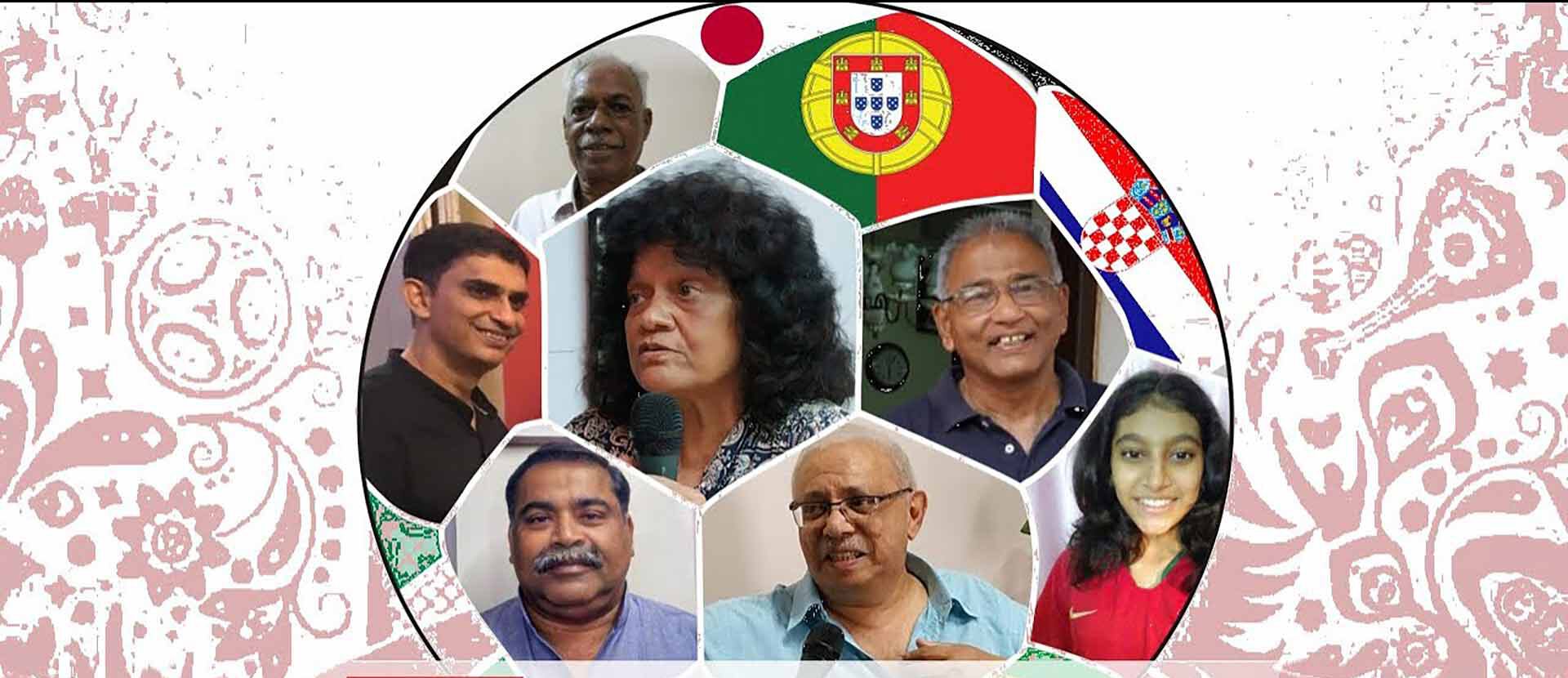
Apropos the forthcoming FIFA World Cup 2022, here are excerpts of a chat by José António Botelho, Jovito Lopes, Eddie Noronha and Sávio de Noronha with Óscar de Noronha, on the radio programme Renascença Goa.
ON: The World Cup is also an occasion for us to talk about football in Goa….
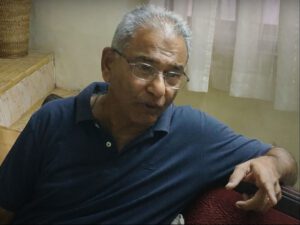
JL: Originally, football was brought to Goa by Father Robert Lyons, who had a school in Arporá, in the taluka (concelho) of Bardez. In Pangim, it is said that the Salesians of Don Bosco were the pioneers: Father Scuderi rode around the city on a bicycle and attracted the boys from the street. Also, the churches in Goa have fields where young people play. Therefore, football was an attraction for the youth.
In front of my house, in Fontainhas, it was a mud street. Nonetheless, we played football in the street. From 5 to 7 in the evening, we would get together and play with a ball made of socks. We didn't have the footballs we have today. We would also go and watch football played on the Police Grounds… Académica, Sporting, and other teams. As children, we didn't have any money, and we couldn't enter the stadium without a ticket. So, when someone we knew went there, we would enter in the shadow of these friends, let's say, on the sly…. Football was indeed a sensation. As kids, it was sensational to see someone play well, score goals, etc. And we had great players, like Alcântara, and others. It was a sensation.
ON: What was your involvement with football?
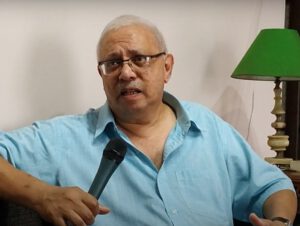
JAB: When I was a student at the Lyceum, some friends of mine played for Sporting Clube, which was based at Lar de Estudantes; and we were fans of Académica, so much so that later, in 1974, when I had my own team, Panvel, it was really a reincarnation of Académica…. We changed the name and played as Panvel, but at heart we were still Académica…. we even played wearing black shirts. It was football from the heart; it was more emotion and less training. Sometimes we didn't even have enough uniforms…. Earlier, the rule was that only one player could be substituted before half-time, and sometimes there was not even an extra shirt for the substitute. The substitute wore the same sweaty uniform of the player who had just left the field. It was more exciting from the player’s and manager’s point of view, but maybe not so much from the point of view of the show and the spectator...
ON: Undoubtedly, football has changed a lot over time…
JAB: Yes. In those days, if we won a match, we would at the most get bhaji puri and tea; but now it's quite different: you get paid a lot of money! In 1966, we followed the World Cup in England, listening to the radio reports. We got to see the finals, almost 6 months later, at Jardim Garcia de Orta, when someone brought a projector with the black and white film. Today, of course, you get to see the game in real time….
ON: Of course, things have changed a lot with technology, that is, with television; but in the days of the radio and newspapers, did the people here follow the happenings closely?
JL: Radio has made a big difference in Goa. When there were these Goan league games, they were held simultaneously in Vasco da Gama, Margão and Pangim. There were radio reports of all three games at the same time: which doesn't happen now. In those times they were the Ferroviários or independents, and there were many Portuguese playing; and the Académica too. And all the games were on the radio, and we already knew who was playing for which team; who won, who lost, from day to day… something that doesn't happen nowadays...
ON: What is the reason for this?
JL: That’s because there are games on television. People are more interested in English leagues than in the Indian leagues…
ON: Who are the big names of Goan football?
JAB: The first coach I remember is Cirilo Ferrão, who built Shantilal's team. Then Shanmugam, from Bangalore, and he was here as coach of Salgãocar. Among the Goan coaches, in addition to João Leite Melo, who was a player for Académica, and was also coach of my team, Panvel, and of Sesa Goa, Salgãocar, and, lately, I think he was coach of Cidade de Goa, which was a team of the present Sporting Clube de Goa. Among the players, Dominic Soares, that forward line of Vasco – ABCD – Andrew, Bernardo, Catão and Dominic Soares – and later, Arwin da Silva, goalkeeper, Jorge Abranches, Vasco, and others – although these are not Goans. But the four people I mentioned first were Goans, although Catão had made a career in Bombay before coming to Goa, Bernardo had been in Vishakapatnam before returning to Goa, and Tanzanian-born Dominic returned to Goa as his parents were from Goa. These were the good players I remember. Then, the other generation that mostly passed through Panvel were Brahmanand Sancoalcar, Rosário Rodrigues, Derek Pereira, Maurice Afonso, Silveira, Bruno Coutinho…. I don't know if we're going to have such players now.
ON: What would you say of the present generation?
SN: After the generation of Bruno Coutinho and Roy Barreto, who had a good combination and won many tournaments as players for the State of Goa and its clubs, in the next generation came Romeo Fernandes, Kelvin Lobo, Mandar Rao, Sahil Távora…. This generation had the opportunity not only to play football at a very high level in the gaming business in India, but they also started to earn a lot of money compared to the footballers of the previous generation, thanks to the Indian Super League (ISL), and this gave many young people the opportunity to make a football career.
ON: Who were the promoters of football in Goa?
JL: Lubé Távora had a team from Siolim, which was called “Kitem Fine”! Then, Académica was the student team. Everyone wanted to have that black shirt…. What a passion that was! And at the time, there were no other games. There was no cricket, there was nothing; It was just football, football, football.
JAB: People like Dr Alvaro Remígio Pinto; Bento Fernandes; Hermano Fernandes, from Santa Inez, they were all dedicated to the club cause; even Dr. Pinto, who together with Aranha, founded Académica; Father Chico was from Sporting and also from Lar de Estudantes, whose players he trained. He had a gift for talking to his men. Nowadays it's easier because we have managers trained to do that. So, a priest knowing how to do that then was rare and very important.
ON: Fortunately, today there are clubs, like Sporting Clube de Goa, that train young people!
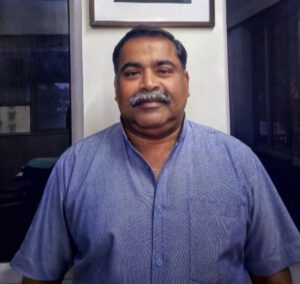
EN: Our main objective is to promote young Goans. We have a senior team that is professional and one of the main clubs in the country. We also have a youth development programme, for teams under 20, under 18, under 16, under 14, and under 13. The team participates in championships organized by the Indian Federation and the Goa Football Association. We have an academy for children at the Don Bosco school in Pangim with which we have an agreement. In addition, we have adopted some schools – which means that we support them, providing technical staff and equipment…
ON: The Indian soccer leagues have aroused a lot of interest. What do you think of this?
EN: We are the only country in the world with two leagues, the I-League and the ISL. With the introduction of ISL, technically, each ISL team is allowed to have more than two foreign players. With this, the inclusion of Goan and Indian players in the team is restricted. In the Indian league only four foreign players can play, giving more opportunities for Indian players to participate. Due to this conflict, three Goan clubs – Sporting Clube de Goa, Dempo Sports Club and Salgãocar Sports Club – withdrew from the I-League some years ago. We hope that the All-India Football Federation will review the decision to have a single championship and that all Goan clubs get into the top division on merit…
JAB: Football control is in the hands of people who don't know anything about football, or don't know professional football. That's not going to change anytime soon. That's where the idea of ISL came from. The mistake was to let the I-League and the ISL continue. They should have done what Japan did: stop all football that existed and start again….
ON: Are Goans readily accepted at the national level?
JL: Only in the last few years there has been a problem. It is said that relations between the Goa Football Association and the Federation are not in good shape. But, by the way, the Indian team always had four players from Goa, which is not the case now, for several reasons…
ON: What is the experience of the Lusofonia Games?
SN: One of the best moments for football in Goa was when the Indian team, with the majority of footballers of Goan origin, won the gold medal at the Lusophone Games, in 2014, when they were held in Goa…
ON: What do you think of the future of football in Goa?
SN: As for the future of football in India, and in Goa in particular, I think that the official organizers of the game in the State of Goa have to reach a consensus with the national federation and clarify what doubts they have against each other. At the moment, things are not going very well but I think the game has to be given the highest priority if it has to improve…
JL: There needs to be a revolution in our thinking. The approach must be totally professional: they must let professionals and technicians execute their vision.
Other participants in the original chat in Portuguese, https://www.youtube.com/watch?v=uyJh4smJV2M : Julio Fernandes, Yolanda de Sousa, and Vera de Noronha.
(First published in Revista da Casa de Goa, https://casadegoa.org/revista/ii-serie-n-o-19-novembro-dezembro-de-2022/
Series II, No. 19, November-December 2022)
Lead, kindly Light!
Eschatological texts on yet another Sunday correlate the end of the liturgical year with the end of the world. Before we close the year with the Solemnity of Christ the King next Sunday, the Church invites us to imbibe the Biblical teachings about the end times.
The First Reading (Mal 4: 1-2) speaks of a chastisement of the Israelites (which, unfortunately, included their priests in post-exilic Jerusalem), for laxity in their social and religious conduct.
Today’s passage from Malachi is brief, but its message is loud and clear. It dwells on the day of Judgment, when the wicked will, like the stubble, be devoured by the flames. And for those who fear the Lord, “the sun of righteousness shall rise, with healing in its wings.” No two ways about that.
Malachi is the last of the eighteen prophetic books and of the Old Testament. In pointing to the coming of the Lord, it carried a message of hope. Approximately five hundred years later, our Divine Lord, “the sun of righteousness,” came into the world to address people of goodwill. Thus, the Book of Malachi builds a bridge with the New Testament, especially in the absence of any other prophetic record in the intertestamental period.
In the Second Reading (2 Thes 3: 7-12), St Paul addresses the slothful members of his community. Whereas the Apostle to the Gentiles was very concerned about setting a good example, his followers had begun taking things for granted and even lived off the charity of fellow Christians. Therefore, he urges both the pastor and the pauper to eat their food with the sweat of their brow: "If any man will not work, neither let him eat."
Does that mean anything to the Christian community of the twenty-first century? If we are wayward or merely basking in past glory, we are in trouble. It is high time we pondered whether we, as leaders and followers, parents and children, priests and laity, have exerted ourselves enough to ensure that tomorrow will belong to us! Let us get our act together, that His Kingdom will come here on earth and that we will inherit Heaven. No gains without pains!
In the Gospel (Lk 21: 5-19) we hear the words that Jesus spoke to His Apostles when His Passion and Death was at hand. Just in case they had thought that a life in the Lord’s service would be a cakewalk, Jesus forewarns them that proclaimers of the Good News might in fact be assaulted, convicted, jailed, and even killed.
In other words, following Christ involves renunciation and suffering; we are called to be committed, to take an unambiguous position, and not run with the hare and hunt with the hounds! This is a little cross we need to bear as an infinitesimal share in the mighty Cross that Our Lord and Master carried to Calvary.
Through it all, we need to fix our gaze on His Divine Face and not on the temple’s façade and interiors that are “adorned with noble stones and offerings.” Vanities will meet their nemesis: “There shall not be left here one stone upon another that will not be thrown down.” Strong words, indeed, which we would do well to heed while it is time. Let's apply them to our situation in Goa and in the world.
It is not clear as crystal when this will happen, yet the secret of our holy success will depend on our sticking with the Lord through thick and thin. Behold the Lord’s words of caution: “Take heed that you are not led astray; for many will come in my name, saying, ‘I am he!’ and ‘The time is at hand!’ Do not go after them. And when you hear of wars and tumults, do not be terrified: for this must first take place, but the end will not be at once.”

Jesus is our Light and Life! Lead, kindly Light, even as we witness nations rising against nations; earthquakes, famines, floods, and pestilences devastating the earth. When we watch the Light amid the encircling gloom, we will not be afraid. We have nothing to fear when we are with the Lord—the Lord is with us! We can be sure that we will not be left to the designs of the evil one. None should draw back when, in the horror of horrors, “you will be delivered up even by parents and brothers and kinsmen and friends, and some of you they will put to death.” And, miracle of miracles, you and I need not even “meditate beforehand how to answer; for I will give you a mouth and wisdom, which none of your adversaries will be able to withstand or contradict,” says the Lord.
As the liturgical year draws to a close, it is highly recommended that we take stock of our spiritual baggage and ponder on the inescapable fact of our individual and collective end, praying with Cardinal Newman:
[A]long the narrow, rugged path,
Thyself hast trod,
Lead, Saviour, lead me home in childlike faith,
Home to my God.
To rest forever after earthly strife
In the calm light of everlasting life.
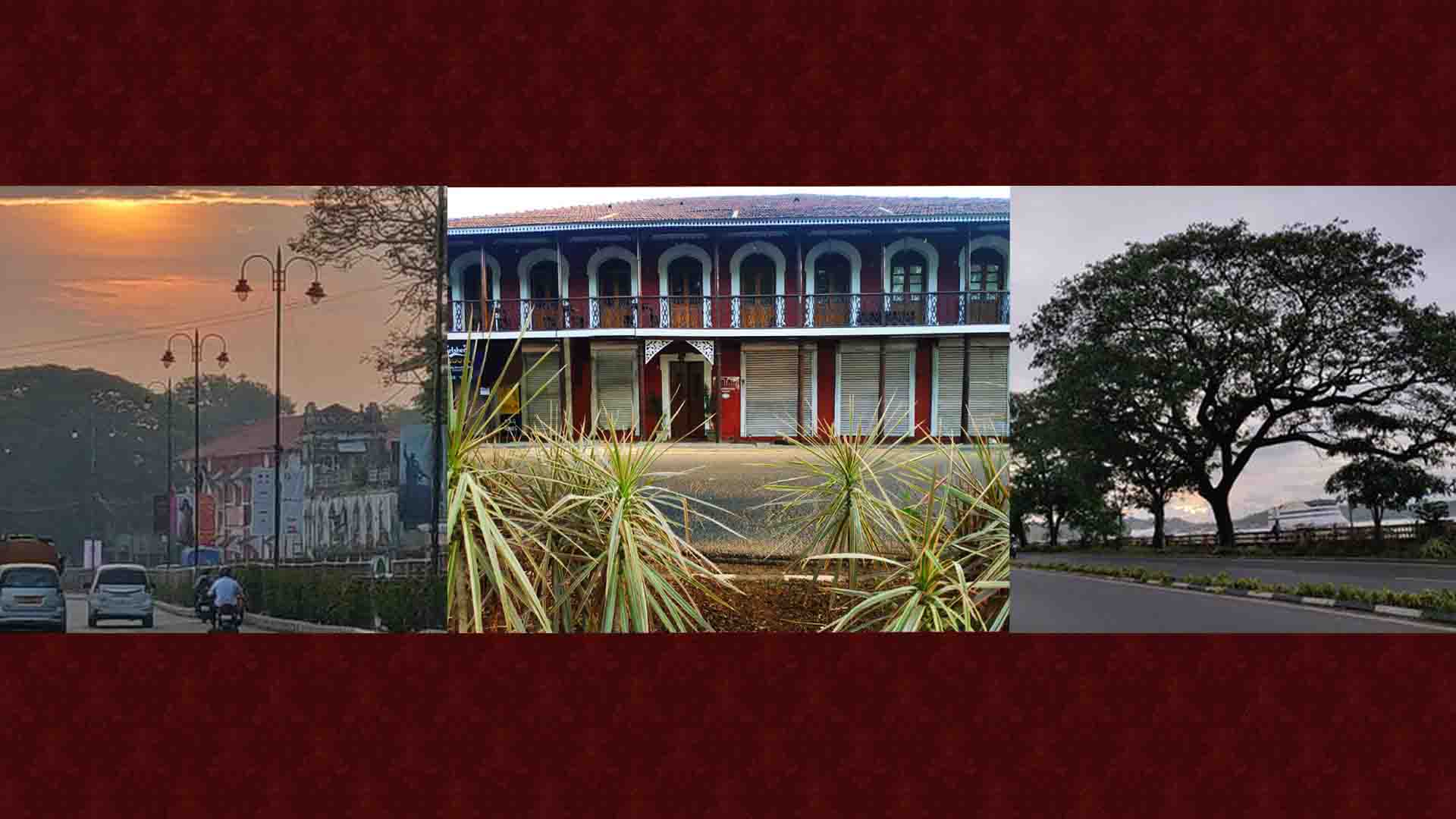
Memories of Panjim

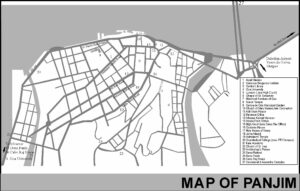
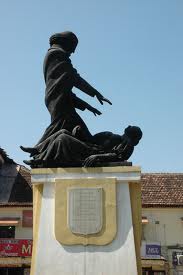
When I was a child, I lived in the heart of Panjim, next door to the centuries-old Adil Shah Palace and under the hypnotic gaze of Abade Faria. My day dawned with the chirping of birds, soon to be followed by the loud siren of the Bombay steamer docking at the Customs pier. The hustle and bustle of the passengers, the clatter of the baggage handlers and the taxis honking on Vasco da Gama Avenue (now Dayanand Bandodkar/DB Marg) roused the 40,000 residents of Panjim still wrapped in sleep, reminding them of their morning tasks, especially of school.
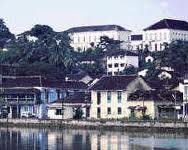
It was now as if the frenzy of the Indian metropolis had disembarked in the Goan capital! The din quickly drifted to the main arteries, Dom João de Castro Avenue and Afonso de Albuquerque Street (now Mahatma Gandhi Road/MG Road), where the bureaucracy and business establishments were situated. Upon the departure of that steamer midmorning, the city regained her composure; she lunched and enjoyed her siesta, and by 4 o'clock resumed her daily battle, which ended around 8 in the evening.
Panjim enjoyed an organic lifestyle only a wee bit different from that of the countryside! Hot bread and fresh fish went door to door; and at the municipal market they sold local produce from villages nearby. But it wasn’t only about what the people bought; it was equally about what they thought – about how they treated one another and the surroundings. They displayed civic sense and were a God-fearing lot. That church, mosque and temple were practically on the same street spoke volumes of communal peace and harmony in the city.
A Japanese writer once labelled Panjim the ‘most unIndian of all Indian cities.’ In his mind’s eye he probably saw an urban landscape devoid of skyscrapers, filth, and chaos. But had he perhaps noted the spiritual architecture of the citizenry? Panjimites were not caught up in a rat race; they lived modestly and contentedly, fearing none, much less the police, a ramshackle force anyway! Burglary was rare, and murder or suicide almost unheard of. Conscience and benevolence – or better, munisponn (humanity, in Konkani) – reigned. In the words of a fado (Portuguese folk song): ‘If someone humbly knocked at our door, they would sit with us at table; and even in the poor comfort of our home, we had loads of affection to offer.’ In short, the townsman didn’t need much to brighten his existence.
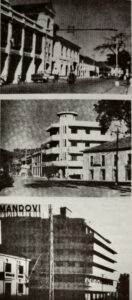 Panjim was all things to all people: a nature lover’s dream, a pedestrian’s delight, a balm for a troubled mind. There were open spaces and colonnaded footpaths. Traffic was simple and light – motorcycles, bicycles, even bullock carts, and automobiles ranging from the popular Volkswagen to the luxurious Cadillac. These were the last of the Mohicans that had emerged, quite paradoxically, from the Economic Blockade; in a way, they denoted the Goan cosmopolitanism.
Panjim was unique; it prided itself on single items: on one daily in Portuguese (O Heraldo) and in English (The Navhind Times); on a radio station (All India Radio) and a music academy (Academia de Música) which had nowhere to hold its annual concert other than at the only public hall (Institute Menezes Bragança). Likewise, Panjim was proud of its one and only three-star hotel (the Mandovi), of its ice-cream shop (Eskimo), and its South Indian restaurant (Shanbhag). Just one cine-theatre (Nacional), one bookstore (Singbal), and one public library (Central) catered to its citizens. For their healthcare needs, they went to the medical college hospital (Escola Médica). Panjim’s children depended on one public ground and football stadium (at Campal) and its adults on their Hyde Park (Azad Maidan) to go to yell their guts out. And children and adults alike enjoyed the evening breeze at the municipal garden (Garcia de Orta).
The quiet beauty of that public garden, the city’s oldest and largest, is etched on my memory: as kids, we jumped there with excitement while our elders bantered back and forth, comfortably seated on self-appointed, gender-segregated benches. From the bandstand, where the navy orchestra and others performed occasionally, I remember naively shouting slogans (“Tujem mot konnank? – Don Panank!”) in the runup to the Opinion Poll in 1967! There were cafés and bars, taverns and little gaming houses thereabouts; and some distressing sounds of tu-tu-main-main at a nearby newspaper office always wafted into the garden. None of this must have ever solved the city’s problems of scarcity and costliness, of poverty and drunkenness! The latter two could be starkly seen in a fringe area dubbed Tambddi Mati (Red Earth), thanks to its untarred alleys and the little red lights on its porches.
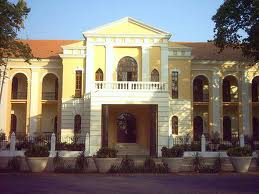
Panjim, therefore, was no garden of virtues. Its relative insularity had prompted me to leave for a city abroad – I was peeved about being everybody's business – until I changed my mind fearing that, meanwhile, my city would become another Mumbai – like nobody’s business! At any rate, the city had already started to expand westward into Miramar and Dona Paula while apartment blocks were quietly replacing houses in the city centre. There was a bridge on the Mandovi and a bus stand in the middle of the Pattó marsh; on the other hand, the sewer network lay incomplete, power outages were common, and piped water was restricted. Pure air was no doubt a saving grace; but then again, in the rains, Panjim would suddenly become Venice!
Panjim was petite, yet many of its sites stayed put on my bucket list. The stairways to Alto dos Pilotos and Escadinhas de Pedras Soltas resembled picture-postcard Lisbon – except for their state of disrepair. The likes of Saraswati Mandir, a library from the post-Republican days, were dimly lit and crowded. And while Tribunal da Relação (High Court) was a charming building adjacent to my house, I never visited it, petrified as I was by the magistrates’ stern faces. In much the same way, I was awed by the Arquivo Histórico (State Archives), but its documents half a millennium old were an ocean that my little bucket could not hold.
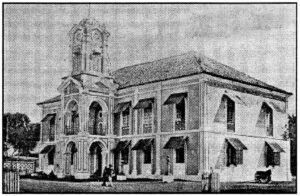
Who can ever forget the five-block Lyceum complex at Alto de Guimarães? Seniors told me that it was once reminiscent of the millennial Portuguese university town of Coimbra; but alas, the spirit had moved – only the shell remained. Worse was the fate of the Senado de Goa (municipal chamber), a distinctive building with a clock tower and hemmed in by gardens; it was torn down on flimsy grounds, so all that one can see now is a gaping space. What’s worse, the city never again got a town hall to match. These and some other facets were thus beyond my little self.
Even so, I eventually came to love and identify myself with the city. People of different creeds lived here in mutual respect. And as though time and tide waited for ever, they happily stopped in their tracks to exchange pleasantries – not to forget that men took off their hats to ladies without ado! Time was when baptisms, birthdays, and funerals were major events; and in those pre-television days, a stroll on Miramar beach at sunset, or a ride to Campal on goddia-gaddi (horse carriage) was all it took to dispel the ennui.
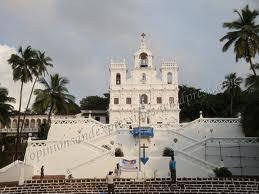
The rest of the magic was left to the cultural calendar to pull off. The Carnival parade, the street dances at clubs Nacional and Vasco da Gama, and the annual quermesse (open-air fair) at Fontaínhas were eagerly awaited. The Way of the Cross wending its way from the iconic Church of the Immaculate Conception up to Paço Patriarcal (Archbishop’s Palace) at Lent; the candle procession streaming the other way around, in October; Christmas celebrations et al were sights to behold. Holi, Ganesh and Diwali brought in traditional delicacies from Hindu friends. And all of this contributed towards a sweet spirit and the joy of living in Panjim.
Forty years on, Panjim is an entertainment hub – one big casino, garish, noisy and manic – which the Covid-19 virus briefly disrupted as only Covid can. The ensuing lull, however, helped me uncover the face of my city. I began to feel a homesickness for that time in the past when we faced shortages of sorts while the world seemed to be enjoying abundant life. Today, this newfound calm and sweetness, simplicity, and decorum make me feel we were never short of anything. No wonder Panjim was the apple of the eye of every Goan worth his salt!
(First published in The Peacock Quarterly, Panjim, July 2022. Reprinted by The Goan Review, Jan-June 2023 https://online.fliphtml5.com/cmlao/eron/?1681654486031
Notes
Abade Faria, or Abbé Faria, refers to the Goan priest José Custódio de Faria (1756-1819) celebrated as ‘Father of Hypnotism’. A statue depicting him in the act of hypnotising a lady was erected in 1956.
Academia de Música (1952), now Kala Academy, was the first professional music academy in Goa, set up under the baton of Europe-trained maestro António de Figueiredo.
Adil Shah Palace was the official residence of the Portuguese viceroy/governor-general (1759-1918). It continued as the seat of government and housed the legislature (pre- and post-1961). An apt extension was built in 1970. The palace is now a museum.
Alto dos Pilotos and Escadinhas de Pedras Soltas (literally, ‘Pilots’ Height’ and ‘Loose Stone Stairs’, respectively) are two of Panjim’s many stairways. The former is located behind Fazenda (Revenue Office) building and the latter in Fontaínhas/Mala ward.
Arquivo Histórico (1595) was first curated by Diogo do Couto, co-author of Décadas, an official history of the Portuguese in Asia and Africa.
Azad Maidan, formerly Praça Afonso de Albuquerque, had a monument to the Portuguese conqueror; now rededicated to Tristão Bragança Cunha, the ‘Father of Goan Nationalism’. A Martyrs’ Memorial was added in the 1970s.
Bombay steamer was a coastal service between Goa and Bombay. Several companies ran it for a century beginning from the last quarter of the 19th century.
Campal, meaning ‘a clearing’, is the area originally developed by viceroy Dom Manuel de Portugal e Castro (1827-1835).
Central Library began as Pública Livraria (1832) and was attached to Instituto Vasco da Gama (1925-1959). Renamed Central Library in post-1961 Goa, it is now housed in a state-of-the-art building at Patto Plaza.
Church of Our Lady of the Immaculate Conception is an iconic structure overlooking the city.
Clubs Nacional and Vasco da Gama were established in the early 20th century, the former largely sponsored by natives and the latter by Panjim-based continental Portuguese.
Economic Blockade (1954-56) imposed by the Indian Union prompted then Portuguese Goa to accelerate agricultural development, import of goods (including automobiles), and start direct flights (Goa-Lisbon-Goa, via Karachi).
Escola Médica, short for Escola Médico-Cirúrgica de Goa (1842), was Asia’s first medical school. Located at the Palace of the Maquinezes, it added a hospital building in 1927, now the headquarters of Entertainment Society of Goa (ESG). It was renamed Goa Medical College in the 1960s and shifted to Rajiv Gandhi Medical Complex, Bambolim, in the 1990s.
Garcia de Orta Garden is named after the Portuguese Jewish botanist and author of the seminal Colóquios dos Simples e Drogas da Índia (1563). He owned an estate in the old Goan capital and had the island of Mumbai on lease from the king of Portugal.
Menezes Bragança Institute, formerly Instituto Vasco da Gama (1871-1963), is regarded as one of Goa’s finest cultural institutions.
O Heraldo, founded by Messias Gomes, in 1900, was the first daily published from the Portuguese colonies; now Herald, published almost exclusively in English, since 1983.
Opinion Poll, the first of its kind in India, was held to ascertain the wishes of the then Union Territory of Goa on the proposed merger with Maharashtra. The popular, anti-merger slogan meant: ‘Your vote?’ – ‘For Two Leaves, for sure!’
Paço Patriarcal, or Patriarchal Palace, is the official residence of the Archbishop of Goa and Daman, who holds the title ‘Patriarch of the East Indies’.
Saraswati Mandir, on 18th June Road, is one of the many libraries set up by Hindu trusts in the new era of political and religious freedom under the Portuguese Republic (1910).
Senado de Goa (1511) was set up on the lines of the municipal senate of Lisbon.
The Navhind Times, founded in 1962 by mining magnate Vasantrao Dempo, is the first English-language daily to be published from Goa.
Tribunal da Relação (1544), had jurisdiction over the Portuguese Eastern Empire (Africa to Japan). It was downgraded to a Judicial Commissioner’s Court under the Indian Union and became a Bench of the Bombay High Court in 1982.