Our ancestors respected nature and lived in harmony with it!
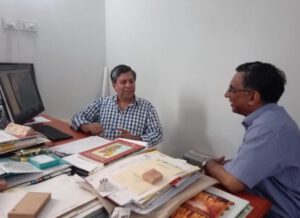
“Our ancestors were more sensible. They respected nature and lived in harmony with it,” says Scientist António Mascarenhas, formerly of National Institute of Oceanography, Goa, while assessing the state of the Goan environment, in an interview with Óscar de Noronha.
For original interview in Portuguese
https://www.youtube.com/watch?v=-BvDOm45GCQ&t=759s
O.N. – What are the issues afflicting Goa's natural environment at this time?
A.M. – There are several issues, right from our forest heritage to more serious ones, such as the improper exploitation of our mining resources, the levelling of khazans (wetlands) to build housing complexes; the contamination of our rivers – and now also the attempt to nationalize them, and so on. But to me, the conservation of the dune-beach ecosystems is the most serious issue that exists.
O.N. – What’s the reason for that?
A.M. – Well, any human action on the landscape results in two types of impacts: reversible or irreversible. Now, the disappearance of the frontal dunes causes the beach to recede, making the coastline much more vulnerable to the action of the sea.
O.N. – So, in order to properly address the environmental status of our territory, we must qualify these matters, mustn’t we?
A.M. – For sure! Google Earth shows where Goa stands! Let’s, then, do a fly-by, say from our beaches to the Western Ghats, across the khazans that are our rice paddy fields. We will see the kind of impact that the different areas of the territory have suffered. For example, if a forest is destroyed, the system can be rejuvenated; and a contaminated river can be oxygenated; even khazans converted into a housing area is recoverable. But the destruction of the coast is almost always irreversible.
O.N. – What examples do you have of this in Goa?
A.M. – Well, in Sinquerim and Candolim, the beach retreated due the impact of the River Princess ship that was stuck there for twelve long years! The dunes were flattened also to make place for hotels and residences. The fact is that the dunes do not get replenished easily; sometimes the sand takes decades to come back. Of course, to speed up the process, the beach can be nourished, by filling up the affected parts with new sand. This process also occurs naturally during the period after the monsoon, between September and March. For example, in Baga, Morjim and Querim, a sandy tip is formed. The tip is caused by the sand transported by the coastal current that enters the river or estuary, and is then pushed counterclockwise by the sea. Further north, the dunes disappeared to make way for shacks, with the exception of Mandrem, Morjim and Galgibaga…
O.N. – The case of Galgibaga, in the taluka of Canacona, is different, isn't it?
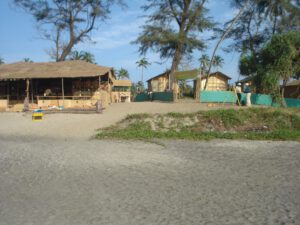
A.M. – Yes. This area is protected by the Coastal Regulation Zone (CRZ) law, and is considered a breeding ground for turtles, one of the four sites in Goa. Hence, urban development in this place is completely forbidden. And thus the beach has remained well preserved. But on those dunes, there are small little houses that function as restaurants. The National Green Tribunal has ordered their demolition.
O.N. – As far as I know, the dune protection in Miramar was one of the first environmental campaigns that you undertook, in 2007, well over a decade ago...
A.M. – That's right. I was part of the Goa Coastal Zone Management Authority, and am at present a member of the Goa Biodiversity Board. One of the projects we proposed was to save these frontal dunes. Some sites have been indicated where you can replicate that experience of dune reconstruction. Miramar beach is already being considered for this.
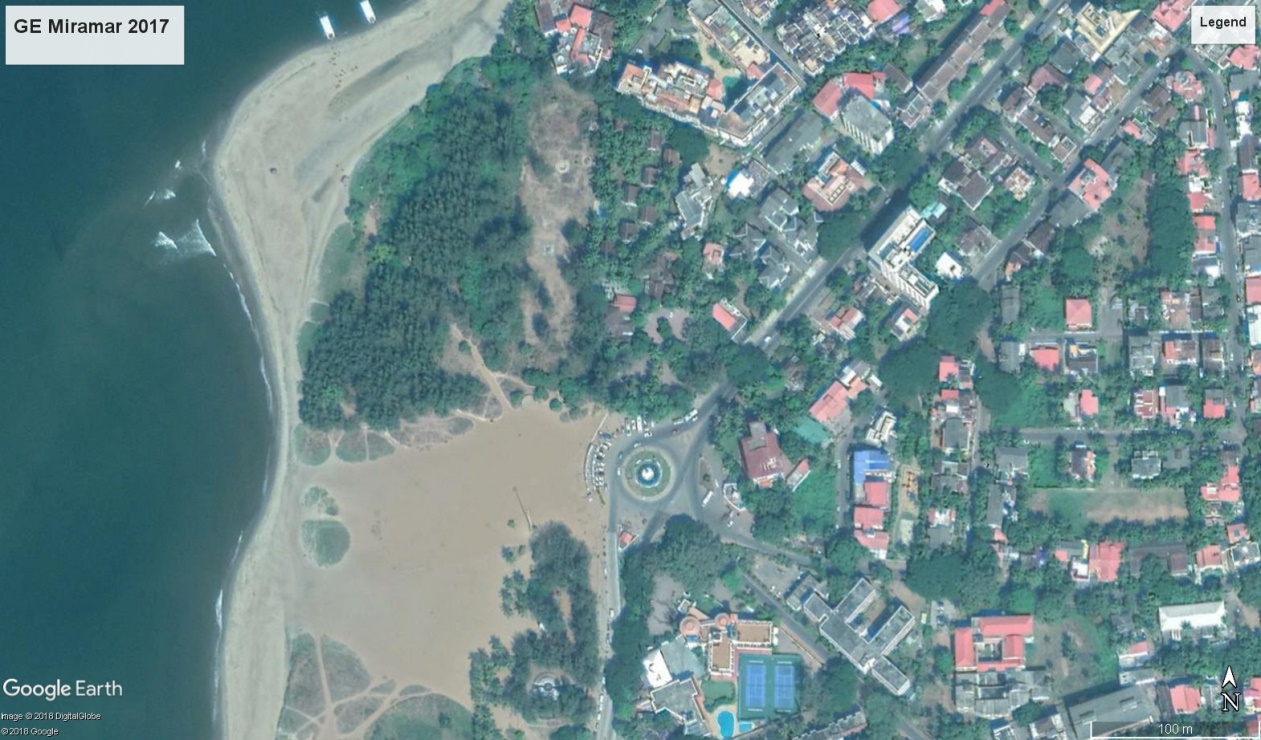
And talking of Miramar: here you find a semi-circular sand deposit, in the form of a sand bar, perhaps one of the few its kind in the world. It accretes and gets washed out, and then the sand comes back during the monsoon. It is an annual phenomenon and has been going on for centuries. The feast of the church of St. Lawrence, on the Sinquerim hilltop, from where you can see the silting, coincides with the opening of the sand bar…. I don’t know the connection.
O.N. – That was one reason why Albuquerque had to wait until the end of the monsoon to win Goa back... Here we see a connection between a natural phenomenon and a historical occurrence….!
A.M. – That's right. There is that 'tongue of sand’ at the site, now known as the Aguada sandbar. Here the navigation channel is very narrow and, after the monsoon, it opens up naturally. Unfortunately, the authorities are thinking of dredging the channel, and that’s going to be a real tragedy. Scientist C. S. Murthy has described the functioning of this area. The currents go south to north while on the other side they flow from north to south. On the coast, the currents run from south to north, from Caranzalem to Miramar; and from north to south, from Campal to Miramar. This process is responsible for the formation of the tongue of sand in Miramar. During the monsoon, when the waves caused by the winds from the west reach Miramar, they cause sand erosion; and later, when the good weather returns, the currents get normalized, helping to rejuvenate the beach. This has been an annual process noticed for decades.
O.N. – And does that protect the coast?
A.M. – Well, it was wrongly assumed that the coast would be protected with the construction of a barrier or wall made of large basalt stones brought perhaps from Maharashtra. But this wall has caused the beach to disappear and today we only have those stones left there. This human action on the beach has had consequences just in front of the old Medical School. The Campal stream flows out here. At this point a sandbar has emerged, blocking the passage of the said stream.
O.N. – By and large, is the ecology of the capital city at risk?
A.M. – The danger is not of very great proportions but it is also not something that can be ignored. For example, saline water enters and flows up to where the Fire Brigade is currently located. Despite this, there are many who have an interest in reducing the status of the stream to that of a nullah, a mere drain. The geological maps of the Survey of India of 1965 prove that there is movement of the tidal waters. Therefore, the stream is comes under the purview of special laws relating to the preservation of coastal zones. On the other hand, if it is reduced to the status of nullah, the said area will be outside the scope of those laws.
O.N. – There was destruction of the dunes when the area of Caranzalém was urbanized... What irreversible effects are we witnessing today?
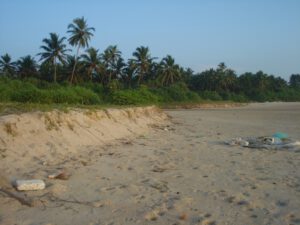
A.M. – Well, in the 1990s the Caranzalém swamps began to disappear, which today are the largest urban area located in the wetlands in Goa. Before this, in the 1970s, the largest area that suffered destruction was where the bus terminus of the capital is located. Today, the high-rise buildings there have their foundations as though floating in the groundwater. These waters are now contaminated. All the wells in the city suburbs have no potable water – whereas I have a fresh-water well at my house in the village of Raia.
O.N. – And for that matter, what is your say on the Mandovi, which is the hope of salvation not only for the capital but also for the territory?
A.M. – It so happens that the neighbouring state Karnataka, where the Mandovi is born, has been trying to divert the water at the very source. The case is in court. Meanwhile, today, Mandovi's condition is nowhere near the same as that of Delhi's Yamuna or Bangalore's Ulsoor Lake. It is less oxygenated but, fortunately, not only does the monsoon refresh the river but also its connection to the sea neutralizes all harmful influences.
O.N. – You have been a scientist at the National Institute of Oceanography... What is the relationship between oceanography and the ecology of the hinterland?
A.M. – Let me explain: The oceans are controlled by the tides twice a day. The water levels rise and fall. The same happens in rivers. In Goa, the impact of the sea is felt up to the remote village of Savoi Verem, in the taluka of Ponda, and up to the village of Macazana of the taluka of Salcete there is appreciable amplitude of tides and saline influx. So, the ocean is connected with the smallest stream. This is confirmed by mangroves, which indicate the presence of saline water. In fact, the area that goes from Cortalim to Macazana, passing through Curtorim and Rachol, has large mangrove swamps. The same can be said of the area between Carambolim and Agaçaim, passing through Azossim, Mandur and Neura.
O.N. – Which is the regulatory authority for wetlands?
A.M. – Well, it is interesting to note that all khazans belong to our Comunidades (agricultural communities). But presently the recently formed Wetland Authority of Goa is in charge. The khazans function as reserves of drinking water. Hence it is essential that our Comunidades are aware of the issues and assert themselves.
O.N. – It seems that the mangroves have helped to afforest the territory…
A.M. – That's right. But this too has to be controlled because mangroves are "colonizers". For example, in Panjim, a mangrove has appeared in an area that was traditionally a salt pan. Likewise, the floodplains at lower levels are now invaded by these trees; and this prevents farmers from cultivating the fields.... These mangroves have engulfed the Linhares Bridge from Panjim to Ribandar and are thus destroying the identity of the historic bridge. And to complicate matters further, there is a garbage treatment plant in the middle of the same mangrove lagoon. These are matters that call for attention.
O.N. – You are a recipient of the ‘Green Heroes’ award from TERI (Tata Energy and Resources Institute), New Delhi. You write regularly for the newspapers, popularizing many of the subjects we’ve talked about today… Is the level of public participation in these matters something that satisfies you?
A.M. – I’m neither satisfied nor frustrated. For 36 years I worked at the National Institute of Oceanography in Goa, a public funded organization. Salaries are paid by the Public Exchequer; hence my primary duty is to meet the needs of society in general and, in particular, to contribute to the conservation of nature.
Of course, public participation in these matters could have and should have been better.... We have the obligation to know the functioning of natural ecosystems: the functioning of the coast and the hills that are found in the hinterland. But it seems that today we suffer from information overload. There are many who do not read, there are others who read but do nothing, and only a few who do act proactively.
But the important thing is that to have proper planning and coordination between the authorities. To manage these issues, a cross-sectoral approach is indispensable. And there should be no politicking. The whole matter must be treated as a sacred cow: the mangroves, dunes, marshes, tidal areas, beaches are all sacred. They are exclusively under the responsibility of Coastal Regulation Zone I (CRZ I), but there have been deviations, there have been transgressions…
O.N. – You’ve travelled through Europe. What initiatives have you noticed?
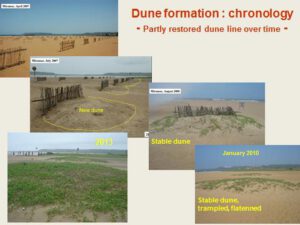
A.M. – For example, in 2007, I visited the University of Algarve, as a fellow of Fundação Oriente. The sand dune systems there have been recreated. On the beach of Tavira, in a part of the marsh called Ria Formosa, there are now long dune areas; these have been artificially reconstituted but work naturally. Some wooden bridges have also been built that help visitors move to the beach without trampling the frontal dune. Faro beach is a good example of conservation of the fore dunes.
We have similar examples In France. The beach nourishment technique is employed for sand restoration purposes, and this controls erosion. Also erection of wooden fences blocks wind borne sand; and over time these sandy deposits become the frontal dunes.
That's precisely what we propose for Miramar Beach. Well, it also helps to have plantations on the dunes: they help stabilize the dunes.
O.N. – It is obvious that much depends on the political will and public participation in safeguarding our heritage...
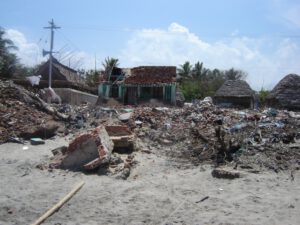
A.M. – Yes, there’s no doubt about that. I would be happy if the authorities and the general public were convinced of the great importance of the conservation of natural systems, in particular the coastal area, our beaches and the dunes. These are the first line of defence against the incursions of the sea. If we save the dunes, the population will be saved in the event of an attack from the sea. The tsunami of the year 2004, which devastated parts of Tamil Nadu, has already proven this theory right. I always say that the population was decimated not by the tsunami but by our recklessness in provoking the forces of nature, with construction of urban structures in inappropriate places. In this respect, our ancestors were more sensible. They respected nature and lived hand in hand with it. Thus, from Canacona to Pernem, they were always safe and sound.
O.N. – Well, it was a pleasure talking to you. Thank you for the panoramic view that you gave us on a topic of great importance to our beloved Goa. Thank you.
A.M. – Thank you! Thank you very much!
(First published in Revista da Casa de Goa, II Serie, N.º 6, Set.º-Out.º de 2020)
https://documentcloud.adobe.com/link/track?uri=urn:aaid:scds:US:80665fef-61a8-44bb-988a-e697ace84c22

Os vinte cinco anos da Fundação Oriente em Goa...
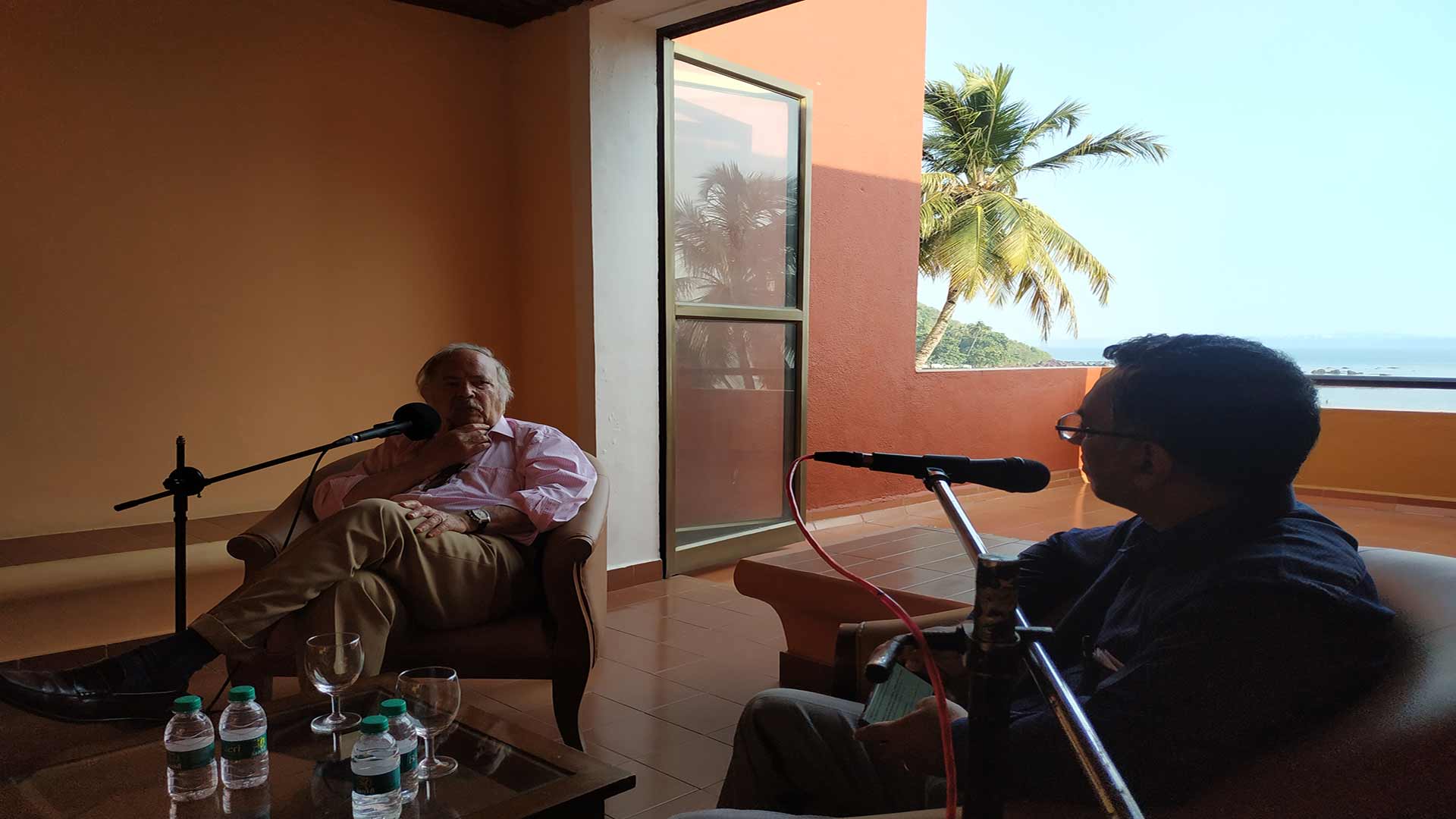
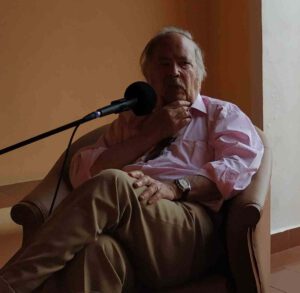
Entrevista ao Dr. Carlos Monjardino, Presidente do Conselho da Administração da Fundação Oriente, por Óscar de Noronha

ON – Senhor doutor, muito boa tarde, e obrigado por nos receber! E desde já parabéns pelo jubileu da prata da Delegação da Fundação Oriente em Goa!
CM – Boa tarde e muito obrigado! É sempre um prazer.
ON – Que balanço faz aos últimos 25 anos?
CM – Os primeiros anos foram, não digo difíceis, mas demoraram algum tempo a passar. Tínhamos algumas limitações – não muitas, porque desde o início tivemos um grande suporte por parte de quem tinha que nos “fiscalizar”: era o ICCR [Indian Council of Cultural Relations]. E logo a seguir quando eu fui ter com eles em Delhi, para lhes apresentar o primeiro projecto, o primeiro plano de actividades da Fundação aqui, que eu insisti que era para a Índia e não só para Goa, porque na altura, é bom saber, há 25 anos, as relações não eram as que são hoje. E, portanto, expliquei que estaríamos instalados em Goa, mas que a nossa acção ia para além de Goa também, como tinha que ser.
Nessa altura não tivemos quaisquer problemas. Analisaram o nosso plano de actividades. Houve uma única coisa que não quiseram que nós fizessemos, que foi ter uma livraria portuguesa em Goa. Não quiseram (a rir) mas isso também não teve problema nenhum, porque, passado muito pouco tempo, fizemos aqui uma feira de livros – foram duas, aliás, feitas por nosso comum amigo António Alçada Baptista, que gostava muito de Goa e que organizou muito bem essas duas feiras... foram um sucesso imenso.
Pronto, as coisas foram correndo. Fomos apoiando projectos aqui; fomos publicando algumas obras de escritores locais; também todos os anos vamos dando algumas bolsas de estudo; fomos apoiando o ensino de português que até hoje continuamos, e nós hoje temos 14 ou 15 professores de português que, de alguma maneira, têm um apoio nosso para ensinar português aqui...
E, portanto, fomos andando… Temos aquela célebre exposição que todos conhecem, do [António Xavier da] Trindade, lá na delegação da Fundação. É um pintor maior e, portanto, em qualquer sítio do mundo era conhecido como o Rembrandt daqui da zona...
ON - O Rembrandt do Oriente!
CM – ... do Oriente, e fomos surpreendidos com uma doação daquelas obras, mas que aceitámos de imediato com algumas limitações que existiam na altura... Depois adquirimos mais algumas obras do mesmo artista, mas não muitas... Também não há muitas no mercado. E agora vamos fazer uma segunda edição do Xavier Trindade com muitas obras que não foram expostas antes e que serão expostas este ano, lá nas Fontaínhas, na nossa Delegação.
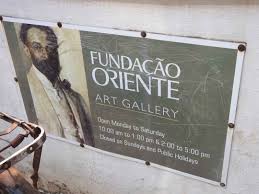
ON – Muito bem. Além disso, a Fundação Oriente fez trabalhos com os nossos edifícios – com o nosso património arquitectónico; e programas de música, como o Festival do Monte!
CM – Sim, quanto à recuperação de edifícios de interesse histórico ou simplesmente arquitectónico aqui em Goa e à volta de Goa, nós, porque tínhamos a noção – o que é normal, enfim – que o que distingue Goa do resto da Índia é que tem uma componente cristã muito grande. E portanto tem as igrejas, tem as capelas e os cruzeiros por aí fora, e nós fomos ajudando nisso, mas depois também sentimos que não podíamos ficar só a apoiar essas iniciativas que nos propunham, e resolvemos ir mais longe do que isso: resolvemos apoiar também uma recuperação dum templo hindu, que para grande espanto de muitas pessoas... –mas estas coisas eu, às vezes, como se costuma dizer, tiro um coelho do chapéu... – e fizemos isso... Foi aceite pelas entidades que controlavam lá o templo hindu e recuperámos o templo hindu. Porque havia sempre umas vozes que diziam ‘porque apoiar sempre as igrejas?’... Eu, claro que tanto apoio as igrejas como apoio os templos hindus. Mas é claro que aqui o que faz mais sentido é apoiar as igrejas porque há uma profusão de igrejas que precisam de ser recuperadas... Mas, pronto, vamos fazendo, temos uma visão muito aberta do que devemos fazer aqui...
ON – Aliás, até calha bem porque os templos hindus aqui são muito diferentes dos templos do resto da Índia. Aqui têm uma característica indo-portuguesa mesmo!
CM – É! Portanto se alguém responsável por alguns templos hindus que tenham que ser recuperados, e que me vá ouvir, podem falar com a dr.ª Inês Figueira [Delegada em Goa], que nós teremos maior prazer em apoiar também a recuperação de templos hindus....
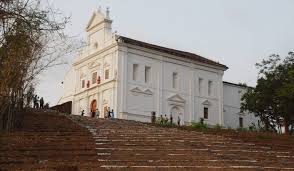
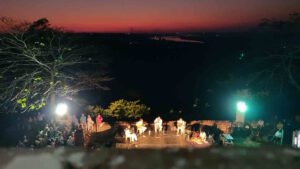
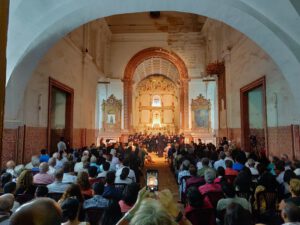
Mas depois também a outra parte que estava a dizer: os festivais de música. O festival da Senhora do Monte para nós tem um significado especial porque há dezoito anos que promovemos aquele festival. Primeiro, começámos por recuperar a Capela [do Monte], que foi um trabalho bastante pesado não só do ponto de vista arquitectónico de recuperação, mas também financeiro. Foi muito pesado. Mas, pronto, foi feito e agora é preciso voltar a fazer alguma manutenção porque com o clima que existe aqui às vezes as coisas vão-se deteriorando rapidamente... E agora há uma nova fase de manutenção e de recuperação duma parte que tem que ser feita também....
ON – Os objectivos da Fundação Oriente variam de país para país...
CM – Variam, consoante o que é a realidade em cada país...
ON – O que é que a Fundação gostaria de fazer, mas ainda não conseguiu fazer na Índia?
CM – Há certamente muitas coisas que a gente gostaria de fazer, mas nós temos cingido àquilo que é possível fazer com os meios que temos – porque os nossos meios também não são ilimitados – e passámos a mensagem de que a Fundação Oriente, que foi criada aqui um pouco por iniciativa do dr. Mário Soares... Quando eu fui para presidente da Fundação – foi ele que me convidou, de resto – me chamou à atenção para uma fundação que eu tinha criado, assim, no papel, antes, em Macau, e depois eu fui para Portugal... Ele chamou-me para eu de facto dar vida à Fundação, coisa que eu fiz... Passado muito pouco tempo, ele telefonou-me e diz-me assim: ‘Ouça lá, você não quer fazer qualquer coisa na Índia? Nós precisamos de reforçar os laços com a Índia; as relações ainda estão um bocadinho tremidas. Talvez fosse bom ter qualquer coisa...’ ‘Claro que estamos, e o natural seria Goa’. E ele diz-me assim: ‘Com certeza. Você vá lá e veja se consegue então uma coisa que era muito importante para Portugal e para a Índia, que houvesse uma instituição que fizesse essa ligação, ou que ajudasse a fazer essa ligação.’
E então eu cá vim, como pessoa bem-comportada – que não sou – mas naquela altura fui – vim cá a mando do dr. Soares, para criar a Delegação cá. E ele tinha a noção de que era necessário naquela altura fazer mais qualquer coisa porque aqui – vocês aqui se calhar não se lembram... vocês são todos muito novos, você incluindo é muito novo – vocês não se lembram que há 25 anos não havia nada de português em Goa...
ON – Sim, a gente aqui em Goa perdeu uma geração... completamente... houve um hiato, mas graças a ...
CM – Pronto, mas não havia nada, não havia Consulado, não havia nada. Não havia o Instituto Camões, não havia nada. Por isso é que a gente assumiu o ensino do português também... Bom, e o Consulado, nem pensar nisso!... Bom. E, portanto, estávamos aqui um bocado sozinhos. Não temos funções consulares, portanto não podíamos substituir-nos ao Consulado, mas iamos fazer aquilo que achámos que podíamos fazer, com grande ajuda do Governo, de então, de Goa... Eram pessoas muito compreensivas, e que entenderam bem aquela ideia que o dr. Soares tinha na cabeça, que era preciso fazer qualquer coisa aqui, na Índia e a partir de Goa.
ON – Mas ainda falta algum passo a tomar? O senhor doutor acha que o Governo da Índia ou o de Goa deve tomar um passo que ajude depois a Fundação a actuar melhor?
CM – Eu acho é que poderia haver... Eu gostaria – gostaria, mas este é um desejo e isto tem outras limitações – eu gostaria que o Governo local estivesse mais próximo daquilo que nós fazemos, mas não está muito... Digo a si, em abono da verdade, não está muito... Houve uma altura, há uns anos atrás, que esteve, razoavelmente próximo.... Agora não vou por aqui dizer nomes porque se não arranjo por aqui um sarilho de todo o tamanho, porque já não são os mesmos partidos... arranjo por aqui uma trapalhada, portanto o melhor é não dar nomes... Mas houve uma altura em que estavam muito próximos daquilo que nós fazíamos. E portanto, gostaria que fizessem mais; que o responsável da Cultura aqui tivesse um melhor interesse naquilo que nós fazemos. E em Delhi também, mas em Delhi eu acho que, apesar de tudo, – é longe – mas apesar de tudo, quando se vai lá eles mostram interesse naquilo que nós fazemos na Índia em geral e em Goa em particular...
ON – Os anos 97 e 99 devem ter sido marcos importantes para a Fundação...
CM – 97, não tanto, 99, sim. Em 97, para a Fundação teve um pouco foi o problema da China e o Hong Kong. A questão de Hong Kong não foi dar em nada. O ano de 99 foi mais importante por causa da saída da administração portuguesa de Macau. Isso foi muito importante.
ON – Mas eu falava dos fundos dos casinos, que cessaram...
CM – Não, já antes não havia nada. Eu já tinha tido uma pega com os chineses – que é o meu costumo arranjar assim umas pegas de vez em quando!... (a rir) Não, porque os chineses não levaram a bem que a Fundação tivesse sede em Lisboa e não em Macau. Portanto criou-se ali um mal-estar, e esse mal-estar levou a que eu tivesse que ceder – o que é difícil, porque normalmente eu não cedo com muita facilidade! Em 1997, com efeitos retroactivos em 96, deixámos de receber dinheiro local... E era muito dinheiro que recebíamos de Macau.
ON – Exacto! No entanto, a Fundação soube gerir as coisas: investiu noutros lugares, etc...
CM – A Fundação soube investir e tinha guardado uma almofada grande em termos de liquidez, não gastando tudo aquilo que tinha recebido do passado e pondo de parte... Eu não adivinhava o que ia acontecer, mas felizmente pus de parte uma parte substancial daquilo que tínhamos recebido no passado – coisa que as pessoas me acusavam muito, dizendo: ‘Recebe tanto dinheiro e gasta tão pouco!’ E eu disse: ‘Olhe, é para outros dias.’ Olhe, eles vieram – os dias mais complicados vieram depois. Mas tivemos muita sorte e algum saber... Já não gosto de dizer isso porque quem faz os investimentos sou eu...
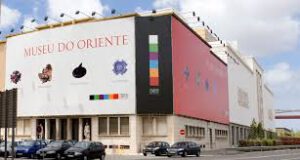
Fizemos dois ou três muito bons investimentos que criaram mais valias importantíssimas para a Fundação... Para lhe dar uma idéia – esta é uma área de que as pessoas acham graça, mas que é um bocado árida – nós hoje temos em termos de activos praticamente a mesma coisa do que tínhamos quando começámos a Fundação. E já gastámos para cima de uma fortuna nestes 25 anos, porque ao princípio gastámos muito dinheiro na China, muito mais, se calhar, do que devíamos ter gasto, mas nós tínhamos que afirmar uma posição na China, portanto fizemos um esforço grande em relação a subsídios para a China e, depois, em Macau, e só um bocado depois é que nos virámos para Portugal. E só começámos a trabalhar mais a sério com Portugal já passados alguns anos porque era a altura, fizemos o Museu [do Oriente], que também foi um investimento particularmente grande e onde temos peças indianas muito bonitas ...
ON – A “almofada” de que o senhor doutor falava ajudou a absorver todos os choques dessas bruscas mudanças económicas que houve na Europa...
CM – Exactamente, exactamente!
ON – Apesar de todos os problemas, conseguiu abrir um Museu de que agora falou e que, se calhar, é o maior projecto da Fundação até hoje...
CM – Sim, é o maior projecto da Fundação até hoje. As pessoas gostam muito do Museu. É de facto um museu muito activo, interactivo mesmo. Em Portugal é de longe o museu com mais actividades, para miúdos, para crianças e para jovens. E tem várias componentes: tem yoga... tem tudo! É, portanto, um museu curioso, muito diferente dos outros museus que há por lá. Mas foi de facto um projecto maior que, financeiramente mais pesado... mas está lá... É aquilo, e pronto, nós, a Administração, temos agora encostado ao Museu um edifício que é o nosso edifício da Administração, que do edifício que estava no meio da cidade passou para ali... e agora estamos todos juntos. É um projecto que hoje é um todo que faz sentido...
ON – O senhor doutor passou do sector governamental para o sector privado...
CM – Não, passei do sector privado muito brevemente para o sector governamental, como você diz, e depois rapidamente também saí outra vez e voltei. Não é que tenha algo contra o público, não tenho; antes pelo contrário, mas a vida é assim. Tive aquela oportunidade que me foi dada pelo dr. Soares para ir para Macau, e estive em Macau 14 meses, não estive mais, e voltei outra vez para o privado...
ON – E o que significa para o doutor, pessoalmente, o ter estado à testa da Fundação Oriente há 32 anos?
CM – 32 anos: o que é que significa? Significa que estou velho! (a rir) Não, significa que apesar de tudo é interessante – eu não escondo – acompanhar um projecto que eu próprio criei. Isso é interessante para mim ver a evolução da Fundação com uma forma sólida: é isso, e de outra forma não poderia ser, porque eu sou conhecido – e pergunte ali à dr.ª Inês, ela dirá a mesma coisa – eu sou muito agarrado ao dinheiro, de maneira que estou sempre a fazer poupanças em tudo...
ON – E faz bem, porque o senhor doutor disse uma vez que sem dinheiro não se faz nada... não se faz cultura!...
CM – Pois não! Não se faz cultura, não se faz nada! Às vezes as pessoas da Cultura não funcionam bem assim. Acham que o dinheiro tem que aparecer de algum lado, mas não querem saber de onde. Lançam-se e dizem: ‘Ah, agora o dinheiro há-de aparecer.’ Mas não é assim; não é assim, e de facto, sem dinheiro não se faz rigorosamente nada! Por isso é preciso, antes de mais nada, meter uma gestão sã nos activos deste tipo de instituições como doutros, e é preciso fazê-lo...
ON – Temos que agradecer ao senhor doutor por todo o trabalho que a Fundação tem feito aqui por Goa. E queria saber quais os seus sonhos para o próximo futuro...
CM – Os meus sonhos?! Eu já estou velho para ter muitos sonhos! Vou tendo alguns, apesar de tudo! Bom, aqui em Goa? Eu nunca pus de parte completamente a hipótese, noutro campo que não cultural, de investir em Goa. Houve uma altura em que ainda pensei em investir na hotelaria porque a Fundação tinha várias participações na hotelaria, e ainda tem. Tem em Timor um hotel, em Lisboa neste momento só tem um. Mas na área grande de Lisboa, tem um. E pensei depois: é muito longe! E para gerir as coisas assim, à distância, é complicado, portanto esse projecto não avançou. Mas se aparecer um outro projecto qualquer, não digo que não a estudar um eventual investimento aqui em Goa.
ON – Entretanto continuam com as coisas que já começaram... A Delegação aqui está a fazer um belíssimo papel...
CM – Espero que considerem que sim!
ON – Sim! Sim, sim!
CM – Se não temos que agarrar aí a dr.ª Inês! (a rir)
ON – Então, senhor doutor, com isto agradecemos muito esta conversa e desejamos muitos anos de vida para o senhor doutor – que continue com os sonhos – e todo o sucesso para a Delegação da Fundação Oriente em Goa!
CM – Muito obrigado, muito obrigado!
ON – Muito obrigado sou eu.
(Entrevista radiodifundida em 23 de fevereiro de 2020, no programa Renascença Goa, acessível no You Tube: https://www.youtube.com/watch?v=4HqO1k5iDX4; e publicada na Revista da Casa de Goa, II Série, No. 4, Maio-Junho 2020)