Oscar Castellino (OC) in an interview with Oscar de Noronha (ON), Associate Editor, Revista da Casa de Goa.
 For the Goan diaspora, music has always been the thread that stitches together our scattered history. Few artists pull that thread with as much resonance as Oscar Castellino. A baritone, who traces his Goan ancestry to the villages of Assagão and Curtorim, and whose voice bridges the gap between the vibrant streets of Mumbai, the lush hills of Goa, and the grand opera houses of Europe, Oscar is redefining what it means to be a Goan artist in the 21st century.
Lisbon Concert
ON: Lisbon is looking forward to your concert on 8 March. How have you curated the repertoire to resonate with both the Portuguese locals and the Goan diaspora?
OC: This is my first trip to Portugal and it is very exciting for me, due to the rich cultural bonds between Goa and Portugal. I love the sound of the Portuguese language and it has shaped my recent compositions. I would like to showcase some of them at the concert. Along with new compositions, I have selected beloved songs from the Goan tradition as well as beloved operatic tunes. Rodrigo Ayala, the pianist, and I will take the audience on a journey from Goa to Italy to Lisbon.
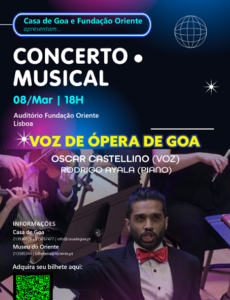
ON: In a city as historically connected to Goa as Lisbon, what specific emotions or cultural memories are you hoping to stir through your performance?
OC: My grandfather would sing lullabies to me in Portuguese and Konkani. Being exposed to those sounds at a very young age, then travelling out of Goa and India, picking up musical traditions and skills, and now coming back into that tradition to unite my background and my skills in opera — culminating in a concert in Lisbon — is a journey worth sharing with the audience. On the morning of the day when I leave London for Lisbon, I have a rehearsal at the Royal Opera House for Samson et Dalila by Camille Saint-Saëns. Incidentally, he is also the composer of Une nuit à Lisbonne.
Early Music Career
ON: Growing up in Bombay, how did the city’s eclectic soundscape — from choral traditions to the Stop-Gaps Ensemble — shape your early understanding of Western music?
OC: My family are from the Sacred Heart Parish in Santacruz West, and we had the privilege of listening to wonderful singers at our church events. I remember in particular Gus D’Lima, who had a fabulous tenor voice and would sing from the loft in the church — that was my first exposure to a classically projected sound. I then joined the Stop-Gaps Choral Ensemble under the direction of Alfred D’Souza, who is a leading figure in the choral world in India and a pioneer in many ways. He would have us project our sound and move at the same time, with quick costume changes — very good training for my career in opera later.
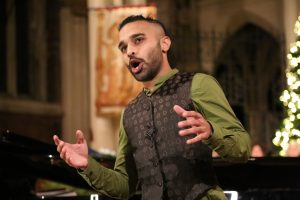
ON: You were a software programmer before being discovered by Patricia Rozario. Could you describe that turning-point moment?
OC: After completing my Physics degree, I received a scholarship from the National Centre for Software Technology to do an advanced diploma in software programming. I then worked in the vibrant IT sector in India in the early 2000s. It was at that time that Patricia Rozario came to India to scout for voices with operatic potential. After hearing me sing, she recommended that I audition at the Royal College of Music in London. I auditioned after completing a workshop with her. I remember the day clearly — I was writing code at my desk in my software job when I saw a pop-up email notification on my screen saying that I had been accepted at the Royal College of Music. That was a pivotal moment in my journey.
ON: Transitioning from a science background to the Royal Colleges of Music and Drama is a massive leap. Beyond the financial hurdles, what was the steepest learning curve you faced when competing with students who had been training since childhood?
OC: When I mentioned to people in the West that I had moved from a software job to a music career, they were often surprised because of the vast difference in financial prospects. However, coming from an Indian background, this opportunity was something so unusual and almost unheard of that when I received a scholarship to study at the Royal College of Music, there was no question that I would take it up. It opened a whole new world to me — something that very few people from India could consider doing.
Coming to London to train in opera was a steep learning curve, not only musically but culturally. My colleagues had trained for over a decade in many cases, and I did not yet know how to read sheet music. We had a very intense training schedule every day and had to prepare songs in various languages — all of them new to me. But as with everything, I knew it would take some time and that I would grow more comfortable. I had a lot of confidence in my ability on stage, and I knew it would just be a matter of time before everything came together. Indeed, in my second year of training I was given my first role in an opera — the character of Dancairo in Carmen — and that was a very good showcase for me.
Singer, Composer, Actor
ON: From performing at the Queen’s Diamond Jubilee Pageant in 2012 to singing in major opera houses, which moment has been the most surreal or emotionally fulfilling for you?
OC: There have been many large ovations and curtain calls on the operatic stage. However, interestingly, the most powerful moment for me was when I sang at the Mars Convention in California, USA — performing my own composition about Mars to an audience of scientists, astronauts, and space enthusiasts, who all sang along with me the refrain to “Rise to Mars”. It was a powerful moment because it combined the power of opera with the reality of an ongoing mission. I love to compose and to sing music that moves people and inspires them to dream big.
ON: “Rise to Mars” is an unusual topic for an opera singer. What inspired you to compose that inspirational space anthem? Also, how does your composing process differ from your singing?
OC: Two things inspired me about space. First, I of course have a degree in Physics. But beyond that, I attended a boarding school in the north of India in the hill station of Mussoorie, where the skies were very clear with very little pollution — you could see the night sky and the stars brilliantly. As a little boy, that begs you to wonder about celestial objects, their origins, and what lies beyond. That wonder has always stayed with me, and it came naturally to compose a song with the power of an orchestra to fulfil that imagination.
Composition is really an extension of my singing — I have mostly composed for my own voice, and it is doubly powerful when you sing your own work because it comes from deep within. You also have the liberty to write music that suits your voice. I have also written music for other voices — this past Christmas I wrote a song called “Nas praias douradas de Goa”, exploring the writings of a Goan-Portuguese poet, Gabriel Pais, who was my grandfather, and it was sung by Chelsea D’Souza. Her rendition took the song to another level entirely, which was very fulfilling to witness.
ON: What was the reaction from international listeners when you sang the Konkani Christmas carol “Mari Matek Ballok Zala” at the 2020 Commonwealth Christmas Concert? Why was that performance important to you?
OC: “Mari Matek Ballok Zala”, composed by Manohar Sardessai (lyrics) and Micael Martins (music), was an instrument that not only gave me the confidence to sing more in Konkani, but also reached many new listeners around the world — people hearing the Konkani language for the very first time. Not only did people back in Goa appreciate the song, but people from the opera world wrote to me asking about the language and the composers. I have sung many songs that appeal to particular communities — whether from the opera world or the Goan diaspora — but this song had the power to appeal across tastes and cultures.
This performance was very important to me in hindsight because, although I do not rate my Konkani and thought that listeners would be hard on me if my language was not perfect, I found that Goan people are very supportive when you use the language with purpose and good intentions. That encouraged me to further explore both Konkani and Portuguese-language music.
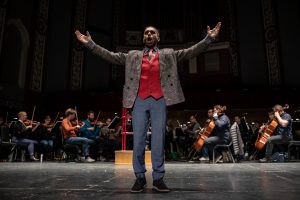
ON: How has your unique cultural background allowed you to look at operatic roles through a different lens, transforming potential language barriers into artistic opportunities?
OC: One can look at challenges in different ways. You could look at entering the operatic world from an unusual background as a disadvantage — you may not know the norms, you may not have trained as a child, you may face early rejection. On the other hand, if you are confident in your ability as an artist and performer, and you know that you have something to contribute, then when you persist and persevere, you will cut through and come up with something exciting — something that not only adds to the art form you are performing in, but also takes something back to your own culture.
Goa and the Future
ON: Goans have immense natural musical talent. What concrete advice would you give them for honing their craft and pursuing Western classical music? Also, how can they bridge the gap to opportunities in the West?
OC: Because Goan music has influences from both Western and Indian musical traditions, we have a unique situation — a wealth of classically adept musicians who are also able to adapt and improvise. These are powerful tools together for making great music.
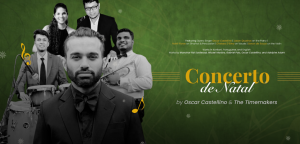
I have seen various musicians put out their work on YouTube and other platforms, and these are excellent mediums for getting noticed today. One is also able to take advice and tuition over the internet without even travelling abroad, so a small investment in a few classes with a teacher in another country can give that little edge in making music more successful and accessible to a larger audience.
There are also musicians who visit Goa from various disciplines, and accessing those musicians is very helpful — they are often happy to perform, and many have time to give a lesson or simply have a conversation. I was very fortunate to learn from Patricia Rozario and Mark Troop when they visited India, and that gave me great insights into classical music.
The biggest challenges are also the biggest opportunities — and if you go with that attitude, great things can be achieved.
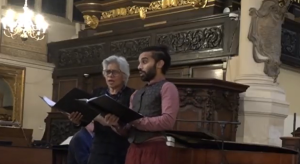
ON: Your recent videos circulating on social media feature you singing in Konkani, Portuguese, and English. Do you see your work as a form of cultural preservation, or is it more about evolving the Goan identity for a global stage?
OC: My actual main goal is simply to entertain people, inspire people, and bring old memories alive. It is almost coincidental that when I sit down to compose, I find my own culture and background to be a very powerful tool — which is why music in Konkani and Portuguese speaks to me, and therefore speaks to my audience. If in the process it helps in evolving the Goan identity on the global stage, there is nothing like it!
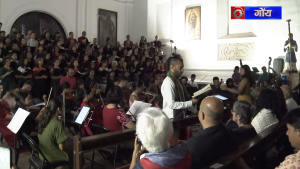
ON: As you continue your career, what is the ultimate legacy you hope to leave behind as an Indian-born, internationally acclaimed baritone?
OC: If I can help continue the legacy and bring to the attention of future generations our great poets of the past and the rich cultural heritage I was exposed to as a child — while also adding something from the modern day that makes it even more powerful — that would be very fulfilling, so that future generations can live and enjoy that tradition, and be proud to be Goan, no matter where they were born or what languages they speak.
The poem by Manohar Rai Sardessai, “Toch Mhozo Ganv” (“That’s my Village”), resonated deeply with me, as it has with so much of my audience — because we are so proud of our Goa and our villages that we never forget them, and identify with them even when generations have not lived there.
Credits: All images are property of Oscar Castellino website https://oscarcastellino.com/ unless otherwise stated.
First published in Revista da Casa de Goa, Series II, Issue No. 39, March-April 2026, pp 68-71. Published here with additional pictures.