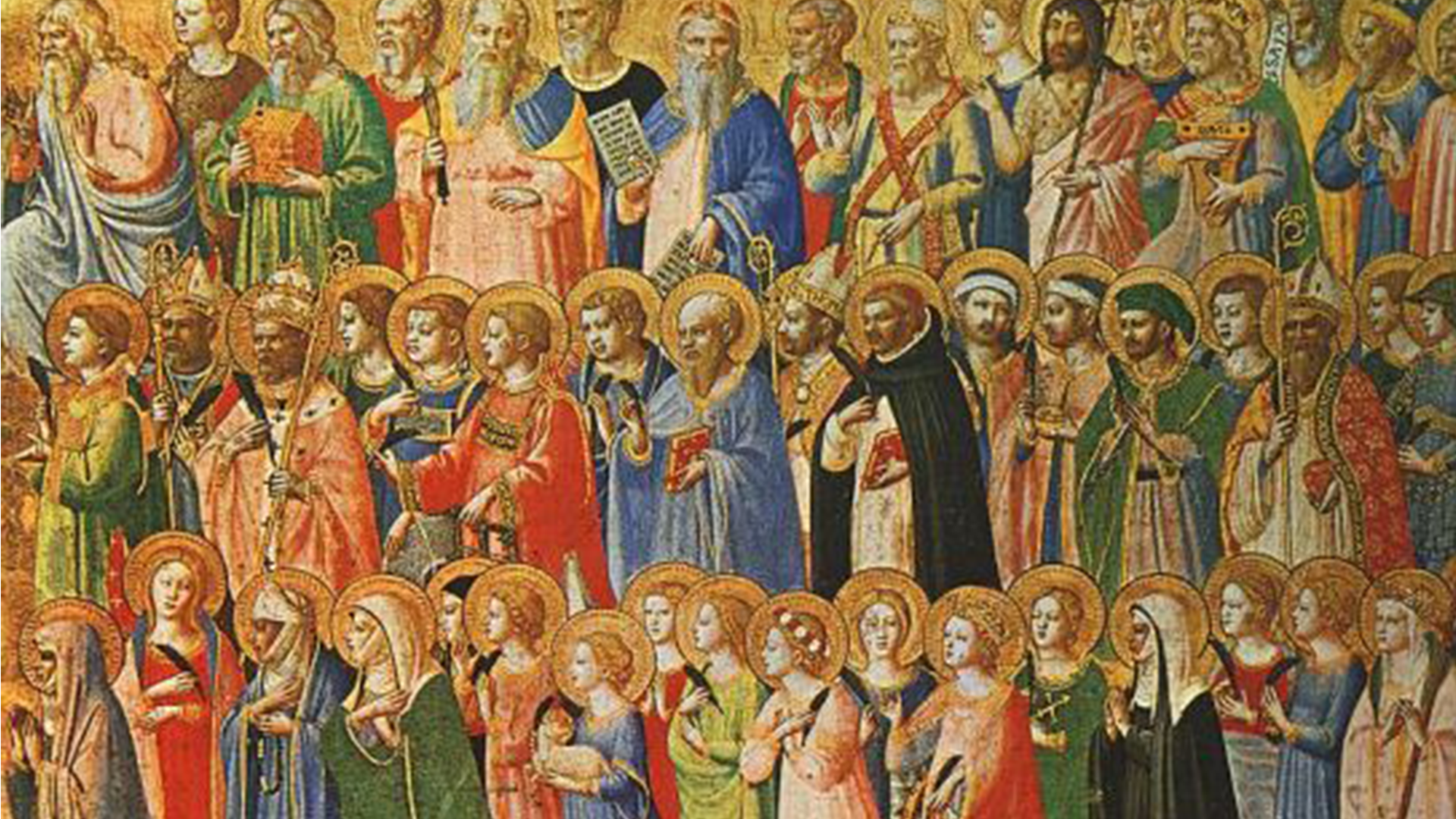
Christ’s Victory in His Saints
When the Solemnity of All Saints falls on a Sunday, it takes liturgical precedence over the standard Sunday celebrations. The usual green liturgical vestments give way to white vestments and Scripture readings to a dedicated set of readings that do not change from year to year: Revelation 7:2–4, 9–14; Psalm 24; 1 John 3:1–3; and Matthew 5:1–12a.
What makes these readings special is their deliberate narrative progression. They move systematically from a glorious vision of heaven to a reminder of our current identity on earth, and finally to the spiritual roadmap that bridges the two. Instead of focusing on specific historical individuals,[1] the liturgy emphasises the universal call to holiness. It reminds us that heaven is populated by an uncountable multitude of ordinary people who quietly lived out the Gospel in their time.
The First Reading gives us a glimpse of our final destination. In the Book of Revelation, St. John details his vision of heaven. Rather than depicting a tiny, exclusive club, it reveals a ‘great multitude, which no one could count, from every nation, race, people, and tongue.’ The crowd is clothed in white robes (symbolising purity and the cleansing power of Christ's sacrifice) and holding palm branches (the ancient symbol of victory over death). The scene serves as a reminder of the ultimate goal of human life: total communion with God.
This deep desire for communion finds a voice in the refrain of the responsorial psalm: ‘Lord, this is the people that longs to see your face.’ Here, the focus shifts. It is no longer just St. John watching heaven from afar, but the congregation actively expressing their own profound longing to attain it.
The Second Reading, also written by St. John, speaks to us about the here and now. Taken from his first epistle, it reminds us that the journey to heaven begins on earth. Sainthood is a reality under active formation during our earthly pilgrimage, not a status achieved only after death. It begins the moment we accept divine grace and choose to live as children of God. St. John invites us to reflect: ‘See what love the Father has bestowed on us that we may be called the children of God. Yet so we are.’ We live in the transitional phase of ‘already but not yet’ —already recognized as God's children, but not yet fully transformed into His glory!
While the First Reading shows where the saints are, and the Second Reading reminds us of who we are, the Gospel teaches us how to get to there. Given that heaven is a place of supreme beatitude and dynamic joy, there is no better text for this day than the Beatitudes.
Delivered during the Sermon on the Mount, the Beatitudes serve as a radical checklist for the human heart. Rather than laying down rigid legalisms, Jesus upends worldly metrics of success. He presents a startling paradox: the very conditions the world equates with misery — poverty of spirit, mourning, humility, and persecution — are the exact states Jesus declares ‘blessed’. True happiness, He reveals, is found through an open-hearted surrender to God rather than through wealth, power, or status.
Although this Gospel passage appears elsewhere in the liturgical calendar, its purpose on 1 November is to show that the Beatitudes are the ultimate portrait of Christ Himself. They serve as the perfect blueprint for Imitatio Christi — the imitation of Christ — for anyone striving to conform their life to His. and so a model for anyone striving to become an Alter Christus. Furthermore, because this feast does not follow the three-year Sunday cycle, Matthew’s Gospel is proclaimed every single year. The evangelist's expansive depiction of these eight inner dispositions, paired with eight divine promises, underpins the final spiritual victory of all the holy men and women in heaven.[2]
Finally, the historical evolution of this solemnity adds rich context to our celebration. The original date of the feast was 13 May, marking the day in 609 AD Pope when Pope Boniface IV officially consecrated the Roman Pantheon — originally a pagan temple to all gods — as a Christian church named Santa Maria ad Martyres (St Mary and All Martyrs).
The shift to 1 November occurred during the pontificate of Gregory III, who dedicated a new chapel in St. Peter’s Basilica to ‘all the apostles, martyrs, confessors, and all the just, made perfect who are at rest throughout the world.’ A century later, Pope Gregory IV officially extended this 1 November celebration to the entire Western Church.
The calendar change was driven by both logistical and tactical reasons. Practically, the massive influx of pilgrims travelling to Rome in the late spring created severe food shortages. Moving the feast to 1 November allowed the city to utilise the freshly gathered autumn harvest to feed the thousands of faithful.
Tactically, by the eighth and ninth centuries, Germanic and Celtic lands were actively integrating into the Holy Roman Empire. Because these cultures held major festivals for the dead around late October and early November, establishing the Solemnity of All Saints to 1 November — and followed closely by All Souls’ Day on 2 November — helped the Church Christianise existing seasonal customs. It beautifully shifted the focus away from placating restless spirits towards celebrating Christ’s victory in His Saints.
[1] Originally, the Church only celebrated the anniversary of individual martyrs at their burial locations. However, during the intense Roman persecutions (like those under Diocletian), the number of martyrs became so vast that the calendar could not support a feast day for each person.
[2] The Beatitudes are covered by only two Evangelists, St Matthew (5:1–12a) and St Luke (6:20–26). St Luke’s is kept strictly within the ordinary tracking of the liturgical calendar. They are from the Sermon on the Plain, focusing on the material and immediate conditions (poverty, hunger, etc.) They speak of four blessings paired with four severe ‘woes’ targeting the rich and comfortable.

Por amor a Deus
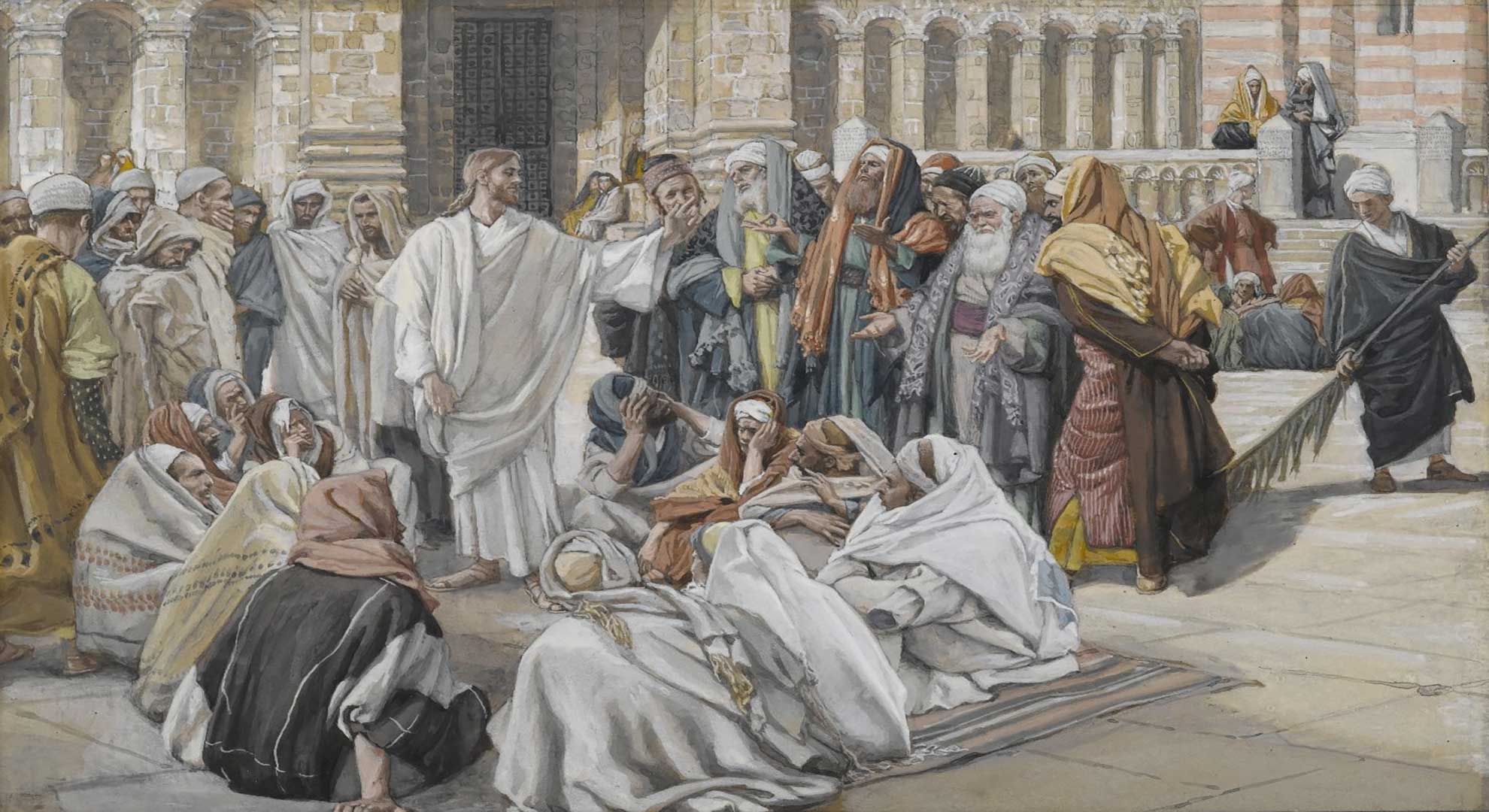
No Evangelho (Mt 22, 34-40), Jesus responde aos seus adversários. Tinha Ele acabado de silenciar os Saduceus sobre a questão da Ressurreição dos mortos quando foi atacado pelos Fariseus. Estes queriam que Ele se pronunciasse sobre o «Grande Mandamento da Lei». Jesus atribui igual importância aos dois mandamentos conhecidos no Antigo Testamento e resume neles toda a essência da lei. Amar a Deus com todo o nosso coração, mente e alma é o primeiro e grande mandamento, diz Ele, e, pelo segundo, que é semelhante a este, devemos amar o nosso próximo como a nós mesmos.
Mas quem é o nosso «próximo»? Diz-nos a Parábola do Bom Samaritano que se trata de qualquer pessoa necessitada. Aliás, o espírito materialista leva-nos a pensar logo no dinheiro como a necessidade primordial, mas não é bem assim. Muitas vezes, esse próximo só espera o nosso amor, o nosso tempo, às vezes uma palavrinha ou alguém que o escute. O amor pode nem sequer exigir a nossa presença física; às vezes, basta um telefonema, uma mensagem no WhatsApp, um pensamento reconfortante. É claro que nunca saberemos de antemão a quem somos chamados a servir, quando e como. Mas é imprescindível servir: aqueles a quem servimos são o nosso próximo, e o serviço é a expressão do nosso amor.
Mas, afinal, o que é o amor? Disse alguém que «o amor é a coisa mais bela que se pode ter, a mais difícil de conquistar e a mais dolorosa de perder»; mas, longe de o definir, isso faz com que o amor pareça indescritível. Por isso, vejamos como os atributos do amor (1 Coríntios 13:4-7) o tornam palpável: «O amor é paciente; o amor é bondoso; o amor não inveja, não se vangloria, não se ensoberbece, não é indelicado. Não insiste no seu próprio modo de agir; não é irritável; não guarda rancor; não se regozija com a injustiça, mas regozija-se com a verdade. Tudo suporta, tudo crê, tudo espera, tudo suporta».
Concreto, mas nem por isso definido. Isso porque o amor é multifacetado, por vezes muito mal compreendido e até transformado em clichê. Debruçaram-se sobre esse inesgotável tema vários pensadores católicos. C. S. Lewis, no seu livro Os Quatro Amores, distingue entre Afeição, Amizade, Eros e Caridade, mostrando como um se funde com o outro e pode até transformar-se nesse outro amor. Frisa ainda que os primeiros três — os amores humanos — podem viciar-se se não forem acompanhados da graça purificadora do amor divino, a Caridade. E, como disse Santo Inácio, «o amor manifesta-se mais nas obras do que nas palavras».
Compreendemos o amor de forma muito real através da Primeira Leitura (Ex 22, 21-27), na qual Deus nos proíbe de prejudicar ou oprimir um estrangeiro, de afligir uma viúva ou um órfão e de atormentar um pobre. Estas são personae miserabiles — pessoas em situações sociais, económicas e jurídicas difíceis. Aliviar o seu sofrimento é uma obra de misericórdia de que fala o Catecismo: «As obras de misericórdia são acções caritativas pelas quais socorremos o nosso próximo nas suas necessidades corporais e espirituais. Instruir, aconselhar, consolar, confortar, são obras de misericórdia espirituais, como perdoar e suportar com paciência. As obras de misericórdia corporais consistem nomeadamente em dar de comer a quem tem fome, albergou aos sem-abrigo, vestir os nus, visitar os doentes e os presos, e enterrar os mortos. Entre estes gestos, a esmola dada aos pobres é um dos principais testemunhos da caridade fraterna e também uma prática de justiça que agrada a Deus». (Cf. Catecismo da Igreja Católica, # 2447)
A civilização cristã cresceu baseada nesses ensinamentos sublimes e, ao longo dos séculos, atingiu um equilíbrio saudável entre o corpo e o espírito. Infelizmente, com a ascensão avassaladora do modernismo ateu, parece que algumas pessoas se cansaram dos ensinamentos que outrora as nutriram. A consequência dessa degradação está bem diante dos nossos olhos. E com a recente abertura das portas da Europa a um afluxo maciço (refugiados, requerentes de asilo, migrantes), alguns deles declaradamente inimigos espirituais da civilização cristã (ou do que resta dela) – e demonstraram-no incendiando igrejas – será que não precisamos de reavaliar se as necessidades físicas dos vizinhos são mais importantes do que o bem-estar espiritual das nossas famílias? É verdade que o samaritano socorreu um judeu (historicamente, um inimigo religioso e cultural do seu povo) – mas nada do que fez pôs a risco a saúde e a segurança colectiva da sua comunidade…. Não será que a caridade começa por casa… em nós mesmos? Escusado será dizer que os cristãos, antes de mais, têm de levar a sério a sua religião e costumes.
São Paulo preocupava-se com a saúde espiritual do seu povo. Na Segunda Leitura (1 Ts 1, 5-10), elogia vivamente o exemplo que os tessalonicenses deram aos crentes da Macedónia e da Acaia. A Palavra de Deus ressoava através deles como trombetas e a sua fé divulgou-se por toda a parte. Deus era o seu bem supremo, de onde brotava o bem do próximo. Por isso, o Apóstolo das Gentes regozija-se ao constatar como eles se converteram dos ídolos a Deus, «para servir ao Deus vivo e verdadeiro e aguardar que venha dos Céus o Seu Filho Jesus, que Ele ressuscitou dos mortos. E é Jesus que nos livra do temível julgamento que há-de vir».
Hoje em dia, será que, enquanto ansiamos por amar a Deus, ainda oramos para que os nossos protegidos venham a amar e adorar o Deus Verdadeiro? A vida do espírito é mais importante do que a vida do corpo ou da carne. O nosso dia-a-dia tem a ver com o bem e o mal, o verdadeiro e o falso, o certo e o errado. A guerra espiritual é, portanto, uma realidade que não podemos ignorar.
Especialmente no contexto do «cavalo de Tróia» que é a migração para os países cristãos, será lícito permitir que os migrantes minem os alicerces da civilização crista? Reflictamos: até que ponto os inimigos do Cristianismo podem ser considerados o nosso «próximo», sem que a isso falsamente chamemos «amor»?
Não será que o Ocidente – aliás, a própria Igreja Católica – está a sacrificar o seu corpo e alma em nome de uma tolerância puramente material? Não esqueçamos que o nosso dever primário é de amar a Deus acima de todas as coisas… e o nosso próximo – por amor a Deus...

Goencheo Mhonn'neo | Adágios Goeses - 12
Segue a duo-décima lista de adágios,[1] extraídos do livro Enfiada de Anexins Goeses, obra bilíngue (concani-português), de Roque Bernardo Barreto Miranda (1872-1935)[2].
| Concani | Tradução literal | Tradução livre
|
| Vagachyá tonddantuló suttunn, xinvanchyá tonddant poddló.
Vagachea tonddantlo suttun, xinvachea tonddant poddlo.
Ximêr moddém. Ximer moddem.
Ghâr firtokúsh vanché firtat. Ghor firtokuch vanxe firtat.
|
Escapando da boca do tigre, livre e são, caiu na de leão.
Salvo do mal menor, foi cair no maior. Colocar o cadáver no limite. (Processo torto; para se não saber a que paróquia pertence o morto.) Não decidir a questão; estar entre dois partidos, perplexo, em vacilação.
Quando, pelo aluimento Se vira uma casa, vira-se também o seu vigamento. Na adversidade, até amigos procedem como os inimigos. |
[1] Cf. um-décima lista, Revista da Casa de Goa, Série II, No. 34, maio-junho de 2025, p. 52.
[2] Roque Bernardo Barreto Miranda, Enfiada de Anexins Goeses, dos mais correntes (Goa: Imprensa Nacional, 1931), com acrescentamento dos adágios na grafia moderna, pelo nosso editor associado Óscar de Noronha.
Publicado na Revista da Casa de Goa, Serie II, No. 37, Set-Out 2025, p. 46

Our Evening Visitor
A chirpy bird descends on even the gloomiest of us, stuck indoors amidst a raging pandemic, with something of the blessing of a fine day. So it is with the oriental magpie-robin, our evening visitor.
For the past two years or so that we know him, he has been touching base around seven o’clock. Till date he hasn't arrived beyond 7.17 p.m. We make it a point to retire by the time of the Angelus prayer and let him come into our veranda at ease. Soon our feathered friend drifts down from the dark sky, greeting our household with a melodious chirp just a few syllables long. Is that merely to announce his arrival? No. It feels more like a polite request for permission to stay the night.
Night after night it’s the same pleasant story. The gentle bird settles on the clothes drying rack, at the very same point, and there’s not a sound from him thereafter.
Once we spotted him flying out, almost certainly with a quick goodbye chirp, a few minutes after four… perhaps to bathe in the morning dew, before getting on with the day’s work….
Will he ever hullo us at our place of work?! Maybe he did fly across to us sometime in the past, but in our usual hullabaloo we might well have overlooked the visitation…
In these grim times, as we humbly reach out to help Nature heal, we wish to be a little more hospitable and offer our honoured guest food and water. But we are no experts: could someone advise us on the protocol?
Tailpiece: Today, as we find ourselves practically under house arrest, in view of the COVID-19 pandemic, the birds in the sky come across as particularly carefree. We finally understand the full import of the Scriptural passage: “Look at the birds of the air; they do not sow or reap or store away in barns, and yet your heavenly Father feeds them. Are you not much more valuable than they? Who of you by worrying can add a single hour to his life?” (Mt 6: 26)

Love in the time of Covid-19 - and always
LENT 2020 – Day 24
Hos 14, 1-9; Ps 80, 6-c-8a, 8b-9,10-11,14,16b; Mk 12, 28-34
Inscrutable are the ways of the Lord God maker of all things.... Like the people of Israel who lived in the midst of fear and anxiety, we too are in the midst of a great scare; and like them, who thought they were masters of their own destiny, we have for too long lived as though God does not exist – until now when the infinitesimally small corona virus has taught us a lesson in powerlessness.
We'd stumbled when we said “Our God” to the work of our hands; we’re now responding to God’s call to return to Him. Haven’t we realized already that we can do with a little less work, money, power and, above all, pride? We must set our priorities right. We can’t do without prayer, thanksgiving and praise to Him who is our Lord and Master, our Creator and Saviour. For His part, He has promised to heal our faithlessness, continue to love us, and be to us like the dew to Israel.
There are marvellous things in store, only if we stop and listen, dialogue, accept, love... Then we shall blossom. Meanwhile, let’s admit that we’ve been worshipping a fake trinity – Mammon, Bacchus and Cupid. Mind you, like the wife who watches her husband, so is our God watching us, and saying: “The Lord is one; and you shall love the Lord your God will all your heart, and with all your soul, and with all your mind, and with all your strength…. You shall love your neighbour as yourself.”
Very often we think we won’t understand God’s ways; but if we care to listen, we will. Now is that time to listen. In this lock-down let’s open our hearts and rekindle our relationship with our God and our family – and set the big wide world afire with our love….

The Place to Celebrate Christmas
Have you ever wondered about the best place to celebrate Christmas?
In my growing years I would often hear overseas relatives sing the praises of Christmas celebrations in Europe; it made me feel that something was amiss in Goa. And last Sunday, Zelia, a plump and contented lady, sixty-plus, living in a suburb of Lisbon, boomed in the churchyard, ‘Here it doesn’t feel like Christmas at all. Back home, you will find shop windows decorated by now, and people rushing about their Christmas shopping.’
No feelings of inadequacy on my part this time round. If that is what she feels, so be it, I thought, and it took me back twenty years to my own reservations about Lent in the Portuguese capital. I remember saying then to Mario el mexicano, a university pal and churchgoer, ‘Back home, we have the Way of the Cross from our city church perched on a hillock to the Archbishop’s Palace on another hilltop. It’s unmistakable; it really makes one feel it is Lent.’
People are entitled to their individual feelings, aren’t they? And God can touch the core of our being in any situation we may be. Ours is not a rectilinear world; and like the heavenly bodies we can go in curves, yet reach the destination the Creator has planned for us. After all, whatever our weaknesses – to quote Yeats, the Irish bard – He who is wrapped in purple robes, with planets in His care, ha[s] pity even on the least of things asleep upon a chair….
But for our part it is better not to lose sight of the Ultimate Reality. At Christmas, the crib, the star, the tree and the lights – however beautiful; the carols – howsoever melodious; the sweets, no matter how delicious – and the little joys they all afford us – should not be an end in themselves.
Rather, our crib and star competitions could help us promote healthy relationships; our tall and intensely decorated trees, to gaze heavenward; the shiny decorative lights we display in our homes, to reflect the state of our souls; the carols we sing, to foster peace, goodwill and harmony among us mortals; and all the eats and drinks that we prepare could well be an expression of the profound joy and love we share with our family and friends.
And what shall we say about the ever-present Santa Claus and his gifts?
A few days ago, a young television journalist interviewing passers-by in the street came up to me, thundering with great expectation, ‘Sir, tell us what Santa Claus means to you and your children!’ And perhaps to her surprise, I said, nonchalantly, ‘Very little.’
Santa Claus means very little to me and my family. This is one institution that has almost become an end in itself – hardly a reminder of the good old St Nicholas, and of Jesus Christ, alas, none at all! Santa has not sanctified but altogether commercialized and secularized Christmas. How I wish Santa had not sought to turn this feast of extreme tenderness, extremely banal.
We cannot let the Christmas mystery turn banal. No doubt, Jesus was born in a humble stable, into a poor family. Simple shepherds were the first witnesses to this event. But – as the Catechism of the Catholic Church points out – ‘in this poverty heaven’s glory was made manifest.’ And the Church never tires of singing the glory of this night:
The Virgin today brings into the world the Eternal
And the earth offers a cave to the Inaccessible.
The Angels and shepherds praise him
And the magi advance with the star,
For you are born for us,
Little Child, God eternal!
This verse from Kontakion of Romanos the Melodist sums up that Mystery-in-swaddling-clothes. And, as the Catechism further remarks, ‘from the swaddling clothes of his birth to the vinegar of his Passion and the shroud of his Resurrection, everything in Jesus’ life was a sign of his mystery’ – a mystery that certainly calls for deep contemplation.
It is of supreme importance, particularly to contemporary man, to note that the Christmas mystery is richer than the richest of shop windows. And we needn’t go to the ends of the Earth to realize this: When we participate in the Mass this day, with a pure and contrite heart, we will come upon the experience like a benediction. Then we shall see that our hearts are the best Crib for the Little Child, God eternal, to be born in and also the best place to celebrate Christmas!
(Published as Editorial, The Stella Maris Bulletin, December 2008; and reprinted by Herald, 22 December 2008, and Renovação, 1-15 January 2009)