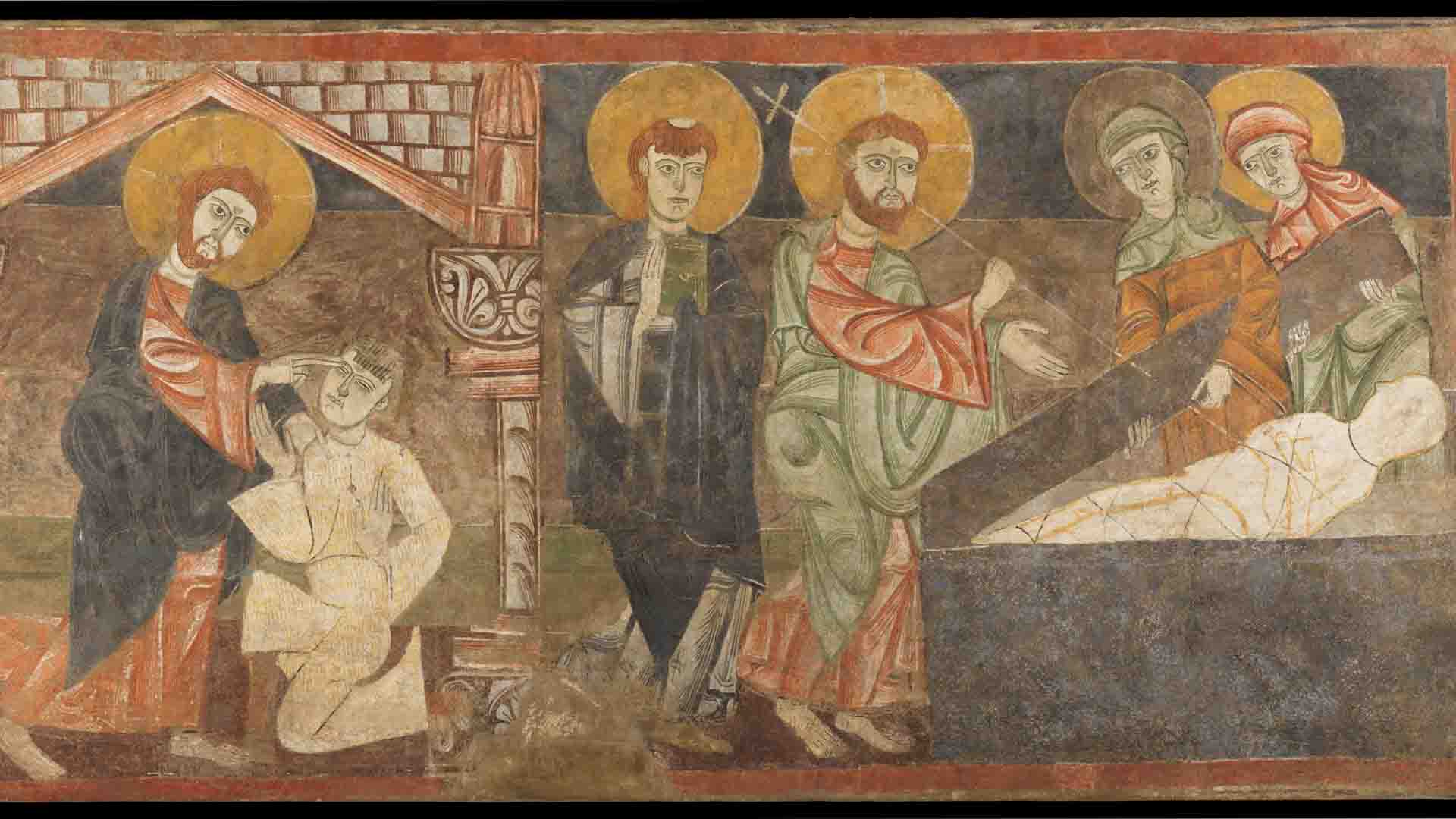
A Glimpse of the Resurrection
Today, God speaks in a special way to our world that is filled with inordinate love for life and undue fear of suffering and death. The long and short of His message is that we must trust in Him alone, for nothing is permanent except Him; we would therefore do well to fix our gaze on eternal life rather than set our heart on earthly promises.
On this fifth Sunday of Lent, the three readings offer a supernatural perspective on life and death. Traditionally called Passion Sunday, today marks the start of ‘Passiontide’, a season that invites us to begin a close preparation for Easter. In this run-up, let us seek to better understand the Passion, Death, and Resurrection of Our Lord and Saviour and to see those stages in our day-to-day life as Christians. The readings prepare us mentally and spiritually for the greatest mystery of all time.
The First Reading (Ezek 37: 12-14) is drawn from a major prophet of the Old Testament. Ezekiel focuses on how God is always faithful and keeps His promises. He makes God’s mercy and justice known through a vision of dry and scattered bones vivified in the valley. The bones represent the Israelites, exiled and dispersed; their revival represents God’s saving grace to the land and the people. Church Fathers like St Justin, St Irenaeus, and St Tertullian consider Ezekiel’s vision to be an indication of the resurrection of the bodies on the last day.
Although today’s Gospel (Jn 11: 1-45) does not quote Ezekiel verbatim, it shows a realization of his prophecy. Jesus raises Lazarus, in a miracle several notches higher than the cure of the blind beggar at Siloam, in last Sunday's Gospel. Jesus made it clear that the beggar’s congenital blindness was not a chastisement; Lazarus’ illness was ‘not unto death.’ Our Lord delays his coming to Bethany, located some 3 km from Bethlehem, so he might not merely have to cure but to raise his friend to life – ‘for the glory of God, so that the Son of God may be glorified by means of it.’ It is the Lord’s final ‘sign’ to the Jews: to believe in His divinity and the power of the true God.
Jesus takes yet another step, by clearly proclaiming: ‘I am the Resurrection and the Life; whoever believes in me, even he dies, will live, and everyone who lives and believes in me will never die.’ Whereas such a statement crosses the limits of human logic, look at Thomas: he who would later be dubbed ‘the doubting’ one is presently ready to die with the Lord. Are we ready to leave behind our earthly knowledge and pride and believe in His logic?
For their part, the disciples did not seem to understand what Jesus meant by saying that Lazarus ‘has fallen asleep’; they had probably forgotten how He had raised the daughter of Jairus! And the Bethany household too was bemused by Jesus who said, ‘Your brother will rise again.’ In her limited human view, Martha took it to be the resurrection on the last day.
What would we see if we looked through Martha’s glasses? And after knowing what really happened two thousand years ago, do we believe firmly that He is truly the Resurrection and the Life? Are we ready to leave behind our earthly possessions and wear spectacles of faith? Can we say confidently that ours is an awesome God, who never fails, and that He never fails us?
But then, isn’t it paradoxical that the One who gave life to Lazarus was put to death?! Mary, who had anointed Jesus and wiped His feet with her hair, was only prefiguring his burial. And Martha, who knew Jesus so well, was so naïve as to say, ‘Lord, by this time there will be an odour, for he has been dead four days.’ It was as if he was dissuading Our Lord from performing so clean a miracle.
All is grist that comes to the mill of the Author of Life. Whereas He can turn bad odours into fragrances and transform death into life, the fragrance of divine fidelity was paid back with the odour of human infidelity. That is to say, life was repaid with death. Whereas the Jews were unmoved by the marvel wrought by the Lord, they moved hurriedly to complain to the Sanhedrin. The rest is history…
We are all Lazaruses wounded by sin. Unless rescued by Christ, we shall remain like dry bones in this valley of tears. St Paul reminds us in the Second Reading (Rom 8: 8-11) that the Spirit of Him who raised Jesus from the dead dwells in us. We must pray that, in untying our sinful bandages, He forgives us our sins. As Pope John Paul II once said, ‘The real strength of a man lies in the fidelity of his witness to the truth and in his resisting flattery, threats, misunderstandings, blackmail, even harsh and relentless persecution. This is the path on which our Redeemer calls us to follow Him.’[1]
[1] Cf. Pope John Paul II, Passion Sunday sermon, 2002 https://www.catholicculture.org/culture/library/view.cfm?recnum=4206
Banner: https://www.metmuseum.org/art/collection/search/471846

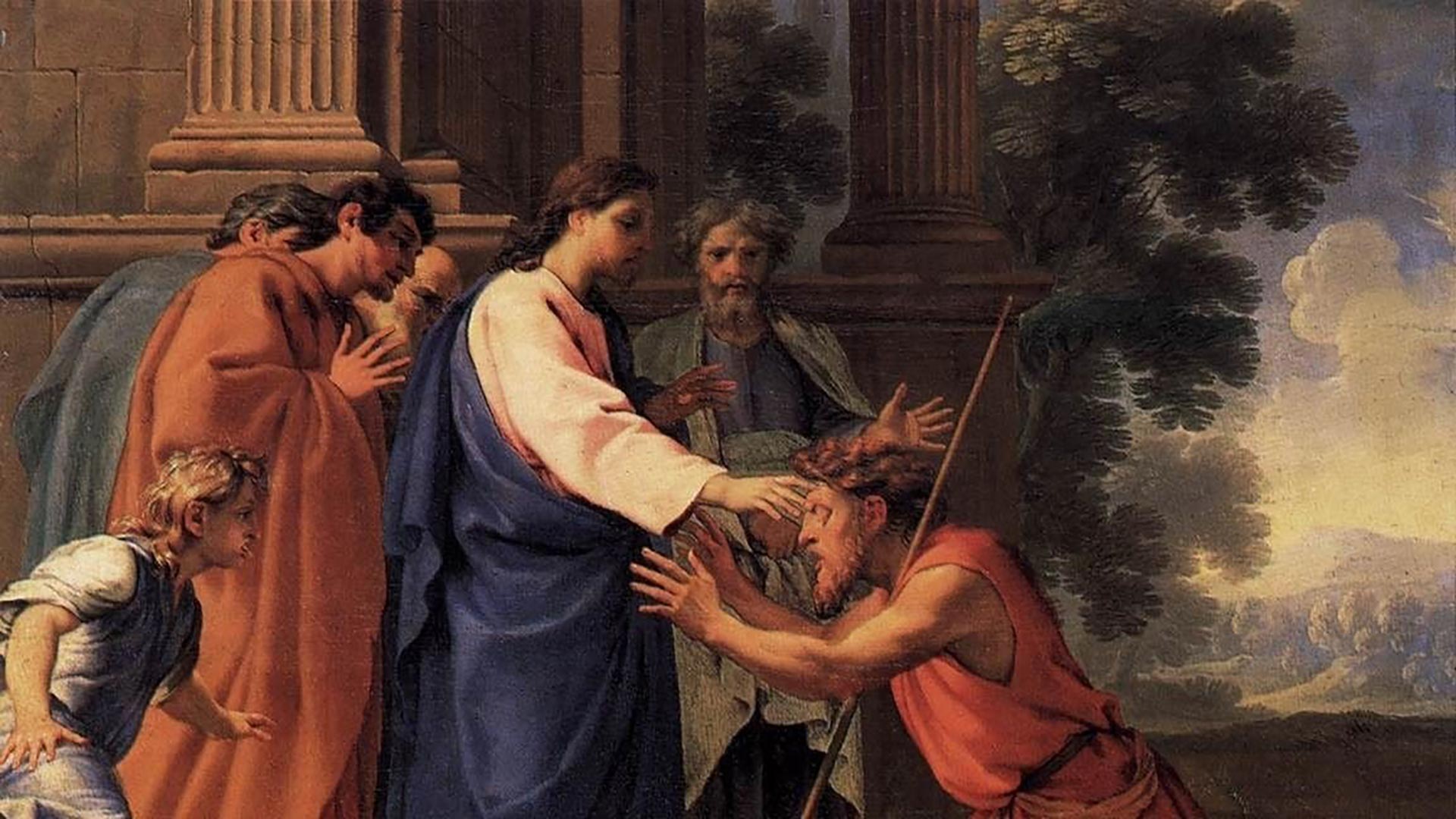
The Challenge of the Light
On Laetere Sunday [1], we joyfully anticipate the victory and the joy that will be ours at Easter. We have progressed through prayer, fasting, and almsgiving, and are half way through Lent. Through the Liturgy of the Word, we have meditated on the human condition and on our response to God’s loving invitation through the ages.
Looking back, on the first Sunday of Lent, the First Reading focused on the creation of the world and the sins of our first parents. On the second, we heard Abraham's call, the father of the people of God. On the third, we read Moses's story of leading his people out of Egypt.
Today, in the First Reading (1 Sam 16: 1.6-7.10-13), on the fourth Sunday of Lent, we witness the rise of David (Hebrew for ‘commander’) as the ruler of the united kingdoms of Israel and Judah. God bid the prophet Samuel to anoint the youngest son of Jesse (‘God exists’) with oil in his hometown of Bethlehem.
Accordingly, David, a shepherd, replaced the first king, Saul, who had disobeyed God: ‘The Spirit of the Lord came mightily upon David from that day forward.’ A millennium later, Jesus (‘God saves’) was born in Bethlehem (‘House of Bread’) and would eventually declare Himself the Good Shepherd. Bethlehem, in the hill country of Judah, was located about six miles north-west of Nazareth, where Jesus lived until he was thirty, and about five miles south of Jerusalem, where He would die, three years later. Thus ended the public ministry of God’s slain Lamb, unprecedentedly full of miracles and blessings.
The Gospel (Jn 9: 1-41) speaks of one such miracle or ‘sign’: the cure of a blind beggar. The disciples, keen as they were to know if his blindness was a result of sin, seemed ‘blind’ too. The Master clarified that 'it was not that this man or his parents had sinned, but that the works of God might be made manifest in him.' Jesus, proclaiming Himself the 'Light of the World', sent the blind man to Siloam (meaning, ‘Sent’).
That was incipient baptism, carrying as it did a promise of sweet light and refreshing health to the weak and suffering.[2] Once cured, the man called Jesus 'a prophet' and later acknowledged Him as the Son of Man. Clearly, he had received not only natural sight but also supernatural light!
Overawed by this occurrence, the local cabal began to work overtime and close in on Jesus. The Pharisees spread a canard: 'This man is not from God, for he does not keep the Sabbath.' No doubt, Jesus had cured the blind man on a sabbath, but, as He had said elsewhere, 'the Sabbath was made for man, not man for the Sabbath. So, the Son of Man is Lord even of the Sabbath.' (Mk 2: 23–28)
However, far from recognising Him as the Messiah, some Pharisees argued that he who has not kept the sabbath cannot be of God. Whereas they kept pressing the cured man, expecting him to retract his earlier statement, the grateful man retorted: 'You do not know where He comes from, and yet He opened my eyes. (…) Never since the world began has it been heard that any one opened the eyes of a man born blind. If this man were not from God, He could do nothing.'
In view of such irrefutable logic, the only thing left to do was hype the case against Jesus. The parents were called upon to make sure if their son was congenitally blind; they did, but since 'the Jews had already agreed that if anyone should confess Him to be Christ, he was to be put out of the synagogue,’ they pleaded ignorance as to the author of the marvel.
That was pure blackmail! Alas, how many do the same today! They swim with the current, compromising their principles, so as to gain social acceptance and political mileage. Likewise, arm-twisting and intimidation are rampant; it is the same old story of giving a dog a bad name and hanging him!
At that time, Jesus was at the height of his ministry — but also at the threshold of his Passion and Death. The Light of the World was shining in the darkness, yet the world did not know Him (cf. Jn 1). The cure of the blind man shows Jesus to be the Messiah, who came into the world 'that those who do not see may see, and that those who see may become blind.' That is, His light was 'as mighty as to enlighten the lowly as it was to dazzle and blind the proud.'[3] To the Pharisees, who felt targeted by this powerful proclamation, He said that only physical, not spiritual, blindness could be excused…
In today’s topsy-turvy world, one sees the right-minded being banished, while the flawed get promoted. But we are not to be frightened or discouraged. By our baptism, we have been invited to cross from darkness to light, from sin to supernatural life. St Paul in the Second Reading (Eph. 5: 8-14) exhorts us to 'walk as children of light (for the fruit of light is found in all that is good and right and true), and try to learn what is pleasing to the Lord. Take no part in the unfruitful works of darkness but instead expose them.' Persevering in this mission through life is indeed the challenge of the Light.
[1] So called from the first words of the Entrance Antiphon for Mass, "Laetare Jerusalem" ("Rejoice, O Jerusalem")
[2] Abbé C. Fouard, Jesus Christ the Son of God. Goa: Don Bosco, 1960, p. 290.
[3] Op. cit., p. 293.
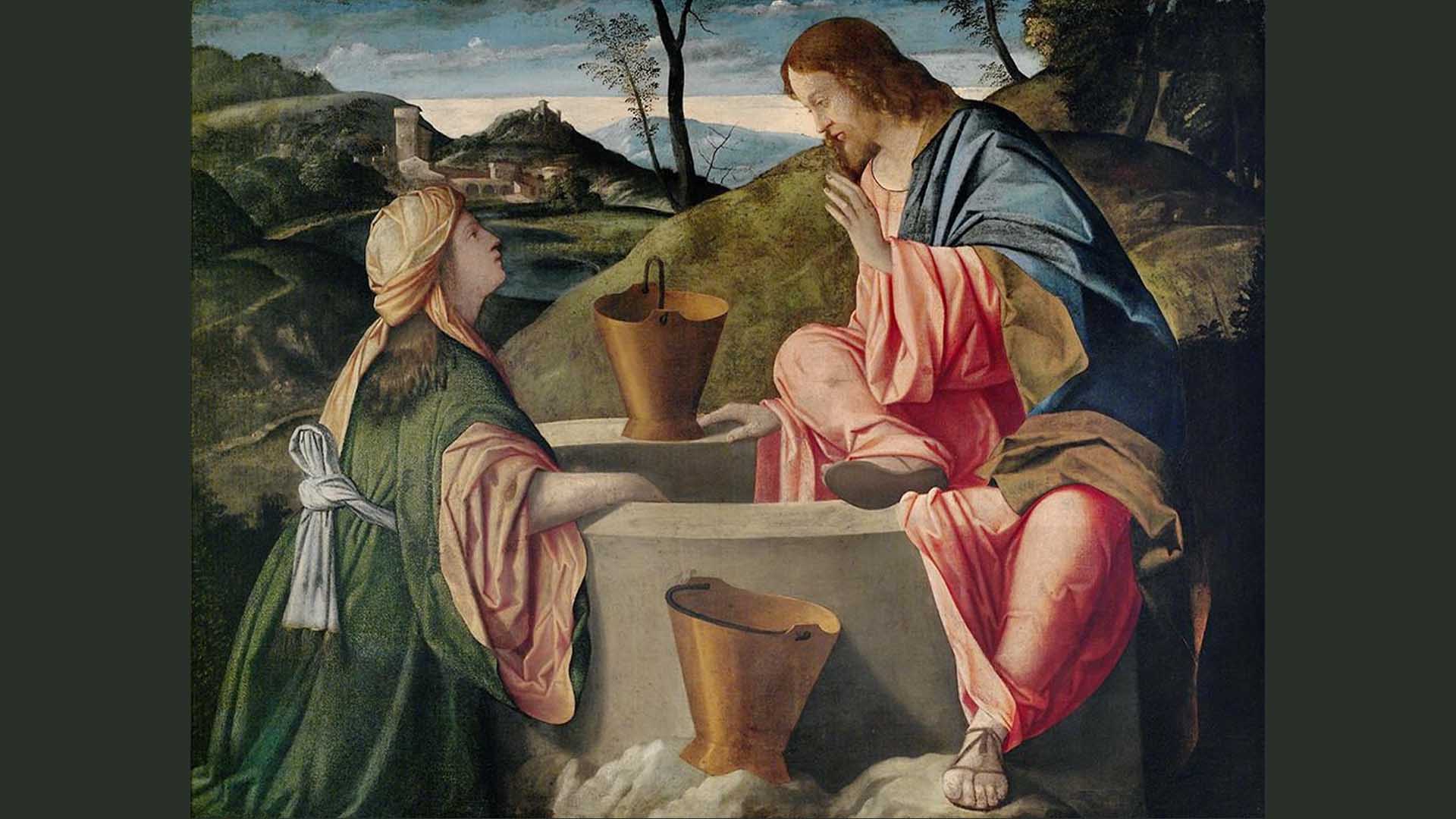
Drinking of the Living Water
Moses almost fell out with God for the sake of the people and with the people for God’s sake. The dilemma faced by the most important prophet of the Old Testament is palpable in the First Reading (Ex 17: 3-7): ‘What shall I do with this people? They are almost ready to stone me.’
It’s no doubt lonely at the top—if we venture to do things alone! Moses had God on his side. He saw God face to face and heard Him more easily than he could humour the fickle-minded and ungrateful Israelites. Here was a man who had led them out of an oppressive land, across the Red Sea, and into freedom; yet his countrymen pined for Egypt’s fleshpots!
However, God did not give up. He knew that doubting pointed to seeking. He commanded Moses to strike the rock, and abundant water would be found to quench the people’s physical thirst. He declared the Ten Commandments on Mount Sinai for their moral guidance. And one day, there would be a New Moses issuing a new Commandment of Love, and blood and water would come forth from His heart wounded by a lance on Mount Calvary.
In the Gospel (Jn 4: 5-42), Jesus offers the Samaritan woman the water of eternal life. At first, she mistook this water for the sparkling water of Jacob’s well that Jesus had asked for. When Jesus dispelled that doubt, she went to town, exclaiming, ‘Come, see a man who told me all that I ever did. Can this be the Christ?’ Obviously, open as she was to divine grace, she welcomed the Word of God.
Meanwhile, Christ’s disciples kept urging Him to eat and satisfy His bodily need; they failed to see the significance of what He had said: ‘I have food to eat of which you do not know.’ What a far cry from the Samaritan woman who had understood the Lord. Therefore, the perceptive St Augustine sees in her the figure of the Church that was about to be founded. The fact that it took a Samaritan woman to proclaim Jesus as the much-awaited Christ shows that no one is a prophet in their own land and that the Church is destined to attract the whole world!
The Bishop of Hippo has this to say of today’s Gospel passage: ‘The things spoken there are great mysteries, and the similitudes of great things; feeding the hungry, and refreshing the weary soul.’[1] Indeed, his interpretations of the Lord’s weariness, the sixth hour, the five husbands, the fountain and the well, the living water, the harvest and the labourers and, of course, the woman herself are all of great benefit.
God promises to reveal to us the treasures of His love by degrees, and Jesus did the same to the Samaritan woman. He is the Bread and Water of Life, and woe to those who do not believe it. We, who are heirs to the Holy Scripture and the Apostolic Tradition, should not go by new-fangled notions; when we have the Living Bread and Water, what use are sensory delights? And is it not downright stupid for us, who already know the Saviour of the World, to dip into the weird world of petty godmen, false prophets, or cult leaders who go about ruining souls?
Let us, then, turn a new leaf. Let us harden not our hearts but praise and thank God, bow down in worship, and kneel before Him who made us (cf. Ps 94: 2, 6-7). Let us pray for the outpouring of the Holy Spirit into our hearts and be sure, as St Paul teaches in the Second Reading (Rom 5: 1-2, 5-8) that ‘since we are justified by faith, we have peace with God through our Lord Jesus Christ, through whom we have gained access by faith to this grace in which we stand, and we rejoice in our hope of sharing the glory of God. ’
What does it mean to be ‘justified by faith’? It means receiving God’s grace to be cleansed of sin and be inwardly sanctified, starting at baptism. When we are convinced of and grateful for this immense blessing, we too will go forth, give witness, and proclaim that Jesus is Lord. What a grace it is to have a God who cares for all our needs. The Living Water fully quenches our thirst.
[1] St Augustine, Homilies on the Gospel of John, Tractate XV, § 1. https://www.ccel.org/ccel/s/schaff/npnf107/cache/npnf107.pdf
Banner: https://www.columbiamuseum.org/collection-highlights/christ-and-samaritan-woman
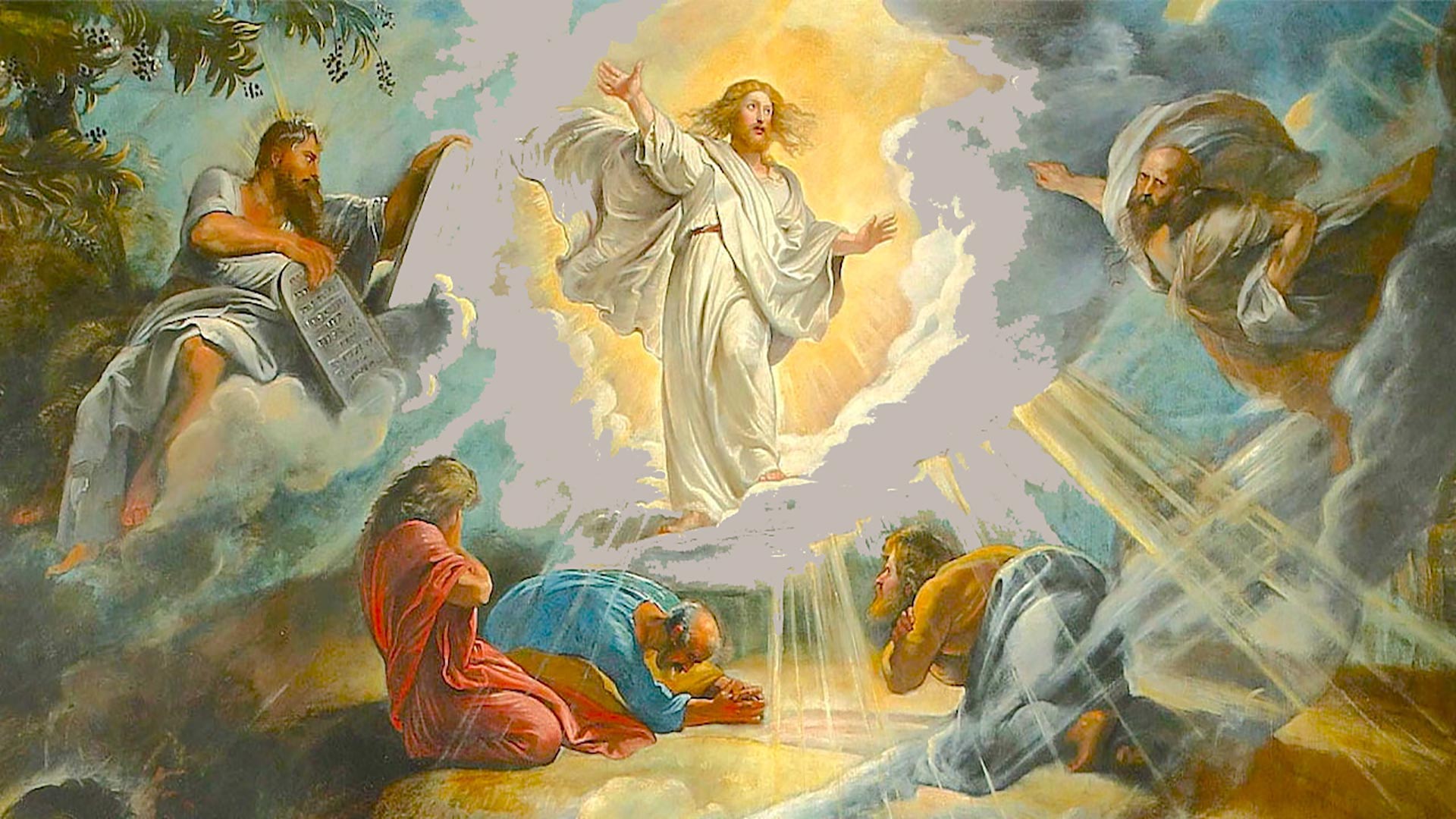
Transfigured by the Cross
God created man in His image and likeness and dialogued with him in Eden. But alas, Original Sin soon interrupted the dialogue. The covenant with Noah followed the Edenic covenant; it was an everlasting covenant of "common grace", made with all of humanity and creation. It not only served as a foundation for subsequent covenants (Abrahamic; Mosaic) but is also seen as a foreshadowing of the final, new covenant in Jesus Christ.
The Abrahamic covenant is the subject of today's First Reading (Gen 12:1-4). God chose Abram to start a new family line. Trusting entirely in God’s Word, Abram left his hearth and home in Ur, Mesopotamia, and walked into the unknown, to a place later identified as Canaan. This act is far from comparable to the migrations of our days, which happen to places of which we have prior knowledge.
The Lord promised Abram: “I will make of you a great nation, and I will bless you, and make your name great, so that you will be a blessing (…) and by you all the families of the earth will bless themselves.” Can you imagine the magnitude of Abram's trust in God's promise?
Abraham became the first of the Hebrew patriarchs. Abraham and Sarah had a son named Isaac and a grandson named Jacob; they inherited the covenantal promises. Meanwhile, God renamed Abram (meaning ‘God is exalted’) to Abraham (‘Father of many nations’) and Sarai ('my princess') to Sarah ('princess' or 'mother of nations'), indicating an expanded role. He did so simultaneously, to signify their shared role in the covenant. Jesus's genealogy is traced to Abraham, whose near-sacrifice of Isaac foreshadows Jesus’ sacrifice on the Cross.
In the Gospel (Mt 17: 1-9), we note that the apostles Peter, James, and John had a vision of the Resurrected Lord. Jesus was “transfigured before them, and His face shone like the sun, and His garments became white as light.” To complete the picture, “there appeared before them Moses and Elijah [central Prophets of the Old Testament], talking with Him.”
At that point, Peter, savouring the moment, wished to stay put on Mount Tabor. He was shaken out of his comfort zone when “a bright cloud overshadowed them, and a voice from the cloud said, ‘This is My beloved Son, with whom I am well pleased; listen to Him.’” The apostles, filled with awe, fell on their faces. Jesus advised them to rise and not to fear. They had an insight into the Lord’s divinity, albeit no inkling of His mission on earth; they also felt emboldened to follow Him.
Their experience was brief but marvellous. Jesus wanted His Apostles to treasure its memory and later testify to its truth. Significantly, it is precisely Peter, James and John who would be destined to witness the Agony in Gethsemani! So, “it was fitting that their faith should be fortified beforehand and their eyes illumined by the effulgence of the Godhead.”[1]
How far are we fortified—transfigured—by learning of the apostles' experience? Or, like Peter, do we only wish to feel good and dream of happier days to come? The Transfiguration was–and will always be–a sign that Christ’s mission does not lend itself to trivialisation. Also, we must be conscious of our special mission as Christians and not be disheartened or tempted to give up. When we look around and see people wallowing in sin, we ought to see how their happiness is only a mirage.
Those who have chosen the narrow part are the fortunate ones, for they are continually transfigured. Jesus had instructed the Apostles to “tell no one the vision, until the Son of Man is raised from the dead.” He indeed rose from the dead; and today, it behoves us to testify with conviction.
In the Second Reading (2 Tim 1: 8-10), St. Paul says that we have to also “take [our] share of suffering for the Gospel in the power of God who saved us and called us with a holy calling (…) and brought life and immortality to light through the Gospel.”
We can never thank God enough for our Christian vocation. Being inheritors of an exalted tradition of faith in action, we need to come out and call the world’s bluff. It is high time the world realised that drawing back from the Cross is at cross-purposes with God’s loving plan of salvation. Hence, let us move forward decidedly and be transfigured by the Cross.
Banner: P. P. Ruben’s Transfiguration of Christ
https://www.ecwausa.org/the-transfiguration-of-jesus-in-matthew-17/
[1] Abbé C. Fouard, Jesus Christ the Son of God (Goa: Don Bosco, 1960), p. 263.
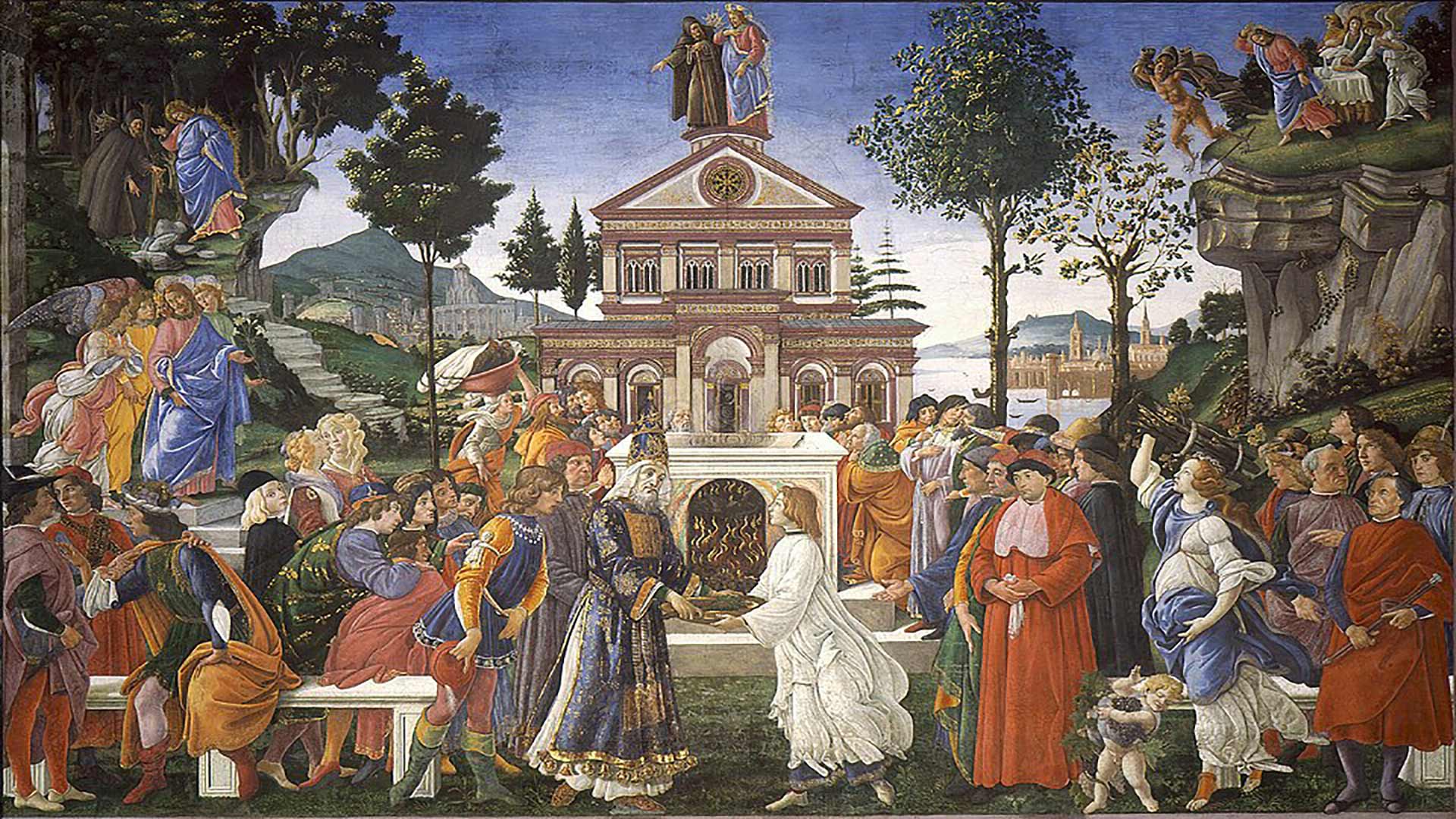
From Trials to Triumph
Today’s readings are a perfect start to Lent: they rewind to the creation of the human race and return to where we stand today. They are cathartic, to say the least. They invite us to renew our faith in Him who sent His Only Son to save the world from the havoc caused by our first parents.
The First Reading (Gen 2: 7-9; 3: 1-7) speaks of the Garden of Eden, where it all began. If it weren’t for Original Sin, the history of humankind would have been different, you may say. But then, why think only of the negative side of the Fall? God, who cranks out good from just anything, tweaked it in our favour. Felix culpa, therefore, “O happy fault that earned for us so great, so glorious a Redeemer,” as the Exsultet (Paschal Vigil Mass hymn) chants.
In the Second Reading (Rom 5: 12-19), St Paul gives a striking description of how “sin came into the world through one man and death through sin, and so death spread to all men because all men sinned.”
Further, “if, because of one man’s trespass, death reigned through that one man, much more will those who receive the abundance of grace and the free gift of righteousness reign in life through the one man, Jesus Christ.”
That is, sin came in through Adam; grace, through the Second Adam, Jesus Christ. So, the Apostle to the Gentiles wraps it up as follows: “Just as through one transgression condemnation came upon all, so, through one righteous act, acquittal and life came to all. For just as through the disobedience of the one man the many were made sinners, so, through the obedience of the one, the many will be made righteous.”
In the Gospel (Mt 4: 1-11), Jesus, the New Adam, reverses the wrong that Adam committed in the Garden of Eden. And behold the spirit and substance of the Son of Man: whereas Adam feasted and fell, Jesus fasted and did not fall. Jesus in the desert represents the new Israel and the new Moses (both of whom spent forty years there) and the new Elijah (forty days).
What a pearl of wisdom Jesus presents when the devil tempts Him in His human state! Jesus says: “Man does not live by bread alone, but by every word that proceeds from the mouth of God.” This has since become the one invigorating thought for when we are tempted by power, knowledge and riches that the world deceptively offers.
Humankind, marked by sin since its inception, is now at a crossroads. We have misunderstood His loving kindness and have taken Him for granted. Finally, having quite lost the sense of sin, we are at a loss to know how to regain our innocence and obtain divine grace. Life feels like a combat, a minute-to-minute battle between the forces of good and evil, grace and sin, God and Satan, only to those with a pang of conscience.
How long can we continue this? Life is short and unpredictable. Let us be steadfast in God’s love, embrace the Cross, and experience God’s mercy. Let us not be disheartened, for if Jesus did experience umpteen trials and temptations, why won’t we? Like Him, we too shall triumph over sin and see the light of the Resurrection.
Banner: Sandro Botticelli's Temptations of Christ, Sistine Chapel (1480-82)

Where are the Fishers of Men?
On the third Sunday in Ordinary Time, Isaiah points to Our Lord as the Light of the World; St Matthew recounts the first days of Christ’s ministry in the wake of the arrest of St John the Baptist; and St Paul exhorts the Corinthians to remain one in mind and heart.
In the First Reading (Is 8: 23 – 9: 3), God in His goodness promises to break “the yoke of [Israel’s] burden, and the staff of his shoulder, the rod of his oppressor”: He would let it triumph over the Assyrians, as He had done against the Midianites, using men armed with clay pots, torches and trumpets!
However, what Isaiah said about Zebulun and Naphthali[1], both located in Galilee, is even more significant. This region had a large, non-Jewish, immigrant population; hence it was called “of the Nations” or “of the Gentiles”. Although the Galileans were considered of dubious ancestry, uneducated, and seditious, they were in fact more faithful to God than others who worshipped false gods. God rewarded Galilee by allowing it to host the Lord of lords and King of kings, who would be a Light to the Nations.
In the Gospel (Mt 4:12-23) we see the realisation of the Isaian prophecy. Bethlehem, where Jesus was born, and Nazareth, where He grew up, were towns in Galilee. It was here that Jesus undertook His three-year ministry. Upon John the Baptist’s arrest, Jesus settled in the fishing village of Capernaum, “in the territory of Zebulun and Napthali”. He soon attracted Peter and his brother Andrew, James and his brother John, all humble fishermen, whom he would make “fishers of men”. And “He went about all Galilee, teaching in their synagogues and preaching the gospel of the Kingdom and healing every disease and every infirmity”. He urged them to “Repent, for the kingdom of Heaven is at hand” (Mt 4: 17), thus establishing a link with the teaching of His Forerunner.
But what is “repentance”? And is the kingdom of Heaven still “at hand”? Repentance is a change of mind and heart; it is a flight from sin to God. On the other hand, hardening our hearts to God’s call is tantamount to playing into the devil's hands. “The kingdom of God [or ‘of Heaven’, to the Jews] means, then, the ruling of God in our hearts; it means those principles which separate us off from the kingdom of the world and the devil; it means the benign sway of grace; it means the Church as that Divine institution whereby we may make sure of attaining the spirit of Christ and so win that ultimate kingdom of God where He reigns without end in ‘the holy city, the New Jerusalem, coming down out of heaven from God’ (Rev. 21: 2).”[2]
Thus, repentance and the Kingdom of God are not passé but vital to our everyday life. They must be at the top of our minds, especially considering that enemies of the Church are lurking in the shadows. It may come as a shock – but it is a fact – that Rome is under siege, and so are you and I. Vatican observers state that the highest authorities, enchanted by the world, are playing into the hands of the evil one. Such reports are dubbed ‘conspiracy theories’ by those who wish to anaesthetize us.
However, who can deny that idolatry, indoctrination, deception, division, and demoralisation are the handiwork of the devil? That theological errors abound, moral teaching is being undermined, and tragically, inter-religious ecumenism is being given the advantage over evangelisation, are signs of the times. If this is not the self-demolition that Pope Paul VI spoke of half a century ago, what is?
The situation has never been so bad. Therefore, what St Paul said in the Second Reading (1 Cor 1: 10-13, 17) is now relevant to a much higher degree: we must be “united in the same mind and the same judgement.” In the early days, philosophical schools caused discord; in our day and age, Humanism borders on the very denial of God.
On the other hand, in these trying times, where are the “Fishers of Men”? To neutralise nefarious influences, it is essential that the powers that be uphold the Apostolic Tradition, that is, “the transmission of the message of Christ, brought about from the very beginnings of Christianity by means of preaching, bearing witness, institutions, worship, and inspired writings. The apostles transmitted all they received from Christ and learned from the Holy Spirit to their successors, the bishops, and through them to all generations until the end of the world.”[3] That is what true Fishers of Men ought to do, Ad Gentes: to the nations.
[1] Names of two of the twelve sons of Jacob who eventually formed the twelve tribes of Israel; they were brothers of Joseph, whom some of the siblings sold into slavery into Egypt, because they hated him. Only the tribes of Judah and Benjamin survived.
[2] Pope, H. (1910). Kingdom of God. In The Catholic Encyclopedia. New York: Robert Appleton Company. Retrieved January 20, 2023 from New Advent: http://www.newadvent.org/cathen/08646a.htm
[3] https://www.vatican.va/archive/compendium_ccc/documents/archive_2005_compendium-ccc_en.html (Compendium of the Catechism of the Catholic Church, Part One, Chapter two, question 12)
Banner: https://www.wallpaperflare.com/man-standing-on-boat-throwing-net-backlit-dawn-dusk-fisherman-wallpaper-alxue
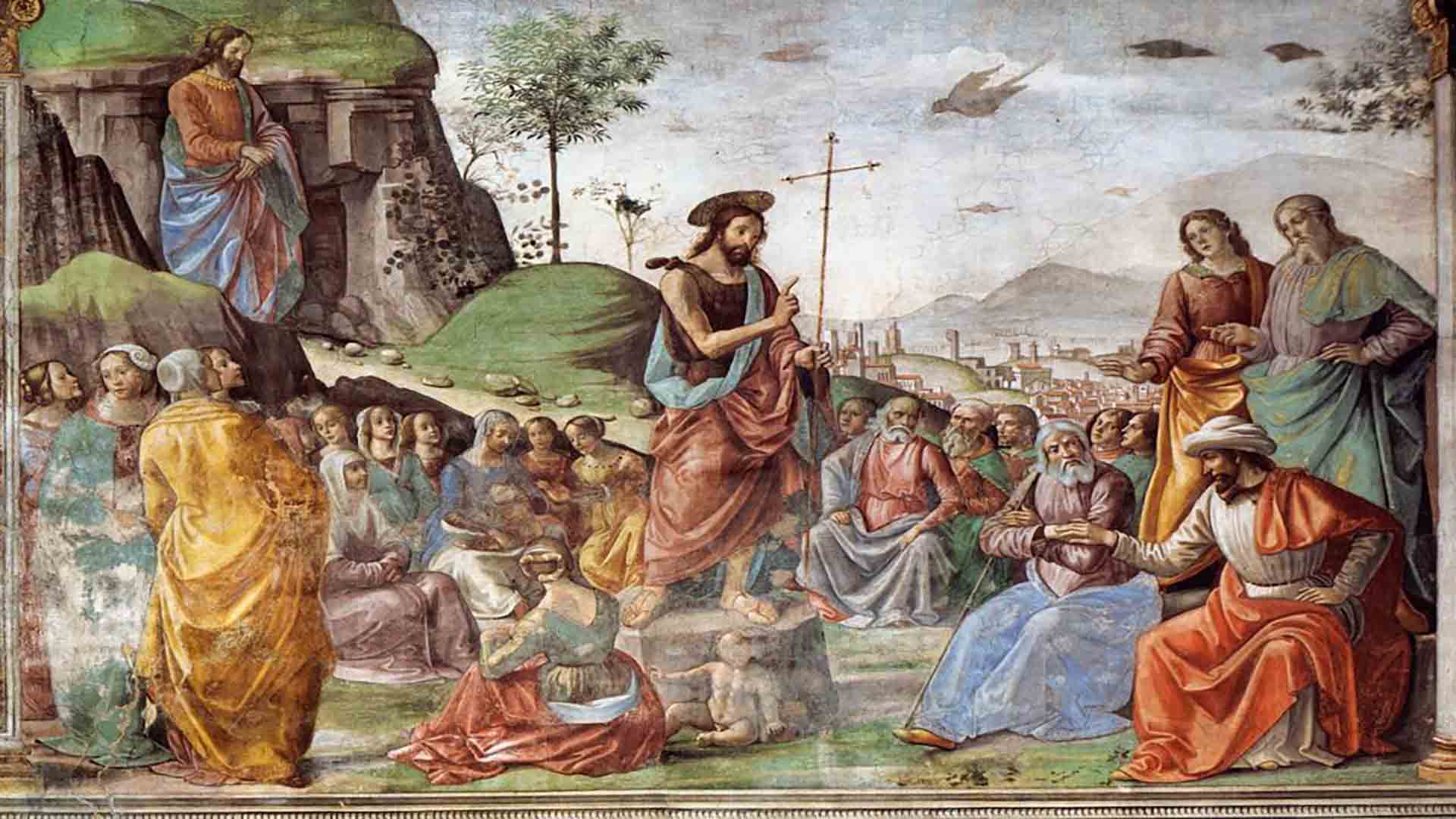
Primordial Light
Last Sunday marked the Baptism of Our Lord. Historically, Jesus began His public ministry after His Baptism at the age of 30. Therefore, it is only fitting that the readings of the second Sunday should touch upon the primordial light of Christianity.
In the First Reading (Is 49: 3, 5-6), who is that “Servant” chosen to unite the scattered tribes of Israel and to enlighten the world with His Word? The Old Testament refers to several as “Servants of the Lord”: Abraham, Isaac, Jacob, Moses, Joshua, Isaiah, Job, Nebuchadnezzar, and even God’s chosen people, Israel, often called 'Jacob'.
While it is no wonder that that title should refer to Israel, it has eventually come to represent Jesus Christ more specifically: “I will give you as a light to the nations, that my salvation may reach to the end of the earth.” Although he was “crushed for our iniquities,” as Isaiah had said (cf. Is 53) that he would be, Christ accomplished His salvific mission. Christianity is the world’s largest and most widespread religion, with over two billion followers representing one-third of the world's population. However, since the light of divine revelation is still waiting to envelop the world, there is no room for complacency. Rather, it behoves us to be God’s instruments and say: “Here I am, Lord! I come to do Thy will.” (Ps 40)
In fact, it is the vocation of every Christian to walk in the footsteps of Christ and do His will without fear or favour. If God is for us, who can be against us? (Rom 8:31) The Psalm teaches us that He is always by our side, stoops down to us, hears our cry, and turns our cry into a song. What is more, He asks not for sacrifice and offerings but for a listening ear and a willing heart. If we only delight in His law from the depth of our hearts – where God’s law is engraved – we will see that He is our only hope and salvation, and proclaim His justice in the great assembly.
In this regard, St Paul set a noble example to all generations in the Second Reading ((Cor 1: 1-3). In his self-introduction to the Corinthians, he announced that God had called him to be an apostle. He dared to establish a community in a city steeped in corruption and urged sinners to become saints. Thus, the local church of Corinth was a symbol of the creation of the universal Church. He warmly encouraged his people to persevere in holiness, for God is holy. What a lesson to be learned by those who easily get discouraged and begin to falter!
Holiness is a sweet challenge, and only a life of faith, hope, and charity can help us attain it. To this end, we must be alter Christus, ipse Christus – another Christ, Christ Himself! St John the Baptist, who knew the path to salvation, never ceased to say, ‘Prepare ye the way of the Lord’. Although he was unworthy to untie the Lord’s sandals, he baptised Him in the Jordan, “that He might be revealed to Israel”.
Interestingly, Jesus and John, though close relatives, did not know each other closely; one had grown up in Galilee and the other in the desert. Nonetheless, John instantly saw that Jesus was the Messiah when the Holy Spirit descended and remained on Him, as preannounced to him by the Heavenly Father.
“The Holy Spirit had rested upon Jesus, not only to bear witness outwardly to the grace which abounded within Him, but to exercise an active influence over Him,” says the Abbé Constant Fouard in his classic work La Vie de N.S. Jésus-Christ (1880). “And therefore, so soon as the Christ had received this consecration He was ‘led by the Spirit’, St Matthew recounts; ‘led on into the wilderness,’ says St Luke; ‘sent out’, borne away, driven ‘into the desert’, according to St Mark”[1]. Over there, as is well known, the Son of God emerged eminently triumphant from a threefold attack waged by Satan. We should also marvel at how He emerged unscathed, “for having taken no part in the perversion of our humanity”[2].
On Jesus’ return from a forty-day stay in the Judean wilderness, where he had prayed and fasted, in close preparation for His public ministry, St John the Baptist saw Jesus coming toward him. It was here that the Precursor presented Jesus as the Lamb of God who takes away the sins of the world, as revealed in today’s Gospel (Jn 1: 29-34) tells us. To the Jews pursuing John, it was evocative of the oracle uttered by Isaiah: “The lamb standing dumb before his shearers, the Man of Sorrows, Who shall bear the sins of the people” (Is 53: 3). In other words, John was referring to his cousin Jesus as the One who would be immolated on the Cross, not as a mere symbol of the traditional paschal lamb.
“And I have seen and borne witness that this is the Son of God,” the Baptist stated very confidently. Should not you and I too respond to the primodial light of our own baptism and bear witness to Jesus Christ, that He may always be “a light to the nations” and His “salvation may reach to the end of the earth”?
[1] Cf. Jesus Christ the Son of God, by Abbé Constant Fouard, translated from the French by George F. X. Griffith; published by Longmans, Green & Co. and reprinted by Don Bosco, Goa, 1960, p. 83.
[2] Op. cit., p. 84.
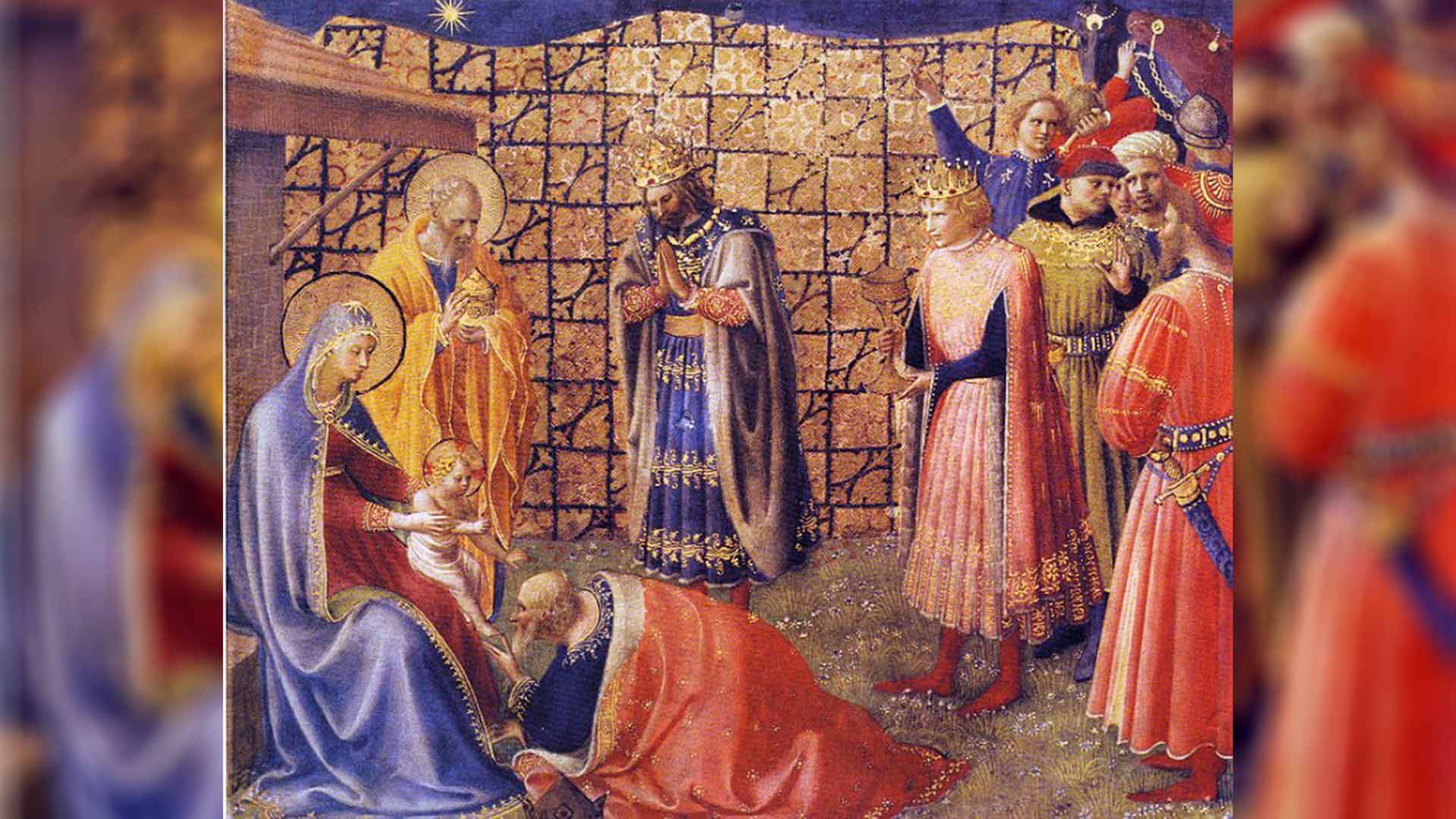
Luminous Epiphany
In places where the Solemnity of the Epiphany has been moved from 6 January to the Sunday falling between 2 and 8 January (both days inclusive), the readings are quite different from those that celebrate it as originally set.
Three parishes in the archdiocese of Goa celebrate the feast on the traditional day: the church of Reis Magos (The Magi), in Verem, Tiswadi; the chapel of Our Lady of Remédios (Cures) in Cuelim, Mormugão; and the church of Our Lady of Bethlehem, in Chandor, Salcete; where little boys play the Wise Men who followed a wondrous star to Bethlehem and paid homage to the Infant King.
The Epiphany (from the Greek ‘manifestation’) is an ancient feast that predates the celebration of Christmas on 25 December. It was central to Christian life because, although Jesus was born unsung, His manifestation to the Magi illuminated the mystery of Christmas.
The early Church combined the visitation of the Magi with the Nativity, the Baptism of Christ in the Jordan, and the Wedding at Cana, all of which pointed to Jesus as the Son of God. Only centuries later, at the Council of Tours in 567, the Church set Christmas day on 25 December, the Epiphany on 6 January, and named the twelve days between the two feasts as the Christmastide, with the latter solemnity marking the grand finale. The remaining feasts are spread out.
The day’s readings highlight an incomparably sublime event in the history of humankind: the manifestation of Jesus Christ. In the First Reading (Is 60: 1-6), while the prophet Isaiah looks at battered Jerusalem, he envisions it as the quintessential city that will be the Bride of the Lord. The city would manifest its glory, and the peoples of the world would flock to it with gifts, the same as the Magi would bring to the Babe of Bethlehem centuries later. Most importantly, by the end of times, 'all nations shall fall prostrate before you, O Lord,' as the Psalm says.
While the Gospel (Mt 2: 1-12) echoes Isaiah’s prophecy, it also quotes the chief priests and scribes as saying to king Herod that it was indeed written by the prophet (Micah 5: 1-2; 2 Sam 5: 2): 'And you, O Bethlehem, in the land of Judah, are by no means least among the rulers of Judah; for from you shall come a ruler who will govern my people Israel.'
That reference is significant, for Jesus would give up on the fortress Jerusalem and choose to be born in humble Bethlehem. The temple authorities were well aware of the coming of the Messiah, yet rejected Him.
Herod’s wily ways should be noted: he was all sweetness and bade the Magi to let him know where the Babe lay. Almost in the same breath, he ordered the killing of infants under the age of two. This is a great lesson for us who are naïve vis-à-vis the world. Although the world enjoys the benefits of Christian civilisation, it is bent on paganising the Mystical Body of Christ.
What about us Christians? Are we alert and zealous to stand up and speak up? Are we imbued with the Good News and desist from entertaining fake news? Church leaders ought to see through the devious ways of the secular, and often anti-Christian, political establishment, and refrain from partying with the impostors.
We Christians must emulate the Magi of yore and reject the world's Herods. Those noble pilgrims from the Orient, astrologers and/or philosophers conversant with Hebraic messianic beliefs, were the first Gentiles to adore Jesus; they accepted Him while the authorities cunningly rejected Him, a pathetic drama that is still unfolding in our times. They offered Him gold, in acknowledgement of the royalty of Jesus; frankincense, as a reference to His divinity; and myrrh (not mentioned by Isaiah), pointing to Jesus's suffering humanity.
St Paul in the Second Reading (Eph 3: 2-3, 5-6) states that the Gentiles are indeed 'fellow heirs, members of the same body, and partakers of the promise in Christ Jesus through the Gospel.' This is in stark contrast to the narrow and exclusive Jewish idea of Salvation. The Chosen Race had clearly failed God, so the Church is now the chosen race, royal priesthood, and holy nation. It makes you and me privileged bearers and proclaimers of His luminous message. Our task is to put the lamp on a stand, such that it gives light to all in the house! Instaurare omnia in Christo.
Banner: http://www.catholicstpeter.com/Epiphany/slides/adoration__of__the_magi-_fra_angelico.html
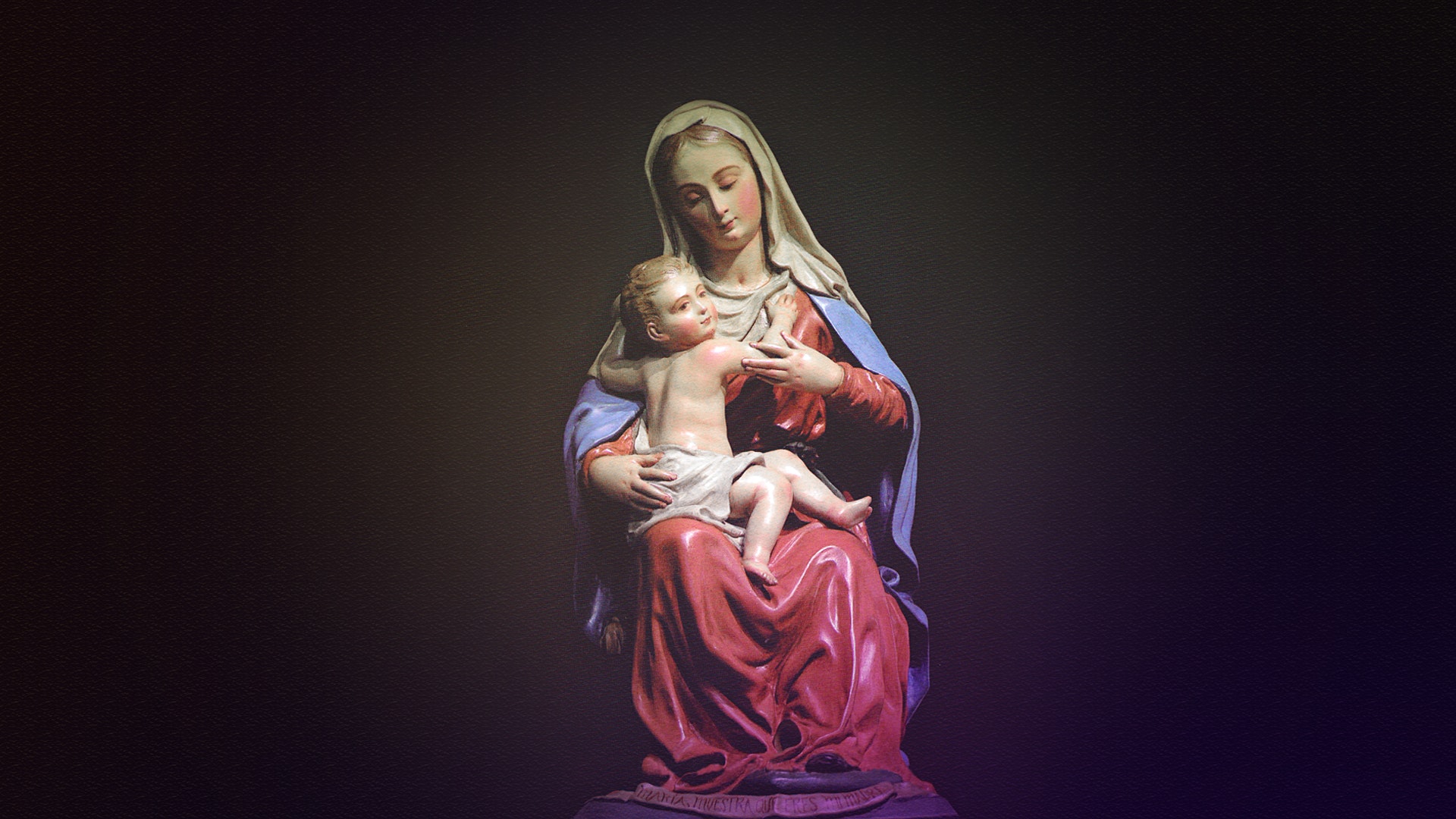
Under Two Holy Names
The New Year will be brought in with much fanfare the world over. The faithful will drive enthusiastically to church in their best outfits to pray for a worthy year ahead. Although it is the beginning of a civil year, we ought to honour it because Time belongs to God.
There is also a Christian facet to it. It is the Octave of Christmas and the first day of the Gregorian calendar as introduced by Pope Gregory XIII in 1582, replacing the Julian calendar whose algorithm had miscalculated the date of Easter.
Although the Gregorian calendar is now used in most parts of the world, some churches not affiliated with Rome still follow the Julian calendar. Ukraine is an example. A few years ago, in a bid to distance itself from the Russian Orthodox Church, Zelenksky’s country fell in line with the Church in the West and began celebrating Christmas on 25 December, instead of 6 January.
The first day of the civil year is also dedicated to the Blessed Virgin Mary in celebration of her unique privilege and title as Mother of God. Accordingly, the readings dwell on the Mother of Jesus and on the Holy Name of Jesus.[1] The Feast highlights Mary's role in the economy of Salvation and helps us place our problems and concerns under her mantle.
The Catholic Church also celebrates the World Day of Peace[2] on the first day of the first month of the year.
In today's First Reading (Num 6: 22-27) one of the five books (Pentateuch) dictated by God to Moses. Called so because it begins by listing the numbers of a census of the Hebrew people, the Book represents a march of God’s people across the desert wilderness between Egypt and Canaan. During this march, the participants gathered experiences that eventually impacted their future. God asked Moses to request Aaron, a fluent speaker, to address the Pharaoh.
Aaron, along with Moses, delivered God's message to Pharaoh: 'Let my people go, so they hold a festival for me in the wilderness'. When Pharaoh refused, demanding to know who the Lord was, Aaron performed miracles (turning his staff into a snake) to show God's power, but Pharaoh remained stubborn, increasing the Israelites' burdens.
The blessing is a general priestly blessing for the wellbeing of Israel. It is often seen as being fulfilled in the Birth of Jesus. The mystery of the Incarnation was a fulfilment of a long wait; it was a manifestation of God’s benevolence and love for humankind, His supreme creation. His Son liberated us from the old law and from sin; we have also secured His blessings, the privilege to be called God’s children (rather than creatures) being the highest one for Christians.
Of course, none of this would be possible without the willing collaboration of the Blessed Virgin Mary. She is thus, very naturally, the Mother of God and Mother of the Church, which is the Body of Christ on earth.
This is why St Paul in the Second Reading (Gal 4: 4-7) says: 'God sent forth His Son born of woman, born under the law, to redeem those under the law, so that we might receive adoption as sons.' His words highlight the human side of the Son of God, that He became man to first save the Chosen People, that He was formed by the religion of his ancestors (to us, the Old Testament), and that in time He perfected the law, whereby all men and women of goodwill would be saved.
Finally, in the Gospel (Lk 2: 16-21), the poor shepherds were the first to receive the Good News of Salvation. They met Mary and Joseph, with the Divine Babe lying in a manger. They soon understood the magnificent Hymn of the Angels, Gloria in excelsis Deo et in terra pax hominibus bonae voluntatis, and became the first proclaimers of the Word made Flesh. They were adopted as children of God.
The fact that, at the end of the Octave, Jesus was circumcised and given His Holy Name, as preannounced by the Angel Gabriel to Mary, justifies the celebration of His Holy Name together with Mary’s title as Mother of God. It also explains why 1 January was observed as the Feast of the Circumcision of Jesus, with a Marian orientation predating it, since the 13th century. However, this feast day was cancelled by Pope John XXIII’s General Roman Calendar of 1960 and simply called the Octave of the Nativity.
Like Mary, we too need to treasure all these things, ponder them in our hearts, and be ever more faithful to Holy Scripture and Tradition. The Blessed Virgin, who had a unique understanding of Jesus's divinity and mission from the beginning, understood the full import of her Son’s words after the Resurrection and Pentecost.
We too ought to bide our time and put His Holy Name upon our world, pray for God’s blessing, and discern our vocation. Above all, by God’s grace, we ought to eschew sin, cease to be slaves of the world, and happily be sons and heirs. The affirmation of their Christian past and inheritance by European and American leaders signals a new grace that is entering our hedonistic world.
Banner: https://daylesford.org/the-solemnity-of-mary/
---
[1] The feast of the Maternity of the Blessed Virgin Mary was first granted to the dioceses of Portugal and Brazil and Algeria in 1751 on the petition of King José I of Portugal. By 1914, the feast was established in Portugal for celebration on 11 October and was extended to the entire Catholic Church by Pope Pius XI in 1931. The 1969 revision of the liturgical year changed it to 1 January.
[2] Pope Paul VI established it in 1967, inspired by Pope John XXIII’s Encyclical Pacem in Terris (1963) and with reference to his own Populorum Progressio (1967).
The Three Christmas Masses
Did you know of the three Christmas Masses – Midnight; Dawn; Morning – each with its own liturgy?
The Midnight Mass is also called ‘the Angel's Mass’; the second, ‘the Shepherd's Mass’; and the third, ‘King's Mass’.
Although all readings are on the theme of hope, light, and salvation, each of the three Masses has its own focus and all of them are worth reflecting upon.
The First Reading is always from the Book of Isaiah, who is the Prophet par excellence of the Messiah and the Good News. The Second Reading of the first two Masses comprise passages from St Paul’s Letter to Titus whereas the Morning Mass is taken from the Letter to the Hebrews. The Gospel of the first two Masses is from St Luke, while the daytime Mass reads from St John.
The Lectionary carries a note: 'For pastoral reasons, one or other of the three Masses may be used at any hour.'
MIDNIGHT MASS
Why a Mass at midnight? It is traditionally believed that Jesus was born at midnight. The physical darkness is a reminder of the spiritual darkness we are steeped in, a darkness that only Christ the Light of the World can dispel.
The First Reading (Is 9: 2-4, 6-7) states: 'The people who walked in darkness have seen a great light.' The prophecy is specific to Israel, whose king, Ahaz, had entered into alliances with kings instead of with the King of Kings. Isaiah announced to the hapless nation that the royal line would produce a descendant that would save them. Ahaz’s son Ezekiah was indeed a righteous king, but the adjectives describing him – 'Wonderful Counsellor, Mighty God, Everlasting Father, Prince of Peace' – are infinitely more apt for Jesus Christ the Messiah, a descendant of the Royal House of David.
The Gospel account (Lk 2: 1-14) is about the humble birth of Our Lord, proof enough that His government would be of the spiritual realm. That 'there was no place for them in the inn' tells us of how the rich and mighty would reject Him, as they still do. It is no wonder that the poor shepherds were the first to be invited to visit the Divine Babe in Bethlehem.
After the Fall, there was a chasm between God and man. The Son of God came to overcome that barrier, yet we vacillate when it comes to things divine. Nowadays, when in the name of secularism, the world is steeped in irreligion and passions, let us heed St Paul’s advice to Titus (2: 11-14): '… live sober, upright and godly lives in this world, awaiting our blessed hope, the appearing of the glory of our great God and Saviour Jesus Christ.'
In this dark world, then, Christmas comes with a message of light and hope for humankind.
DAWN MASS
The Mass at dawn commemorates the shepherds’ early and eager visit to adore the Lord in the manger. As natural light increases at dawn, those who believe in the Lord are blessed with His gift of light.
In the First Reading (Is 62: 11-12), Isaiah announces the good news of salvation to the daughter of Zion, that is, Jerusalem, or the Jewish people. As the luminous Psalm says, 'This day a new light will shine upon the earth: the Lord is born to us.' This light will shine on the just, and joy will belong to the upright of heart.
The Gospel (Lk 2: 15-20) tells us that the lowly – represented here by the shepherds, who were considered the scum of the earth – are the upright of heart: they see with eyes of faith, and they glorify and praise God. Like little children, it is the lowly who are apt to inherit the kingdom of God.
Yet, we are never worthy. As St Paul says to Titus (3: 4-7): 'When the goodness and loving kindness of God our Saviour appeared, He saved us, not because of deeds done by us in righteousness, but in virtue of his own mercy.' Our baptism, then, is the dawn of a new life of the spirit.
DAY MASS
The third and final Christmas Mass is celebrated in broad daylight, symbolising the promised Son of God Who has been revealed to the world. The Gospel reading is a standing invitation to all nations to worship the new-born King of Kings, hence the name ‘King's Mass’.
The First Reading (Is 52: 7-10) announces the Good News to Israel, and eventually, to 'all the nations; and all the ends of the earth shall see the salvation of the world.' How happy we should consider ourselves to be included in that number, thanks to the Apostles who visited our subcontinent way back in the first century (Kerala, Tamil Nadu) and later, other proclaimers of the Word, from the 16th century onwards (Goa and surrounding areas).
The Gospel (Jn 1: 1-18) strikes a somber note, that is, nevertheless, thought-provoking: 'The true light that enlightens every man was coming into the world, He was in the world, and the world was made through Him, yet the world knew him not.'
How true that is of our world two millennia after the Birth of Jesus. We know Him not, and those who are privileged to know, care not! 'He came to his own home, and His own received Him not.' Jesus came to save Israel, and they rejected Him; He wants us to announce the Good News to the world, and what do we do?
How can we despise God Who has stretched out His hand to humankind?
The Second Reading (Heb 1: 1-6) emphasizes how 'in many and various ways God spoke of old to our fathers by the prophets; but in these last days He has spoken to us by a Son… He reflects the glory of God and bears the very stamp of his nature, upholding the universe by his Word of power.' Let us acknowledge Him duly and gratefully.
RESOLUTION
This Christmas let us reflect on the power and glory of God and how we are privileged to inherit His light on earth and everlasting life in Heaven. Let us rise above matter and embrace the spirit; let us look beyond the physical and gaze at the supernatural; let us put the pettiness of the world behind us and live like angels on high.
Thanks to the Holy Catholic Church, the ineffable mystery of Christmas stays with us through the year.