Continued from Herald Café magazine, 2 May 2026
KEY MILESTONES
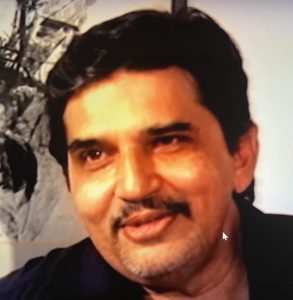
Mario Carlos do Rosário Brito Miranda (1926–2011)
- Early Life & Education: Born in Daman on 2 May 1926 to Constâncio do Rosário Miranda and Maria Zulema de Brito. Educated in Loutulim and Bangalore, he graduated from St Xavier’s College, Bombay, choosing a BA in Literature over formal art school.
- Career Beginnings: Began freelancing in 1952, eventually establishing a long-term association with the Times Group, in particular, The Illustrated Weekly of India.
- Hobbies: Reading, music, sports, cinema, travel.
- Artistic Style: Shifted from political to social cartooning, creating iconic, intricate depictions of daily life. Also, a visual diarist, caricaturist, painter, illustrator, and muralist.
- Return to Goa & Legacy: Returned to Goa with his wife, Habiba Hydari, in 1996. Key efforts included restoring the Reis Magos Fort and establishing the Museum of Christian Art.
- Awards & Recognition: Honoured with all three Padmas (Padma Shri, Bhushan, Vibhushan), the Goa State Cultural Award, and international awards from Spain and Portugal.
- Passing: Passed away on 11 December 2011 after a battle with Parkinson’s disease.
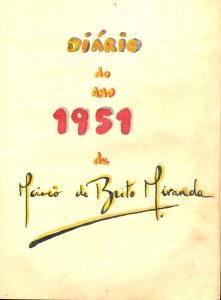
MARIO’S DIARIES
Mário began to draw while he was still learning to walk and talk. To deter him from doodling on the walls, his mother gave him blank diaries, pencils, and pens, suggesting that he record a highlight of the day. He feverishly filled their pages with bright and breezy sketches. He used line drawings and water colours and made a few jottings in Portuguese. Noticing her son’s commitment to journaling, she gave him drawing materials as a Christmas gift every year.
Mário sketched every day for 18 years (1934-1952). His sister, Fátima Miranda Figueiredo, estimates that those sketches number around 6,000. While his eye caught the quirks of his society, he unwittingly froze a microcosm of mid-20th-century Goa in his drawings, which also mirrored universal human nature. In them lies Goa’s plenty, or, as Dryden said of The Canterbury Tales, “Here is God’s plenty!”
Three volumes (1949, 1950, and 1951) have been published in English translation as The Life of Mário, edited by Gerard da Cunha and published by Architecture Autonomous.
MÁRIO’S CHARACTERS
Mário’s diaries portray his busy social life. He had a large circle of relatives and friends with whom he spent carefree moments as well as solemn moments. They went to restaurants and the movies, attended picnics and birthday parties, and went to church, a wedding, or a funeral. But wherever he went, he always noticed something funny.
Mário notices everything and everyone, and spares no one. The serious and the pompous come very especially under his scanner. According to him, ‘when people take themselves too seriously, they tend to be funny.’ While his drawings embody that insightful observation, they don’t merely distort a person’s features; they perceptively bring to light things invisible to the naked eye.
Those who came under his diary scanner included Goan celebrities, village folk, and even his beloved pet animals. It was quite a different ballgame in his cartoon strips for Bombay newspapers or in his travelogues covering Portugal, Spain, France, Germany, the USA, Israel, Japan, or other countries. Occasionally, he reworked his diary ideas, especially for the Bombay newspapers — the city and village types, styles of dancing, scenes at the cinema theatre, the cafés and restaurants, and so on — implying that human nature is the same everywhere.
‘I’m a keen observer of people,’ said Mário, ‘they are generally doing something they shouldn’t be doing.’