Today’s readings offer a profound lesson in the attributes of God and a glimpse into a Kingdom of Heaven that far exceeds human imagination. For our part, we are called to bloom where we are planted, always offering praise and thanks for the infinite variety of blessings and graces we receive.
The First Reading (Is 55:6-9) speaks to a people in exile. After allowing them to experience the consequences of their wandering, God calls them back to conversion. Their exile, though temporary, was a time of trial — an experience not unfamiliar to us in our own valley of tears. Isaiah reminds us that the best remedy for trial is to let ourselves be conquered by God’s boundless love. To do this, we must align our wills with His, resisting the temptation to bend His divine teachings to suit our personal tastes or cultural trends.
All too often, instead of exercising humility and justice, humanity offends God in countless ways. We see a world that either confuses the natural with the supernatural or rejects the divine entirely. We encounter those who speak of justice while abusing their neighbours, or who worship power and money until they become slaves to both. Yet others curry favour with false gods and fail to honour the true God they have known since their baptism.
As the Responsorial Psalm reminds us, the true God is highly to be praised, and His greatness is immeasurable. It is foolish to think we can match His stature, yet He remains intimately close to everyone who calls upon Him in truth. Cultivating this deep faith and trust is the ultimate antidote to the fear, tension, and stress that bedevil our daily lives. The One who knows the number of hairs on our heads will surely take care of us.
This total focus on God is perfectly captured by St. Paul in the Second Reading (Phil 1:20-24, 27). Writing from a prison cell, Paul delivers his famous, pithy conviction: ‘For to me, to live is Christ, and to die is gain.’ If he is spared death, he promises to continue working fruitfully for Christ; if he is executed, he will be united with Him in Heaven. He is at peace either way because Christ is his absolute centre.
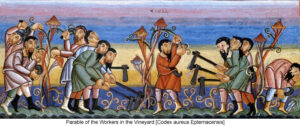
Finally, in the Gospel (Mt 20:1-16), Jesus illustrates exactly why God’s thoughts are not our thoughts, and His ways are not our ways. The Parable of the Labourers in the Vineyard reveals a God who is not grudging, but immensely generous. He does not treat us according to mathematical calculations, but according to our deepest needs. He is magnanimous, empathetic, and fair in a way that transcends human logic.
This Gospel text may shock the world’s paymasters and economists, but it is a lesson about the economy of the Kingdom of Heaven. We cannot demand that God pay us based on what we perceive to be our own merits. He knows our backstories better than we do. Jesus reveals to the grumbling labourers — and to the Pharisees of His time — that divine goodness completely bypasses human criteria of compensation. Historically, this also served as a lesson to the Jewish people that the pagan nations, though called ‘last’, would receive the same full inheritance of grace.
To human eyes, the world may seem as the poet wrote: ‘lovely, dark and deep,’ filled with promises to keep and miles to go before we sleep. But this Sunday reminds us of a greater truth: if through our life we choose God above all else, then when we finally do close our eyes in sleep, we will wake up safely with Him.
Banner: Mass of Saint Gregory the Great by Master of Portillo (1520-1525). https://rb.gy/qhikf
Today’s liturgy truly portrays a God whose thoughts and plans are far away from ours, as so perfectly clarified in the gospel. A magnanimous God! And your explanation has driven home that point. Thank you, Oscar.
This is the sentence that stayed with me today, Oscar – “He knows our backstories better than we do.”
Thank you not only for it but the whole text.
É verdade ! “E até mesmo os cabelos da vossa cabeça estão todos contados.” , Mateus 10 : 30.