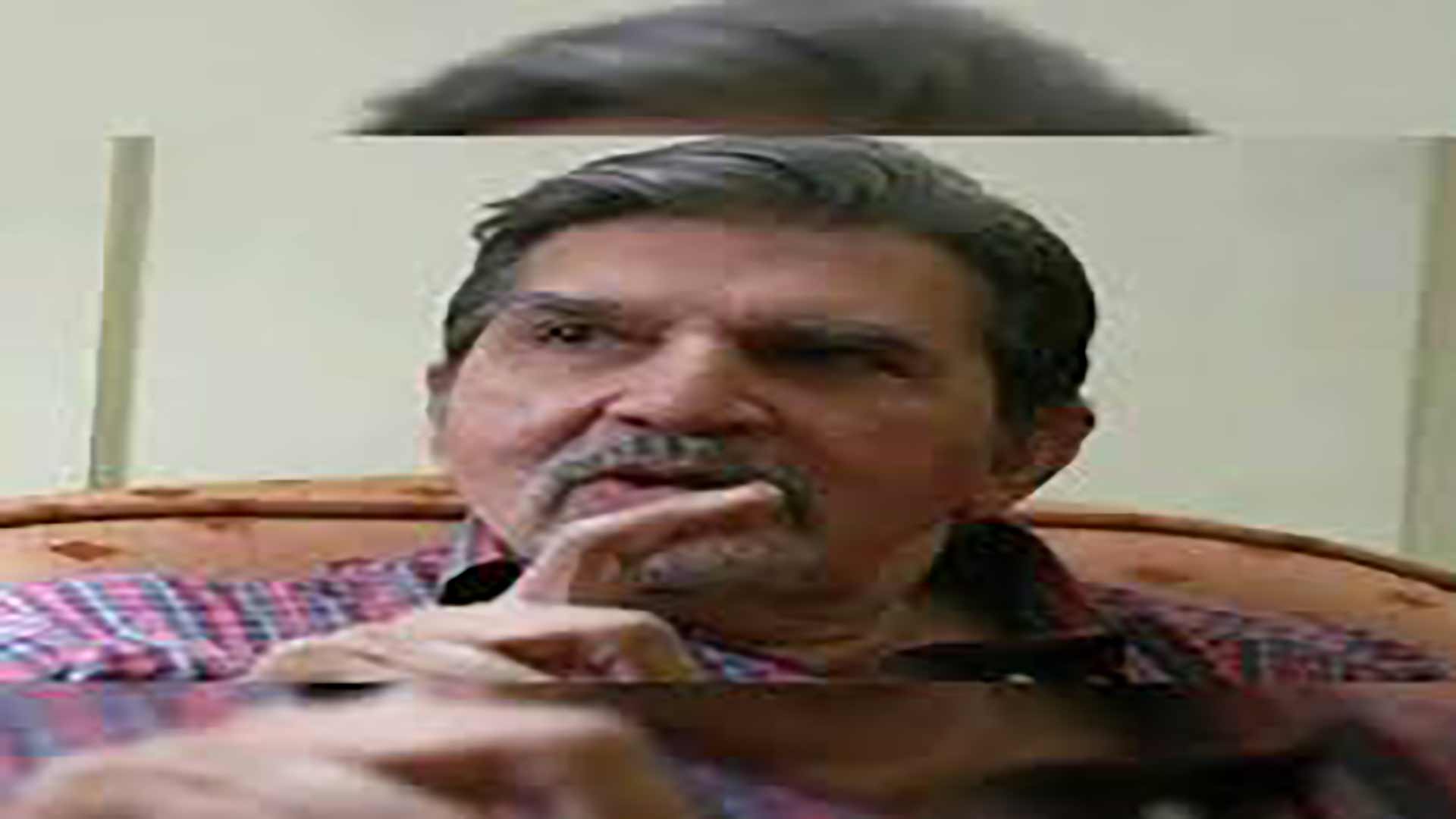
Mário and his Times
Mário’s long tryst with Mumbai began at the Times. He had spent his graduation years at St Xavier’s College, but saw the paper up-close on his return to the city in 1952. With 18 years of visual diaries under his belt, he visited newspaper and business offices. He began as a freelance cartoonist with The Current and sold his handcrafted postcards of the city landmarks at the Flora Fountain to make extra money.
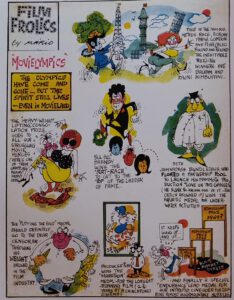
The 26-year-old Goan cartoonist’s versatility, spontaneity, and detail created a significant buzz. Before long, editor C.R. Mandy and art director Walter Langhammer invited him to the Times group of publications. The Illustrated Weekly of India was his first stop. Soon, sister publications like Cocktail, Femina, Filmfare, The Evening News, and The Economic Times began to use Mário’s skilful depictions of movement and sound, often featuring his trademark dog.
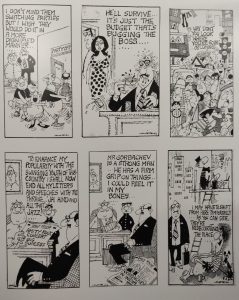
The rest is history. Mário would soon rank among the best of India’s cartoonists. The job seemed easy, and everything grist to his mill, but finding humour was no mean task. ‘There are times when you don’t feel funny, or may not feel like laughing, but still have to produce a funny cartoon – like a clown who has got to make people laugh all the time, although he doesn’t feel like laughing,’ said Mário.
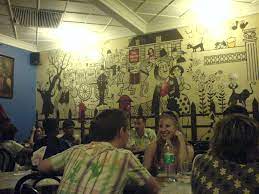
Add to it the fact that political bigwigs were breathing down his neck—and he had a sure recipe for disillusionment. Mário learned early on that lampooning power involved high risk. When he toned down the humour, cartooning became a ‘serious’ business. ‘Cartoonists are very serious people, and cartoons, no laughing matter,’ he quipped. That’s when Mário began to see himself mostly as a social caricaturist, turning his lens to fashions, crowded trains, music, films, the bustling life of Irani cafés, and so on!
Past the initial scramble for work, Mário began to yearn for the blissful freedom of his diary sketching. He travelled to Portugal and England, drawing merrily. He did cartoons for Mad magazine and ITV and was featured in Punch. He made fast money and friends, but most importantly, his idol Searle’s injunction — ‘Stay on in England, but stop copying me!’— infused him with the confidence to go by himself.
On Mário’s return in 1962, R.K. Laxman, the reigning deity of The Times of India, ‘subtly ensured that the pedestal was not for sharing,’ says Bachi Karkaria. Mário made his mark… ‘His hilarious work is packed with characters from the contemporary scene and his greatest gift is that he makes us laugh at ourselves,’ said a review in a 1960 issue Cocktail, adding, ‘His illustrations too have polished perfection and have been such a success that all our writers want Mario to illustrate their work.’
The period saw the rise of Mário’s characters to iconic status: the efficient secretary Ms Fonseca, the Boss and his crony Godbole; the corrupt politician Bundaldass and his sidekick Moonswamy; the glamorous Bollywood star Rajni Nimbupani and co-star Balraj Balram. For generations of Indians, these characters were more than ink on paper; they remain a mirror to the nation’s quirks, even if changing sensibilities put a negative spin on some of them.
In 1964, the Times of India Press published Mário’s book of sketches, Goa with Love. Successive editors of the Weekly—Khushwant Singh, M.V. Kamath and Pritish Nandy—held him in high esteem. While his literary background and travels gave him a broad outlook, he wore none of that on his sleeve. Vinod Mehta said that Mário abhorred ‘intellectual talk’, his forte being ‘the accumulation of trivia judiciously and harmoniously composed.’
By and by, Mário got excited about capturing moods and ambiences for his pictorial travelogues. To make time for travel, he first joined a new tabloid, The Midday, where his close friend Behram 'Busybee' Contractor was the editor; and then took to freelancing for The Afternoon Despatch & Courier, founded by humorist Busybee. Countries around the globe invited him to hold solo exhibitions. He also illustrated books for the likes of Ruskin Bond, Dom Moraes, Manohar Malgonkar in Bombay, and for several writers in Goa. There was perhaps no other Indian cartoonist whose works turned into murals that now adorn the urban landscape.
In 1996, after Mário and wife Habiba retired to the quiet of Loutulim, the quintessential Goan artist was instrumental in setting up a museum of Christian art at Rachol (now shifted to Old Goa) and restoring the Reis Magos Fort. But the homecoming far from ended his love story with Mumbai, as he continued infusing The Afternoon Despatch & Courier and The Economic Times with his peerless humour.
The Times was thus his first and last stop. In 2011, India grieved when the icon that had humoured it in good times and in bad fell silent… Thankfully, Mário still provides a timeless window into the local and the global. He is an artist for all times and climes.

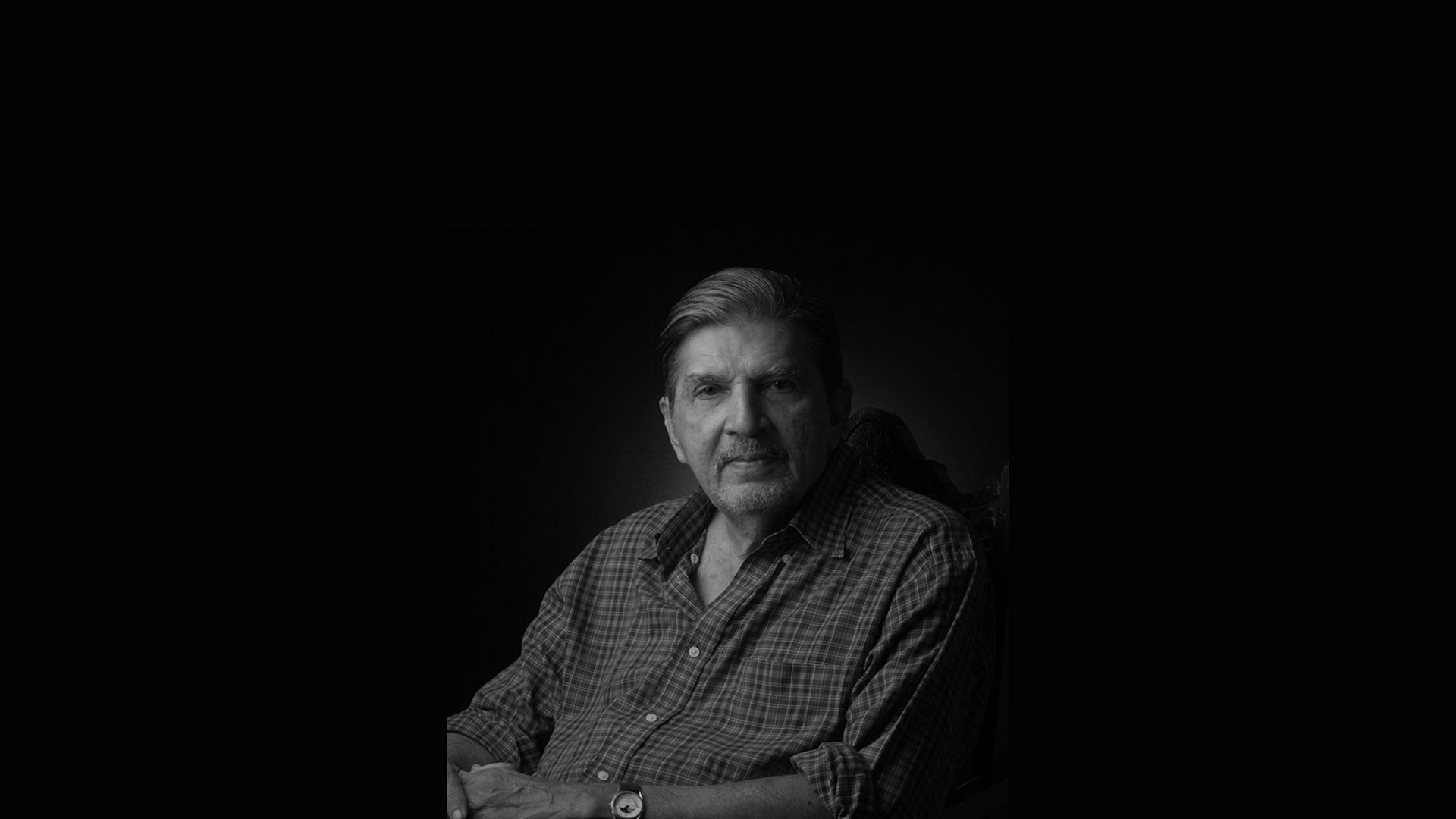
Story of Mário, the Miranda (Part 2/6)
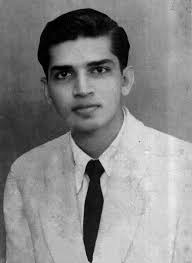 The Artist as a Young Man
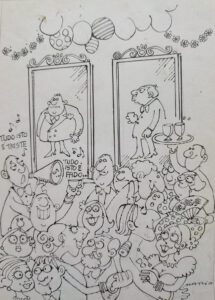
It was during his college days in Bombay that Mário’s characters first strutted out of his diaries; he drew pocket cartoons and peddled them at Flora Fountain for pin money.[11] And at a medical ball held at Clube Vasco da Gama, Panjim, couples dancing the night away delighted in the frisky sketches of the faculty members that Mário kept drawing on the wall mirrors lining the ballroom.[12]
It is not that Mário always passed uncensured. One day, a priest from the village, whom he had depicted outside the local fish market, showed up at his house. Mário’s mother, after doing her best to placate the visitor, ended up going to see archbishop Dom José da Costa Nunes, who had once expressed his wish to meet the young artist. Mário was hesitant but once there, was relieved to see his diaries spark guffaws rather than a controversy. ‘That was the first time I was appreciated by someone I didn’t know,’ he said.[13]
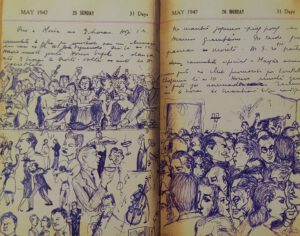
Mário maintained a diary right through his years spent in British India with intermittent stays in Goa and Damão (Figure 2). The last three logbooks (1949-51),[14] now available in print, are a shrine of frolicky pictures of relatives and friends in Loutulim, Panjim and Margão.[15] To quote Nissim Ezekiel, ‘the buffoonery of his human figures is redeemed from grossness by their verve, their inner urge towards going places, getting somewhere. It is not always their fault that there is no place to go, nowhere to get except through the corridors of illusion.’[16]
That was Mário’s equivalent of the dark night of the soul! His lifestyle was a cause of concern to his by now widowed mother struggling to manage the household while at the same time providing for Pedro at Princeton University.[17] But then Mário had a change of heart: was it the showcasing of his watercolours and drawings by the 1950 Souvenir of the Bombay-based Loutulenses League[18] that did the trick?
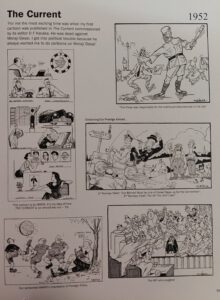
In 1951, seeing a bleak future for himself in Goa, Mário moved to Bombay. Though creative possibilities seemed unlimited here, he was jobless and quite badly off at first. That’s precisely when Policarpo (Polly) Vaz, a fellow hosteller at Rockville,[19] famously suggested to him to hand-craft picture postcards depicting the city monuments, offering to sell them at the hotel where he worked the night shift. Needless to say, the two became fast friends; and they had even thought of migrating to Brazil,[20] when Mário got a call from D. F. Karaka of The Current. The redoubtable editor, riveted by Mário’s diaries, commissioned him to cover a can-can dance scene at the Taj Hotel, and received such a rib-tickler that he promptly took him on as the tabloid’s regular cartoonist.
The young Goan created a stir in Bombay's journalistic circles when his cartoons first appeared in the press. Editor C. R. Mandy and art director Walter Langhammer soon invited him to The Illustrated Weekly of India. Before long, other Times Group publications,[21] too, began to use Mário’s drawings; they skilfully portrayed movement and sound, and often featured the cartoonist’s trademark dog.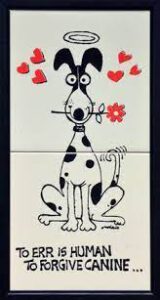
Art of Cartooning
That was the year 1952. Mário had virtually stumbled into the profession of cartooning.[22] To an onlooker the job seemed easy, and everything grist to the mill – from the bureaucracy, fashions, business, and people’s habits, to the animal world, environment, music, society, and even politics – but really, finding humour was no mean task. ‘There are times when you don’t feel funny, or may not feel like laughing, but still have to produce a funny cartoon – like a clown who has got to make people laugh all the time, although he doesn’t feel like laughing.’[23]
Elaborating on his predicament, Mário said, ‘People expect me to come up with jokes and anecdotes to make others laugh. I can’t do that. I enjoy humour if it comes from someone else who knows how to tell a good joke…. I am not a naturally funny person; I may look funny, but I am not funny.’[24] And if a cartoonist’s defining quality it is ‘to detect funniness in people’s behaviour or physical features and draw it, it is equally important to be able to laugh with someone, not at someone, without being cruel,’ said Mário, adding: ‘Humour is something very personal, individual. What’s funny to me may not be funny to you. Sometimes I do something which I think is very funny – and it flops! And people asking you to explain a cartoon flattens it completely.’[25]
Past the initial scramble for work, Mário began to yearn for the blissful spontaneity of his diary sketching. Add to this the fact that political bigwigs were breathing down his neck, and Mário had a sure recipe for disenchantment. Bombay Presidency’s Home Minister Morarji Desai was among the first ones to let his irritation show – something that taught Mário early on that lampooning political animals involved high risk. When he toned down the humour to appease the readers, cartooning quite paradoxically became a ‘serious business’. ‘Cartoonists are very serious people, and cartoons, no laughing matter,’[26] he quipped.
Finally, Mário stopped pursuing individual politicians; he began to see himself as a social caricaturist more than anything else. He is on record as saying, ‘I am not even a cartoonist; I draw… give me a pen and blank paper and I will draw. I just love to draw.’[27]
Acknowledgements: (1) I am indebted to Fátima Miranda Figueiredo for her knowledge and patience translated into many hours of whatsapp chats about her brother Mário and the family; and to Raul and Rishaad de Miranda for their warm welcome and lively conversation. (2) Banner picture: Portrait Atelier Goa (3) Article first published in Revista da Casa de Goa, Lisbon, Series II, No. 12, Sep-Oct 2021
[11] ‘Tale of Two Goans: Mario Miranda & Wendell Rodricks’, https://www.youtube.com/watch?v=5FDLGApfATc&t=5s
[12] Cf. Fernando de Noronha, Momentos do meu passado (Goa: Third Millennium, 2002), p. 146.
[13] FTF Mario Miranda, op. cit.
[14] Cf. The Life of Mário (1949, 1950, 1951) ed. Gerard da Cunha (Goa: Architecture Autonomous), in 2016, 2012 and 2011, respectively. Fátima Miranda Figueiredo reckons that her brother’s diary sketches total up to about 6,750 over a period of 18 years (1934-1951).
[15] He frequented the houses of his relatives, Judge António Miranda and Captain Adolfo Menezes, in Panjim, and Judge Eurico Santana da Silva, in Margão; and often stayed overnight with friends in their hostels.
[16] Nissim Ezekiel, ‘No escape if Mario is looking at you,’ in Mário de Miranda, ed. Gerard da Cunha (Goa: Architecture Autonomous, 2005), p. 276.
[17] As told by Fátima Miranda Figueiredo, 27.5.2021.
[18] Souvenir of the Silver Jubilee of the Loutulenses League (Goa: Imprensa Nacional do Estado da Índia, 1950). Curiously, in the chapter titled ‘The Rising Generation’, Mário figures as an Arts graduate, not as an Artist.
[19] Polly was from Bastorá; other hostelites, Joe Albuquerque and Paulo Miranda, from Loutulim. Cf. Mário de Miranda, op. cit., p. 14.
[20] Manohar Malgonkar, ‘Biography’, in Mário de Miranda, op. cit., p. 15.
[21] Femina; Filmfare; The Evening News and The Economic Times.
[22] Conversation with Shri Mario Miranda – 2 (Outtakes), op. cit.
[23] FTF Mario Miranda, op. cit.
[24] Ibid.
[25] Ibid.
[26] Ibid.
[27] Manohar Malgonkar, ‘Biography’, in Mário de Miranda, op. cit., p. 24; Conversation with Shri Mario Miranda – 2 (Outtakes), op. cit.