Mário and his Times
Mário’s long tryst with Mumbai began at the Times. He had spent his graduation years at St Xavier’s College, but saw the paper up-close on his return to the city in 1952. With 18 years of visual diaries under his belt, he visited newspaper and business offices. He began as a freelance cartoonist with The Current and sold his handcrafted postcards of the city landmarks at the Flora Fountain to make extra money.
The 26-year-old Goan cartoonist’s versatility, spontaneity, and detail created a significant buzz. Before long, editor C.R. Mandy and art director Walter Langhammer invited him to the Times group of publications. The Illustrated Weekly of India was his first stop. Soon, sister publications like Cocktail, Femina, Filmfare, The Evening News, and The Economic Times began to use Mário’s skilful depictions of movement and sound, often featuring his trademark dog.
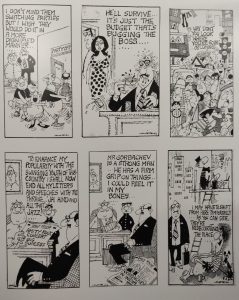
The rest is history. Mário would soon rank among the best of India’s cartoonists. The job seemed easy, and everything grist to his mill, but finding humour was no mean task. ‘There are times when you don’t feel funny, or may not feel like laughing, but still have to produce a funny cartoon – like a clown who has got to make people laugh all the time, although he doesn’t feel like laughing,’ said Mário.
Add to it the fact that political bigwigs were breathing down his neck—and he had a sure recipe for disillusionment. Mário learned early on that lampooning power involved high risk. When he toned down the humour, cartooning became a ‘serious’ business. ‘Cartoonists are very serious people, and cartoons, no laughing matter,’ he quipped. That’s when Mário began to see himself mostly as a social caricaturist, turning his lens to fashions, crowded trains, music, films, the bustling life of Irani cafés, and so on!
Past the initial scramble for work, Mário began to yearn for the blissful freedom of his diary sketching. He travelled to Portugal and England, drawing merrily. He did cartoons for Mad magazine and ITV and was featured in Punch. He made fast money and friends, but most importantly, his idol Searle’s injunction — ‘Stay on in England, but stop copying me!’— infused him with the confidence to go by himself.
On Mário’s return in 1962, R.K. Laxman, the reigning deity of The Times of India, ‘subtly ensured that the pedestal was not for sharing,’ says Bachi Karkaria. Mário made his mark… ‘His hilarious work is packed with characters from the contemporary scene and his greatest gift is that he makes us laugh at ourselves,’ said a review in a 1960 issue Cocktail, adding, ‘His illustrations too have polished perfection and have been such a success that all our writers want Mario to illustrate their work.’
The period saw the rise of Mário’s characters to iconic status: the efficient secretary Ms Fonseca, the Boss and his crony Godbole; the corrupt politician Bundaldass and his sidekick Moonswamy; the glamorous Bollywood star Rajni Nimbupani and co-star Balraj Balram. For generations of Indians, these characters were more than ink on paper; they remain a mirror to the nation’s quirks, even if changing sensibilities put a negative spin on some of them.
In 1964, the Times of India Press published Mário’s book of sketches, Goa with Love. Successive editors of the Weekly—Khushwant Singh, M.V. Kamath and Pritish Nandy—held him in high esteem. While his literary background and travels gave him a broad outlook, he wore none of that on his sleeve. Vinod Mehta said that Mário abhorred ‘intellectual talk’, his forte being ‘the accumulation of trivia judiciously and harmoniously composed.’
By and by, Mário got excited about capturing moods and ambiences for his pictorial travelogues. To make time for travel, he first joined a new tabloid, The Midday, where his close friend Behram 'Busybee' Contractor was the editor; and then took to freelancing for The Afternoon Despatch & Courier, founded by humorist Busybee. Countries around the globe invited him to hold solo exhibitions. He also illustrated books for the likes of Ruskin Bond, Dom Moraes, Manohar Malgonkar in Bombay, and for several writers in Goa. There was perhaps no other Indian cartoonist whose works turned into murals that now adorn the urban landscape.
In 1996, after Mário and wife Habiba retired to the quiet of Loutulim, the quintessential Goan artist was instrumental in setting up a museum of Christian art at Rachol (now shifted to Old Goa) and restoring the Reis Magos Fort. But the homecoming far from ended his love story with Mumbai, as he continued infusing The Afternoon Despatch & Courier and The Economic Times with his peerless humour.
The Times was thus his first and last stop. In 2011, India grieved when the icon that had humoured it in good times and in bad fell silent… Thankfully, Mário still provides a timeless window into the local and the global. He is an artist for all times and climes.

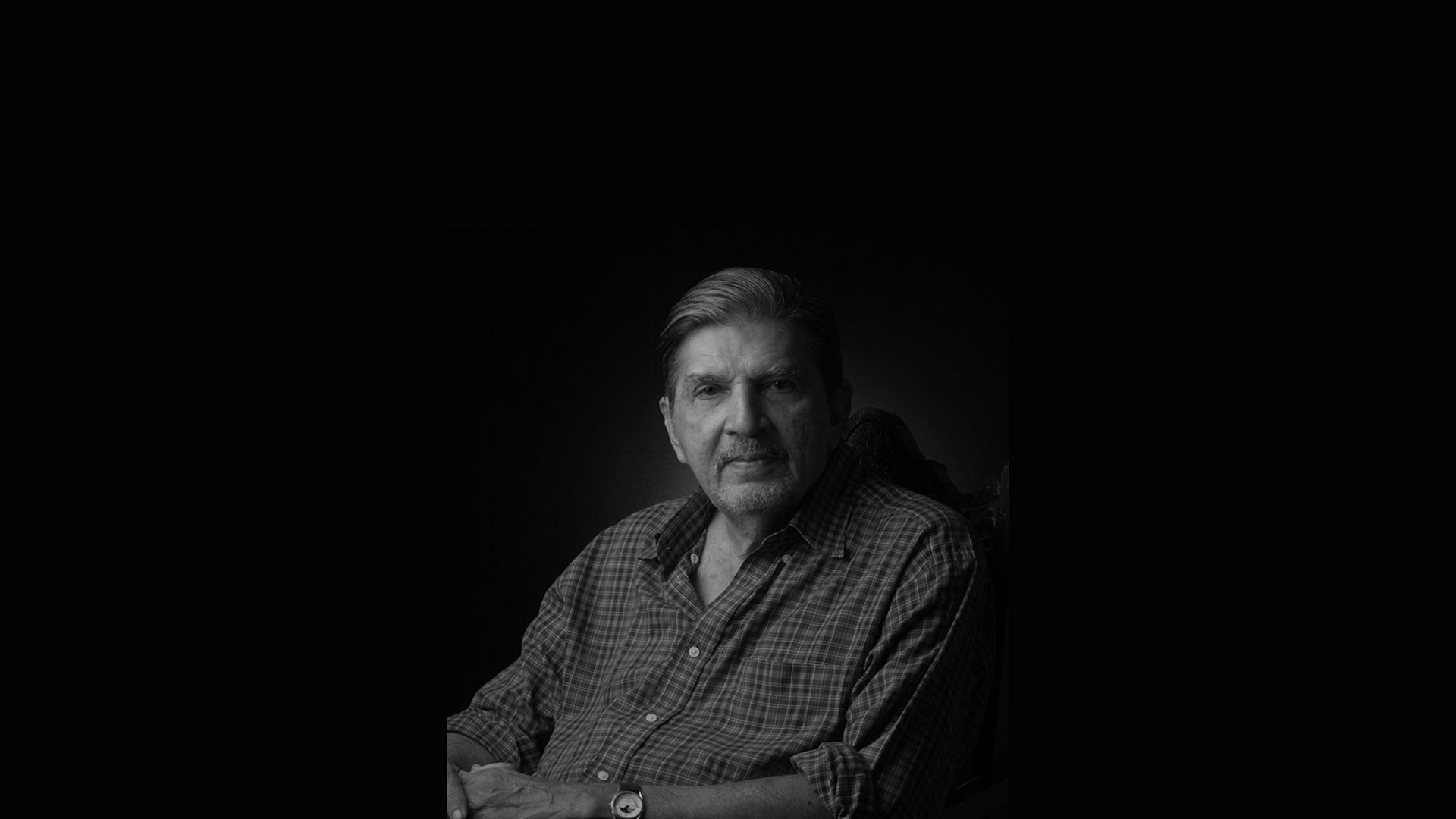
Story of Mário, the Miranda (Part 5/6)
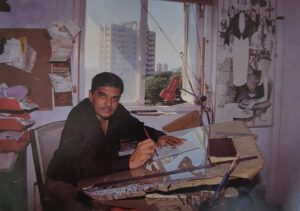
Reinventing himself
By his fiftieth year, Mário had developed an abiding interest in illustrating books. After Ruskin Bond’s The Room on the Roof, Uma Anand’s books for children,[69] and several business publications; Dom Moraes’ The Open Eyes: a Journey through Karnataka and A Family in Goa (1976); Manohar Malgonkar’s Inside Goa (1983), Lambert Mascarenhas’ In the Womb of Saudade (1994) and Mário Cabral e Sá’s Legends of Goa (1998) confirmed him in the art of book illustration.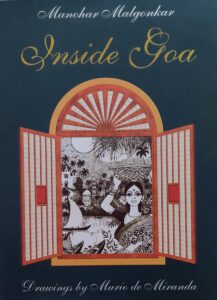
Now practically at the end of his career, doing illustrations for a book in Portuguese – Momentos do meu Passado (2002), by Fernando de Noronha – ‘brought back nostalgic memories of my youth spent in Goa,’ Mário said.[70] Victor Rangel-Ribeiro for his part recalls that when he proposed to the publishers that Mário be the illustrator for Loving Ayesha (2003), ‘first they said he would never agree; and when he agreed, they said he would be late with the drawings. He surprised us all by delivering the drawings on schedule.’[71]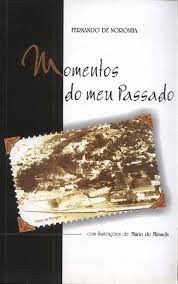
Interestingly, Goa-based projects marked the beginning of Mário’s homeward journey. In 1979, the movie buff of yesteryear acted as a creative assistant for Sea Wolves, a war film shot in Goa. In 1985, Shyam Benegal’s film Trikaal based itself on snippets of the Miranda family history; it was shot in their heritage home and village, the film director deeply appreciative of India’s Latin character available only on its west coast.[72] The mansion, refurbished for the occasion, soon began to figure in coffee table books and glossy magazines.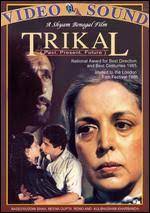
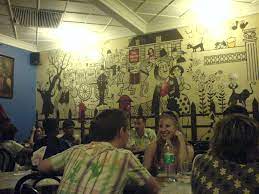
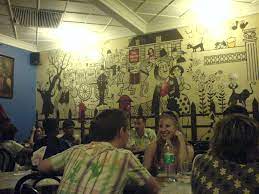
Mário is possibly India’s only cartoonist whose sketches have been turned into murals. His first one came up in 1986, at Hotel Mayfair, in a quaint corner of Panjim. The next two locales were at Colaba: Café Mondegar, his favourite haunt, and Hotel Paradise.[73] Mário also honoured Goa’s Krishnadas Shama Library[74], Panjim’s municipal market complex,[75] and other locations in the country with his murals. The adaptation of Mário’s characters by Air India and by the Charles Correa-designed Kala Academy in Goa was yet another feather in his cap.[76]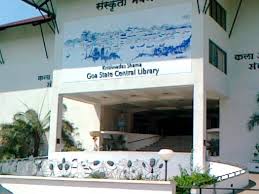
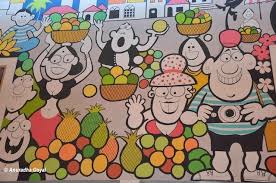
In 1996, the Mirandas gave up their rented place at 7A, Oyster Apartments, Navy Colony, Colaba, and returned with their dogs, turtles, parrot and all to the same sleepy little village of Loutulim that was frozen in time almost just as Mário had left it half a century earlier. The homecoming far from ended his love story with Bombay, though; he continued infusing The Afternoon and The Economic Times with his brand of humour. And in the evening of his life the inveterate cartoonist was a welcome presence in Goa’s social and cultural circles as well.
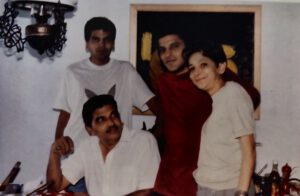
The Goan Cause
Life had come full circle for Mário. ‘What I enjoy most is doing nothing, if I could… – back to the sossegado times!’ he said.[77] Yet he was always brimming with ideas; and even if a wee bit mystified by Goa’s half-hearted response to his work,[78] or so he thought, the quintessential Goan gentleman had many dreams to fulfil and promises to keep.
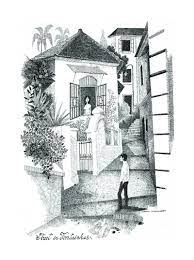
‘Goa has a different atmosphere from the rest of India. After all, Goa was with the Portuguese for 500 years…,’[79] said Mário. He planned to do a series of drawings ‘on my Goa, the Goa that I grew in, the past; the Goa which lots of people did not know existed.’ Considering it critically endangered, he wished to preserve it in his own way.[80] ‘Today, Goa is part of India, so naturally we will lose a lot and gain a lot,’ he said, hoping at the same time that ‘some of the heritage of the past remains and gives Goa this identity that I think it needs.’[81] According to art critic Ranjit Hoskote, Mário’s confluential, Indic and Iberian heritage, ‘gives him an amplitude of cultural references [and] a historically informed sensibility.’[82]
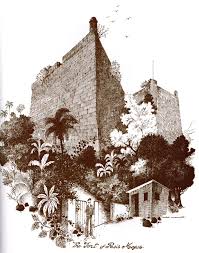
As the convenor of the Goa chapter of INTACH (Indian National Trust for Art and Cultural Heritage), Mário was instrumental in getting the Gulbenkian Foundation to sponsor the establishment of a Museum of Christian Art at the Seminary of Rachol. He also secured funding from Lady Hamlyn Trust, London, for the restoration of the iconic Reis Magos Fort.[83] And even though daunted by politics and red tape, he lent his expertise to public institutions like Goa University, Kala Academy and Goa International Centre.[84] It is ironic that the consummate Goan artist who could make light of just any situation found little reason to smile when it came to the State handling of tourism, environment, animal welfare and heritage issues.[85]
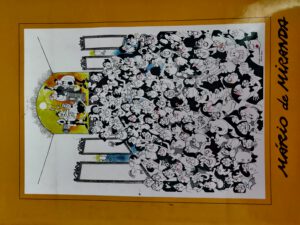
Meanwhile, Mário encouraged fashion designer Wendell Rodricks to document the Goan costume, through the Moda Goa project;[86] and artist Victor Hugo Gomes to study Goa’s ethnography,[87] an experiment that led to the creation of the Goa Chitra Museum. As regards his own oeuvre, Mário was fortunate to see part of it documented in a large-sized book titled Mário de Miranda as well as displayed at Mário Gallery, by architect Gerard da Cunha.
Acknowledgements: (1) I am indebted to Fátima Miranda Figueiredo for her knowledge and patience translated into many hours of whatsapp chats about her brother Mário and the family; and to Raul and Rishaad de Miranda for their warm welcome and lively conversation. (2) Banner picture: Portrait Atelier Goa (3) Article first published in Revista da Casa de Goa, Lisbon, Series II, No. 12, Sep-Oct 2021
[69] The Room on the Roof was first serialised in the Weekly, in 1956; and Anand’s Dul-Dul, The Magic Clay Horse, The Adventures of Pilla the Pup, and Lumbdoom, The Long-Tailed Langoor) were published in the 1960s. Mário also worked on films for children, sometimes for free, Cf. Conversation with Shri Mario Miranda – 2 (Outtakes), op .cit.
[70] Mário’s statement to my father. Cf. Fernando de Noronha, op. cit.
[71] Email of 25.6.2021.
[72] Telephone conversation on 2.7.2021.
[73] https://www.thehindu.com/features/friday-review/art/his-drawings-had-a-special-quality-rk-laxman/article2707166.ece Retrieved on 8 August 2021. Mário chose not to sign the mural, possibly because the artwork was put together by students of J.J. College. Others were done by one Shetty, cf. Conversation with Shri Mario Miranda – 2 (Outtakes), op. cit.
[74] Façade mural and interior panels: project executed by Orlando de Noronha’s firm Azulejos de Goa, Panjim, in 2011.
[75] Executed by Panjim-based Rajesh Salgaonkar, 2005.
[76] Some undertaken by Deepak from Meerut, cf. Conversation with Shri Mario Miranda – 2 (Outtakes), op. cit.
[77] ‘Tale of Two Goans’, op. cit.
[78] FTF Mario Miranda, op. cit.
[79] ‘Tale of Two Goans’, op. cit.
[80] Ibid.
[81] Ibid.
[82] Ranjit Hoskote, ‘The Art of Mario Miranda’, in Mário de Miranda, op. cit., p. 81.
[83] In both projects he had the support of Bal Mundkur; Bartand Singh and Smith Baig of INTACH.
[84] Mário was declared Goa Today’s Man of the Year. Cf. interview with Alexandre M. Barbosa and Alister Miranda, in Goa Today, December 1998, pp. 18-23.
[85] Doordarshan National, Eminent Cartoonists of India, #04, op. cit.; Goa Today, ibid.
[86] https://www.firstpost.com/india/moda-goa-designer-wendell-rodricks-on-indias-first-costume-museum-and-his-vision-for-its-future-5510481.html Retrieved on 19 Aug 2021
[87] https://timesofindia.indiatimes.com/city/goa/dont-call-me-sir-call-me-mario/articleshow/11456423.cms Retrieved on 19 Aug 2021