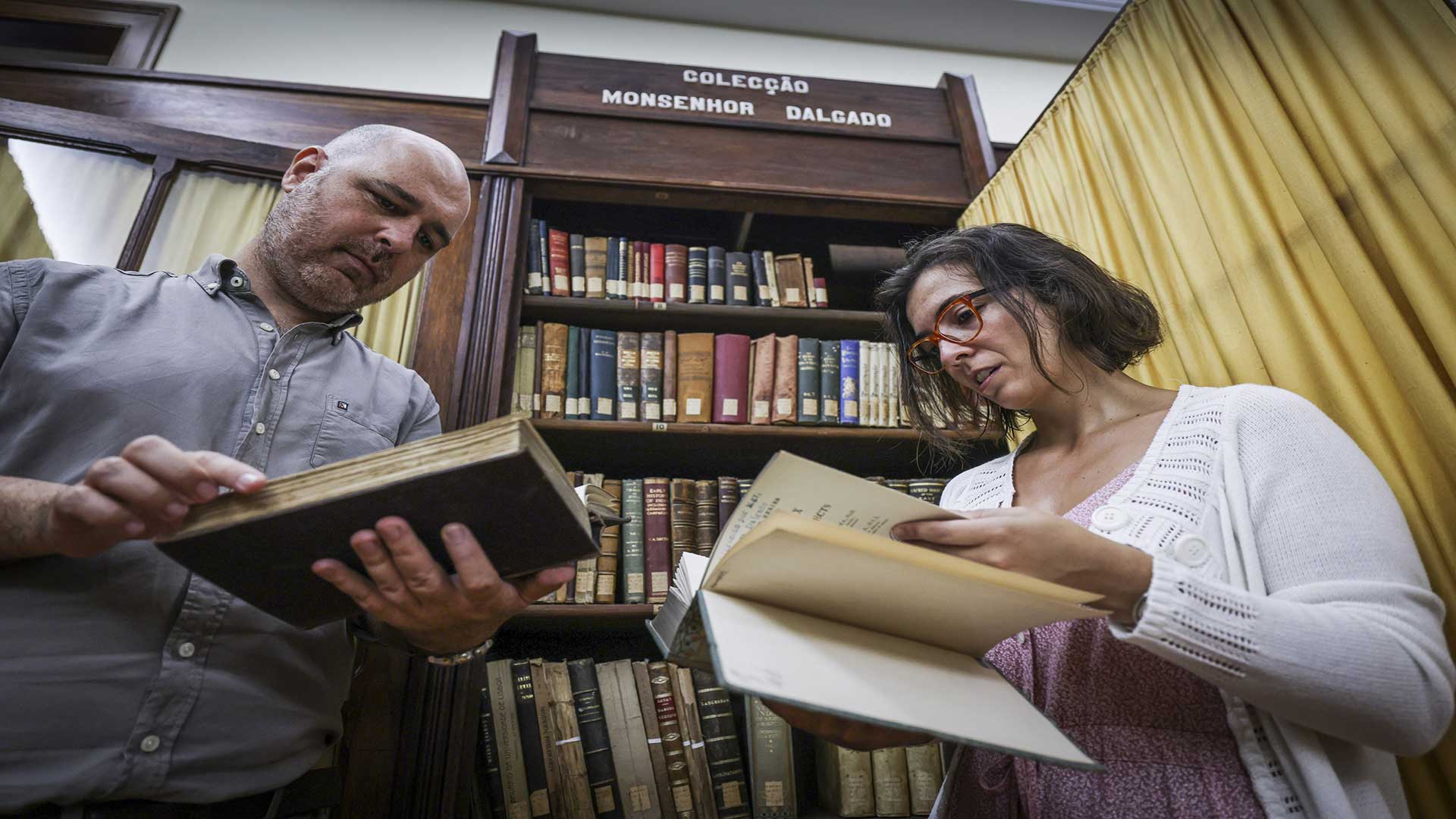
Dalgado and the Konkani-Marathi Controversy - 2
Mgr. Dalgado’s entry into the Konkani-Marathi controversy was a watershed moment in the history of Konkani Studies. Contemporaneous Portuguese-language newspapers in Goa and bilingual newspapers in Bombay commented on that priest’s efforts in the field.[1] After him, Jules Bloch in his La formation de la lingue marathe[2] showed how distinct Marathi was from Konkani. S. M. Katre paralleled Bloch’s book by writing The Formation of Konkani[3] and, together with V. P. Chavan, helped further Konkani’s position as a separate language.
Meanwhile, Vaman Raghunath Sinai Varde Valaulikar (1877-1946), who used the pen name Shenoi Goembab, was an important Konkani scholar of the first half of the 20th century. He began by writing in Marathi. However, after a writer from Bombay remarked that his Marathi was “artificially flavoured”, because “Marathi is not your spoken language,”[4] Valaulikar switched to Konkani, and initially wrote in the Roman script. Konkani in the Devanagari script was not worth the name in Bombay, and much less in Goa.
While Valaulikar’s crusading voice primarily addressed the upper-class Hindu community in Bombay, it complemented Dalgado’s work of demonstrating Konkani’s individuality to a larger audience. His Konknnichi Vyakornni Bandavoll[5] provided a detailed grammatical analysis through which Konkani emerged supreme over Marathi.[6] Valaulikar, who knew Portuguese, must have read Dalgado’s 1917 rejoinder. Perhaps the two never met or exchanged correspondence, but they shared a vision for their mother tongue, in particular, the choice of script: Devanagari.
Dalgado died in Lisbon in 1922, after decades dedicated to research in the field of Konkani and culture. His academic legacy was maintained by his pupil Mariano Saldanha, who replaced him as a professor of Sanskrit at the University of Lisbon in 1929, taught Konkani at Escola Superior Colonial’s Institute of African and Oriental Languages and conducted extensive research on Konkani in Goa and Europe.
In 1952, Saldanha was in Bombay as the president of the Fifth All-India Konkani Porixod. Unlike Dalgado, his guru, he was a votary of the Roman script, and his address to the Conference was printed in the said script. Shenoi Goembab had died six years earlier, in 1946, after a lifetime of activism in favour of Konkani.
By the 1950s, the demand for linguistic states in India had gained significant momentum leading to the creation of the Telugu-speaking Andhra out of the State of Madras. Much earlier, the Indian National Congress (INC), then the country’s foremost political party, had organized its provincial committees along linguistic zones, signalling an early form of the concept. Valaulikar’s vision of Konkani in the Devanagari script dovetailed into that concept, while, in Lisbon, Saldanha was officially working on the possible introduction of Konkani in the Roman script for primary schools in Portuguese Goa. Obviously, that plan did not materialise in post-1961 Goa under Indian rule.
Konkani post-1961
It was an entirely new ballgame after Goa joined the Indian Union. The neighbouring state of Maharashtra, deeming Konkani a dialect of Marathi, soon laid claim to Goa. Goans who formed the Maharashtrawadi Gomantak Party (MGP) were fifth columnists who aided the designs of that expansionist state. The United Goans Party (UGP) stood opposite, favouring administrative autonomy in the form of a Union Territory and eventual Statehood for Goa.
In the 1960s, the Goan elite, which was hitherto divided between Portuguese and Marathi suddenly realised that only Konkani could help preserve the Goan identity. It was a David and Goliath situation, in which Konkani won, because there could be no arguments against facts: the language was on the people’s lips and nobody could take that away. Its literature was perhaps not on par with the best in the country, but Dalgado and Valaulikar had widened and strengthened its base.
Valaulikar is rightly regarded as the ‘Father of Modern Konkani Literature’; Dalgado ought to be titled as the Grand Father (pun intended) of Modern Konkani because of his fundamental research contribution to the development of the language. Eventually, their impact was felt during the Opinion Poll (1967), which was an unprecedented referendum held in Goa to ascertain the people’s wishes vis-à-vis Maharashtra’s territorial claim. The contribution of the two stalwarts came into sharp focus again when Sahitya Akademi recognised Konkani as a literary language (1975), with no mention of the script.
The stage was now set for Konkani to become the official language of the soon-to-be 25th State of the Indian Union. Curiously, even at this late hour, there was a tussle between Konkani and Marathi in Goa. Finally, the Goa, Daman and Diu Official Language Act, 1987,[7] passed in the Goa Legislative Assembly on 2 May 1987 granted Konkani official status.
Nonetheless, by a twist of fate, the official language was defined as “Konkani language in Devanagari script” with the use of Marathi for all or any official purposes. While Konkani speakers as a whole heaved a sigh of relief on seeing the language of the land being accorded official status, the pinch of that definition slowly but surely made itself felt. On the one hand, supporters of Marathi were placated, and on the other, supporters of Konkani written in the Roman script were angered. Olivinho Gomes dubs it a “defective definition”, stating that “it was exactly like saying that “woman” means a female clad in a saree, leading to the fallacious conclusion that females not wearing such attire were not women at all.”[8]
Goa gained statehood less than four months later, on 30 May 1987; and on 31 August 1992, Konkani was included in the Eighth Schedule of the Indian Constitution. The language had clearly come into a privileged position, as never before. It would seem that a time to consolidate had arrived, but, alas, the Act had sowed seeds of disunity. The Konkani community that uses the Roman script and is largely Catholic felt discriminated against. This section of the people and the Roman script, both of which had all the while been a bulwark of Konkani, suddenly felt marginalised. From state employment and the structure of the literary advisory committee of the local Kala Academy right to the attribution of national awards by the Sahitya Akademi, Konkani became synonymous with the Devanagari script alone, whereas the Roman script almost became a scripta non grata.
The Catholic Church of Goa, in collaboration with seven Konkani-speaking dioceses (Bombay, Poona, Karwar, Belgaum, Sindhudurg, Mangalore, and Chikmagalur), which constitute the Konkani province of the Indian Church hierarchy, implemented the use of Konkani in its jurisdiction (liturgy; translation of the Bible and documents; hymnals; and medium of instruction in the diocesan primary schools, etc.). But alas, the Church in Goa failed to actively support the inclusion of the Roman script in the Language Act.[9]
Meanwhile, the Dalgado Konkani Akademi (DKA), established in 1989, helped keep the flame of the Roman script alive. It took some time for its activities to gain momentum, given the lack of funds. In the financial year 2007-08, state funds were made available and the official body, Goa Konkani Akademi, was directed to provide for the publication of books written in the Roman script. DKA, in addition to providing a forum for writers, poets, and dramatists, gave birth to the Tiatr Academy of Goa.[10] Even though naming the Academy after an advocate of the Devanagari script seemed incongruous, all in all it helped keep the stalwart’s memory alive.
Case for the Roman script
Whereas a script ought to be a facilitator, it has become a bone of contention. In the Konkani world, the multi-script situation, which could well be considered a plus point, has become an Achilles heel. The sooner this is resolved, the better, to ensure the interests of all the user communities, whose happiness and wellbeing is bound to popularise the language. The more the scripts, the better.
In 2013, the Sahitya Akademi organised a conference on the theme “One Language, Many Scripts”. There were representatives from several Indian languages, some of them still using multiple scripts. They appreciated the Akademi’s initiative to have an open dialogue on the issue. Even though the official report of the Conference concludes that all the speakers “admitted that a language will not prosper with multiple scripts”, it is undeniable that there were those who opined that the occurrence of many scripts is a sign of vibrancy that must be celebrated. “There was a general consensus that Sahitya Akademi should maintain status quo on this issue at present… The scholars appreciated and welcomed this significant step taken by Sahitya Akademi to open a dialogue on this sensitive issue.”[11]
So, the matter is by no means settled. This is therefore a time to reflect on whether the shared legacy of Dalgado and Shenoi Goembab has been put to creative use. It would be interesting to consider what their response would be in the context of our globalised world. How would they look at demands for the State recognition of the Roman script in today’s multilingual and multicultural world? Would they not consider it an opportunity to woo back Konkani speakers at home and in the diaspora and to win new speakers from across the world? Would they not appreciate the possibility of Konkani finally becoming a means of communication and identity marker?
Living languages are dynamic, and no script is perfect, much less eternal. For example, Goykanadi was the earliest known native script that Konkani used until replaced by other scripts. Similarly, the Anglo-Saxon futhorc was the earliest known English language script. However, in England, from the seventh century onwards, the futhorc coexisted with the Latin alphabet which then gradually replaced it. No one pines for the futhorc. The same is true of Turkey, Malaysia, Indonesia, Vietnam, and other countries that have given up their traditional scripts in favour of the Roman script to safeguard the future of the language.
A similar phenomenon occurred in Goa five centuries ago. With the arrival of the Portuguese, the Roman script became Konkani’s survival instrument. This script, which has been around for several centuries in India, is therefore not to be considered foreign; it is as Indian as the country’s English language. If the English language can be made the country’s official language alongside Hindi, so can the Roman script be made official alongside the Devanagari, given that the numbers and the production volume justify it.
To not let script become a divisive issue, would not Dalgado and Shenoi Goembab, then, consider letting Goa become the first state in the Indian Union to successfully adopt a multi-script situation? Any script that has worked in the past ought to work in the future as well, maybe with some refinement. This is true of both the Roman and the Devanagari script. Surely, Dalgado’s mission was to save the language over and above the script.
(First published in Revista da Casa de Goa, Series II, No. 38, Jan-Feb 2026, ISSN 2184-7045)
The first part of this article appeared on this blog on 20 September 2023.
References
[1] Rochelle Pinto, Between Empires: Print and Politics in Goa (New Delhi: Oxford University Press, 2007), p. 113. Among other issues, the book notes the emergence of the Konkani language press in Bombay while the Goan elite sponsored the Portuguese language press in Goa.
[2] Paris, 1920.
[3] Bombay: Karnatak Press, 1942.
[4] Kiran Budkuley, Shenoi Goembab: The Man and his Work (Margão: Asmitai Pratisthan, 2003), p. 36.
[5] Bombay: Gomantak Press, 1947.
[6] Olivinho Gomes, Konkani Literature in Roman Script: A Brief History, Panjim: Dalgado Konknni Akademi, 2010, p. 174. The book dubs the Official Language Act, 1987, the political genocide of those demanding equal status to Konkani in the Roman script.
[7] Act No. 5 of 1987, in the Official Gazette, Series I, No. 7, dated 14 May 1987.
[8] Ibid., p. 177.
[9] Ibid., pp. 180-181.
[10] Jason Keith Fernandes, Citizenship in a Caste Polity: Religion, Language, and Belonging in Goa (Hyderabad: Orient Blackswan Pvt Ltd., 2020, p. 13. The book uses mobilisations around the Konkani language in Goa (in particular, the people’s struggle to secure for the Roman script equal status with the Devanagari script) to enter into a study of citizenship.
[11] Uday Bhembre, Yadincho Kurponno (Goa: Konknni Bhasha Mandal, 2025), p. 206-207. For the entire report by Bhushan Bhave, see Appendix 4, pp. 179-207.

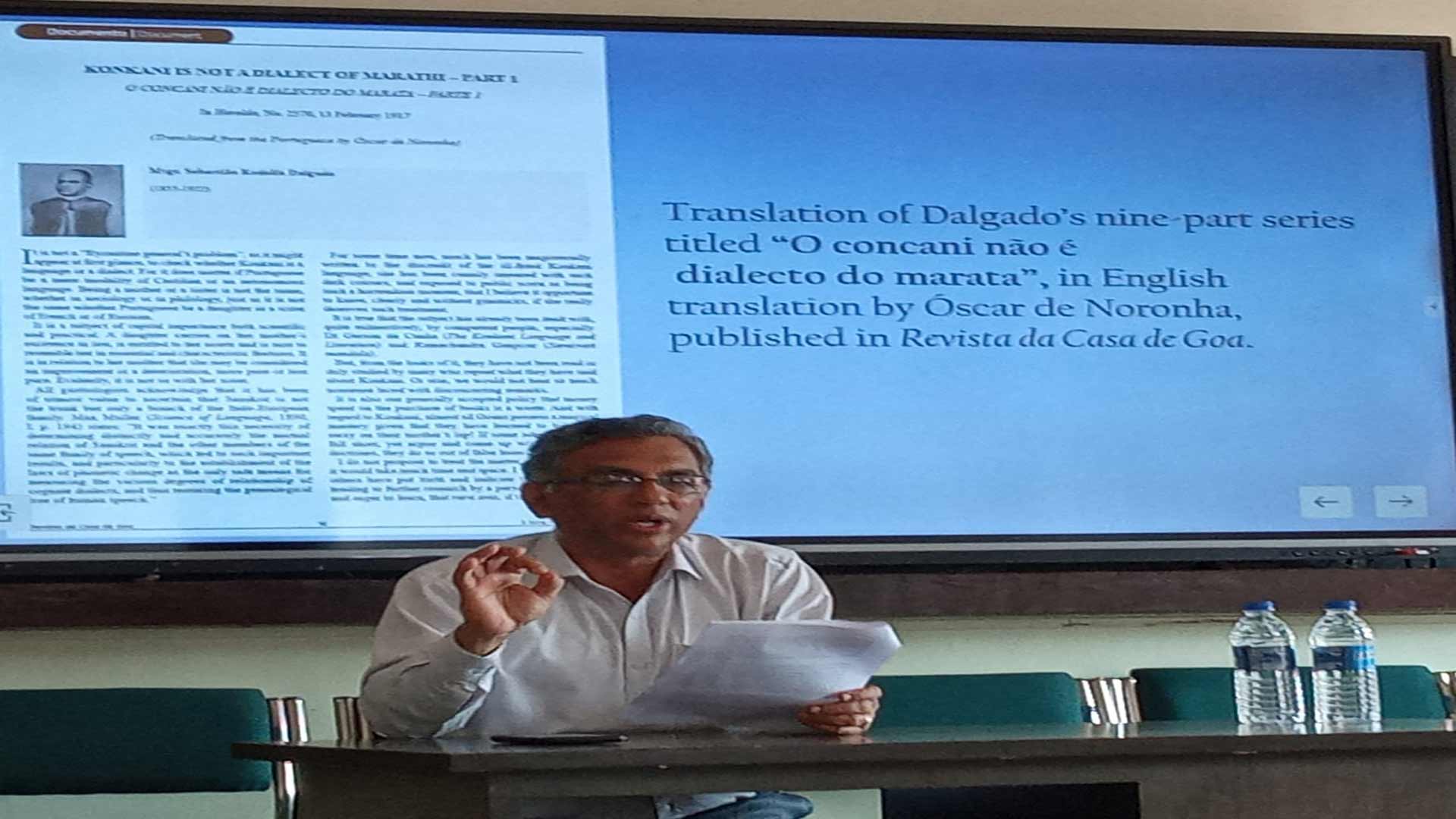
Konkani before and after Dalgado
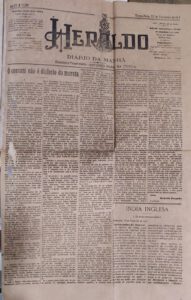
In 1917, Mgr. Sebastião Rodolfo Dalgado, an internationally renowned Goan linguist, forever changed the course of the Konkani-Marathi controversy. In a nine-part series titled “O concani não é dialecto do marata” (‘Konkani is not a dialect of Marathi’), published in the Panjim daily Heraldo, he analysed the linguistic and grammatical characteristics of Konkani, demonstrating its identity as distinct from that of Marathi. But, then, what events led Mgr. Dalgado to write the series?
Fabricated controversy
The Konkani-Marathi controversy is not as ancient as it might seem; it is a nineteenth-century fabrication. Konkani, which, like Marathi, evolved from Prakrit, began to make rapid strides in the linguistic, lexicographic, and literary fields, thanks to the ingenuity of European missionaries in sixteenth-century Goa. It is another matter that their interest began to wane, and indifference turned into state hostility, to some extent, at least on paper. This brought the first modern literary period of Konkani literature to an inglorious end.
In the eighteenth century, literary production in Goa was conspicuous by its absence, due to the shutdown of the printing press. As a result, not only did Konkani get relegated to the background, but Goa itself became a backwater. Even so, there was not a doubt about Konkani’s linguistic status until the year 1807, when John Leyden dubbed it a dialect of Marathi. His ideas began to gain currency in British India. When those echoes reached Portuguese India, Konkani was excluded from the curriculum of the first state-owned schools set up in 1831. By now, in the new Liberal regime, it suited Goan Catholic elite to adopt Portuguese as their cultural language, while the Hindu elite continued to seek refuge in Marathi and turned to Portuguese in the following century.
Meanwhile, in 1858, J. H. da Cunha Rivara’s famous essay on the Konkani language (Ensaio histórico da língua concani) decried Goa’s contempt of its native language and defended its dignity. His realisation was perhaps a byproduct of a new Orientalist consciousness, which prized the rediscovery of indigenous languages. But alas, it is Marathi and not Konkani that drew the benefit. In 1869, at the behest of Goa’s official translator Suriagy Ananda Rao, the state government banned the use of Konkani, while Marathi ruled the roost at the Panjim Lyceum.
A decade later, when R. G. Bhandarkar in Bombay reiterated Konkani’s dialect status (cf. Wilson Philological Lectures, 1877, a series of seven lectures on the Sanskrit and Prakrit languages), scholars favouring the dialect theory slightly outnumbered those favouring the language theory. But a fitting reply awaited Bhandarkar in 1881, when José Gerson da Cunha systematised and coordinated the arguments of the language theory in his Konkani Language and Literature. Nonetheless, in 1905, the Linguistic Survey of India, published by the British Government, buttressed the dialect myth.
Divided Goa
 The case of Konkani was quietly and insidiously growing into a big problem. By the beginning of the twentieth century, linguistic theories backed by the British colonial administration in India seemed at odds with those articulated in Portuguese India. Curiously, on both sides of the Western Ghats, the foreign element seemed more vocal than the native educated class that patronised but did not write in the vernacular. That was also a time when the Catholic masses in Bombay created the tiatr and the Konkani-language press; for their part, the Goan Hindu Brahmins, published in Marathi but failed to construct an identity, as their Catholic counterparts were doing through Konkani. Interestingly, in 1901, Poona-based Goan writer Eduardo Bruno de Souza, modified the Roman alphabet for use by Konkani, calling it the ‘Marian alphabet’.
While the Konkani movement was thus gaining momentum within the community in Bombay, back in Goa, Thomaz de Aquino Mourão Garcez Palha and Fernando Leal, two mestiços (persons of mixed blood, Portuguese and Goan), who had probably caught the Orientalist bug, began a crusade for the “resurrection of Konkani”. They were supported mostly by members of the Goan Catholic elite.
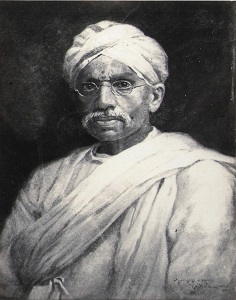
As regards the Hindu elite, in 1916, when the ayurvedic physician Dada Vaidya (Ramachondra Panduronga Vaidya) spoke in Konkani at Goa’s first Provincial Congress, Marathi writer Xamba Suriarao Sardesai shouted him down and followed it up with a two-part article disparaging the Konkani movement. The division of Goan society was complete, not only between educated Christians and Hindus, but also within the Hindu community.
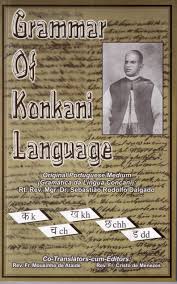
By February 1917, therefore, the stage was set for Dalgado’s intervention from distant Lisbon. The tireless Goan Catholic missionary was now on a mission to prove Konkani’s credentials as a language. He had published a Konkani-Portuguese dictionary in Bombay (1893), and a Portuguese-Konkani dictionary in Lisbon (1905), both of which used the Devanagari and Roman scripts. The university professor and Fellow of the Portuguese Academy of Sciences was an authority on the influence of Portuguese on Asian languages, and his thoughts kept returning to Konkani. Significantly, his last unpublished work was a Konkani Grammar, which Fr Mousinho de Ataíde translated into English in Dalgado’s death centenary year, 2022.
Decisive entry
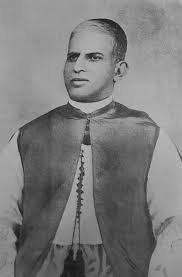 Dalgado’s authoritative voice in Heraldo infused the Konkani camp with a new confidence, helping to put many issues to rest. But alas, his articles remained unread by the non-Portuguese speaking majority who could have profited by it. Hoping to right that historical wrong and pay homage to that rare scholar, I had the opportunity to translate his text into English in his death centenary year. The series was later published in the Lisbon-based online magazine Revista da Casa de Goa. (See this blog https://www.oscardenoronha.com/2023/09/26/konkani-is-not-a-dialect-of-marathi-1/ and ff)
Dalgado’s entry was decisive. It was a watershed moment in the history of Konkani Studies. Portuguese-language newspapers in Goa as well as bilingual papers in Bombay began to comment on Dalgado’s efforts in the field. After him, Jules Bloch showed how distinct Marathi was from Konkani; S. M. Katre paralleled Bloch’s book by writing The Formation of Konkani, and together with V. P. Chavan, helped further Konkani’s position as a separate language.
Varde Valaulikar’s writings continued Dalgado’s work of demonstrating Konkani’s individuality. Curiously, Shenoi Goembab began by writing in Marathi, and after switching to Konkani, first wrote in the Roman script. Seven of his twenty-nine books are in the Roman script. In fact, there was no Konkani worth the name in the Devanagari script in Bombay, and much less in Goa.
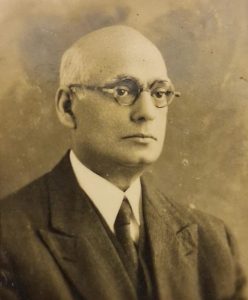
Perhaps Dalgado and Valaulikar never met or exchanged correspondence, but they shared the same vision. Valaulikar, who knew Portuguese, must have read Dalgado’s rejoinder to Xamba Sardesai. While Valaulikar carried out a literary crusade in Bombay, Dalgado’s academic legacy was kept alive by his pupil Mariano Saldanha in Lisbon. Dalgado died in 1922, and Shenoi Goembab in 1946. In 1952, Mariano Saldanha was in Bombay as the president of the Fifth All-India Konkani Porixod held there. As a votary of the Roman script, Saldanha’s address was printed in the Roman script.
By the 1950s, the demand for linguistic states had gained significant momentum, leading to the creation of the Telugu-speaking Andhra out of the State of Madras. Much earlier, the Indian National Congress had organised its provincial committees along linguistic zones, signalling an early form of the concept. Dalgado and Valaulikar’s vision of Konkani in the Devanagari script dovetailed into that concept, whereas Saldanha envisioned the Roman script for Konkani in Goa. It did not materialise in the post-1961 scenario, for obvious reasons.
Goa post-1961
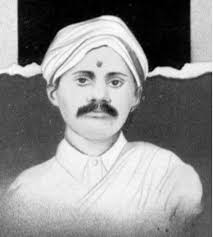
It was an entirely new ballgame after Goa got into the Indian Union. Maharashtra had laid claim to Goa, deeming Konkani a dialect of Marathi. The Goan elite, which was once divided between Portuguese and Marathi, leaving Konkani to fend for herself, now realised that only Konkani could help preserve their identity. It was a David and Goliath situation, in which Konkani won because the language was on the people’s lips and nobody could take it away. Its literature was perhaps not on a par with best in the country, but it had a strong foundation built by Dalgado and Valaulikar.
Hence, while Valaulikar is regarded as the Father of Modern Konkani Literature, Father Dalgado, by his fundamental contribution to the development of the language, ought to be regarded as the Grand Father (pun intended) of Modern Konkani. Their impact was felt at the time of the Opinion Poll and when Sahitya Akademi recognised Konkani as a literary language; when Goa achieved statehood and Konkani became the state language, and when Konkani was included in the Eighth Schedule of the Constitution.
Thereafter, Konkani came into a privileged position, as never before. It would seem like a time to consolidate had arrived. For instance, in the Konkani world beyond Goa, it would pay dividends to make the most of the multi-script situation; but that was not to be. In Goa, the issue of script remains Konkani’s Achilles heel. The sooner this is resolved the better, to ensure the interests of all the user communities; their wellbeing is bound to produce positive results for the popularity and expansion of the language. The more the scripts the better.
Case for the Roman script
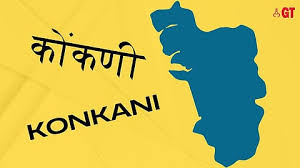
It is also a time for some reflection. Has the shared legacy created by Dalgado and Shenoi Goembab been put to creative use? It would be interesting to consider what their response would be to our globalised world. How would they respond to demands for recognition of the Roman script in today’s multilingual and multicultural world? Would they consider it an opportunity to woo back Konkani speakers at home and in the diaspora, and to win new speakers from across the big wide world? Would they appreciate the possibility of Konkani finally becoming at once a means of communication and identity marker?
After all, living languages are dynamic, and no script is perfect. Goykanadi was the earliest known native script that Konkani used, before it was supplanted by others. Similarly, the earliest known script for the English language was the Anglo-Saxon futhorc. From the seventh century onwards, the Latin alphabet began to replace the futhorc, though they coexisted for a time in England.
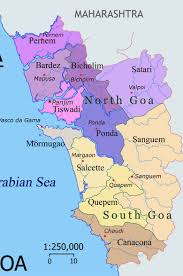
It is the same in India. The Latin or Roman script is not to be considered foreign; it is as Indian as the English language in the country. If the English language can be made official, so can the Roman script, or any other for that matter, if numbers and the volume of work justify it.
Not to let script remain a divisive issue, would Dalgado and Shenoi Goembab, then, consider letting Goa be the first state in the Indian Union to successfully resolve a multi-script situation? Any script that has worked in the past ought to work in the future. This applies to the Roman script as well. Surely, Dalgado’s mission was to save the language over and above the script.