Mário and his Times
Mário’s long tryst with Mumbai began at the Times. He had spent his graduation years at St Xavier’s College, but saw the paper up-close on his return to the city in 1952. With 18 years of visual diaries under his belt, he visited newspaper and business offices. He began as a freelance cartoonist with The Current and sold his handcrafted postcards of the city landmarks at the Flora Fountain to make extra money.
The 26-year-old Goan cartoonist’s versatility, spontaneity, and detail created a significant buzz. Before long, editor C.R. Mandy and art director Walter Langhammer invited him to the Times group of publications. The Illustrated Weekly of India was his first stop. Soon, sister publications like Cocktail, Femina, Filmfare, The Evening News, and The Economic Times began to use Mário’s skilful depictions of movement and sound, often featuring his trademark dog.
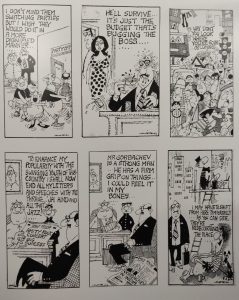
The rest is history. Mário would soon rank among the best of India’s cartoonists. The job seemed easy, and everything grist to his mill, but finding humour was no mean task. ‘There are times when you don’t feel funny, or may not feel like laughing, but still have to produce a funny cartoon – like a clown who has got to make people laugh all the time, although he doesn’t feel like laughing,’ said Mário.
Add to it the fact that political bigwigs were breathing down his neck—and he had a sure recipe for disillusionment. Mário learned early on that lampooning power involved high risk. When he toned down the humour, cartooning became a ‘serious’ business. ‘Cartoonists are very serious people, and cartoons, no laughing matter,’ he quipped. That’s when Mário began to see himself mostly as a social caricaturist, turning his lens to fashions, crowded trains, music, films, the bustling life of Irani cafés, and so on!
Past the initial scramble for work, Mário began to yearn for the blissful freedom of his diary sketching. He travelled to Portugal and England, drawing merrily. He did cartoons for Mad magazine and ITV and was featured in Punch. He made fast money and friends, but most importantly, his idol Searle’s injunction — ‘Stay on in England, but stop copying me!’— infused him with the confidence to go by himself.
On Mário’s return in 1962, R.K. Laxman, the reigning deity of The Times of India, ‘subtly ensured that the pedestal was not for sharing,’ says Bachi Karkaria. Mário made his mark… ‘His hilarious work is packed with characters from the contemporary scene and his greatest gift is that he makes us laugh at ourselves,’ said a review in a 1960 issue Cocktail, adding, ‘His illustrations too have polished perfection and have been such a success that all our writers want Mario to illustrate their work.’
The period saw the rise of Mário’s characters to iconic status: the efficient secretary Ms Fonseca, the Boss and his crony Godbole; the corrupt politician Bundaldass and his sidekick Moonswamy; the glamorous Bollywood star Rajni Nimbupani and co-star Balraj Balram. For generations of Indians, these characters were more than ink on paper; they remain a mirror to the nation’s quirks, even if changing sensibilities put a negative spin on some of them.
In 1964, the Times of India Press published Mário’s book of sketches, Goa with Love. Successive editors of the Weekly—Khushwant Singh, M.V. Kamath and Pritish Nandy—held him in high esteem. While his literary background and travels gave him a broad outlook, he wore none of that on his sleeve. Vinod Mehta said that Mário abhorred ‘intellectual talk’, his forte being ‘the accumulation of trivia judiciously and harmoniously composed.’
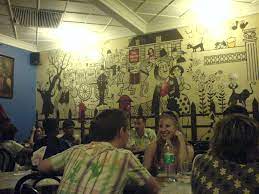
By and by, Mário got excited about capturing moods and ambiences for his pictorial travelogues. To make time for travel, he first joined a new tabloid, The Midday, where his close friend Behram 'Busybee' Contractor was the editor; and then took to freelancing for The Afternoon Despatch & Courier, founded by humorist Busybee. Countries around the globe invited him to hold solo exhibitions. He also illustrated books for the likes of Ruskin Bond, Dom Moraes, Manohar Malgonkar in Bombay, and for several writers in Goa. There was perhaps no other Indian cartoonist whose works turned into murals that now adorn the urban landscape.
In 1996, after Mário and wife Habiba retired to the quiet of Loutulim, the quintessential Goan artist was instrumental in setting up a museum of Christian art at Rachol (now shifted to Old Goa) and restoring the Reis Magos Fort. But the homecoming far from ended his love story with Mumbai, as he continued infusing The Afternoon Despatch & Courier and The Economic Times with his peerless humour.
The Times was thus his first and last stop. In 2011, India grieved when the icon that had humoured it in good times and in bad fell silent… Thankfully, Mário still provides a timeless window into the local and the global. He is an artist for all times and climes.

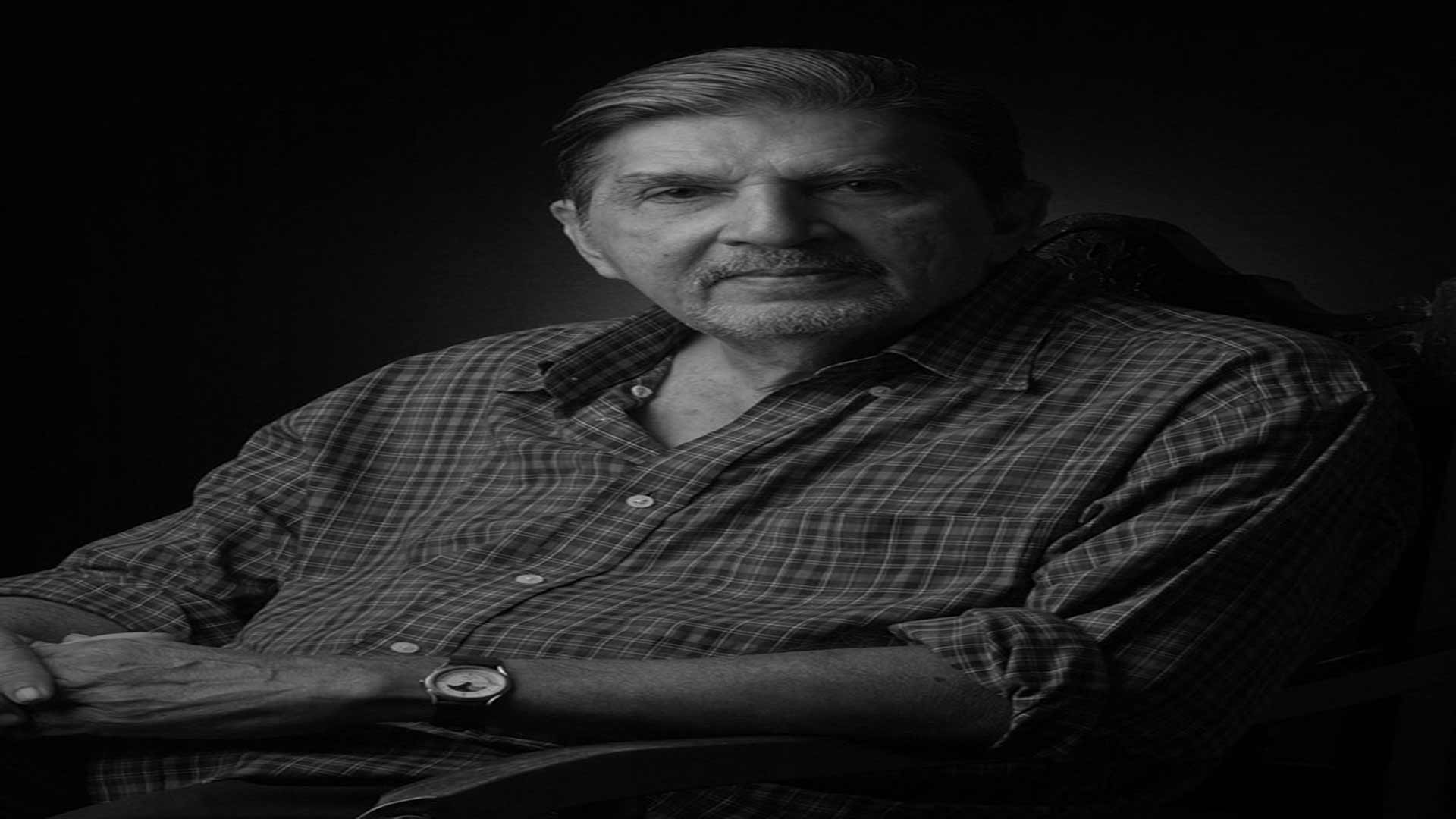
Mário: with malice toward none - 1
‘Mário is a subject that has no end.’ That is how Carolina Miranda, the centenarian cousin of the inimitable Goan artist, concludes her foreword to Diário do Ano 1951: Uma Campanha Alegre de Mário de Miranda (‘Diary of 1951: A Cheerful Campaign’), an upcoming book edited by this writer. She offers a close-up of Mário’s visual diary and how it made the rounds among relatives and friends. The Lisbon-based Carolina is a former teacher, poet, visual artist, and author of Histórias que contei ao meu gato — ‘Stories I told my cat’ — her memoirs, in which Mário figures prominently.
About Mário’s own fondness for animals, Fátima Miranda Figueiredo draws attention to her brother’s saying, ‘To err is human; to forgive, canine’ — which speaks volumes about his gentleness and empathy. He gave his pets long names and surnames, making them star characters in his diaries. In these, says Luís Pereira da Silva in his afterword, Mário ‘ably articulated what he experienced every day with lines at once quick and elaborate.’ The retired professor of paediatrics and amateur caricaturist adds that ‘Mário was always noble hearted in his irony, choosing affection and subtlety over scorn and sarcasm.’
Was it the artist’s unmalicious intent, then, that prompted Archbishop-Patriarch Dom José da Costa Nunes to let go when some clerics felt targeted by the young lad’s depictions? He was acquainted with Mário’s diaries and grateful for his help crafting the swan boat to carry the Pilgrim Statue of Our Lady of Fátima from Panjim to Old Goa. Mário, for his part, was relieved that his diaries had sparked guffaws rather than a controversy. ‘That was the first time I was appreciated by someone I didn’t know,’ he said.
Mário was a versatile artist, but best remembered and universally recognised as a cartoonist. Possibly one of the world’s youngest caricature diarists, he turned his journaling habit into a career. In March 1952, seeking an opening in Bombay, he toured editorial offices, his diaries in hand. Thoroughly impressed, The Current editor D.F. Karaka sent Mário to cover a can-can at the Taj Hotel. Mário returned with a rib-tickler that promptly secured him a cartoonist’s position at the weekly.
Mário was an instant hit, yet could not land a full-time role in Bombay. A fellow hosteller, Policarpo (Polly) Vaz of Bastora, suggested that he also draw picture postcards of the city landmarks and sell them at the Flora Fountain. Their bond grew so strong that they planned to move to Latin America together. But suddenly, Bombay proved to be more promising than Brazil when editor C.R. Mandy and art director Walter Langhammer invited Mário to join The Illustrated Weekly of India… and the rest is history.
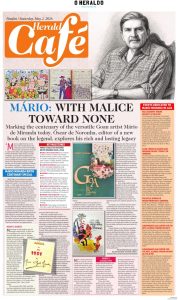
Mário went on to become one of the country’s best loved social cartoonists. His iconic characters, like Ms Fonseca, the Boss, and clerk Godbole; the corrupt politician Bundaldass and his sidekick Moonswamy; Bollywood stars Rajni Nimbupani and Balraj Balram, appeared in the Times group of publications. Generations grew up with those cartoon characters that are etched in collective memory, although the world’s ever-changing sensibilities tend to put a negative spin on some of them.
All of Mário’s works, be it Goa with Love, A Little World of Humour, Laugh It Off, or others, show him as a tireless seeker of the comic side of life. In Bal Bharati textbooks and Air India in-flight magazines alike, Mário’s drawings were always teeming with human specimens, each with their own story to tell. His hawk eye caused the poet Nissim Ezekiel to remark that there is ‘no escape if Mario is looking at you. The buffoonery of his human figures is redeemed from grossness by their verve, their inner urge towards going places, getting somewhere. It is not always their fault that there is no place to go, nowhere to get except through the corridors of illusion.’
The artist’s own ‘inner urge towards going places’ was clear on his first-ever trip abroad, to Portugal. Later, Mário went freelance as a cartoonist to satisfy his wanderlust. By his magical ability to capture the spirit of a place, he received assignments to sketch vignettes and hold exhibitions across the globe. Veteran editor Vinod Mehta saw no contemporary artist in India coming close to Mário’s command over the grammar of drawing; the alleged ‘lack of venom’ in his repertoire spoke for his ‘objective perspective,’ he said.
According to art critic Ranjit Hoskote, Mário’s confluential, Indic and Iberian, heritage ‘gives him an amplitude of cultural references [and] a historically informed sensibility.’ Bombay’s Cocktail magazine once said that Mário’s illustrations have ‘polished perfection and have been such a success that all our writers want Mario to illustrate their work.’ He took as much pleasure to draw for journalists as he did for literary giants and lesser writers. A much sought-after muralist, he is perhaps the only Indian cartoonist whose works adorn the landscape.
Prakruti Ramesh, in her hitherto unpublished thesis titled Making a Public Aesthetic: Heritage, Humour and Regional Identity in Goa, examines why Mário’s images have fascinated architects, urbanists, educators, and tourism entrepreneurs and have been used as a form of public art in Goa. While she draws many weighty conclusions, one can also say that, thanks to Mário’s malice toward none, he has touched a chord in the Goan soul and is also capable of raising the happiness quotient of the big wide world.
To be continued... See three items in the next blogpost: Key Milestones; Mário's Diaries; Mário's Characters
(First published in Herald, Café magazine, 2 May 2026)
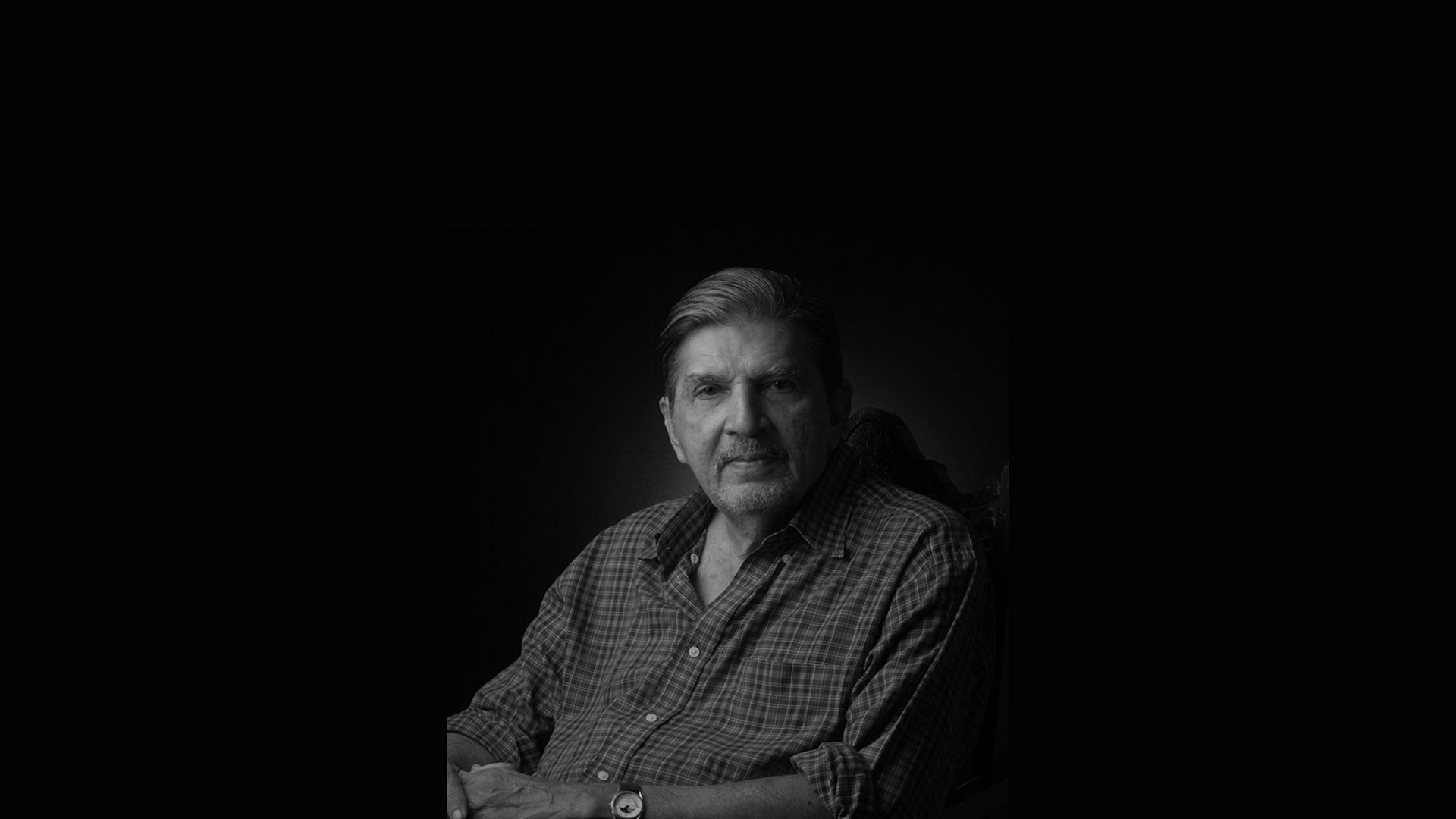
Story of Mário, the Miranda (Part 4/6)
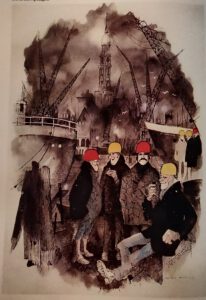
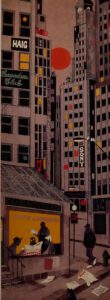
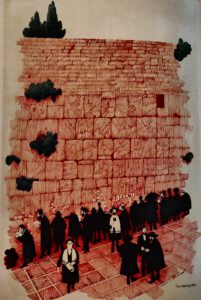
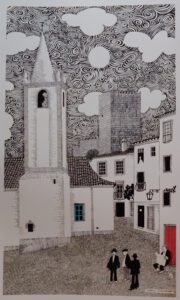
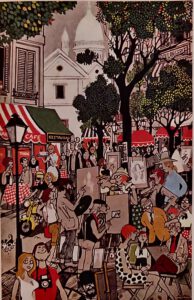
(L-R Dockworkers in Germany; Charley's Corner, NY; the Wailing Wall; a street in Portugal; open-air cafe in Paris)
Compulsive Traveller
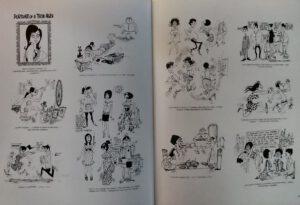
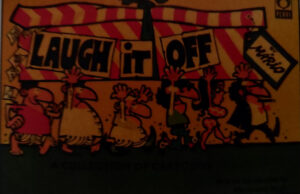
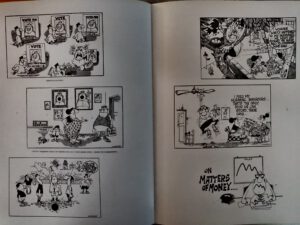
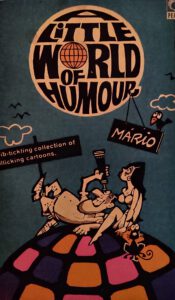 Mário was a persistent seeker of the funny side of life, as A Little World of Humour (1968) and Laugh It Off (1975) make it amply clear. He was never bored, even if stuck at an airport or a railway station; ‘watching people is an experience,’[53] he said. Bombay’s hustle and bustle had brought him face to face with crowds all right, but he only loved watching them, not being in them![54] He enjoyed walking around, be it in the village or the city; to him, walks were ‘life’s mini-journeys that could be turned into a movie’, says Rishaad.[55]
Mário drew from observation, from life, prompting Nissim Ezekiel to remark: ‘No escape if Mario is looking at you.’[56] In his illustrations always teeming with human specimens, each had their own story to tell. However, sometime later, began cherishing moments away from the madding crowd, say, by slipping into the anonymity of a movie hall.[57] Was it plain overload or a midlife crisis that had suddenly brought on the feeling that ‘life is not funny as all that’[58]?
Fortunately, there was an upside to the behaviour change. Mário got less and less interested in cartooning and more and more excited about capturing moods and ambiences for his pictorial travelogues.[59] He made no bones about his travel mania – ‘especially if someone else is footing the bill!’ as he would say in jest.[60]
In 1979, a year after a major trip to Germany, he quit the influential Times Group and joined a fledgling tabloid, Midday, under Contractor’s editorship. From 1985 onwards, he was a freelancer with the same editor’s The Afternoon Despatch & Courier: not only did his cartoons gel with Busybee’s humour, the paper’s relaxed pace permitted him and wife to travel and draw at will. Sometimes, Habiba and the sons joined him on cross-country jaunts, which were truly memorable, says Raul.
Mário’s wanderlust brought forth the sublime artistry of his pencil and brush, ink and paper – fascinating enough to fill a book. Generally, after he had spotted his themes, his pen would scribble just a few hasty lines, later turning them into finely detailed and nuanced sketches, thanks to the artist’s photographic memory for faces and buildings[61] (he especially loved old people and ruins). Mário’s traditional line art had by now got stylised into neat, black ink pen illustrations, sporting straight graphite lines with flat cross-hatching for tonal variations.[62] Mário said, ‘If you see my early work and compare it, you’ll see I always enjoy experimenting.’[63]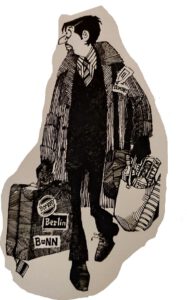
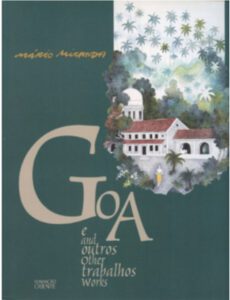 Over a span of three decades, Mário put up more than thirty solo exhibitions across the country[64] and the world.[65] Vinod Mehta saw no contemporary illustrator or cartoonist in India coming close to Mário’s command over the grammar of drawing; the alleged ‘lack of venom’ in his repertoire spoke for his ‘objective perspective’.[66] In the year 2000, Fundação Oriente in collaboration with the Indian Council for Cultural Relations organised a Mário retrospective titled Goa and Other Works[67], honouring the man who for years had served as a cultural link between Portugal and India (Figure 4).[68]
Acknowledgements: (1) I am indebted to Fátima Miranda Figueiredo for her knowledge and patience translated into many hours of whatsapp chats about her brother Mário and the family; and to Raul and Rishaad de Miranda for their warm welcome and lively conversation. (2) Banner picture: Portrait Atelier Goa (3) Article first published in Revista da Casa de Goa, Lisbon, Series II, No. 12, Sep-Oct 2021
[53] FTF Mario Miranda, op. cit.
[54] ‘The Last Interview’, op. cit.
[55] Personal interview, 9.7.2021.
[56] Ibid.
[57] Pritish Nandy, https://economictimes.indiatimes.com/mario-miranda-the-man-who-made-miss-fonseca-famous/articleshow/11075146.cms
[58] Conversation with Shri Mario Miranda – 3 (Outtakes), 26.6.1991, op. cit.
[59] Germany in Wintertime (1980); Impressions of Paris (1985); Desenhos e Aguarelas (1987); Spain (2007), et al.
[60] ‘Tale of Two Goans’, op. cit.
[61] ‘The Last Interview’, op. cit.; for Mário sketching in loco, cf. Conversation with Shri Mario Miranda – 1 (Outtakes), https://www.youtube.com/watch?v=UBTrDEU9gEQ
[62] ‘The Last Interview’, op. cit.; for Mário at work in Bassein cf. Conversation with Shri Mario Miranda – 2 (Outtakes), op. cit..
[63] ‘Tale of Two Goans’, op. cit.
[64] His first countrywide tour, ‘American Sketchbook’ (1975), included Panjim, Calcutta, Madras and New Delhi.
[65] In Paris, New York, Lisbon, East Berlin, Singapore, Muscat, Jerusalem and Macau, among others.
[66] Vinod Mehta, ‘Tomorrow is another day’, in Mário de Miranda, op. cit., p. 140.
[67] [Lisboa]: Fundação Oriente, 2000.
[68] Mário was the local coordinator of Fadista Amália Rodrigues’ visit to Goa, in 1990, sponsored by Fundação Oriente, as a prelude to setting up office in Goa. Also cf. ‘From Lisbon with Love’, by Mário, in Goa Today, February 2001, pp. 18-19, describing his exhibition and stay in Portugal in the year 2000.
Story of Mário, the Miranda (Part 3/6)
Welcome Break
Mário’s diaries were sacrificed on the altar of newspaper cartooning. In 1959, the caricaturist flew to Lisbon on a Fundação Calouste Gulbenkian scholarship.[28] He toured the length and breadth of Portugal, distilling the essence of the Portuguese soul into his sketches and drawings. The experience brought a fresh perspective to his profession:[29] it whetted his appetite for travel and charted a path that would reveal itself with time.
It is unlikely that Mário would go out of his way to confer with the Portuguese cartoonists reeling under an authoritarian regime at the time. In London, later that year, he met with Ronald Giles, Raymond Jackson (Jak), Victor Weisz (Vicky), and memorably bumped into his all-time favourite Ronald Searle at a pub on Fleet Street! He was happy to do cartoons for the classic humour magazine Lilliput and for ITV, but featuring in Punch, the flag-bearer of humour magazines, really was the icing on the cake.
Mário’s passage to England was a turning point in his career. He earned money and friends; more importantly, Searle’s injunction – ‘Stay on in England, but stop copying me!’[30] – infused him with the confidence to go it alone. But then again, the dramatic regime change in Goa, on 19 December 1961, made him turn on his heels. He returned to Bombay on an Indian passport and rejoined the Times Group; but this time around, R. K. Laxman, the reigning deity of The Times of India, ‘subtly ensured that the pedestal was not for sharing,’ says journalist Bachi Karkaria.[31]
Appreciating the steady stream of cartoons that Mário had sent home while on his working holiday abroad, Bombay’s Cocktail magazine commented: ‘Mario is so well known that it’s difficult to say things about him that will not be superfluous. A man who can draw and depict the funniest in the most convincing manner, his Shammu has won the laughing interest of everyone. Every cartoon of his is a refreshing experience. He lampoons the frailties, foibles and social shortcomings of us all. His hilarious work is packed with characters from the contemporary scene and his greatest gift is that he makes us laugh at ourselves. His illustrations too have polished perfection and have been such a success that all our writers want Mario to illustrate their work.’[32]
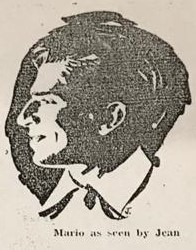
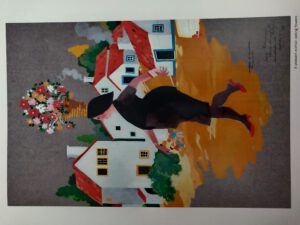
In Mário’s absence, Jean de Lemos, an artist born in the Nilgiri heights, handled the bulk of illustration; they had a soft spot for each other and even exchanged sketches (Figure 3).[33] On his return, though, Jean learnt that Mário was getting engaged to Habiba Hydari,[34 a 24-year-old fine arts student-turned-air hostess whose ‘teenage gang’ had once been part of his circle.[35] Jean exited, but remained friends with Mário’s family.
On 10 November 1963, Mário and Habiba[36] got married in a civil ceremony, and set up home at Rockville. Their children, Raul,[37] a hairstylist, and Rishaad,[38] a designer-decorator, who live in Loutulim, remember their mother as ‘the boss’ and their father as a calm, liberal, and generous man.[39] Mário for his part rued the fact that he was usually too absorbed in his work to resolve pressing domestic issues with a firm hand.[40]
Versatile Artist
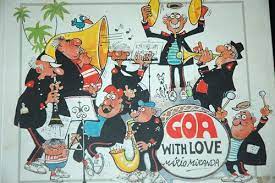
In 1964, Mário brought out a book of sketches, Goa with Love,[41] dedicating it to Habiba. His visibility was on the rise – in school textbooks, corporate calendars, advertisements and trendy magazines. Successive editors of the Weekly[42] held Mário in high esteem; and humourist Behram Contractor (alias Busybee), political commentator Vinod Mehta, poets Dom Moraes and Nissim Ezekiel, and admen Gerson da Cunha, Frank Simões, Bal Mundkur and Alyque Padamsee were among his closest friends. They churned out reams of prose and loads of ad copy; Mário read between the lines and came up with charming visuals.
Mário’s reading, now restricted to periodicals, stood him in good stead.[43] Victor Rangel-Ribeiro believes that the cartoonist’s stays overseas, ‘particularly the long months he spent in London, plus the fact that he was very well read in Portuguese as well as English literature, did give him a broader outlook than one normally found in members of the local press.’[44] But Mário wore none of that on his sleeve; in fact, he abhorred ‘intellectual talk’, his forte being ‘the accumulation of trivia judiciously and harmoniously composed,’[45] as Vinod Mehta puts it.
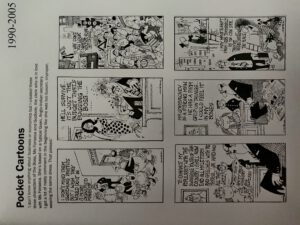
That is evident from Mário’s daily cartoon strips, some of which drew upon people he met in daily life: the archetypal secretary, Miss Fonseca; the Boss and his hapless minion Godbole; the fat, corrupt politician Bundaldass with his sidekick Moonswamy, and the bosomy Bollywood star Rajani Nimbupani.[46] Millions across generations grew up on those cartoon characters that were all the rage; they are now etched in the collective memory, even if the world’s ever-changing sensibilities tend to put a negative spin on some of them.[47]
Nineteen seventy-two was a landmark year: the United States Information Service (USIS) flew Mário to America, and Tel Aviv invited him to stop en route. He met Israeli cartoonists Kariel Gardosh, Shemuel Katz and Friedel Stern; and in the US he interacted with Charles Schulz, creator of Peanuts; Herblock, editorial cartoonist of the Washington Post, Pat Oliphant of the Denver Post, Ed Fisher of The New Yorker and freelancer Al Jaffee. Mad magazine featured him, and back home Mário wrote a piece titled ‘Cartoons – American Style’[48] – a pointer to his writing talent[49] lost in the rough-and-tumble of editorial cartooning.
As India was beginning to see him in a new light, Mário lamented the tendency to seek validation from agencies abroad[50] and wept over his countrymen’s inability to laugh at themselves. He regularly discussed the state of the profession and, Alexyz recalls, he encouraged budding cartoonists. He inspired the formation of the Indian Institute of Cartoonists, Bangalore, and gifted them many of his priceless originals.[51]
Mário was among the handful of cartoonists[52] that ruled the roost in India, but alas, long years of caricature art had left him with little leisure to pursue what he liked best: sketching. The reprinting of Goa with Love in 1982 was thus as much a celebration of the fast-fading world of his youth as it was an evocation of the line art that had grown on him.
Acknowledgements: (1) I am indebted to Fátima Miranda Figueiredo for her knowledge and patience translated into many hours of whatsapp chats about her brother Mário and the family; and to Raul and Rishaad de Miranda for their warm welcome and lively conversation. (2) Banner picture: Portrait Atelier Goa (3) Article first published in Revista da Casa de Goa, Lisbon, Series II, No. 12, Sep-Oct 2021
[28] The scholarship possibly came as a result of Maria Zulema’s letter to Minister Pedro Teotónio Pereiras. Mário lived in a rented room on Rua Actor Isidoro. (Fátima Miranda Figueiredo, 27.6.2021)
[29] Published in Diário Popular, cf. ‘M de Mário’, by Jorge Silva, in Macau, April 1993, II Series, No. 12, pp. 39-43.
[30] ‘The Last Interview’, op. cit.; FTF Mario Miranda, op. cit.; ‘Tale of Two Goans’, op. cit.
[31] https://indianjournalismreview.com/2011/12/12/did-r-k-laxman-subtly-stifle-marios-growth/ Retrieved on 8 August 2021.
[32] Cocktail, January 1960, p. 5.
[33] Mário called her Chips; she called him Popat (Fátima Miranda Figueiredo, 27.5.2021)
[34] Daughter of Iqbal Hydari, a senior executive of the Indian Railways and scion of the nobility of Hyderabad, and Rohaina Mohamedi, a painter.
[35] Mário’s circle included Lúcio Miranda, a third cousin, and Sarto Almeida, both architects. Cf. Manohar Malgonkar, ‘Biography’, in Mário de Miranda, op. cit., p. 17.
[36] He called her ‘Charlie’, and she called him ‘Joseph’.
[37] Married Magen Gilmore, who lives in the US with their daughter Gayle Zulema.
[38] Married to Sabine Frank, who lives with their children, Rafael and Samuel, in Austria.
[39] Personal interview on 9.7.2021.
[40] As told by Fátima Miranda Figueiredo, 27.5.2021.
[41] There are at least three known editions of Goa with Love (1964, Times of India, Bombay; 1982, Goa Tours, Panjim; 2001, by M&M Publications, Reis Magos). In 1964, Mário also brought out ‘Goa Postcards’.
42] Khushwant Singh, M. V. Kamath and Pritish Nandy were the last three editors of the Weekly.
[43] All India Radio, Bengaluru, interviewed by Shylaja Gangooly, 27 Nov 1993. https://www.youtube.com/watch?v=kDDO3N4OVtA
[44] Email of 10.7.2021
[45] Vinod Mehta, ‘Tomorrow is another day’, in Mário de Miranda, op. cit., p. 139.
[46] Conversation with Shri Mario Miranda – 2 (Outtakes), op. cit.
[47] https://timesofindia.indiatimes.com/home/sunday-times/kerala-to-us-cartooning-is-in-the-crosshairs/articleshow/69805457.cms Retrieved on 22 Aug 2021
[48] The Illustrated Weekly of India, 2 January 1974.
[49] Mário liked to write (B. Contractor and K. Singh encouraged him) but found it ‘a slow and irritating process’, https://www.youtube.com/watch?v=6zJB0u-_akA
[50] FTF Mario Miranda, op. cit.
[51] https://www.deccanherald.com/content/211335/cartoon-gallery-gets-mirandas-priceless.html
[52] K. Shankar Pillai, R. K. Laxman, O. V. Vijayan, Abu Abraham, Rajinder Puri, E. P. Unny.