
The Light of Joy
Today is the Third Sunday of Advent. We have got this far with hope and peace we have summoned from past two Sundays. We are half way to the holy day commemorating the arrival of our Saviour in Bethlehem two centuries ago. There is an air of anticipation, and the Readings reflect that joy. It stems from the conviction that, no matter how we may fall short of the glory of God, He does not abandon us. In fact, He has stayed with us through human history and our personal stories.
In the First Reading (Zeph 3: 14-18), we meet a rare prophet. Zephaniah prophesied in the days of king Josiah of Judah (640–609 BCE). He was a contemporary of Jeremiah and had much in common with him. The scene of his activity was the city of Jerusalem. A three-chapter book that he wrote places him among the twelve minor prophets.
Today’s text is from Zephaniah’s third and last chapter. It has a Messianic flavour, although not to the same extent as Isaiah and Jeremiah do. It’s a hymn of hope about the restoration of Israel. ‘Daughter of Zion’ and ‘daughter of Jerusalem’ personify the inhabitants. Zion was the local hill, on which David built his city. Zion was also a land of future promise or return from exile. And although infrequent in the New Testament, Zion has been used as a name for the heavenly city or for the earthly Christian city.
As foretold in the Old Testament, the Lord kept His promise. He sent His Only Son with the Good News of Salvation; the bad news was that the people of Israel misunderstood His mission and rejected Him. God, however, remains faithful to the end. He comes into our homes and hearts very especially, and will come again at the end of times – hour unknown.
As for St Paul, in the Second Reading (Phil 4: 4-7), he says ‘the Lord is at hand.’ What does that mean? It was common for the first generation of Christians to believe that the Lord’s return was imminent. So, in his letter to the Philippians, the Apostle instructs and reassures them. By no means does he give them false hope; for ‘at hand’ meant nearby, close to us, in spirit.
St John the Baptist and Jesus Himself often used that expression. In fact, Jesus is always at hand: does He not follow every step we take and prevent us from stumbling? Can we imagine even a moment without the Lord’s presence and intervention? God is one with our earthly reality. We must, therefore, in prayer with petition and thanksgiving, let Him know our concerns.
In the Gospel (Lk 3: 10-18), we learn that the multitude asked St John the Baptist: ‘What then shall we do?’ This question that occurs quite naturally is the beginning of a change of heart, a conversion. The Baptist not only tells them what they have to do, he points to Jesus as being the One they have to follow: ‘I indeed baptize you with water; but there shall come one mightier that I, the latchet of whose shoes I am not worthy to loosen: he shall baptize you with the Holy Ghost, and with fire.’
The son of Zechariah and Elizabeth then added that when Christ comes in judgement, He will ‘gather the wheat into his barn; but the chaff he will burn with unquenchable fire.’ Of course, this is not a matter for sadness but joy – for we have finally found The Way! Jesus endorsed the idea, saying, ‘I am the Way, and the Truth, and the Life. No man cometh to the Father, but by me.’
On Gaudete Sunday[1] today, we ought to rejoice, for the Saviour is in our midst, notwithstanding our sins of old. The pink or rose of the third candle of Advent, called the Shepherd’s Candle, represents that joy. Jesus is indeed the Good Shepherd. We have to rejoice with deep faith in His goodness and mercy. With this knowledge or light in our hearts, we are sure to experience the light of joy! And the more we partake of that joy, the greater will be our light, our knowledge, our understanding of things divine!
[1] So called from the Latin opening words of the introit antiphon, ‘Gaudete in Domino Semper’ – Rejoice in the Lord always!


The Light of Peace
Our Advent journey is so rich in meaning that themes keep adding through the Readings.
Today’s First Reading is taken from the Book of Baruch (5: 1-9), an anonymous author who had possibly assumed the name of Prophet Jeremiah’s scribe Baruch ben Neriah. The text announces the final restoration of Israel, her liberation and return from exile. There is a reference to the change of the name Jerusalem, in line with what the Prophet Isaiah had announced: ‘Peace of justice, and honour of piety’.
The city’s new appellation represents the joy experienced by returnees from the Exile, now assembled there to begin a new journey. Similarly, we who are exiles in this world see a new promise, a new light, a new hope. Jesus is to come again this Christmas and at the end of time, bringing peace, justice, honour and piety. And we will begin a new journey towards Heaven, the Eternal Jerusalem, where we belong.
The Gospel (Lk 3: 1-6) suggests that we too should assemble this Advent and embark on a new journey. It is metanoia, our journey of conversion and transformation. This cannot be said better than in the memorable words of Isaiah, with reference to the future St John the Baptist: ‘The voice of one crying in the wilderness: Prepare the way of the Lord, make his paths straight.’
We are never alone on our journey. Our Lord walks alongside, and whenever necessary carries us on His shoulders. That is how He makes our burdens light. He fills every valley, flattens hill and mountain, makes the paths straight and smooth, to ensure that we see the salvation of God – reach Heaven. This is our journey’s ultimate and noblest goal.
Let’s think of how our journey toward Christmas has been like thus far. Have we examined our conscience, confessed our sins (at the very beginning, not end, of Advent), prayed and asked for pardon? Advent is not a time of merriment in anticipation of Christmas. In fact, it is a penitential season, a ‘little Lent’.
‘Advent used to be forty days but was formalized to four weeks, in the ninth century, which is why we now have the four Sundays of Advent. The Mass itself assumes a more sombre tone during Advent. The priests wear violet vestments, as they do during Lent, since purple is the liturgical colour that signifies an attitude of repentance and sorrow for sin. The Gloria is also removed from the beginning of Mass during Advent, just as it is during Lent.’[1]
Though both Advent and Lent are times of preparation for Christmas and Easter, respectively, the essential difference is that Advent has no Passion Week. The penitential observances of Advent always have a festive character to them, which is why the Alleluia is retained. It is sad that we are tempted to pass over the penitential aspects of Advent and focus on the festivity of Christmas.
Vis-à-vis our secular culture, therefore, St Bernard of Clairvaux (1090-1153) drives home a point. The mystic co-founder of the Knights Templar says: ‘Consider Who He is that comes, whence He comes, to whom He comes, for what end He comes, when He comes, and in what manner He comes. This is undoubtedly a most useful and praiseworthy curiosity, for the Church would not so devoutly celebrate the season of Advent if there were not some great Mystery hidden therein.’[2]
In light of the above, it is significant that St Paul bore the same joyful sentiments with which Baruc celebrated the return of the exiles to Jerusalem. He sings a paean to the conversion of the Philippians. Not one to bask in past glories, the Apostle to the Gentiles urges them thus: ‘This I pray, that your charity may more and more abound in knowledge, and in all understanding: That you may approve the better things, that you may be sincere and without offence unto the day of Christ, filled with the fruit of justice, through Jesus Christ, unto the glory and praise of God.’
There is no joy without prior conversion. May the second Advent candle, called Bethlehem Candle that represents Peace, remind us of Mary and Joseph’s journey from Nazareth to Bethlehem before the Nativity. She was carrying the Prince of Peace. Let us, who are filled with a renewed, transcendental hope this Advent, embark on a spiritual journey that will better prepare us to receive the Light of the World who is Peace Incarnate.
Banner: https://shorturl.at/QtaWi
[2] ‘On the Advent of Our Lord and its Six Circumstances’, in Sermons of St Bernard on Advent and Christmas, p. 4. https://shorturl.at/limFm

The Light of Hope
Don’t the words ‘Behold the days come, saith the Lord…’ light up our faces and warm our hearts? Then we know it is the season of Advent!
What joy to be once again in Advent! It is the most beautiful time of the year. And what joy to be greeted with those words. The cause of that joy stems from Our Lord’s promise to transform our lives, making them holy and fit for Heaven.
In the First Reading (Jer 33: 14-16), the Lord promises to ‘make the bud of justice to spring forth unto David.’ Judah was in need of someone who would rule with ‘judgement and justice’, ensuring that the city lived securely and the country was saved.
The House of David ruled for generations. No doubt it had its share of ups and downs, but it all paved the way for the coming of the Messiah. In His infinite goodness, God sent us His Only Son. The promise made to David was realized in Jesus, but alas, He was rejected by His own. Jesus is now coming yet again. How prepared are we to welcome Him?
The best part of our preparation is to confirm our hearts ‘without blame, in holiness, before God and our Father, at the coming of our Lord Jesus Christ, with all his saints,’ as St Paul says in the Second Reading (Thes 3: 12 – 4: 2). The Messiah desires no silver or gold, no frills, and for sure no lip-service. He wants us to grow in the life of the spirit, or say, the theological virtues of hope, faith and charity. This for sincerity and constancy.
St Luke too, in the Gospel (Lk 21: 25-28, 34-36), recommends watchfulness. ‘There shall be signs in the sun, and in the moon, and in the stars; and upon the earth distress of nations, by reason of the confusion of the roaring of the sea and of the waves… When these things begin to come to pass, look up, and lift up your heads, because your redemption is at hand,’ says the Evangelist, quoting Jesus. But are we going to interpret them, understand them, accept them as God wants us to? Or are we going to superimpose them with our own ‘scientific’ ideas?
The Evangelist warns against ‘surfeiting and drunkenness, and the cares of this life.’ Woe to them who are caught in such a state, for the day will come upon us ‘as a snare’. Of course, alone we can do nothing, so we must prayerfully rely on God, asking that we may be ‘accounted worthy to escape all these things that are to come, and to stand before the Son of man.’
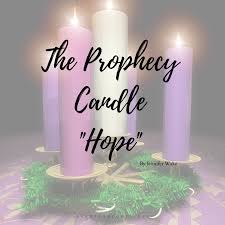
On this first Sunday of Advent, let us remember that That is where He would like to be born and have us proclaim Him. He brings us hope. This is symbolized by the Prophecy Candle, which takes us back to the Old Testament, especially Isaiah’s prophecies filled with hope of the coming of Jesus. The candle is purple, the primary colour of Advent, symbolizing royalty.
So will it be this year and at the end of times! After all, every Advent is only a foreshadowing of the time when the Son of Man will come in glory. Let us realize this truth, lest our wait go in vain. Hence, let us do all it takes to make Advent meaningful by illuminating our lives with the light of hope and spreading the joy of Jesus.
Banner: https://shorturl.at/yYtba
The Universal King of Hearts
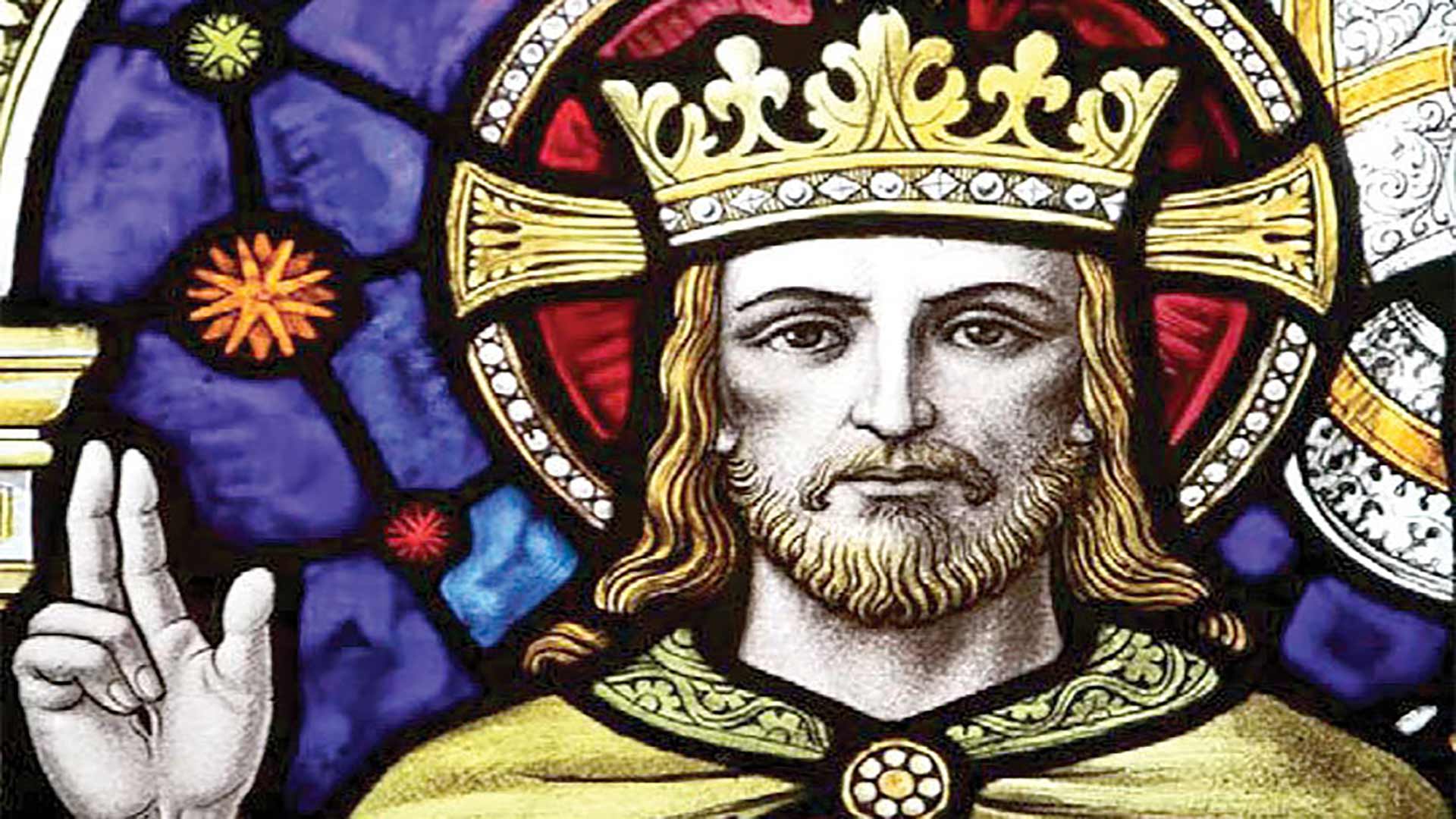
The liturgical year celebrates the Mystery of Christ, right from His Incarnation and Birth to His Ascension, and from Pentecost to the Second Coming of Christ in Judgment. This latter occasion is held today as a Solemnity, which is the highest rank of celebration. Hence the lectionary entry for today, the thirty-fourth or last Sunday of the Year, reads: ‘Solemnity of Our Lord Jesus Christ Universal King’.
Describing Our Lord as King should not raise eyebrows. Did He not belong to the Royal House of David? Didn't the Wise Men at His Birth and Pilate at His trial and crucifixion refer to Him as ‘King of the Jews’? Most important of all, the Scriptures awaited a Messiah who would be Prophet, Priest and King. It is quite another matter that the high priest Caiphas twisted all that to mean that Jesus was subverting the Roman imperial authority in an attempt to become king. He knew full well that Jesus would be put to death for sedition. As for Pilate, however, he found no basis for a charge against Jesus; yet he let the populace execute their desire to kill Him. It is very significant that eventually Rome became the headquarters of Christianity!
Pilate did not find a basis for a charge because Jesus had convincingly said, ‘My kingdom is not of this world.’ Jesus was no doubt a king, but not of this world. The House of David was where he belonged as man but as God He was not to be seduced by it. In fact, Rome did not have to fear Him as a political rival, for He functioned in the spiritual realm. He was not in need of any human defence either, for He was one with the Father in Heaven. Whereas the Sanhedrin had expressly made Jesus' claim to divinity look like blasphemy, He was soon vindicated by His Resurrection and Ascension.
Today’s Readings trace the story of spiritual royalty. The First Reading (Dan 7: 13-14) is apocalyptic in nature and focussed on ‘one like a son of man’. While in the Old Testament, this term refers to one man or to humankind, Daniel is the only one who uses it differently. In the Babylonian exile, he had a vision of four great beasts set to overpower the earth. The Ancient of Days (God the Father) took his seat of judgment and expelled them. Daniel then saw ‘one like a son of man, coming with the clouds of heaven’ and standing before the Father, who gave him authority over all nations, languages, and peoples of the world for all eternity.
As for the Jews of Jesus’ time, they took the ‘son of man’ (Dan 7) to be a messianic human figure who would liberate them from political subjugation and restore the House of David. Jesus, on the other hand, was divine and unconcerned about earthly politics, as is evident from today’s Gospel text (Jn 18: 33-37). Perhaps only the religious, intellectual and political leaders were in the know of the real identity of Jesus. But then, instead of clarifying those popular misconceptions, they suitably exploited them with a view to safeguarding their own exalted positions.
It became necessary for Jesus to die and rise and fulfil all the other prophecies about the Son of Man for the world to know the full truth. Many New Testament passages (e.g. Mt 26: 64 and Mk 16: 26) are evocative of the imagery from Daniel’s vision. So, now there can be no doubt that Jesus was that Son of Man. He came into the world not to restore material goods but spiritual goods; to destroy not political powers but the power of sin. His Passion and Death revealed the love of God for humankind. At His Second Coming, He will judge the righteous and the unrighteous, and the former will inherit the kingdom of God.
The Second Reading (Rev 1: 5-8) gives us that hope. The Book of Revelation was written during the reign of Emperor Domitian, one of the great persecutors of the Church. The author, St John, sought to convey a sense of optimism and confidence in face of the people's suffering. He gives glory and praise to Jesus Christ, as being ‘the faithful witness, the first begotten of the dead, and the prince of the kings of the earth, who hath loved us, and washed us from our sins in His own blood, and hath made us a kingdom, and priests to God and His Father.’ Thanks to Him, one day, sin will disappear from the face of the earth. And when that day comes, we as followers of Christ will share in His glory and enjoy His loving, peaceful kingship for ever.
We must all pray for the kingdom to come, as indeed we do in the Our Father. However, a sine qua non for the kingdom to come is to let God's will be done. For this, we must let go of ourselves and make God the be-all and end-all of our life. Humanly speaking, this is not easy; but with God’s help nothing is impossible. We must, then, learn to put God first in everything we do, in every step we take, big or small. Our ardent desire must be translated into concrete decisions. This calls for prayer, sacrifice and practice of the Sacraments. It also calls for evangelisation by word and deed.
In short, we must ardently desire that more and more people join us in the campaign to let God’s kingdom come and His will be done. This sentiment is best conveyed by St Louis de Montfort’s stirring hymn ‘We Want God’. In a world steeped in atheism, agnosticism and indifferentism, we must take a stand for God. By having Christ as the king of our hearts we will have Him as the King of the Universe. He will forever be the Universal King of Hearts.
Discerning the Signs of the Times
The Readings of the end of the liturgical cycle portray the end times. The idea is to conscientize us about this inescapable reality. Initially, the suffering that the Israelites underwent in Exile was an occasion for prophets to speak of hope. But that hope became a living reality only centuries later, with the coming of Christ, who died for the sins of humankind by offering Himself as a living sacrifice. He was at once the High Priest and the victim, our only hope.
The First Reading (Dan 12: 1-3) takes us back to the Babylonian Exile. It does not matter whether the author was Daniel the returnee from Exile or Daniel the king of antiquity; possibly, the name here is symbolic. His book seems to have been written during the time of king Antiochus IV Epiphanes, who wished to end the Jewish religion and to Hellenize Palestine, over which he ruled (c. 167 BC). The fact of the matter is that many Jews stood up to him and were killed; and it was therefore of the essence for the people to know what would be the fate of those who had died.
That is when Daniel spoke of the resurrection as the beginning of happiness in the afterlife. Concretely, the prophet announced the liberation of Israel after the horrors perpetrated by the Antiochian monarch. Besides national resurgence, he also announced the resurrection of the body. Scholars say that the doctrine of the resurrection, according to biblical anthropology, places more value on the bodily aspect than on immortality conceived in the Hellenistic manner.
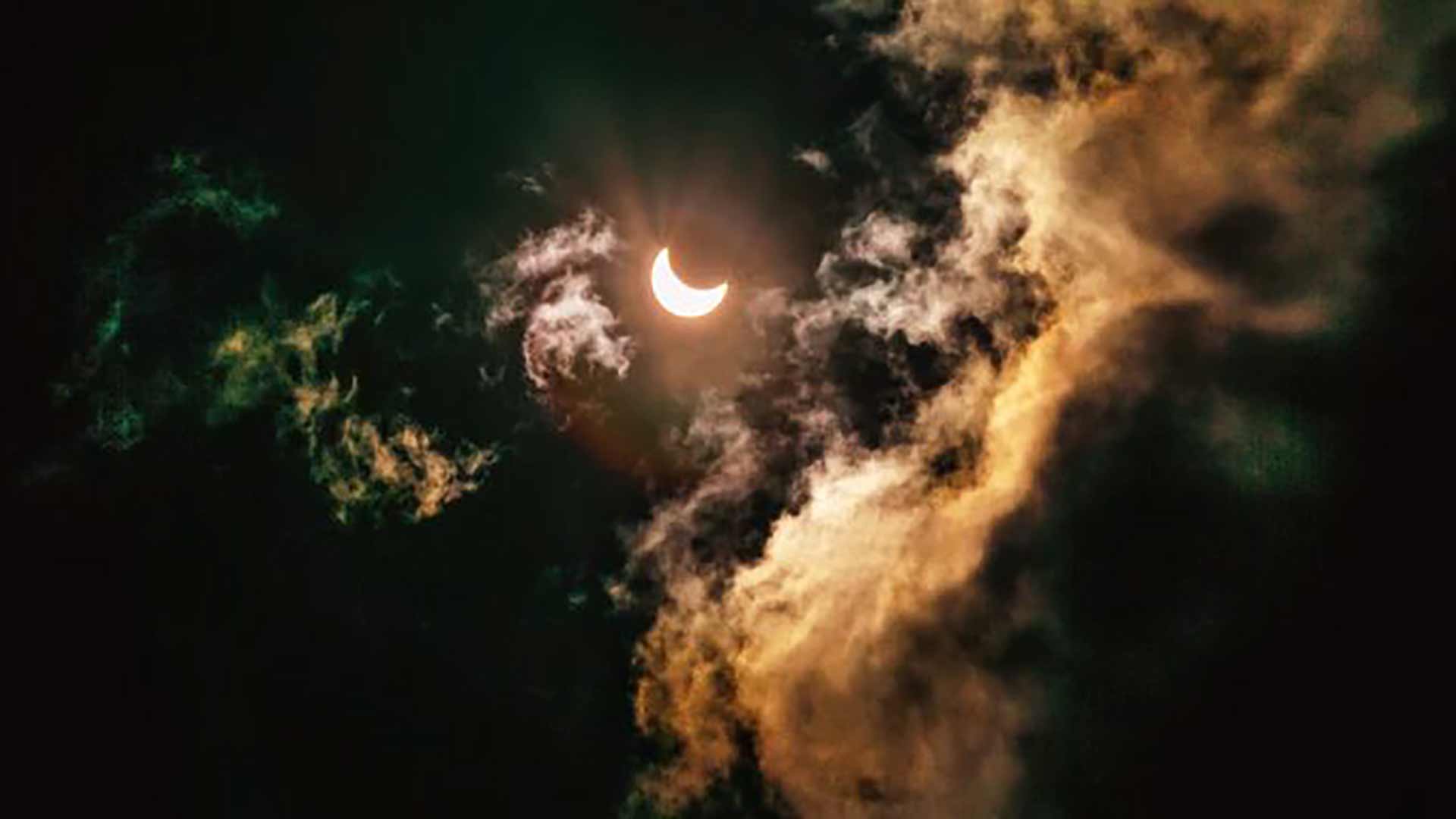
In today’s Gospel (Mk 13: 24-32) too we see the theme of the resurrection. Earlier on (12: 18-27), Jesus broached this topic; and after speaking of the destruction of Jerusalem and the rise of false prophets that will be posing as messiahs, Jesus speaks of the coming of the Son of Man. He quotes from the Old Testament about how the world will be after ‘the great tribulation’[1]: the sun will be darkened, the moon will not give its light, the stars will fall from heaven and the powers in heaven will be shaken. After that the Son of Man will come from the clouds with great power and glory and send out His angels and gather his elect (those who believe in Him as Messiah and Saviour) from the four corners of the world.
Will we discern these signs and mend our ways, or will we be oblivious of the changing times and suffer a titanic loss? Mind you, Jesus has warned us: ‘Take heed, I have told you all things beforehand (13: 23). Once before, addressing the crowd, He said: ‘Hypocrites! You know how to interpret the appearance of the earth and the sky. How is it that you don’t know how to interpret this present time?’ (Lk 12: 56) A pointed question indeed. So, if ignorance of the (secular) law excuses no one, shouldn’t the same principle hold true for God’s law? We cannot take God for granted and would do well to be in a state of readiness when the Son of Man arrives.
Jesus has stated very categorically that Heaven and earth may pass away but His words will not. Yet, He said not a word about the specific hour when the end will come; none except the Heavenly Father knows it. And as for us, it behoves us to wait in great anticipation, like the wise virgins did for the groom’s arrival. We have to read the writing on the wall, discern the signs of the times. We must look around and see what the world has come to: natural calamities; breakdown in human relationships; catastrophes within institutions, the Church included; and calamities of war. Are we then in the times of pre-Tribulation?
Finally, today’s Second Reading (Heb 10: 11-14, 18) reiterates last Sunday’s heartening message: that Christ offered for all time a single sacrifice for sins and sat down at the right hand of God, by which He has perfected for all time those who are sanctified. We now await His coming as the King of the Universe next Sunday. And soon, with Advent, yet another liturgical cycle will begin.
[1] There are different views about how this will pan out. But, simply understood, it is a period that Jesus refers to in the Olivet Discourse, the last of the five discourses that St Matthew reports on, before the beginning of the Passion. Jesus meant it as a sign that would occur in the end of times.
Banner: https://shorturl.at/QrbHg
Trouble, Trust and Thanks
The Readings of today help us develop faith and trust, love and gratitude. As we inch closer to Advent, let us cleanse our hearts and minds that we may worthily receive the Divine Babe.
In the First Reading (1 Kings 17: 10-16), we learn about a famine that devastated Israel under king Ahab. Under these trying circumstances, a poor widow and her son received the prophet Elijah into their lowly home in Zarephath, a town on the Mediterranean coast. Their supply of flour and oil was at its fag end, yet miraculously it was not depleted until the famine itself came to an end. Truly, the needy are sometimes the more generous and welcoming.
Israel’s dry spell was a punishment for idolatry prevalent in the kingdom, but soon God turned things around. When the prophets of Baal prayed for rain, there was scorching sun; but after Elijah had restored Yahweh’s altar and offered sacrifice and prayers, it began to pour. This signalled the power of the true God and the end of the famine.
The miraculous episode is reminiscent of the wonders that St Joseph Vaz worked in Sri Lanka. After efforts by the kingdom’s false prophets had come to nought, the Goan apostle prayed for rain at an altar erected in a public square. Rain bucketed down, leaving only the area around the priest and the altar dry! The miracle was a defining moment for the Vazian apostolate: many embraced Catholicism and those that had fallen by the wayside returned to the faith.
In our own times, look at how the world went berserk in the days of Covid-19 even while self-proclaimed saviours became the new idols. What state of mind will we find ourselves in when the real D-day comes? Will we be prepared to welcome our Saviour? Therefore, come what may, we must swear our allegiance to Him right away, so that at the eleventh hour there is no vacillation nor succumbing to mental or physical vaccination.
It is such false prophets that Jesus in the Gospel (Mk 12: 38-44) railed against: ‘Beware of the scribes, who like to go about in long robes, and to have salutations in the market places and the best seats in the synagogues and the places of honour at feasts.’ They devour widows’ houses and for a pretence make long prayers. We could well add that then, instead of being run into jail, they are run into Parliament!
Such are the ways of the world, which the kingdom of Heaven will greatly condemn. The high-handed will be shown the door and the poor shall inherit the kingdom; those who mourn now shall be comforted, and those who weep, laugh. The same with the prophets... What prophet worth the salt has not been reviled, hated and excluded from his own land, by his own people, precisely for standing up and speaking up for God? He will be awarded the crown of righteousness.
Meanwhile, in the Gospel text too, there appears a poor widow. Like her Old Testament counterpart, who through her destitution trusted in the Lord, she too in her deprivation gave Him everything she had. And Jesus, seated opposite the treasury and watching people putting in their gifts, quickly made a distinction between those who had comfortably contributed out of their abundance and the poor widow who even out of her poverty put in two copper coins, her whole living!
It is not that Jesus summarily condemns the rich and commends the poor. In fact, it is not persons but faulty attitudes and acts that he censures. Those with wealth and/or intellect, how well do they serve God? Historically, we have umpteen examples of individuals, families, even countries, that have prioritised and served God in all things.
On the other hand, there are those who receive but never repay. ‘Kam zalem, voiz melo’ is a saying that comes promptly to mind: God is taken for granted. We get so puffed with pride that we think we can have it our way. No wonder, Jesus noted that it is easier for a camel to go through the eye of a needle than for a rich man to enter the kingdom of heaven.
The way out, then, is to be always in awe of God and to have a heart filled with love and gratitude, so we can sing with the Psalmist: ‘My soul, give praise to the Lord.’
Finally, the Second Reading (Heb. 9: 24-28) presents us the Christ who ‘has appeared once for all at the end of the age to put away sin by the sacrifice of Himself.’ A solemn and beautiful promise wraps it up, saying that ‘Christ, having been offered once to bear the sins of many, will appear a second time, not to deal with sin but to save those who are eagerly waiting for Him.’
Let us therefore do everything to be counted among those who await His Second Coming. Nothing compares to Him and to the time when the Son of Man will come, at an hour we do not expect. We have to be in a state of readiness, irrespective of our troubles. We have to trust in Him and be thankful at all times.
Banner: https://shorturl.at/pnCDx
Love, for God’s sake!
Today’s Readings refer to love, about which we all wax philosophical. And we have the added advantage of getting Our Lord’s invaluable perspective on it. After all, in Him we have a High Priest who offered the supreme sacrifice of His life for the love of mankind.
From the First Reading (Deut. 6: 2-6) we can conclude that God – the True God, and He alone – is the first and last object of our love; everything else flows from there on. Hence, Moses said to the people, ‘Hear, O Israel, the Lord our God is one Lord; and you shall love the Lord your God with all your heart, and with all your soul, and with all your might.’ Totally.
Considering the extent of God’s love for us, is it not our bounden duty to love Him in return? His love is inscribed upon our hearts, for we are made in the image and likeness of God Who is Love. In this regard, we may recall the basic teaching we imbibed in our catechism class, in the form of two simple yet profound questions and answers: ‘Who made you?’ God made me. ‘Why did God make you?’ God made me to know Him, love Him and serve Him in this world and to be happy with Him forever in the next.
Centuries after Moses, Jesus added a new dimension to love when a scribe asked Him to identify the greatest commandment. In today’s Gospel (Mk 12: 28-34), our Divine Master quotes verbatim that passage from Deuteronomy, and adds: ‘You shall love your neighbour as yourself. There is no other commandment greater than these.’ The scribe was quick to admit, to Jesus’ delight, that ‘to love one’s neighbour as oneself is much more than all whole burnt offerings and sacrifices.’
This brings us face to face with three loves, so to speak: love of God, love of neighbour and love of self. And the question is, how do we begin loving? Love of self, which comes naturally to us, can quickly turn into narcissism and pride. For that matter, love of neighbour is more easily said than done, for we are quicker to love ourselves than to love our neighbours, aren’t we?
That is because self-interest is a survival skill that rules the roost. So, it seems easier to relate to God – by loving Him who first loved us. But then, some may wonder how we can love God who is invisible when we haven’t first loved our neighbour who is next door... The fact is that, left to ourselves, our fallen nature determines what we do. Thus, loving becomes an uphill task unless we receive God’s grace – of which the Sacraments are mystical channels.
As for the love of God, it is no plain emotion or whim. It is a resolution that made upon due appreciation of God’s plan of salvation… When we see that He who is wrapped in purple robes, with planets in His care, has pity on the least of things (as Yeats puts it in the ‘Ballad of Father Gilligan’); that He who looks on the birds of the sky surely cares for us too, who are more valuable in His eyes (Cf. Mt 6: 26) – we open ourselves to God. Finally, the realisation that the world is transitory where Heaven is where we spend eternity clinches it.
By such a supernatural approach to life, power and pelf lose their hold on us. When we compare our present life with what God has promised, people and things, and even self, pale into insignificance. Then we are convinced that ‘He must increase, but I must decrease,’ as St John the Baptist has stressed. By and by, at a higher rung of our ascent to God, we begin to say with St Paul: ‘It is no longer I who live, but Christ lives in me’ (Gal 2: 20). Then, God’s love in us overflows into our neighbour’s heart through what we do.
It would be silly to believe that loving God, loving neighbour and loving self happens sequentially. It is one whole. But does it mean that one must indiscriminately bow to each and every one? Consider the person who gives scandal and becomes his neighbour’s tempter; he damages virtue and integrity and may even draw his brother into spiritual death (Cf. CCC #2284). Can we relate to them in the same way as we do to those who follow God’s commandments and stand by Him?
Much harm is caused to the world when, in the name of ‘love’, we close our eyes to malicious and criminal acts, saying, ‘Who am I to judge?’ There are those who preach love as long as they have not been offended – and yet it matters little to them if God is offended! But then, can we wash our hands like Pilate? Must we not stand up, speak up?
God calls on us to distinguish between what is true and false, good and bad, right and wrong. That is, we need to discern – and not have acts of foolishness styled as acts of love. For instance, opening your houses and parishes and countries to people inimical to what we believe as Christians is a recipe for self-destruction. Our Lord’s command to ‘be cunning as a serpent and yet as harmless as doves’ (Mt 10: 16) is thus pertinent even when we talk of love.
We may therefore conclude that we must love God above all things – for His own sake; and we must love our neighbour as ourselves – for the love of God! (Cf. CCC # 1822).
Banner: https://shorturl.at/1iVrn
The Core of Jericho
A single theme runs through the First and the Third Reading: disability, which is important to look at in both literal and figurative senses. We must indeed look further than what is obvious when the Scriptures speak of physical or material loss. We must seek the treasure that lies hidden beneath the surface, and it’s always something transformative!
In the First Reading (Jer 31: 7-9), Jeremiah calls upon the Israelites to sing the praises of patriarch Jacob.[1] While they were reeling under the Assyrian yoke, the prophet urges them to not lose hope. God had promised to free them and bring them back from far and wide. In fact, the mention here of the blind and the lame and the woman in travail speaks volumes of God’s loving kindness.
God singles out Ephraim, which had settled in Samaria (central Israel), as it was the foremost of the ten tribes. Their cry would be their prayer, which God would hear. He would lead His people to lush pastures and restful waters. However, this is not about physical health alone; it is about restoring the Chosen People to spiritual health. It is not so much about their political liberation as it is about their much-needed liberation from the bondage of sin.
A grateful lot would readily chant Psalm 125: 1-6, which puts it all so beautifully: ‘What marvels the Lord worked for us! Indeed, we were glad!... They go out, they go out, full of tears, carrying seed for the sowing, they come back, they come back, full of song, carrying their sheaves.’ Thus, God’s promise wasn’t a dream but a reality.
Even greater marvels awaited the people of Israel down the centuries. In the Gospel (Mk 10: 46-52), we see Jesus leaving the town of Jericho with His disciples and a great multitude, when Bartimaeus, a blind beggar, on hearing that Jesus was passing by, persistently cried out: ‘Jesus, Son of David, have mercy on me!’ On hearing that appeal, the Master sought to heal the blind man, much to the disciples’ surprise, for they had tried to box him out.
Why did Jesus, who was all-knowing, say to the blindman, ‘What do you want of me?’ Possibly, to get him to articulate a more specific prayer and thus be more intimately involved in his own healing. The sightless man’s plea – ‘Master, let me receive my sight’ – was as straightforward as his cure was instantaneous. His words indicate that he was not born blind but had lost his sight. ‘Immediately he received his sight and followed Him on the way.’
Bartimaeus’ deep and unwavering faith made him well, said Jesus. The other lesson for us to imbibe is that the beneficiary’s heart filled with gratitude impelled him to follow Jesus.[2] So, it is not about physical disability alone; it is about overcoming our spiritual disability – call it what you will: blindness, deafness, numbness, or whatever – and having a change of heart. Elsewhere, Jesus railed: ‘You hypocrites! You know how to interpret the appearance of earth and sky… why do you not judge for yourselves what is right?’ (Lk 12: 56) Jesus was only alerting His people to the need for faith.
It is often our indifference, not to say malice, that comes in the way of our spiritual progress. Yet, there is nothing to worry, for our High Priest in Heaven knows the inner recesses of our soul and can provide the right balm. That is how He partakes of the human condition. Similarly, as the Second Reading (Heb 5: 1-6) points out, ‘every high priest chosen from among men is appointed to act on behalf of men in relation to God, to offer gifts and sacrifices for sins.’ Being sinful and weak, we must atone for our sins and deal gently with our fellow beings, who are also beset with weakness.
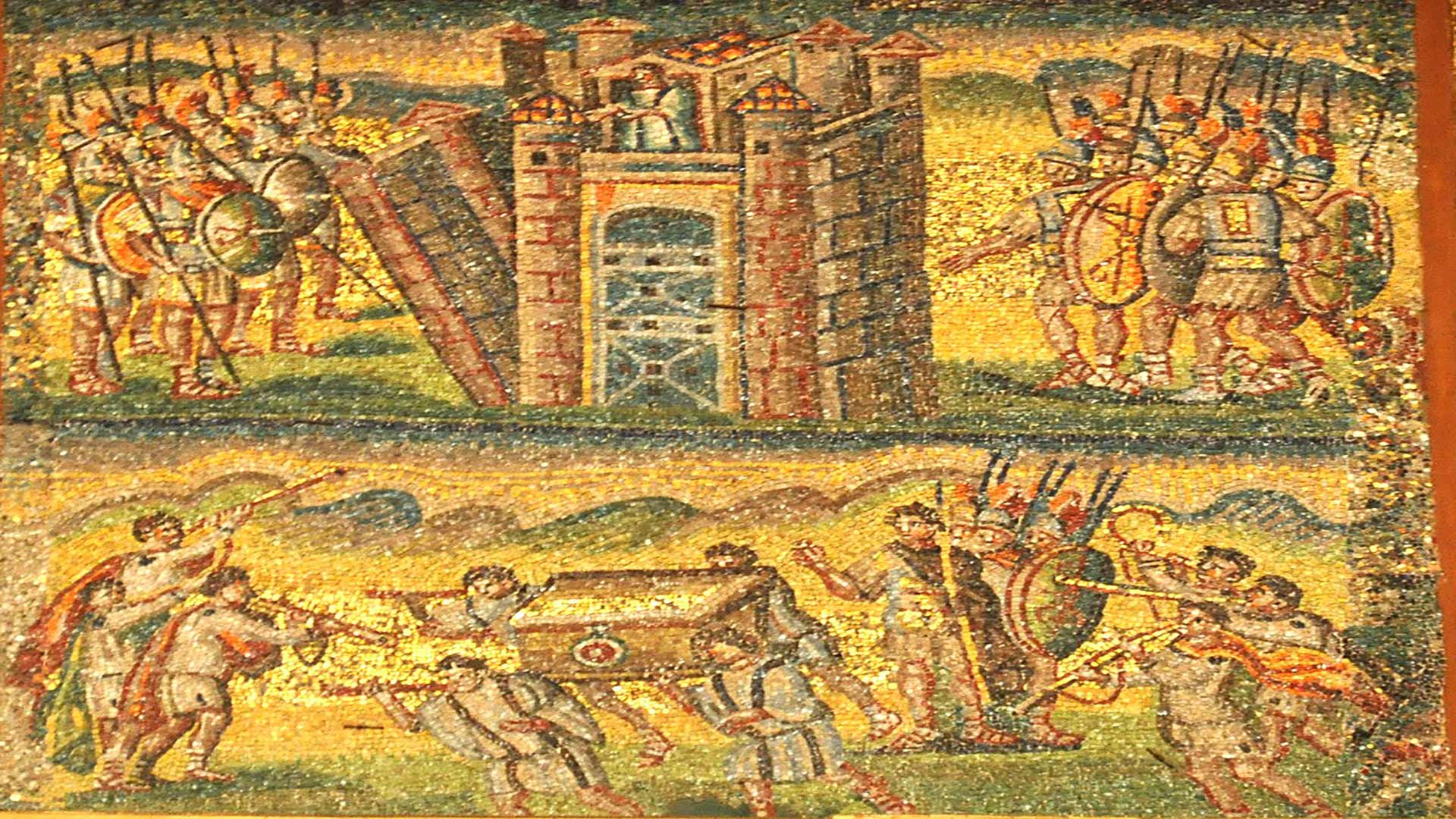
Finally, the Readings don’t merely indicate a purpose but point to a process as well. What we see in the Old Testament actually happens in the New. Hence, a word about core of Jericho. It was the first city – and a well-fortified one at that – which the Israelites conquered after occupying the Promised Land. By strictly following God’s (apparently foolhardy) instructions, they were able to bring down the walls of Jericho.[3] They did so by virtue of their faith – the same that helped the blind beggar shed his blindness as Jesus was leaving Jericho. And it is the same faith that knocks down the Jericho wall of our hearts, letting God touch the core of our being.
[1] He was a son Isaac and Rebecca and grandson to Abraham. When there was a drought in his homeland Canaan, Jacob moved to Egypt, where his son Joseph wielded influence in the Pharaoh’s court. Jacob came to be regarded as a patriarch of the Israelites.
[2] Both St Mark and St Luke talk of one blindman (the latter does not register his name), whereas St Matthew mentions two, just as he does in the case of the possessed men (Cf. Mt 20: 29-34).
[3] See Joshua 6: 1-27
Passion and Glory
‘The greatness and the power and the glory and the majesty and the splendour’ that the Book of Chronicles (29: 11) speaks of as belonging to the Lord belong to us humans as well. The difference is that in God’s hands those values are transformative; in human hands, they turn ordinary and dull, and often degenerative.
Today’s Readings speak of the purpose of those values and how to avoid the most obvious pitfalls. The First Reading (Is 53: 10-11) is taken from the Fourth Song of the Servant, which begins thus: ‘Behold, my servant shall prosper; he shall be exalted and lifted up, and shall be very high.’ While this is sure to give every human a high, in the verses that follow, which make up today’s Reading, we see that glory comes with a price – also very high.
Isaiah’s Suffering Servant prefigured Jesus Christ. His Song indicated that He would be despised, rejected, esteemed not, afflicted, wounded for our transgressions, bruised for our iniquities, oppressed, stricken… And if this is not a description of Our Lord’s Passion, what is? He redeemed us through His Passion and Death. The Jews, too, traditionally believed that the Suffering Servant referred to the Messiah or Redeemer who was to come to Zion. But, irony of ironies, they rejected Him when He actually came!
Hence, in the Gospel (Mk 10: 35-45), Our Lord makes it amply clear that the Son of Man came to give His life as a ransom. He did not come to enjoy earthly glory but rather to suffer for the sins of humankind and raise it to a glory that is eternal. Here, two of His close disciples – James and John, sons of Zebedee – were hideously off the mark. They sought the highest ministerial berths from Him who they thought had come to rule over Israel! Our Lord obliged the Good Thief instead, who was crucified to His right hand….
However, handling the disciples’ feelings of self-importance with utmost care, Jesus didn’t say an outright no, but asked them what they wanted Him to do for them. And then came the full truth: ‘You do not know what you are asking.’ Which is often the case with you and me; we want gains without the pains. Yet, it was not for Jesus to grant their request, but for God the Father to decide. The high place they coveted would be ‘for those for whom it has been prepared.’
This is so much the story of our own lives. As the saying goes, man proposes; God disposes. Although there is nothing wrong in proposing, this must be accompanied by a wilful surrender to the divine will. God’s will can be way different from our own, so we must be ready to accept it, firmly trusting that it will work for our good. The golden rule, then, is to believe that ‘there is a time for everything, and a season for every activity under the heavens’ (Eccl 3: 1).
Setting the common good above everything could be another guiding principle. Also, we must ascertain that our goal has a higher purpose. This sanctifies what we desire – power and glory included. If it be for God, let it be done! That is what a 300,000-plus gathering meant to say when they sang ‘We want God’, on John Paul II’s first visit to his homeland, in 1979, shortly after he succeeded to the Chair of Peter. He invoked the power of the Holy Spirit to renew the face of Poland and liberate it from the bondage of communism and atheism.[1] The prayer was transformative.
That is a perfect illustration of what those in power should do. Jesus pointed out that, unlike the Gentile rulers who lord it over their people, Christians must rule through selfless service. ‘Whoever would be great among you must be your servant, and whoever would be first among you must be slave of all.’ There is no better example of this than Jesus Himself, who came not to be served but to serve, not to live but to give His life as a ransom for us.
Finally, the Second Reading (Heb 4: 14-16) makes it clear that we must envision the ‘throne of grace’, where Jesus is seated, at the right hand of God the Father. Our High Priest sympathises with our weaknesses, so we can easily draw near to His throne, trusting that we will receive mercy and find grace. Which is so much unlike the earthly seats of power that are hotbeds of inconsideration, corruption and degeneration. Thus, there is not a doubt that only those who have gone through the passion are deserving of the glory.
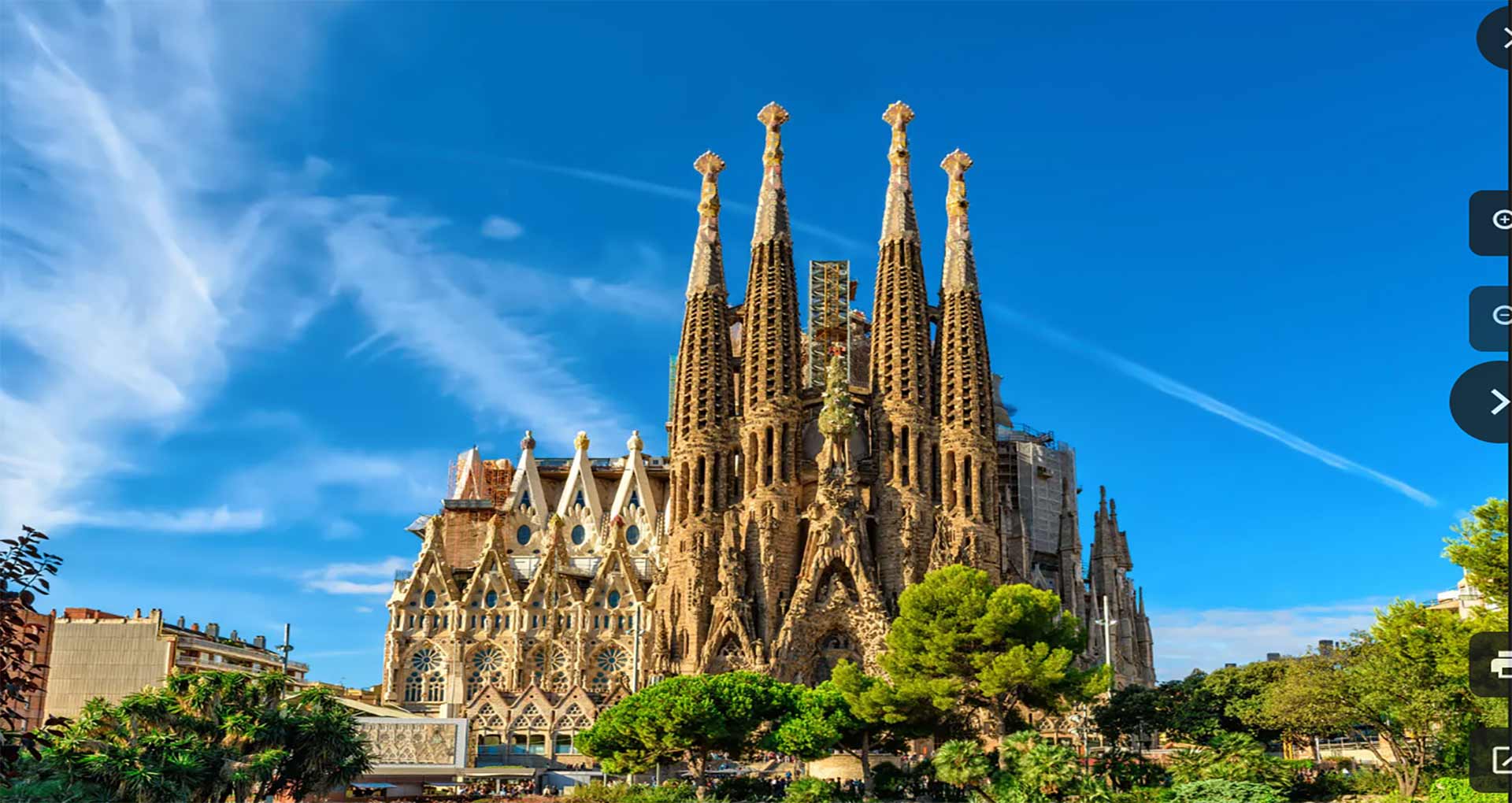
Banner: The Sagrada Familia Basilica, Barcelona https://www.britannica.com/topic/Sagrada-Familia
[1] https://breakingground.us/we-want-god/

Where to lay up our treasures
We all wish to be happy, don't we? And everything we do is in high hopes of achieving happiness. The problem is when we don’t know what true happiness looks like. We look around and see wealth and possessions, power and influence, health and beauty, fancies and pleasures, knowledge and skills, and mistake them all for happiness. No doubt, they are blessings and they do make us happy; yet something feels incomplete. For sure, when we leave God out of the equation, we fail to balance the formula of happiness.
King Solomon, arguably the author of the Book of Wisdom, states that wisdom clinches it: ‘I preferred [wisdom] to sceptres and thrones, and I accounted wealth as nothing in comparison with her. Neither did I liken to her any priceless gem, because all gold is but a little sand in her sight, and silver will be accounted as clay before her. I loved her more than health and beauty, and I chose to have her rather than light, because her radiance never ceases. All good things came to me along with her, and in her hands uncounted wealth.’
So, wisdom it is that we must seek out so as to attain happiness. Wisdom is the ability to see things, through prayer, the way God sees them; it is a spiritual gift that enables us to discern God’s plan. St Thomas Aquinas says it is both the knowledge of and judgment about ‘divine things’, and the ability to judge and direct human affairs according to divine truth.[1] Like Solomon, when we aim for the sky, all that is under it is ours for the asking: when we seek God – who is Wisdom – the rest is added unto us (Cf. Mt 6: 33).
The rule applies to everybody without exception: parents and children, teachers and students, managers and employees rulers and the people, statesmen and their advisors, scientists and researchers, all professionals, the clergy and the laity, The world will be a better place if we take wiser decisions. Domestic quarrels, public scandals, intercontinental wars are often a result of misinformed or confused minds groping in the dark. Alas, some of them may be downright malicious in what they do, but others simply use the wrong means to achieve their ends. For instance, some may naively think that just having wealth will bring them happiness....
Here is probably where that well-meaning man of the Gospel text (Mk 10: 17-30) failed miserably. He had approached Jesus with an all-important question: ‘What must I do to inherit eternal life?’ Jesus referred him to the commandments: he had observed them all! Moved by his uprightness, the Good Teacher declared: ‘You lack one thing. Go, sell what you have… and come, follow Me.’ At that saying, the man’s countenance fell; he went away sorrowful, for he had great possessions. That is, his love for money had proved to be greater than his love for God….

It is sad that the man turned away. That line about him speaks volumes about the folly of rejecting a divine invitation and about continuing to wallow in the mire of the world. It is not that we must give up everything and head to the nearest monastery; rather, even while we follow our calling, we ought to be ready to make one heap of all our winnings and never breathe a word about our loss. It must be God’s will all the way, in what we do, wish, say. Jesus has to be the be-all and end-all of our existence; He who is Wisdom Incarnate has to be our supreme ideal!
Does that seem to be a tall order? Nothing is too big for Him who is the ‘Light of the World’ (Jn 8: 12). Let us learn to trust in Him. By our presence and word, let us spread His light and dispel fear from our disbelieving world. ‘Do not worry beforehand about what you are to say,’ says St Mark elsewhere, ‘but say whatever is given you at that time, for it is not you who speak, but the Holy Spirit’ (Mk 13: 11). The Second Reading (Heb 4: 12-13) pertinently notes that ‘the word of God is living and active, sharper than any two-edged sword, piercing to the division of soul and spirit.’
After all, wisdom is one of the seven gifts of the Holy Spirit; and the word of God, like a learned judge, is unyielding. He discerns the thoughts and intentions of the heart, and before him none is hidden. In fact, ‘we are open and laid bare to the eyes of the one to whom we must present an account,’ says the Letter to the Hebrews. So, why dilly-dally? Let us first seek the kingdom of God, discern His plan, and live by it. Wisdom will then bear abundant fruit.
Is the spirit willing but the flesh weak? Don't worry; let our hearts leap with joy on hearing the good news of salvation. The Lord has promised that our detachment from earthly treasures and the enduring of persecutions for His sake will gain us eternal life. So, how about laying up treasures in heaven rather than on earth? And on this day that marks the last Marian apparition at Fátima, let us pray that the good old Miracle of the Sun, which inspired thousands way back in 1917, convinces the world that God exists and that His salvation is for real.
Banner: https://prunedlife.com/lay-up-treasures-in-heaven/
[1] https://www.catholic.com/magazine/print-edition/the-seven-gifts-of-the-holy-spirit