Mário: with malice toward none - 2
Continued from Herald Café magazine, 2 May 2026
KEY MILESTONES
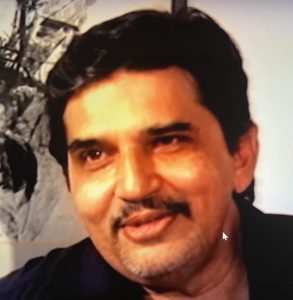
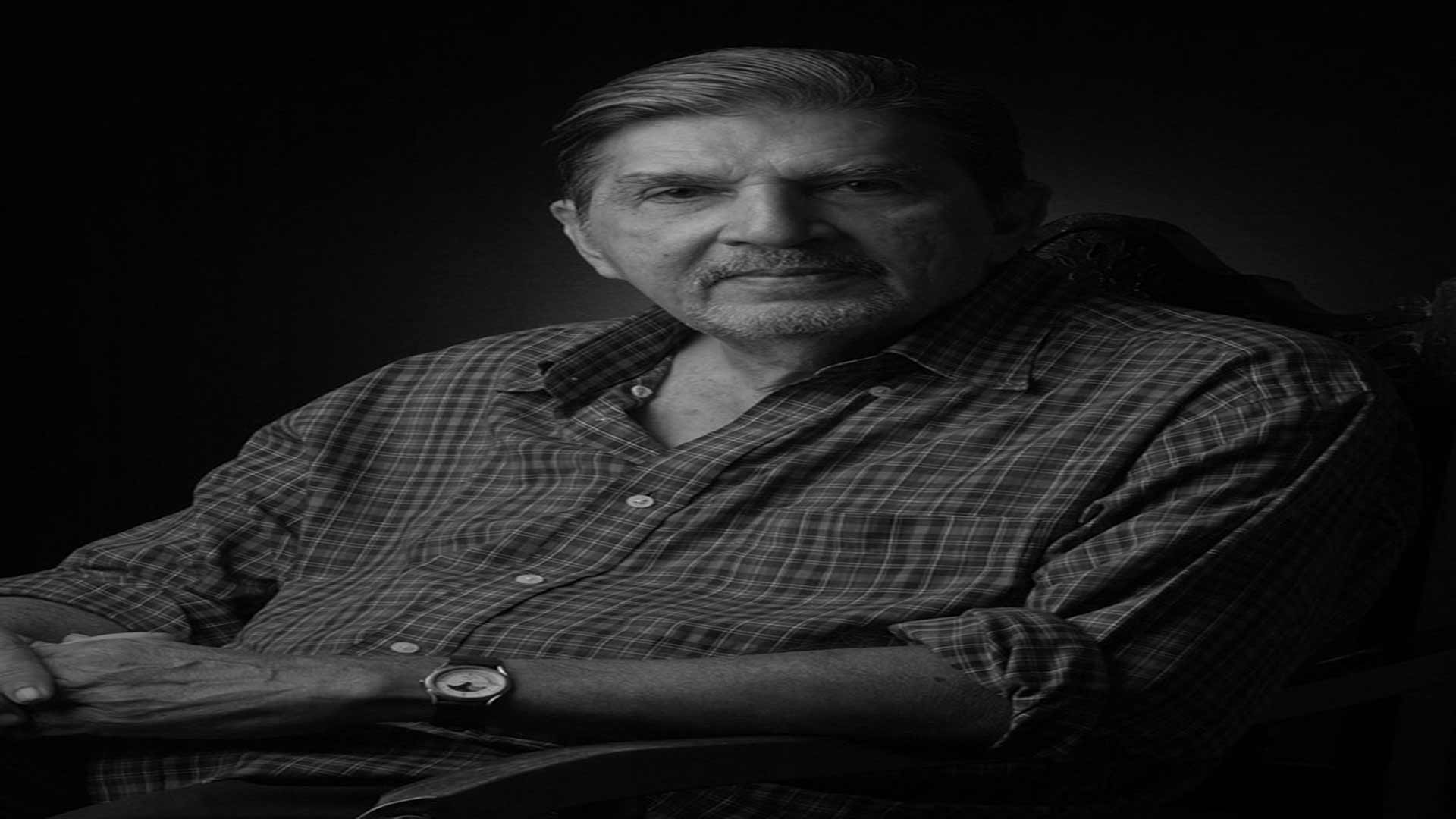
Mario Carlos do Rosário Brito Miranda (1926–2011)
- Early Life & Education: Born in Daman on 2 May 1926 to Constâncio do Rosário Miranda and Maria Zulema de Brito. Educated in Loutulim and Bangalore, he graduated from St Xavier’s College, Bombay, choosing a BA in Literature over formal art school.
- Career Beginnings: Began freelancing in 1952, eventually establishing a long-term association with the Times Group, in particular, The Illustrated Weekly of India.
- Hobbies: Reading, music, sports, cinema, travel.
- Artistic Style: Shifted from political to social cartooning, creating iconic, intricate depictions of daily life. Also, a visual diarist, caricaturist, painter, illustrator, and muralist.
- Return to Goa & Legacy: Returned to Goa with his wife, Habiba Hydari, in 1996. Key efforts included restoring the Reis Magos Fort and establishing the Museum of Christian Art.
- Awards & Recognition: Honoured with all three Padmas (Padma Shri, Bhushan, Vibhushan), the Goa State Cultural Award, and international awards from Spain and Portugal.
- Passing: Passed away on 11 December 2011 after a battle with Parkinson's disease.
MARIO’S DIARIES
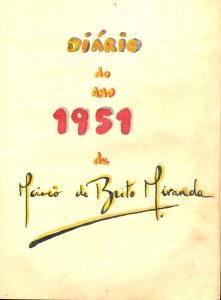
Mário began to draw while he was still learning to walk and talk. To deter him from doodling on the walls, his mother gave him blank diaries, pencils, and pens, suggesting that he record a highlight of the day. He feverishly filled their pages with bright and breezy sketches. He used line drawings and water colours and made a few jottings in Portuguese. Noticing her son’s commitment to journaling, she gave him drawing materials as a Christmas gift every year.
Mário sketched every day for 18 years (1934-1952). His sister, Fátima Miranda Figueiredo, estimates that those sketches number around 6,000. While his eye caught the quirks of his society, he unwittingly froze a microcosm of mid-20th-century Goa in his drawings, which also mirrored universal human nature. In them lies Goa’s plenty, or, as Dryden said of The Canterbury Tales, “Here is God’s plenty!”
Three volumes (1949, 1950, and 1951) have been published in English translation as The Life of Mário, edited by Gerard da Cunha and published by Architecture Autonomous.
MÁRIO’S CHARACTERS
Mário’s diaries portray his busy social life. He had a large circle of relatives and friends with whom he spent carefree moments as well as solemn moments. They went to restaurants and the movies, attended picnics and birthday parties, and went to church, a wedding, or a funeral. But wherever he went, he always noticed something funny.
Mário notices everything and everyone, and spares no one. The serious and the pompous come very especially under his scanner. According to him, ‘when people take themselves too seriously, they tend to be funny.’ While his drawings embody that insightful observation, they don’t merely distort a person’s features; they perceptively bring to light things invisible to the naked eye.
Those who came under his diary scanner included Goan celebrities, village folk, and even his beloved pet animals. It was quite a different ballgame in his cartoon strips for Bombay newspapers or in his travelogues covering Portugal, Spain, France, Germany, the USA, Israel, Japan, or other countries. Occasionally, he reworked his diary ideas, especially for the Bombay newspapers — the city and village types, styles of dancing, scenes at the cinema theatre, the cafés and restaurants, and so on — implying that human nature is the same everywhere.
‘I’m a keen observer of people,’ said Mário, ‘they are generally doing something they shouldn’t be doing.’

Mário: with malice toward none - 1
‘Mário is a subject that has no end.’ That is how Carolina Miranda, the centenarian cousin of the inimitable Goan artist, concludes her foreword to Diário do Ano 1951: Uma Campanha Alegre de Mário de Miranda (‘Diary of 1951: A Cheerful Campaign’), an upcoming book edited by this writer. She offers a close-up of Mário’s visual diary and how it made the rounds among relatives and friends. The Lisbon-based Carolina is a former teacher, poet, visual artist, and author of Histórias que contei ao meu gato — ‘Stories I told my cat’ — her memoirs, in which Mário figures prominently.
About Mário’s own fondness for animals, Fátima Miranda Figueiredo draws attention to her brother’s saying, ‘To err is human; to forgive, canine’ — which speaks volumes about his gentleness and empathy. He gave his pets long names and surnames, making them star characters in his diaries. In these, says Luís Pereira da Silva in his afterword, Mário ‘ably articulated what he experienced every day with lines at once quick and elaborate.’ The retired professor of paediatrics and amateur caricaturist adds that ‘Mário was always noble hearted in his irony, choosing affection and subtlety over scorn and sarcasm.’
Was it the artist’s unmalicious intent, then, that prompted Archbishop-Patriarch Dom José da Costa Nunes to let go when some clerics felt targeted by the young lad’s depictions? He was acquainted with Mário’s diaries and grateful for his help crafting the swan boat to carry the Pilgrim Statue of Our Lady of Fátima from Panjim to Old Goa. Mário, for his part, was relieved that his diaries had sparked guffaws rather than a controversy. ‘That was the first time I was appreciated by someone I didn’t know,’ he said.
Mário was a versatile artist, but best remembered and universally recognised as a cartoonist. Possibly one of the world’s youngest caricature diarists, he turned his journaling habit into a career. In March 1952, seeking an opening in Bombay, he toured editorial offices, his diaries in hand. Thoroughly impressed, The Current editor D.F. Karaka sent Mário to cover a can-can at the Taj Hotel. Mário returned with a rib-tickler that promptly secured him a cartoonist’s position at the weekly.
Mário was an instant hit, yet could not land a full-time role in Bombay. A fellow hosteller, Policarpo (Polly) Vaz of Bastora, suggested that he also draw picture postcards of the city landmarks and sell them at the Flora Fountain. Their bond grew so strong that they planned to move to Latin America together. But suddenly, Bombay proved to be more promising than Brazil when editor C.R. Mandy and art director Walter Langhammer invited Mário to join The Illustrated Weekly of India… and the rest is history.
Mário went on to become one of the country’s best loved social cartoonists. His iconic characters, like Ms Fonseca, the Boss, and clerk Godbole; the corrupt politician Bundaldass and his sidekick Moonswamy; Bollywood stars Rajni Nimbupani and Balraj Balram, appeared in the Times group of publications. Generations grew up with those cartoon characters that are etched in collective memory, although the world’s ever-changing sensibilities tend to put a negative spin on some of them.
All of Mário’s works, be it Goa with Love, A Little World of Humour, Laugh It Off, or others, show him as a tireless seeker of the comic side of life. In Bal Bharati textbooks and Air India in-flight magazines alike, Mário’s drawings were always teeming with human specimens, each with their own story to tell. His hawk eye caused the poet Nissim Ezekiel to remark that there is ‘no escape if Mario is looking at you. The buffoonery of his human figures is redeemed from grossness by their verve, their inner urge towards going places, getting somewhere. It is not always their fault that there is no place to go, nowhere to get except through the corridors of illusion.’
The artist’s own ‘inner urge towards going places’ was clear on his first-ever trip abroad, to Portugal. Later, Mário went freelance as a cartoonist to satisfy his wanderlust. By his magical ability to capture the spirit of a place, he received assignments to sketch vignettes and hold exhibitions across the globe. Veteran editor Vinod Mehta saw no contemporary artist in India coming close to Mário’s command over the grammar of drawing; the alleged ‘lack of venom’ in his repertoire spoke for his ‘objective perspective,’ he said.
According to art critic Ranjit Hoskote, Mário’s confluential, Indic and Iberian, heritage ‘gives him an amplitude of cultural references [and] a historically informed sensibility.’ Bombay’s Cocktail magazine once said that Mário’s illustrations have ‘polished perfection and have been such a success that all our writers want Mario to illustrate their work.’ He took as much pleasure to draw for journalists as he did for literary giants and lesser writers. A much sought-after muralist, he is perhaps the only Indian cartoonist whose works adorn the landscape.
Prakruti Ramesh, in her hitherto unpublished thesis titled Making a Public Aesthetic: Heritage, Humour and Regional Identity in Goa, examines why Mário’s images have fascinated architects, urbanists, educators, and tourism entrepreneurs and have been used as a form of public art in Goa. While she draws many weighty conclusions, one can also say that, thanks to Mário’s malice toward none, he has touched a chord in the Goan soul and is also capable of raising the happiness quotient of the big wide world.
To be continued... See three items in the next blogpost: Key Milestones; Mário's Diaries; Mário's Characters
(First published in Herald, Café magazine, 2 May 2026)