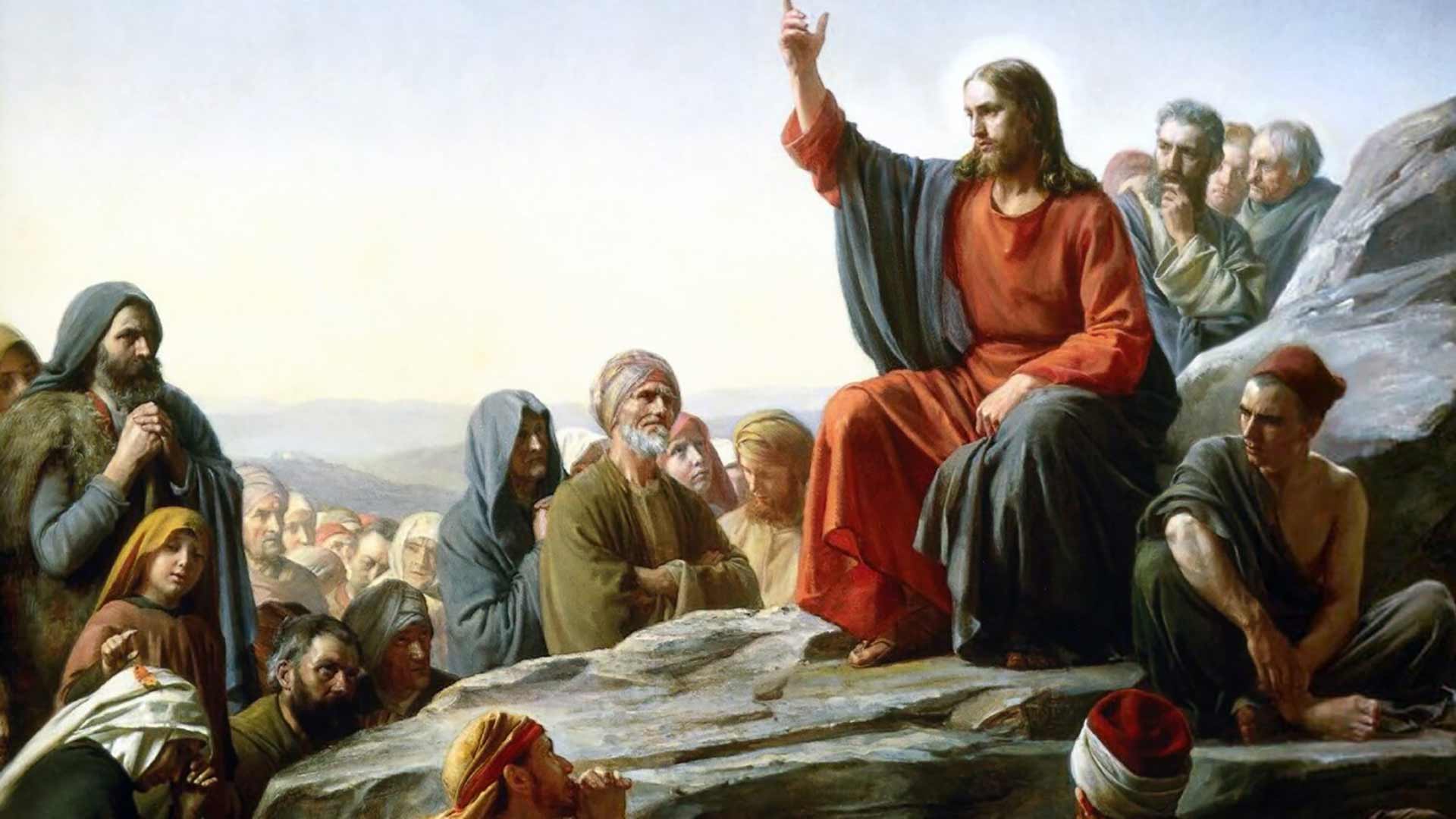
Discernir o Profeta
Por que é que Jesus, no Evangelho de hoje (Mc 6, 1-6), diz: "Um profeta só é desprezado na sua terra, entre os parentes e em sua casa"?
Depois de ter deixado a casa de Jairo (ver o Evangelho do domingo passado), Jesus empreendeu uma missão pela Galileia, pregando em todas as pequenas aldeias daquela terra. Foi para a sua antiga casa em Nazaré e, no sábado, começou a pregar na sinagoga. Infelizmente, foi recebido com frieza. Em vez de apreciarem e agradecerem a Deus a dádiva do seu divino conterrâneo, os nazarenos menosprezaram-no, dizendo: "Não é Ele o carpinteiro, Filho de Maria e irmão de Tiago, de José, de Judas e de Simão? Não vivem aqui entre nós as Suas irmãs?
Quando as pessoas de bem são rejeitadas, isso pode acontecer por simples falta de seriedade ou por malícia do outro lado. Ou não os damos importância ou os invejamos. Consideramo-los iguais a nós, nada melhores do que nós. Parecem-nos vulgares, incapazes de fazer algo de bom. E quanto melhor os conhecemos, mais provavelmente acharemos neles alguns defeitos. Em suma, olhamo-nos com desdém, pois santo de casa não faz milagre.
Essas situações são muito dolorosas, mas são os caminhos do mundo, dos quais não há melhor resumo do que as palavras do Divino Mestre. Note-se, no entanto, que, enquanto S. Marcos usa uma dupla negativa em "Um profeta não é sem honra, exceto na sua terra...", S. Mateus (13: 57) diz directamente: “Um profeta só é desprezado na sua pátria e em sua casa".
Já reparou como os bem-intencionados são alvo de escrutínio enquanto os enganosamente agradáveis são colocados num pedestal? Foi o que aconteceu no tempo do profeta Ezequiel, que foi enviado ao povo de Israel, uma nação de rebeldes, impudentes e teimosos, que muitas vezes se tinham voltado contra Deus. No entanto, Deus, no seu infinito amor e misericórdia, não os abandonou; enviou-lhes o seu profeta, quer ouvissem ou não. Um dia, aperceber-se-iam de que no seu meio haviam tido um profeta.
Ao longo dos tempos, centenas de santos enfrentaram a rejeição da família e de amigos. De facto, muitas vezes Deus permite que sejamos testados desta forma; é como o ouro a passar pelo fogo da purificação. Diz o falecido escritor brasileiro, Professor Plínio Corrêa de Oliveira: “Porém, Ele costuma provar a confiança de seus servos. Quando isto lhe acontecer, não se suponha abandonado… Quando tudo parecer perdido ou comprometido, aí virá a solução”.[1]
Qual deve ser a nossa atitude numa situação destas? Temos de estender a mão aos outros, no que for preciso. Como diz o mesmo zeloso escritor católico na sua Via Sacra: “Em meu apostolado, Senhor, deverei continuar mesmo quando todas as minhas obras estiverem por terra, mesmo quando todos se conjugarem para atacar-me, mesmo quando a ingratidão e a perversidade daqueles a quem quis fazer bem se voltem contra mim”.[2]
É este também o espírito de São Paulo que, na Segunda Leitura de hoje (2 Cor 12, 7-10), afirma: “É, pois, da melhor vontade que porei a minha glória sobretudo nas minhas fraquezas, para que a força de Cristo se estabeleça em mim. Por amor é que sinto prazer nas fraquezas, nas afrontas, nas adversidades, nas perseguições e nas angústias sofridas por Cristo. Pois, quando me sinto fraco, então é que sou forte".
São esses os verdadeiros profetas. Do mesmo modo, todos nós que recebemos os dons baptismais de sacerdote, profeta e rei, não devemos fazer concessões baratas, seja nas nossas conversas, nas nossas escolhas, no nosso vestuário, na companhia que mantemos, naquilo que pensamos e ensinamos. Não devemos desnaturar a Igreja e, com a nossa conduta, dar a entender que já não há nada de sagrado. Por fim, não devemos ter sentimentos de desprezo ou inveja, pois alguém pode muito bem ser uma dádiva de Deus.
Dito isto, devemos apenas estar atentos aos frutos que uma pessoa produz, pois, muito tragicamente, há aqueles que distorcem a natureza do mandato evangélico, fogem às suas responsabilidades e, pior ainda, dão contra-testemunho e escândalo de mau exemplo. Sobre eles, Jesus fez esta advertência: "Acautelai-vos dos falsos profetas, que se vos apresentam disfarçados de ovelhas, mas por dentro são lobos vorazes". (Mt 7, 15)
O Papa Paulo VI, na sua Exortação Apostólica Evangelii nuntiandi, afirma: "O homem contemporâneo escuta com melhor boa vontade as testemunhas do que os mestres, dizíamos ainda recentemente a um grupo de leigos, ou então se escuta os mestres, é porque eles são testemunhas… Será pois, pelo seu comportamento, pela sua vida, que a Igreja há de, antes de mais nada, evangelizar este mundo; ou seja, pelo seu testemunho vivido com fidelidade ao Senhor Jesus, testemunho de pobreza, de desapego e de liberdade frente aos poderes deste mundo; numa palavra, testemunho de santidade.” (EN n. 41)
Assim, o verdadeiro desafio atual é separar o trigo do joio e discernir o verdadeiro profeta. Se este não marcar pela autenticidade, a maré passará da admiração e da simpatia à incredulidade e/ou à rejeição, e por ela não serão responsáveis nem Deus nem o povo, mas o tal profeta.
[1] https://www.pliniocorreadeoliveira.info/OUT_001960_conselhosvidaintelectual.htm
[2] https://www.pliniocorreadeoliveira.info/1951_003_CAT_Via_Sacra_CAT.htm

Discerning the Prophet
Why does Jesus in today’s Gospel text (Mk 6: 1-6) say ‘A prophet is not without honour, except in his own country, and among his own kin, and in his own house’?
After Jesus had left the mansion of Jairus (see last Sunday’s Gospel), He undertook a mission through Galilee, preaching in every little hamlet of that land. He went to his old home in Nazareth and on the Sabbath began to preach in the synagogue. But alas, He met with a cold reception. Rather than appreciate and thank God for the gift of their divine townsman, the Nazarenes belittled Him, saying, ‘Is this not the carpenter, the son of Mary and brother of James and Joses and Judas and Simon, and are not his sisters here with us?’
When good people meet with rejection, this could be out of plain lack of seriousness or out of malice from the other side. We either take them for granted or we envy them. We consider them just like us, nothing better than us. They look ordinary, incapable of any good. And the better we know them, the more likely we will find fault with them. In short, familiarity breeds contempt.
Such situations are very painful, but then, such are the ways of the world, of which there is no better summary than the words of the Divine Master. It may be noted, however, that while St Mark uses a double negative in ‘A prophet is not without honour, except in his own country…’, St Matthew (13: 57) puts it straightforwardly as: ‘A prophet is respected everywhere except in his hometown and by his own family.’
Have you noticed how the well-intentioned come under the scanner while the deceptively pleasant stand on a pedestal? It was the same in the times of the Prophet Ezekiel. He was sent to the people of Israel, a nation of rebels, impudent and stubborn, who had often turned against God. Yet, God in His infinite love and mercy, did not abandon them; He sent them His prophet, whether or not they heard or refused to hear. One day they would realise that they had had a prophet in their midst.
Down the ages, hundreds of saints faced rejection from family and friends. In fact, God often allowed them to be tested in this way; it was like gold going through the fire of purification. The late Brazilian writer, Professor Plínio Corrêa de Oliveira, says: ‘It is very true that God often tests our confidence. When He does, do not deceive yourself into believing that God has abandoned you. It is when all seems lost that the way out is closest at hand.’[i]
What should be our attitude in such a situation? We have to reach out to others through thick and thin. As the same zealous Catholic writer says in his Way of the Cross: ‘I must continue my apostolate, even when all my works have tumbled to the ground, even when all have joined together to attack me, even when the ingratitude and perversity of those to whom I have wished to do good have turned against me.’[ii]
Such is also the spirit of St Paul who, in today’s Second Reading (2 Cor 12: 7-10), states: ‘I will more gladly boast of my weaknesses that the power of Christ may rest upon me. For the sake of Christ, then, I am content with weaknesses, insults, hardships, persecutions, and calamities; for when I am weak, then I am strong.’
So much for the true prophets. Similarly, you and I have received the baptismal gifts of priest, prophet and king are not to make cheap concessions, be it in our talk, in our tastes, in our attire, in the company we keep, and in what we think and what we teach. We ought not to denature the Church and by our conduct imply that there is nothing sacred anymore. Finally, we should have no feelings of disregard or envy, for someone might well be a Godsend.
Having said that, we should only be alert to the fruits a person produces, for, very tragically, there are those who distort the nature of the Gospel mandate, shirk their responsibilities, and worse, give counter-witness and scandal of bad example. About them, Jesus issued this warning: ‘Beware of the false prophets, who come to you in sheep’s clothing, but inwardly are ravenous wolves.’ (Mt 7: 15)
Pope Paul VI, in his Apostolic Exhortation Evangelii nuntiandi, states: "Modern man listens more willingly to witnesses than to teachers, and if he does listen to teachers, it is because they are witnesses...It is therefore primarily by her conduct and by her life that the Church will evangelize the world, in other words, by her living witness of fidelity to the Lord Jesus - the witness of poverty and detachment, of freedom in the face of the powers of this world, in short, the witness of holiness". (EN n. 41)
So, the real challenge today is to separate the wheat from the chaff and discern the true prophet. If he does not fit the bill, the tide will turn from admiration and sympathy to incredulity and/or rejection, for which neither God nor the people but the so-called prophet alone will be responsible.
[i] https://www.pliniocorreadeoliveira.info/UK_00_passion_for_truth.htm
[ii] https://www.pliniocorreadeoliveira.info/the-way-of-the-cross/#gsc.tab=0