Journeying from doubt to belief
Would you believe it? The apostles were caught off-guard by the Resurrection! They huddled together in fear, when they should have been rejoicing and shouting from the rooftops! Of course, with the benefit of hindsight, this seems like an obvious point. But the fact is that, although at the Passover Meal Jesus had foretold His return, 'Resurrexit' was likely just a distant concept to them.…
Let’s face it, what does it mean to us today? Does the Resurrection still have a breaking-news effect in our lives? The world had never seen a resurrection before. Jesus had raised three from the dead, but that did not register with those men of little faith!
It was not the apostles, then, but Mary of Magdala who was privileged to first see the Risen Lord. Unable to contain herself, she rushed to break the news to Peter and John, but they simply shook their heads in disbelief. Meanwhile, Jesus appeared to two other Marys and Salome—women were the first messengers to the Apostles—and in the evening, to two disciples travelling to Emmaus. When this duo hurried back to Jerusalem, they found the apostles gathered, bewildered, in the Cenacle.
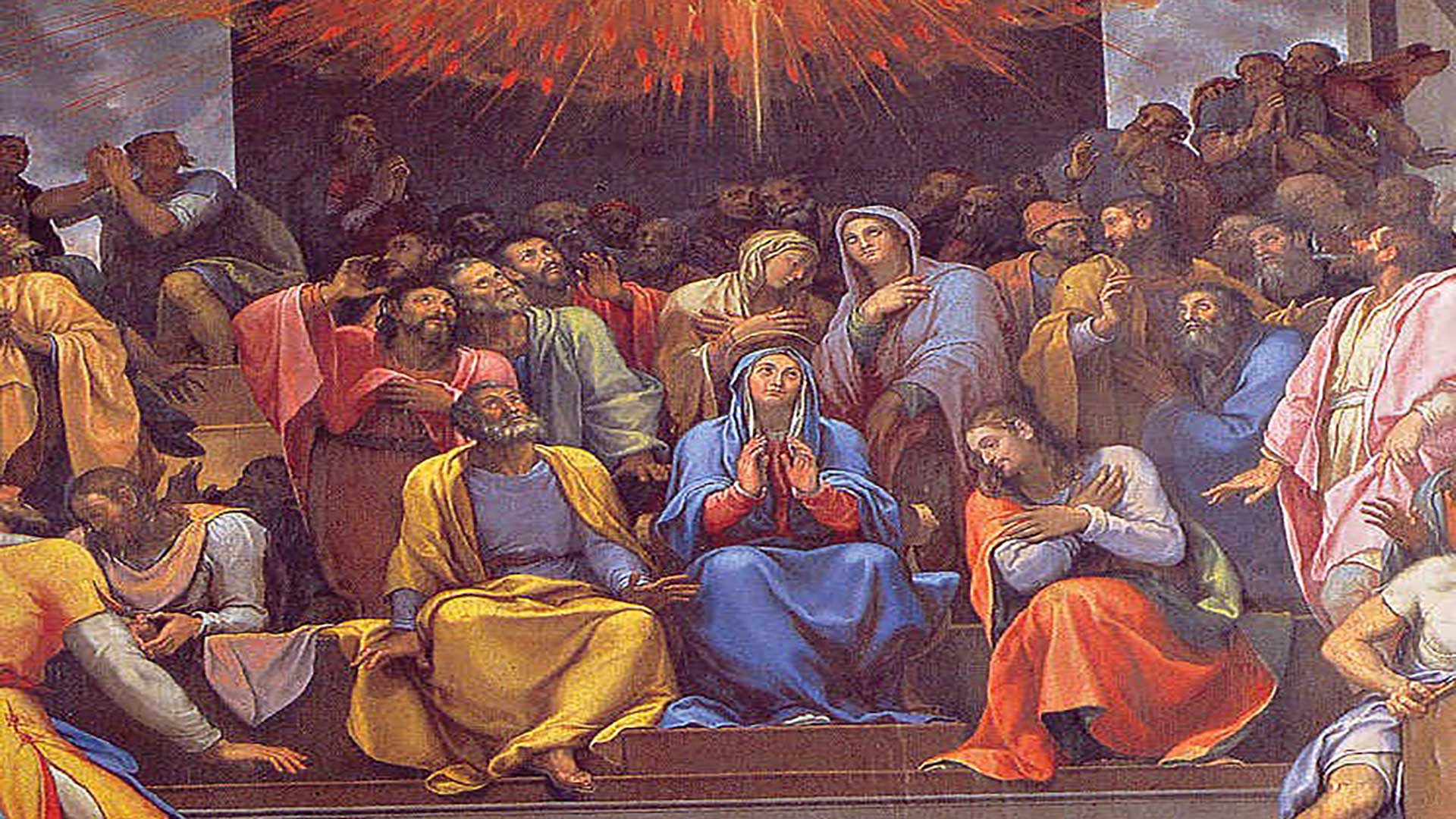
According to the Gospel (Jn 20: 19-31), when the doors were shut—where the disciples were gathered for fear of the Jews—Jesus came in and stood among them, saying, ‘Peace be with you’. He had defied the laws of time and space, which probably caused them even more fear. But then, to set all their doubts at rest, He showed them His hands and His side. He instructed them to receive the Holy Spirit and authorised them to forgive and preach in His Name.
This day soon became “the Lord’s Day,” replacing the Sabbath as the day of creation, the Mosaic law, and the Pasch. It symbolised a new creation, a new alliance, and a new, definitive Pasch. The Gospel account may not be exhaustive, but there is no doubt that the Church was on the horizon.
However, the going was not as smooth as it might seem. The Twin has gone down in history as ‘doubting Thomas’ (St John is the only evangelist to refer to the episode); still, we must not hold it against him. By the depth of his love, he believed when he met the Lord a week later; by the strength of his bond, he cried, ‘My Lord and my God’; and by the power of his commitment, he went on an apostolic mission to India.
What a lesson for us! Too often we doubt and remain in that doubt; we ask questions but seldom seek the answers. In our fast-paced world, while we pretend to eloquently reason out, we fail to see that faith alone can touch infinity and set us free.
So many holy traditions can be traced back to the Day of the Lord: the peace greeting, the receiving of the Holy Spirit, the sacrament of confession, and the duty to evangelise. Lest these meaningful commands turn into meaningless rituals, it is essential to remember that our acts must be soaked in faith. The Lord expects nothing short of a leap of faith, for ‘blessed are those who have not seen and yet believe.’
That transformative faith was evident when thousands converted and lived radically in the wake of the Resurrection. The First Reading (Acts 2: 42-47) tells us that the neo-converts ‘devoted themselves to the apostles’ teaching and fellowship, to the breaking of bread and the prayers.’ By having ‘all things in common’, they sowed the seed of religious communities; by selling or distributing their possessions, they introduced charitable living. This was not an injunction against private property, for they did so ‘as any had need’. But one thing is sure: by refraining from accumulating wealth, they emphasised that our real treasure lies in Heaven.
Thus, the neo-converts lived in the joy of the Lord and felt blessed. That is yet another lesson for us to take to heart. It is a pity that sometimes we distance ourselves from the Messiah, if not reject Him completely. By shameful acts of commission and omission, we repeatedly put him to a shameful death. If the Resurrection does not convince us of the divinity of Our Lord, no other miracle will. In fact, after He rose from the dead, His divinity was even more pronounced than his humanity.
The Second Reading (1 Pet. 1: 3-9) renews our hope. It teaches us that ‘by His great mercy, we have been born anew to a living hope through the resurrection of Jesus Christ from the dead, and to an inheritance which is imperishable, undefiled, and unfading, kept in Heaven for you.’ We may suffer a little while on earth, but that suffering is a purging. Through it all, we must continue to praise and thank God for our Christian vocation.
Finally, Christ being the reason for our being, we must dispel the darkness of doubt and soak in our belief. In fact, the Gospel account was written precisely ‘that you may believe that Jesus is the Christ, the Son of God, and that believing you may have life in His Name’ (Jn 20: 30-31). It promises not a naïve and selfish joy of the flesh, but a deep and self-giving joy of the spirit, simple and life-giving. This is a marvellous hope that we can all nurture as we renew our Christian life; it is a most wonderful way of being Church.
Banner: https://reclaimingourchildren.typepad.com
