Transfigured by the Cross
God created man in His image and likeness and dialogued with him in Eden. But alas, Original Sin soon interrupted the dialogue. The covenant with Noah followed the Edenic covenant; it was an everlasting covenant of "common grace", made with all of humanity and creation. It not only served as a foundation for subsequent covenants (Abrahamic; Mosaic) but is also seen as a foreshadowing of the final, new covenant in Jesus Christ.
The Abrahamic covenant is the subject of today's First Reading (Gen 12:1-4). God chose Abram to start a new family line. Trusting entirely in God’s Word, Abram left his hearth and home in Ur, Mesopotamia, and walked into the unknown, to a place later identified as Canaan. This act is far from comparable to the migrations of our days, which happen to places of which we have prior knowledge.
The Lord promised Abram: “I will make of you a great nation, and I will bless you, and make your name great, so that you will be a blessing (…) and by you all the families of the earth will bless themselves.” Can you imagine the magnitude of Abram's trust in God's promise?
Abraham became the first of the Hebrew patriarchs. Abraham and Sarah had a son named Isaac and a grandson named Jacob; they inherited the covenantal promises. Meanwhile, God renamed Abram (meaning ‘God is exalted’) to Abraham (‘Father of many nations’) and Sarai ('my princess') to Sarah ('princess' or 'mother of nations'), indicating an expanded role. He did so simultaneously, to signify their shared role in the covenant. Jesus's genealogy is traced to Abraham, whose near-sacrifice of Isaac foreshadows Jesus’ sacrifice on the Cross.
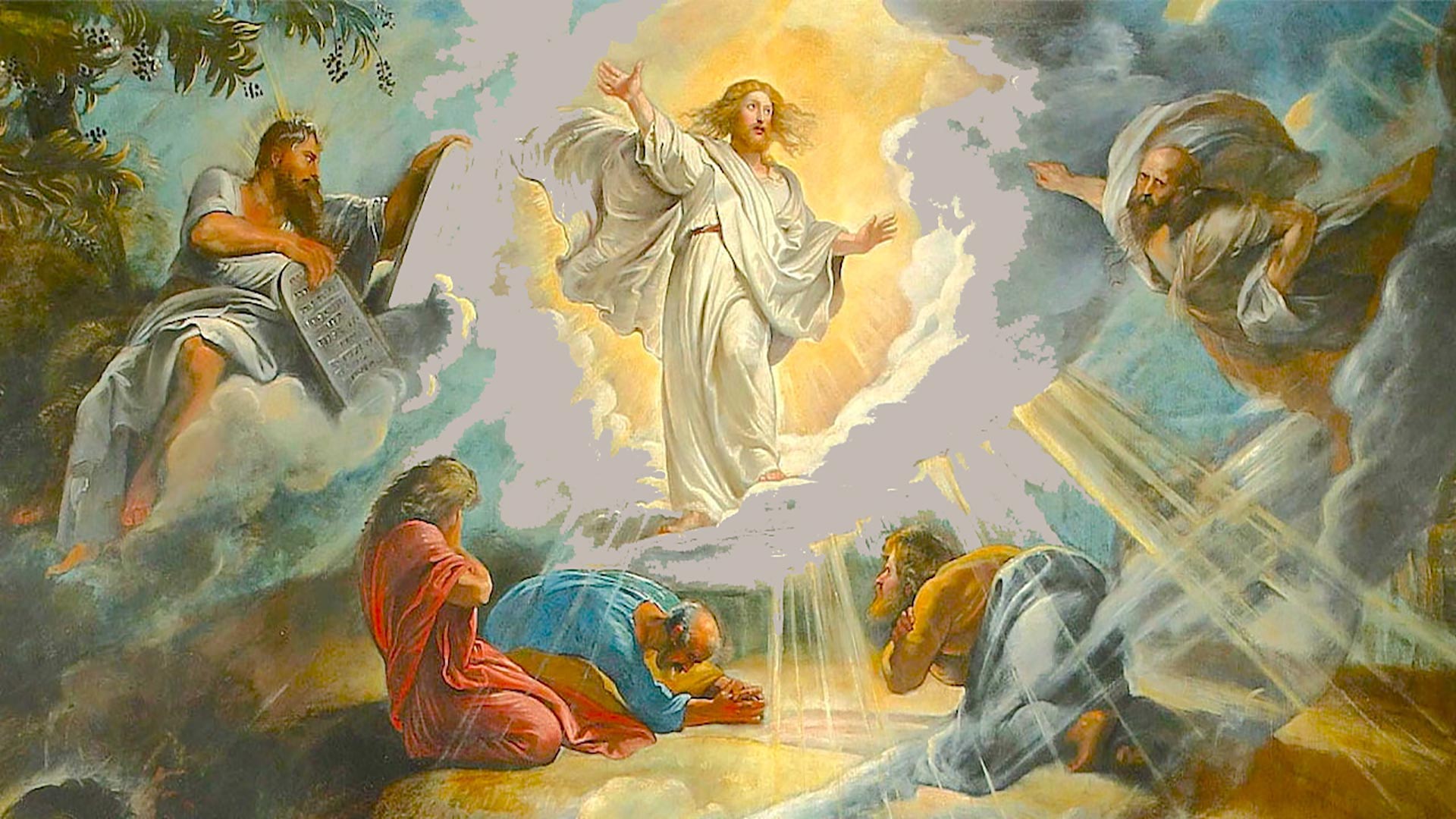
In the Gospel (Mt 17: 1-9), we note that the apostles Peter, James, and John had a vision of the Resurrected Lord. Jesus was “transfigured before them, and His face shone like the sun, and His garments became white as light.” To complete the picture, “there appeared before them Moses and Elijah [central Prophets of the Old Testament], talking with Him.”
At that point, Peter, savouring the moment, wished to stay put on Mount Tabor. He was shaken out of his comfort zone when “a bright cloud overshadowed them, and a voice from the cloud said, ‘This is My beloved Son, with whom I am well pleased; listen to Him.’” The apostles, filled with awe, fell on their faces. Jesus advised them to rise and not to fear. They had an insight into the Lord’s divinity, albeit no inkling of His mission on earth; they also felt emboldened to follow Him.
Their experience was brief but marvellous. Jesus wanted His Apostles to treasure its memory and later testify to its truth. Significantly, it is precisely Peter, James and John who would be destined to witness the Agony in Gethsemani! So, “it was fitting that their faith should be fortified beforehand and their eyes illumined by the effulgence of the Godhead.”[1]
How far are we fortified—transfigured—by learning of the apostles' experience? Or, like Peter, do we only wish to feel good and dream of happier days to come? The Transfiguration was–and will always be–a sign that Christ’s mission does not lend itself to trivialisation. Also, we must be conscious of our special mission as Christians and not be disheartened or tempted to give up. When we look around and see people wallowing in sin, we ought to see how their happiness is only a mirage.
Those who have chosen the narrow part are the fortunate ones, for they are continually transfigured. Jesus had instructed the Apostles to “tell no one the vision, until the Son of Man is raised from the dead.” He indeed rose from the dead; and today, it behoves us to testify with conviction.
In the Second Reading (2 Tim 1: 8-10), St. Paul says that we have to also “take [our] share of suffering for the Gospel in the power of God who saved us and called us with a holy calling (…) and brought life and immortality to light through the Gospel.”
We can never thank God enough for our Christian vocation. Being inheritors of an exalted tradition of faith in action, we need to come out and call the world’s bluff. It is high time the world realised that drawing back from the Cross is at cross-purposes with God’s loving plan of salvation. Hence, let us move forward decidedly and be transfigured by the Cross.
Banner: P. P. Ruben’s Transfiguration of Christ
https://www.ecwausa.org/the-transfiguration-of-jesus-in-matthew-17/
[1] Abbé C. Fouard, Jesus Christ the Son of God (Goa: Don Bosco, 1960), p. 263.
