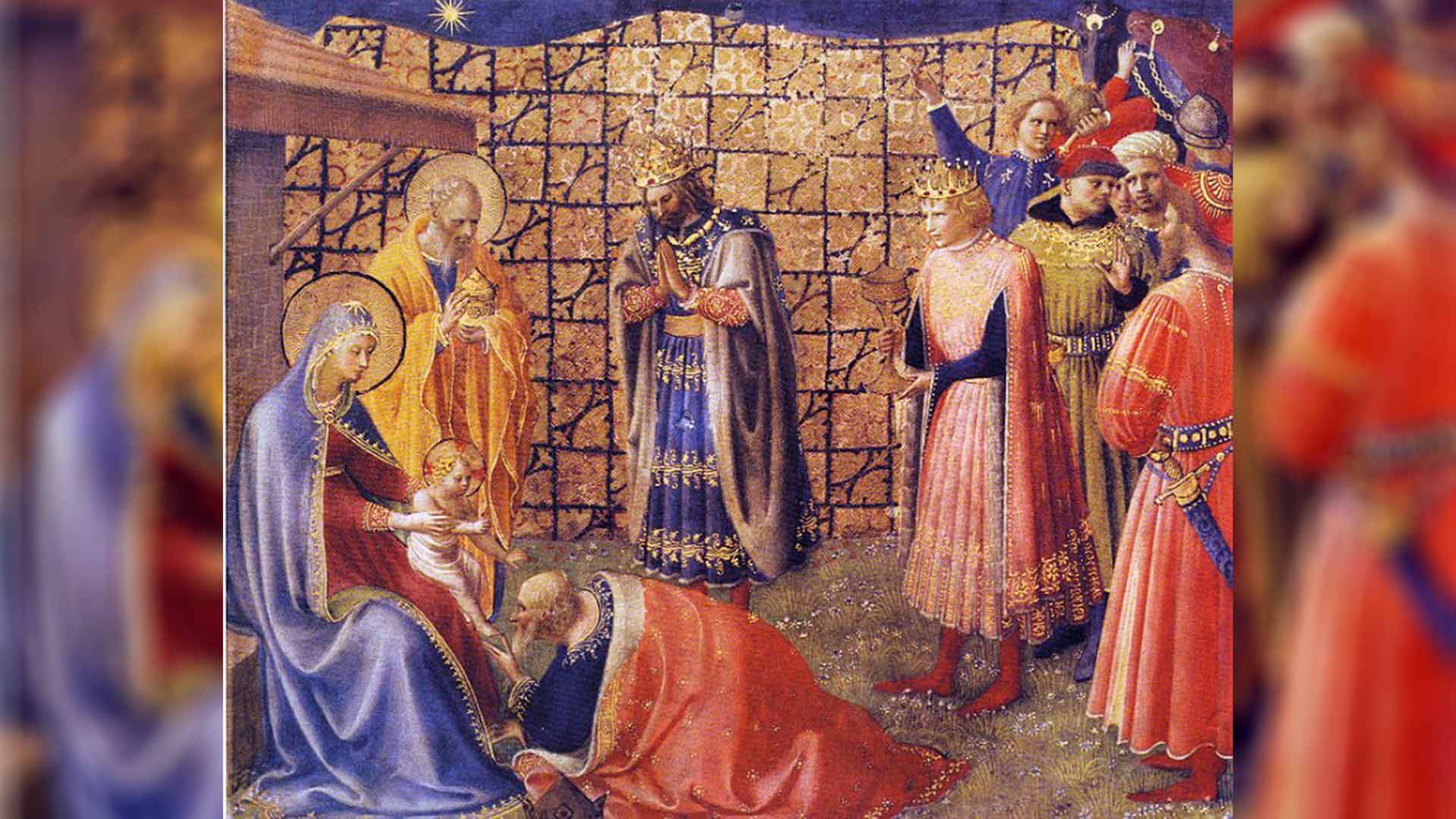
Luminous Epiphany
In places where the Solemnity of the Epiphany has been moved from 6 January to the Sunday falling between 2 and 8 January (both days inclusive), the readings are quite different from those that celebrate it as originally set.
Three parishes in the archdiocese of Goa celebrate the feast on the traditional day: the church of Reis Magos (The Magi), in Verem, Tiswadi; the chapel of Our Lady of Remédios (Cures) in Cuelim, Mormugão; and the church of Our Lady of Bethlehem, in Chandor, Salcete; where little boys play the Wise Men who followed a wondrous star to Bethlehem and paid homage to the Infant King.
The Epiphany (from the Greek ‘manifestation’) is an ancient feast that predates the celebration of Christmas on 25 December. It was central to Christian life because, although Jesus was born unsung, His manifestation to the Magi illuminated the mystery of Christmas.
The early Church combined the visitation of the Magi with the Nativity, the Baptism of Christ in the Jordan, and the Wedding at Cana, all of which pointed to Jesus as the Son of God. Only centuries later, at the Council of Tours in 567, the Church set Christmas day on 25 December, the Epiphany on 6 January, and named the twelve days between the two feasts as the Christmastide, with the latter solemnity marking the grand finale. The remaining feasts are spread out.
The day’s readings highlight an incomparably sublime event in the history of humankind: the manifestation of Jesus Christ. In the First Reading (Is 60: 1-6), while the prophet Isaiah looks at battered Jerusalem, he envisions it as the quintessential city that will be the Bride of the Lord. The city would manifest its glory, and the peoples of the world would flock to it with gifts, the same as the Magi would bring to the Babe of Bethlehem centuries later. Most importantly, by the end of times, 'all nations shall fall prostrate before you, O Lord,' as the Psalm says.
While the Gospel (Mt 2: 1-12) echoes Isaiah’s prophecy, it also quotes the chief priests and scribes as saying to king Herod that it was indeed written by the prophet (Micah 5: 1-2; 2 Sam 5: 2): 'And you, O Bethlehem, in the land of Judah, are by no means least among the rulers of Judah; for from you shall come a ruler who will govern my people Israel.'
That reference is significant, for Jesus would give up on the fortress Jerusalem and choose to be born in humble Bethlehem. The temple authorities were well aware of the coming of the Messiah, yet rejected Him.
Herod’s wily ways should be noted: he was all sweetness and bade the Magi to let him know where the Babe lay. Almost in the same breath, he ordered the killing of infants under the age of two. This is a great lesson for us who are naïve vis-à-vis the world. Although the world enjoys the benefits of Christian civilisation, it is bent on paganising the Mystical Body of Christ.
What about us Christians? Are we alert and zealous to stand up and speak up? Are we imbued with the Good News and desist from entertaining fake news? Church leaders ought to see through the devious ways of the secular, and often anti-Christian, political establishment, and refrain from partying with the impostors.
We Christians must emulate the Magi of yore and reject the world's Herods. Those noble pilgrims from the Orient, astrologers and/or philosophers conversant with Hebraic messianic beliefs, were the first Gentiles to adore Jesus; they accepted Him while the authorities cunningly rejected Him, a pathetic drama that is still unfolding in our times. They offered Him gold, in acknowledgement of the royalty of Jesus; frankincense, as a reference to His divinity; and myrrh (not mentioned by Isaiah), pointing to Jesus's suffering humanity.
St Paul in the Second Reading (Eph 3: 2-3, 5-6) states that the Gentiles are indeed 'fellow heirs, members of the same body, and partakers of the promise in Christ Jesus through the Gospel.' This is in stark contrast to the narrow and exclusive Jewish idea of Salvation. The Chosen Race had clearly failed God, so the Church is now the chosen race, royal priesthood, and holy nation. It makes you and me privileged bearers and proclaimers of His luminous message. Our task is to put the lamp on a stand, such that it gives light to all in the house! Instaurare omnia in Christo.
Banner: http://www.catholicstpeter.com/Epiphany/slides/adoration__of__the_magi-_fra_angelico.html
